Viapass steers Belgium’s lorry road charging system
Text Geert Van Cauwenberge Beeld Viapass
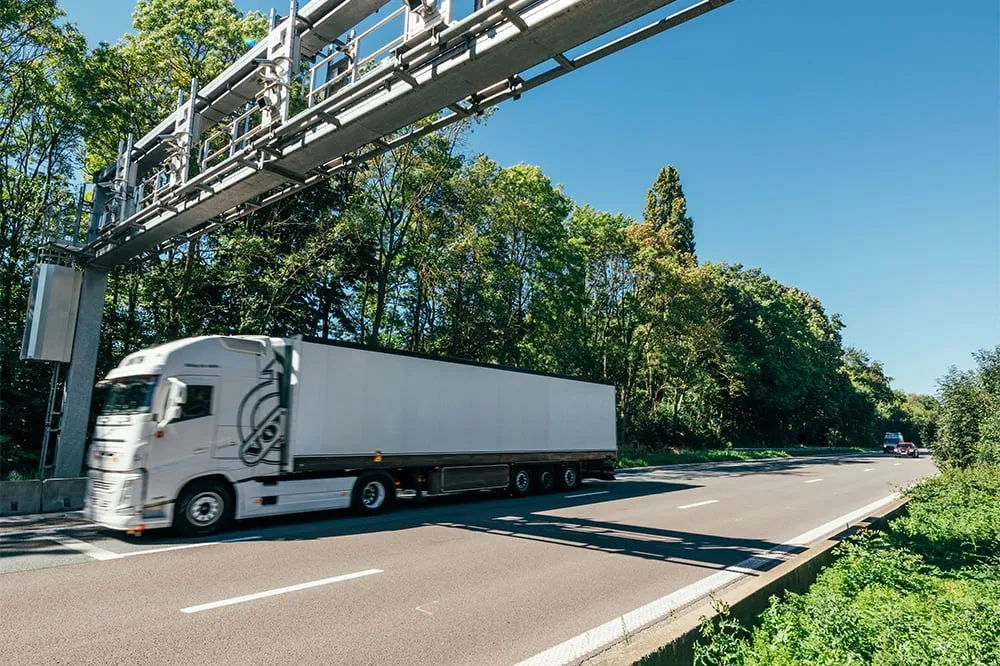
On 17 July 2024, Viapass celebrates its tenth anniversary. The interregional public agency that implemented Belgium’s lorry road charging system has been through an intensive journey. Administrator-general Johan Schoups is proud of his team and looks back on the past decade.
“The introduction of an annually indexed kilometre charge for lorries has been a long journey”, says Johan Schoups. “In January 2011, Belgium’s three regions reached a political agreement on reforming road taxation. This agreement laid the foundations for the kilometre charge. It led to a cooperation agreement in 2014 and a legislative framework in 2015.”
“Since 1 April 2016, Belgium has had three regional toll zones for freight vehicles weighing more than 3.5 tonnes. Preparing and implementing this kilometre charging system was a major feat”, says Johan. “As a so-called ‘interregional entity’, we were responsible for overseeing service providers, coordinating between Flanders, Wallonia and the Brussels-Capital Region, and communicating clearly about the kilometre charge. Rolling out and synchronising a kilometre charging system across three different regions, in the country’s three languages and in English, and involving two different systems, a tax in Flanders and Brussels and a road charge in Wallonia (SOFICO), made our project the largest and most complex toll system in the world.”
A challenging journey
Thanks to the dedicated efforts of all Viapass employees, who worked day and night on the project, the kilometre charging system got off to a successful start in April 2016. Johan is very proud of that. “One challenge was to build the broadest possible support among policymakers and users for the value and practicality of the kilometre charge for lorries”, he recalls. “Similar projects abroad often failed to reach the finish line, such as the ‘Anders betalen voor mobiliteit’ project in the Netherlands, Ecotaxe in France and the initial plans for Germany’s PKW vignette for passenger cars.”
“Another challenge was to create a modern, high-tech system without barriers or toll booths on Belgian roads. In terms of financing, we aimed for a self-financing system, with our private partners having to pre-finance everything. We succeeded in setting up a toll system that worked flawlessly from day one, apart from a few typical teething problems.”

A source of revenue
The kilometre charge for lorries has operated without interruption to date. Viapass’s successful rollout has therefore already generated substantial revenue for Belgium’s three regions. “In 2023, toll revenue collected in Belgium totalled 888 million euros”, says Johan. “Notably, more than 54 per cent of this amount was paid by foreign lorry drivers.”
A wealth of information
Since its introduction in 2016, the kilometre charging system has generated not only substantial revenue, but also a wealth of data. Johan explains: “Through tolling, we generate huge volumes of aggregated and pseudonymised data every day on vehicle flows on our roads. Which countries are most represented? Which regions in Belgium have to handle the most freight traffic?
And what proportion of lorries on Belgian roads are electric? We have seen lorry traffic change significantly over the past ten years.”
Johan gives two specific examples: “During the first Covid lockdown, from March to May 2020, road freight traffic in Belgium fell sharply. This led to a 28 per cent drop in economic activity. Transport picked up again from June 2020, reaching pre-Covid levels once more in September that year. Another example: during the recent farmers’ protests at the port of Zeebrugge, we saw in real time how lorry drivers avoided or became stranded in the region, with the familiar consequences for goods deliveries.”
Kilometre charge indexation
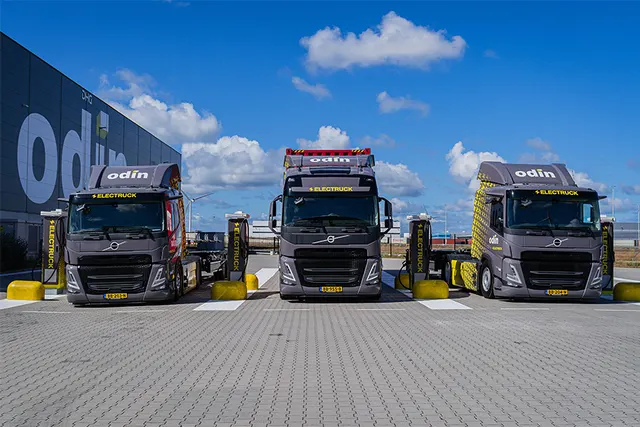
From 1 July 2024, new indexed rates for the kilometre charge apply in Flanders and Brussels. “The new rates will be available on the Viapass website”, says Johan. “Another change is that the Brussels-Capital Region is introducing a preferential rate of zero cents per kilometre for zero-emission vehicles. This already applies across the entire Flemish road network. In Wallonia, these vehicles remain in emissions category EURO VI.”
Question about this story? Ask your question
Keep following this
Get an email when a new story is published. No account needed.
- SubjectTransport