Warehouse safety in the age of AGVs and automation: Troax on Active Safety and impact protection
How do you create a safe warehouse environment where people, forklifts, AGVs and robots are working together ever more closely? In this episode of Warehouse en Logistiek, Björn Crul talks to Sigrid Herbosch of Troax about the changing approach to warehouse safety. They discuss risk analysis, Active Safety, flexible impact protection, regulations and the importance of an integrated safety concept that combines physical and technological solutions.
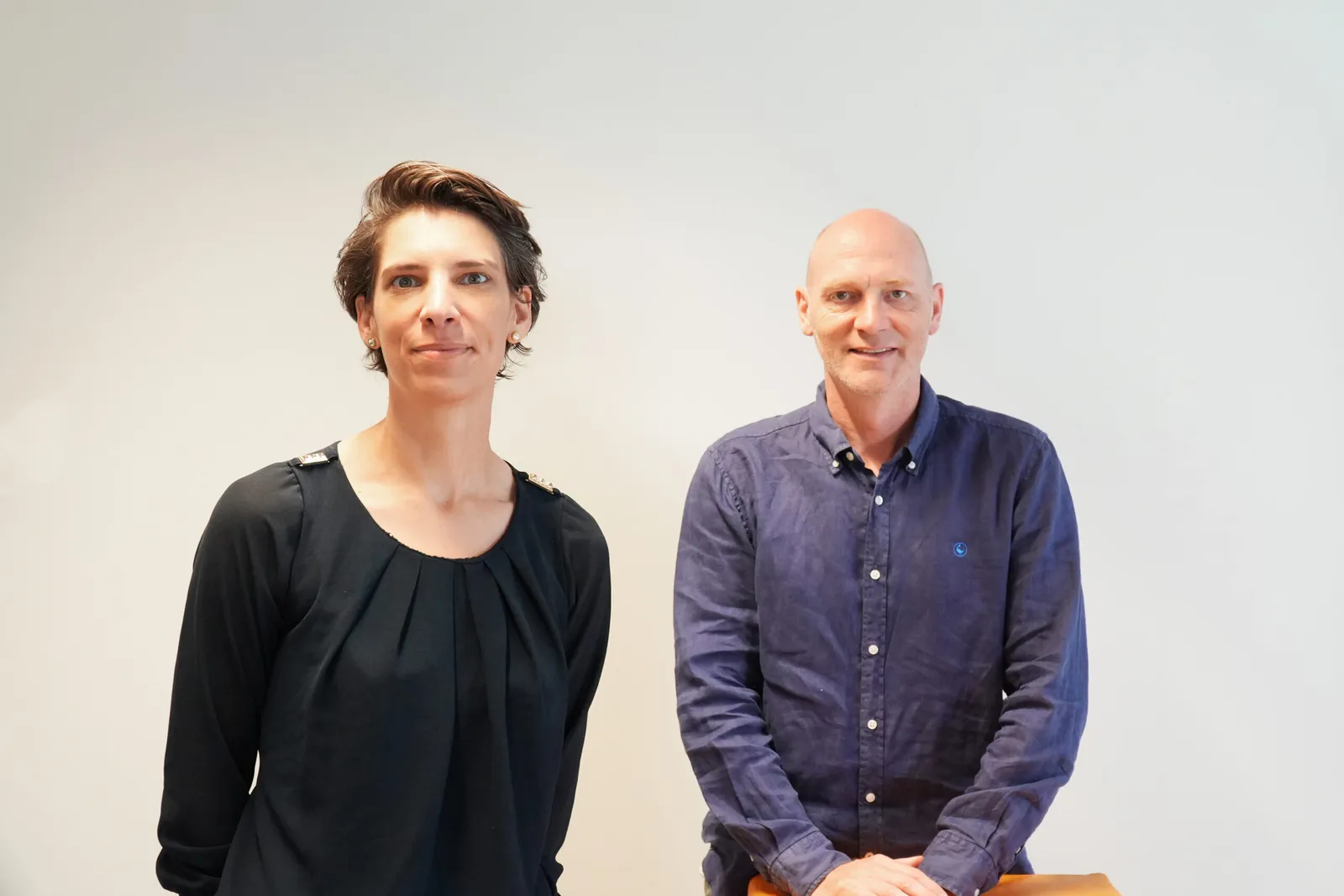
Interview with Sigrid Herbosch: Coordinator Internal Sales BE & Marketing BNL
Host: Björn Crul
A business enquiry for TROAX? Get in touch
Full transcript
All chapters (42)
- Safety in modern warehouses
- The origins and activities of Troax
- Expanding the safety offering
- From manufacturer to safety partner
- Mapping safety risks
- From individual zones to a complete concept
- The modern warehouse
- Data, automation and speed
- People and vehicles working together
- New risk areas
- Forklifts, AGVs and AMRs
- Anticipating hazards
- Building safety into a project from the outset
- Earlier is better
- A more thorough renovation
- Investing for the long term
- The role of regulations
- Regulations and internal traffic plans
- Active Safety
- Technological solutions
- A practical example
- Blind spots and warnings
- Technological and physical solutions
- Combining the two systems
- Risks in internal transport
- Flexible impact protection
- Applications for Troax Barriers
- Flexible and steel barriers
- Differences in the event of an impact
- Testing safety systems
- Independent testing and certificates
- A rapidly changing warehouse environment
- Modularity and future-proofing
- Replacing damaged components
- Sustainability of modular systems
- The cost
- Troax at Logistica Next
- The portfolio at the trade fair
- Advice and expertise at the stand
- Practical information
- Consider the complete picture
- Closing
Safety in modern warehouses
Björn Crul Hello, listeners. Modern warehouses are becoming increasingly dynamic. People, forklifts and AGVs, for example, move around in the same environment. Automation is on the rise, and goods are being stored ever more efficiently. This is changing the way safety is viewed in these environments. What does the new, integrated approach to workplace safety look like, and what are the main challenges? I’ll be discussing that today with Sigrid Herbosch of Troax, a partner in innovative safety concepts. Troax has long been known for its safety fencing and mesh partitions, but is also looking to position itself firmly as a partner for a much broader approach to safety. Sigrid, welcome to our studio. Let’s start at the beginning. Troax has undergone a major transformation as a company over the past few decades. What do you do today?
The origins and activities of Troax
Sigrid Herbosch Well, Troax was actually founded in 1955 in a small shed in the Swedish village of Hillerstorp, where four brothers made chicken wire. Over time, other safety products were added. Today, I think we can say that Troax is present on every continent, with more than 45 sales offices, and is the global market leader in steel mesh partitions for machine guarding, dividing up warehouses and data centres, and fitting out storage areas in apartment buildings and garages.
Expanding the safety offering
Björn Crul So you’re responding to developments in the various markets where these solutions can be used. How did you decide to expand your range? How has the company’s role changed?
From manufacturer to safety partner
Sigrid Herbosch It’s really the next logical step in a company’s growth. You have certain products that let you do certain things. But ultimately, Troax wants to look to the future as a safety partner rather than a manufacturer of steel fencing. We want to take a broader perspective. In other words, how do we improve workplace safety? How can we offer a complete concept? It’s a logical consequence, not only of the company’s growth, but also of expanding our portfolio. But I think it’s also a sign of the times. Customers want a one-stop shop, or a single point of contact that takes care of all their safety needs. That’s where Troax comes in.
Read the full transcriptCollapse transcript38 more chapters
Mapping safety risks
Björn Crul Do one of your advisers visit a site and map out the safety situation with the company, so you can design the right solutions?
From individual zones to a complete concept
Sigrid Herbosch Yes. In the past, companies would look at different zones separately. So you’d have a production area, an order-picking area and so on. The customer would then approach us to deal with that specific zone. What we do now is carry out a risk analysis and map out a complete concept. We no longer look at which individual zones need to be fenced off or made safer. Instead, we look at what needs to be addressed across the site as a whole. It’s no longer about one zone. The entire working environment is the zone. We need to look very carefully at the possible solutions. These could include impact protection or fall-through protection for racking. So we look at the complete picture.
The modern warehouse
Björn Crul This is a podcast by Warehouse en Logistiek, so of course we’ll be talking about warehouse environments today. What does a modern warehouse look like?
Data, automation and speed
Sigrid Herbosch In the past, warehouses were divided into the zones I mentioned. Now they’ve become smart, technology-driven environments where data, automation and robots are central. And above all, things have sped up. That was much less the case ten years ago. Businesses can achieve that speed with automated vehicles, robotics, automated picking and so on. These changes also have a major impact on safety, because people are now interacting with speed and with these vehicles.
People and vehicles working together
Björn Crul Yes, and sometimes they have to work together very closely. Does that make safety more complex?
New risk areas
Sigrid Herbosch Absolutely. That complexity is also due to the speed and the close interaction between the two. The places where they come together are especially critical. These often become risk areas: intersections in workplaces where machines meet people, vehicles meet, and people are walking, and so on. These are very difficult to deal with using perimeter fencing. In the past, people paid less attention to this, but it’s now very much on the radar.
Forklifts, AGVs and AMRs
Björn Crul Can we make that more concrete? Let’s say you have a warehouse where operators use manual forklifts, but there are also AGVs or AMRs. What kind of protection do you need?
Anticipating hazards
Sigrid Herbosch In that case, you’re no longer talking about perimeter fencing, which is really intended to define zones or absorb an impact. Instead, you’re talking about something that prevents risks and anticipates hazards, which perimeter protection could never do. For example, take a blind spot where a forklift races past on one side and a pedestrian walks by on the other. That’s a dangerous situation. Another example could be narrow aisles in warehouses where forklifts are operating. A forklift should receive a signal that there’s already a forklift in the aisle, or that a pedestrian is passing through. These are very abstract risks that you can’t address with impact protection or fencing.
Building safety into a project from the outset
Björn Crul You’ve already touched on this. Many logistics warehouses are working on this right now, whether they’re greenfield projects or renovations of existing warehouses. At what point do you get involved in a project as a safety partner? When is the ideal time to map out and avoid all these risks?
Earlier is better
Sigrid Herbosch Well, earlier rather than later. I think that’s the key. Often, people only react when something happens. That’s unfortunate. We need to anticipate risks and, above all, learn to map them out before a warehouse starts operating, so we can anticipate the hazards. Otherwise, we end up thinking in terms of separate zones again. For example: there’s a machine here, so this area needs fencing. Order picking takes place here, so we need fall-through protection or something similar. But that’s no longer how things work today. All these zones are linked by AGVs and automation. In other words, we need to look at the whole picture. We try to convince customers to view this as a complete safety concept, rather than dealing with the different departments in their factory or warehouse, or whatever it may be. They should try to take a global approach from the outset. That’s the ideal situation. The reality can be different. Often, you’re dealing with an existing situation. Something has happened, there’s been an incident or a collision. Then you have to work with what’s already there and implement something within that setup. But all the systems are flexible enough to allow that. Of course, you need to ask the right questions. Are we going to patch things up, or are we going to tackle the problem at its core?
A more thorough renovation
Björn Crul Or carry out a more thorough renovation, then?
Investing for the long term
Sigrid Herbosch And I think, of course, you should always choose the second option. How can we do this thoroughly, so it doesn’t happen again? How can we invest now for the next ten years at least? That’s important to us.
The role of regulations
Björn Crul You’ve spoken about the importance of making preventive investments. What role do regulations play in all this?
Regulations and internal traffic plans
Sigrid Herbosch For machine guarding, there’s also the Codex on Well-being at Work. Whether it can be interpreted literally in every company is another question. But it does set out some basic guidelines. One is that, as soon as mobile work equipment is used in a work area, a company must draw up an internal traffic plan. That’s number one. Number two is that organisational measures must be put in place to keep pedestrians separate from moving work equipment. This can be done by marking out a designated area. That can be as simple as painted lines, but heavy traffic wears them down, so they should really be reviewed every few years. You can also use barriers and Active Safety products. What else is important? For example, forklifts should have visual or audible warning signals to alert people. And those narrow aisles I mentioned earlier: there should also be a signal to indicate that a forklift is in an aisle or that a pedestrian is approaching. These are issues that need to be addressed.
Active Safety
Björn Crul I heard you mention Active Safety. That’s a new product range that Troax has launched. What exactly does it involve? Are these technological solutions?
Technological solutions
Sigrid Herbosch Yes, technological solutions. And I have to admit, when people ask me that sort of question, I often think: what am I supposed to say? Because it’s a very abstract and broad subject. But, essentially, these are technological solutions that anticipate hazards and prevent risks by mapping the situation in real time. Think, for example, of projectors that display a pictogram on the floor. Or tags worn by people or attached to forklifts, which alert the forklift driver or someone nearby using light, sound or vibration. We always work with those three alert levels, which you can choose between. That’s the basic concept. We use these products where perimeter protection reaches its limits. That’s where Active Safety takes over, covering everything that can’t literally be cordoned off.
A practical example
Björn Crul Can you give a practical example of a situation or context where this really adds a lot of value?
Blind spots and warnings
Sigrid Herbosch Yes, the blind spot we were talking about earlier. A forklift approaches from one side at a certain speed, which should hopefully be regulated, as it ought to be. A pedestrian approaches from the other side, unaware of what’s happening. Forklifts these days are very quiet because they’re electric. They’re no longer petrol-powered and making all the noise that would warn you they’re coming. When the two are on a collision course, you can set up a perimeter around both. The forklift sends out a signal. The driver also wears a tag, which can alert them using vibration, light or sound. The pedestrian also receives an alert on their personal tag, using light, sound or vibration. Another example might be a forklift passing through a narrow opening, with the warehouse beyond it, where visibility through the opening is very limited. As the forklift approaches the zone, it could be slowed down, for example by an automatic speed limiter built into the forklift. There is also a physical barrier to prevent people from crossing. Once the forklift has passed, a projector displays a pedestrian crossing on the floor, letting people know they can cross. Those are two examples.
Technological and physical solutions
Björn Crul From that last example, I gather it’s not so much about the technology itself, but about combining technological and physical solutions.
Combining the two systems
Sigrid Herbosch Yes, absolutely. And I’m convinced that the two work perfectly together and that they need each other. One takes over where the other reaches its limits. I think that as soon as things become a little abstract or there’s movement involved, we have to rely on other means than the typical… Of course, it has to work in your environment. That’s a given, so it needs to be thought through carefully. But once that’s taken care of, you can cover every zone. That’s something we couldn’t do before. You can protect a machine cell. You can protect a pallet racking system with fall protection. That’s all fine.
Risks in internal transport
Björn Crul But the more transport you have, the more everything is interconnected.
Sigrid Herbosch And what do you do about falling goods and the risks they pose? How do you warn people in hazardous zones, or address forklift speeds and collisions? These are things that are very difficult to tackle with conventional methods.
Flexible impact protection
Björn Crul I also saw on your website that you offer a flexible impact protection solution. The product is called Troax Barriers. In what kinds of environments do they offer the greatest value?
Applications for Troax Barriers
Sigrid Herbosch More or less the same kinds of environments: from production halls to warehouses, including automated warehouses, where a lot of forklifts operate. Powered industrial trucks, if you like. They’re designed to prevent collisions. So they provide physical protection. Whereas Active Safety is more about anticipating hazards, the barriers actually stop the impact if a collision does occur.
Flexible and steel barriers
Björn Crul What’s the fundamental difference between a flexible polymer barrier and conventional steel protection?
Differences in the event of an impact
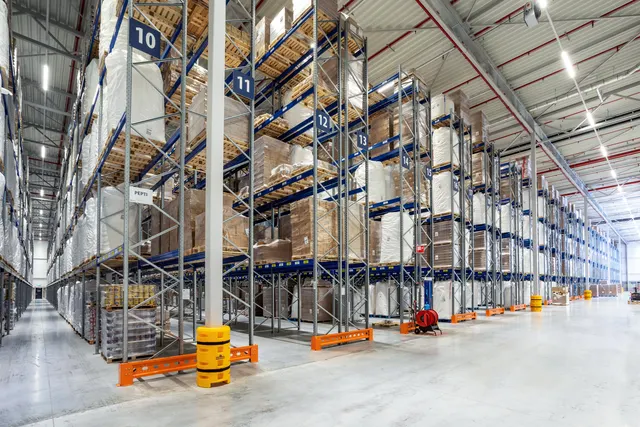
Sigrid Herbosch There are three major differences, and they’re all very important. A flexible barrier reduces damage to the vehicle, which can otherwise lead to considerable costs. It also reduces damage to the floor. Its flexibility absorbs the impact in such a way that the concrete doesn’t crack, with the force instead absorbed by the base plate. And then there’s the damage to the barrier itself. With a steel barrier, the forklift is damaged, the floor is damaged and the barrier itself is damaged too. So you can use it once. In that sense, it’s a short-sighted solution. A flexible barrier, on the other hand, springs back. I should mention that it has a deflection zone of 250 mm, which means it can be reused. So it’s a sustainable solution.
Testing safety systems
Björn Crul Sigrid, we’re talking about solutions that are meant to keep people safe. Their credibility is therefore crucial. Your brand has been building up experience since 1955. But how are these systems tested today to make sure they actually do what they’re supposed to?
Independent testing and certificates
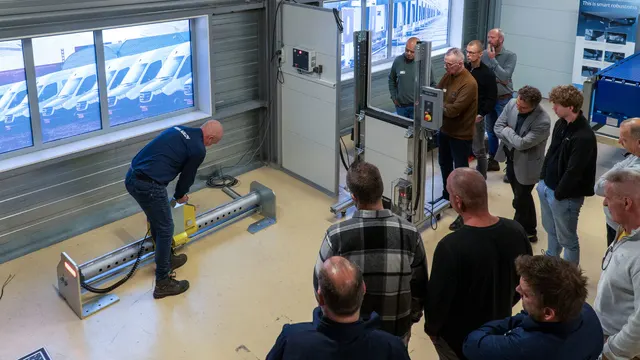
Sigrid Herbosch Testing is extremely important to us. We’ve always placed great importance on it, because of course you can say that your own products are very safe, that they’re the best on the market. Well, you would say that. If something happens, that claim will be put to the test. But it’s much more important to have products tested independently. That’s why every one of our products is tested at our own test centre, as well as by independent bodies. For example, TÜV, which I think most people will know. We also have PAS 13, a worldwide product code for testing industrial impact protection. It covers supply, installation and testing. We can provide certificates for every one of our products. And that matters to the customer. It’s not Troax saying so, it’s independent bodies. That’s much more important.
A rapidly changing warehouse environment
Björn Crul Let’s go back to the modern warehouse environment. As we’ve already said, technology is playing an increasingly important role. There’s more automation, more cobots, more robots and AGVs, and so on. It’s an environment that’s changing very quickly these days. How do you adapt when a warehouse has been made safe, and then a new machine is installed or a new piece of technology is introduced?
Modularity and future-proofing
Sigrid Herbosch We evolve along with it. I think that’s what we have to do. The advantage of our products is that they’re all designed to be modular. And I think modularity is what makes them future-proof. If an extension is needed, I can add it. No zone stays the same for ten years. I don’t believe that any more. If you’d told me that in the past, I’d have said: yes, that used to be the case. Factory environments were relatively static. That’s simply no longer true today. So anything that doesn’t change isn’t keeping up with the times. Troax sees that a lot. It can also happen in a collision. That happens very often with our products, because that’s what they’re designed for.
Replacing damaged components
Björn Crul Yes, because then only one section of the protection might be damaged, for example, and a new component needs to be fitted.
Sustainability of modular systems
Sigrid Herbosch Yes, it would be absurd to tell the customer: well, we’ll tear the whole thing down and come back with a new one. No, we just replace the section that needs replacing. So in that respect, the product is very sustainable and future-proof.
The cost
Björn Crul Yes, Sigrid, that brings us to the question of cost. Companies need to invest in safety. How should a customer look at that?
Sigrid Herbosch Nobody likes spending money unnecessarily. But customers also need to consider the indirect costs. Think about downtime in a factory if something happens, or the costs resulting from an impact or collision, goods falling, damaged goods, or even people being injured.
Troax at Logistica Next
Björn Crul That certainly sounds like a very logical way of looking at it, and one that will help prevent incidents in companies. Now, Sigrid, we’ve discussed a lot of different solutions. People who’d like to see them in real life can soon visit the Logistica Next trade fair in Utrecht. What will they find at your stand?
The portfolio at the trade fair
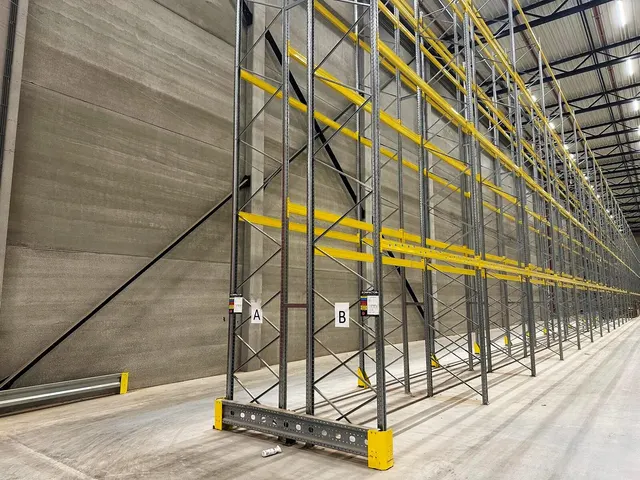
Sigrid Herbosch All sorts of things from the Troax range. We’ll be showing a full portfolio of machine guarding, fall protection for pallet racking, Active Safety products and our barriers. So I think visitors will be able to see pretty much everything Troax has to offer.
Advice and expertise at the stand
Björn Crul And why should a warehouse or logistics manager make a point of visiting your stand?
Sigrid Herbosch Not just for the delicious coffee and the friendly people at the stand, but above all for the advice we can offer and the expertise my colleagues have built up over the years, as well as the pleasure they take in talking to customers.
Practical information
Björn Crul To come and have a look. Troax will be at Logistica Next in Utrecht from 3 to 5 November. You can also find more information about Troax and its safety solutions through the Warehouse & Logistiek channels. Now, we’re almost at the end of the podcast. If you could leave our listeners with one piece of advice, what would it be?
Consider the complete picture
Sigrid Herbosch Look at the complete picture in the context of the work zone, the company and its operations. No two companies are the same. You can’t copy a previous situation, and you can’t compare companies with one another. It will be different for everyone. But try to integrate different zones with one another. Don’t view them in isolation. Compare different safety solutions with one another, because there isn’t just one solution. There are several. You can then choose the one that best suits your preferences or budget.
Closing
Björn Crul Sigrid Herbosch, thank you very much for this conversation, and all the best with Troax.
Sigrid Herbosch Yes, thank you. My pleasure.
Björn Crul That brings us to the end of this Warehouse & Logistiek podcast, dear listeners. Until next time!
Companies in this story
Keep following this
Get an email when a new story is published. No account needed.
- ThemeAutomating goods flows
- SubjectWarehouse equipment & safety
- CompanyTROAX