‘Together, we’re accelerating the transition to electric transport’
Text Armand Landman Image Lidl Nederland
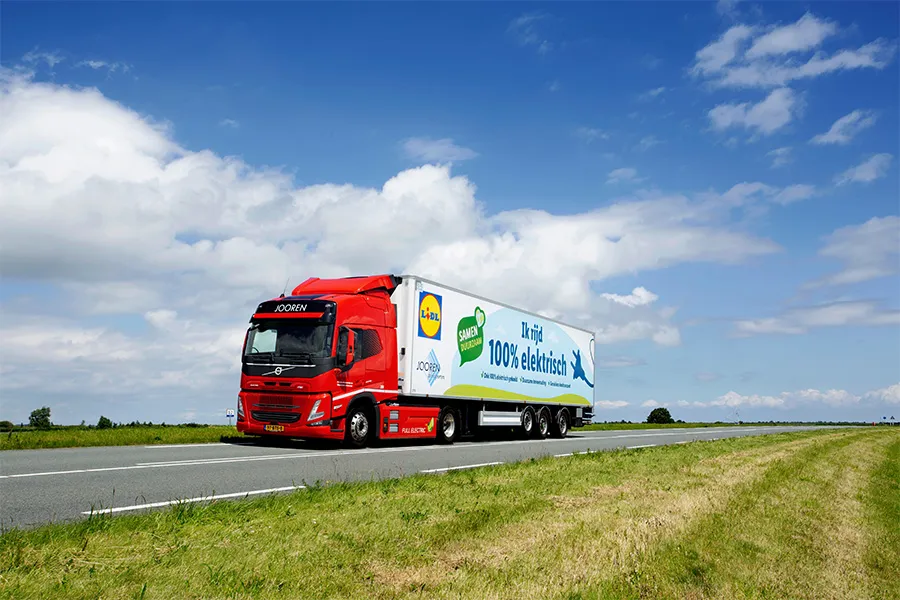
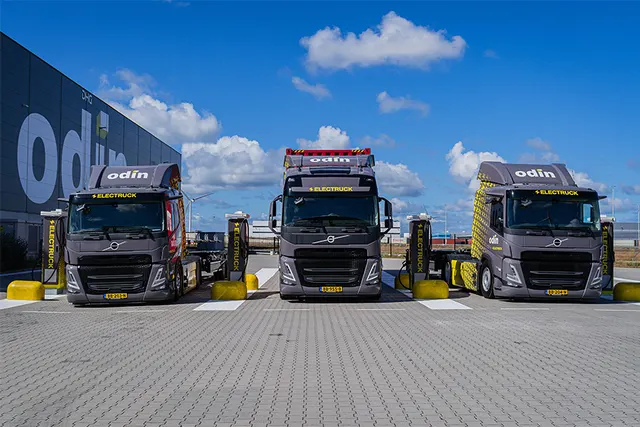
Lidl is actively tackling challenges such as grid congestion, polluting urban transport and complex decarbonisation programmes for hauliers with a forward-looking approach. The supermarket chain has recently opened the charging hubs at its distribution centres to other logistics companies. This is not a pilot project, but a deliberate strategic choice that supports Lidl’s ambition to supply all its stores, from city to village, entirely by electric vehicles by 2030. By working together intelligently and opening up its own infrastructure, Lidl Nederland is showing how the logistics sector can accelerate its transition to sustainability collectively. An interview with Ruud Metten, Manager Transport & Innovaties.
“A charging hub like this is a substantial investment,” says Ruud Metten, Manager Transport & Innovaties at Lidl Nederland. “So it’s a real shame when that infrastructure sits unused outside our charging hours. And when we plan well, which we do, we know exactly when there’s capacity available. We can share that capacity with our neighbours, suppliers and other hauliers. Everyone benefits.”
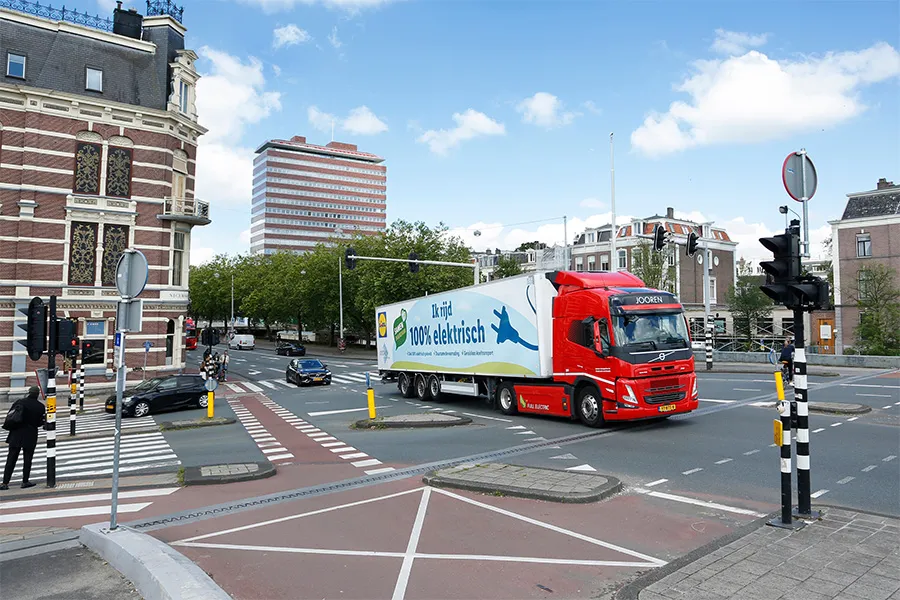
Sharing smartly, charging smartly
Lidl has six distribution centres, four of which, in Heerenveen, Almere, Oosterhout and Weert, now have operational charging hubs. The remaining two, in Etten-Leur and Waddinxveen, are due to follow in 2025. The hubs supply 100% green electricity, generated in part on the roofs of Lidl stores or at the Haghorst solar park, with which Lidl has signed a Power Purchase Agreement.
According to Metten, the idea of sharing the hubs came about organically. “After unloading, our suppliers often have to wait because of driving time regulations. Why not use that time to charge? And why should we leave our neighbours on the business park struggling with queues or a lack of connections when we have spare capacity?”
The charging hubs are available through time slots agreed in consultation. “We charge a fixed, competitive rate per kilowatt-hour, with no hidden costs. No penalties, no invoicing fees. That makes it easy to get started,” says Metten.
A catalyst for sustainability across the sector
What Lidl is doing goes beyond simply sharing infrastructure. It gives our suppliers the opportunity to charge their vehicles when they deliver goods to us.
That is no unnecessary luxury, he stresses. “Buying an electric lorry is one thing, but the charging infrastructure around it is often much more complicated. Think transformers, fire safety, insurance, and so on. We’ve now taken care of most of that, so the haulier doesn’t need to worry about it.
Setting an example in Europe
Lidl was the first supermarket in the Netherlands to publicly commit to fully electrifying its store deliveries before 2030. State Secretary Vivianne Heijnen (Infrastructure and Water Management) praised the initiative as proof that the government’s ambitions are achievable.
Lidl Nederland is also attracting interest internationally. “The Netherlands is leading the way,” says Metten. “We’re now looking with our international Lidl colleagues at how we can roll out our approach more widely.
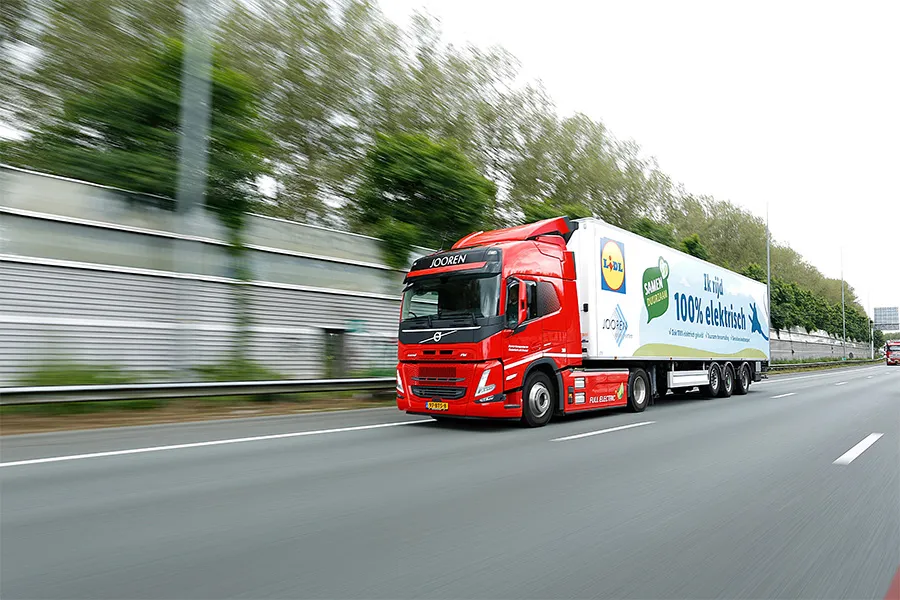
Transport as a strategic pillar
Sustainability is not a marketing story, Metten stresses. “It’s woven into everything we do. Our stores have been gas-free since 2018, long before the war in Ukraine. Electric transport fits perfectly with that. It’s quiet, clean and ultimately cheaper. We cover short distances, combine chilled, fresh and ambient products in a single trip, and collect return flows at the same time. Efficiency and sustainability go hand in hand.”
Lidl also gives its transport partners clarity. “We work with regular partners, some of them for as long as twenty years. In 2023, we announced our 2030 target. That gives hauliers time to depreciate their fleets and plan their transition carefully. We set a shared goal and work towards it together.”
The future is quiet, and shared
For Lidl, opening up its charging hubs is just the beginning. “We hope this inspires other companies,” Metten concludes. “We can’t achieve sustainability on our own. But if we share our infrastructure, put our knowledge to use and bring the whole supply chain along, we can make electric logistics accessible to everyone.”
Partnership with Volvo Trucks
Electrifying Lidl’s store deliveries would not be possible without strong partners in vehicle technology. One of the key players in this journey is Volvo Trucks. The vast majority of the electric lorries Lidl currently operates are supplied by Volvo.
“We don’t specify a particular brand,” stresses Ruud Metten, Manager Transport & Innovaties at Lidl Nederland. “But many of our regular hauliers have worked with Volvo for years and are also choosing electric models from the brand. What matters most to us is that the lorries meet our functional requirements: sufficient range and battery capacity, and suitability for our daily routes.”
“The energy transition in road transport is well under way,” says Jan Schouten, manager energy transition at Volvo Trucks Nederland. “We’re seeing more and more requirements for transport to be emissions-free. Electric trucks are already available, but further growth in charging infrastructure is crucial if we’re to scale up in earnest. Lidl is showing leadership not only by setting requirements for electric transport, but also by actively enabling it. By making its charging hubs available, the company is creating the conditions transport operators need to make the switch. That’s exactly what the energy transition needs: collaboration between shipper, haulier and manufacturer. Partnership is the new leadership in the supply chain. And there are great opportunities for hauliers who make the move now.
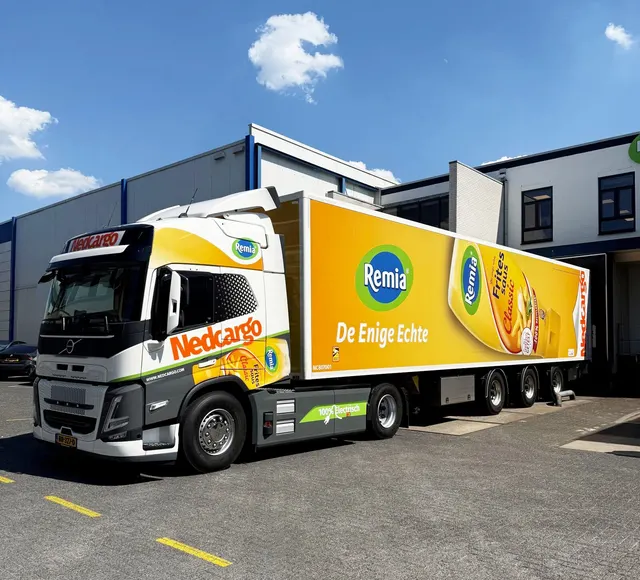
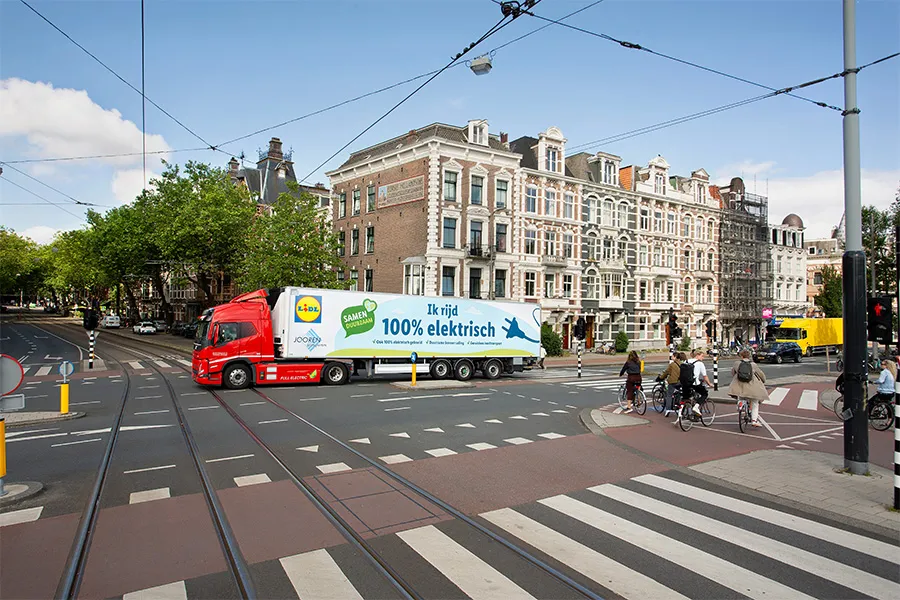
Volvo Trucks supplied the vehicles for a recent photoshoot in Amsterdam, in which Lidl highlighted the visibility of electric transport in an urban environment. The partnership goes beyond supplying vehicles: Lidl also actively shares knowledge with manufacturers such as Volvo to further optimise the use of electric trucks.
“As a European frontrunner, we want to know what’s available, what works in practice, and how we can support our hauliers,” says Metten.
Question about this story? Ask your question
Keep following this
Get an email when a new story is published. No account needed.
- SubjectTransport