












System for connecting cruise ships to shore power wins gold vector award
Text Marjolein de Wit-Blok Beeld WhiteCube
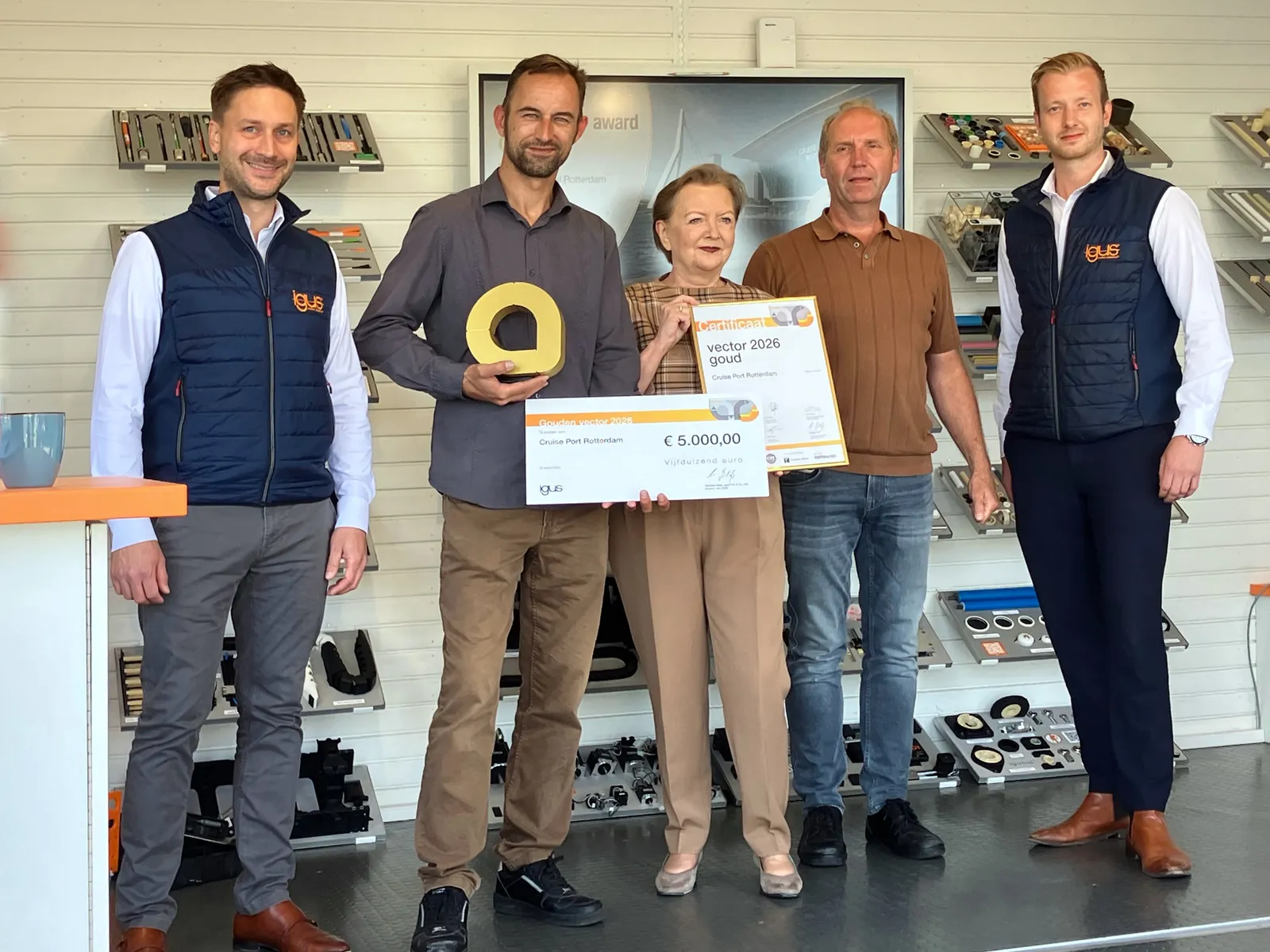
On 27 May, Cruise Port Shore Power B.V. (CPSP) received the gold igus vector award for an integrated mobile shore power solution. Put simply, the solution enables ships docking at Wilhelminakade in Rotterdam to be connected to the electricity grid quickly, flexibly and efficiently. When the ships leave, the connection can be removed just as quickly, restoring the quayside to a publicly accessible area. The innovative motion technology addresses a specific societal and industrial challenge.
Every two years, igus presents its vector awards for the most interesting, exciting, unusual and innovative applications that successfully use plastic plain bearings and cable carrier systems. The awards are presented by a jury of experts in four categories: gold, silver, bronze and green.
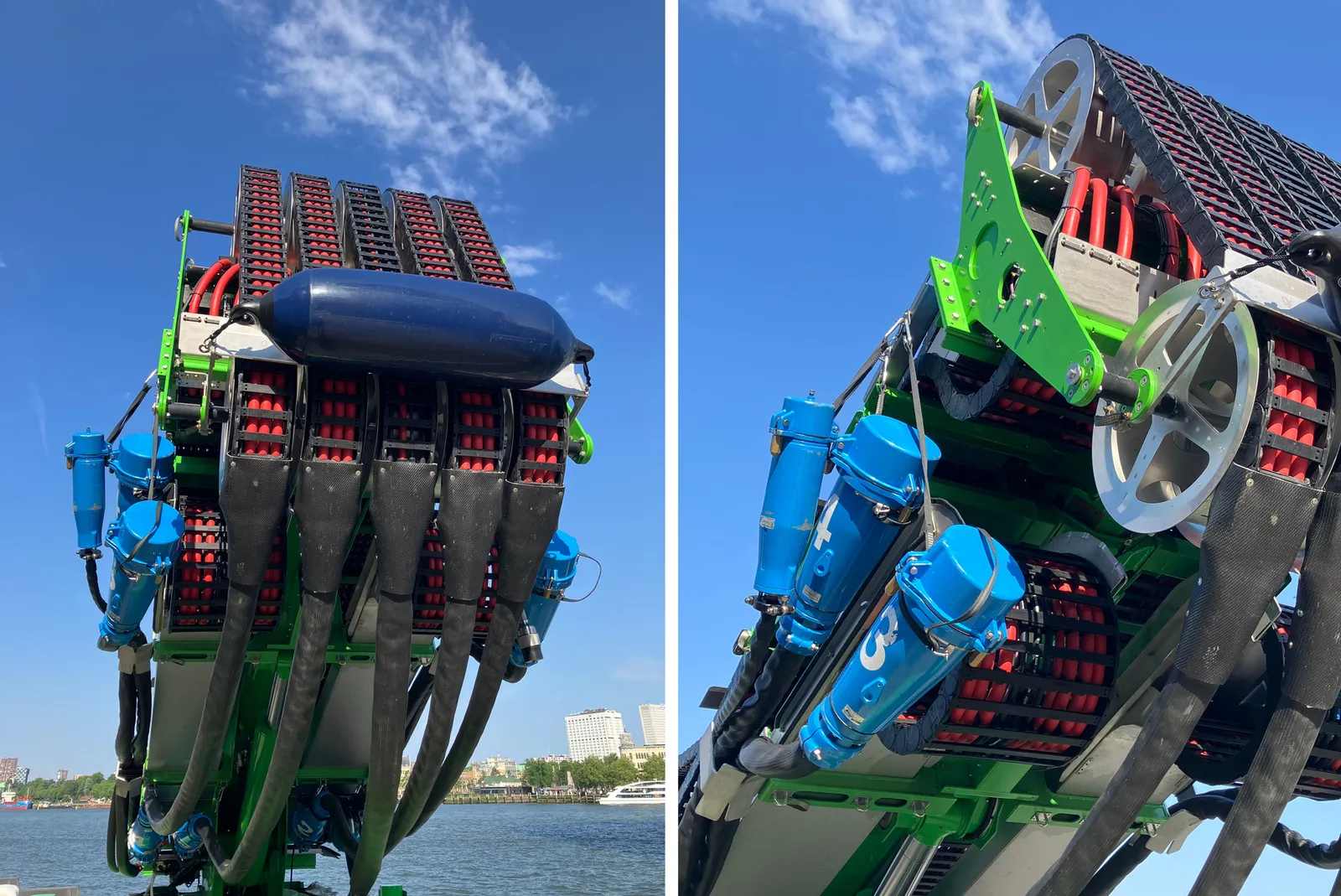
Winner: Cruise Port Shore Power B.V.
This year, the gold vector award went to Cruise Port Shore Power B.V. for what is known as an ‘integrated mobile shore power solution’. Shore power is electricity supplied to ships from shore while they are docked in a port. This type of power will be mandatory for all ships weighing more than 5,000 tonnes from 2030, but the necessary reliable connections are already available in various ports. It is a sustainable and environmentally friendly alternative to the conventional polluting diesel generators previously used on ships and quaysides to power onboard systems.
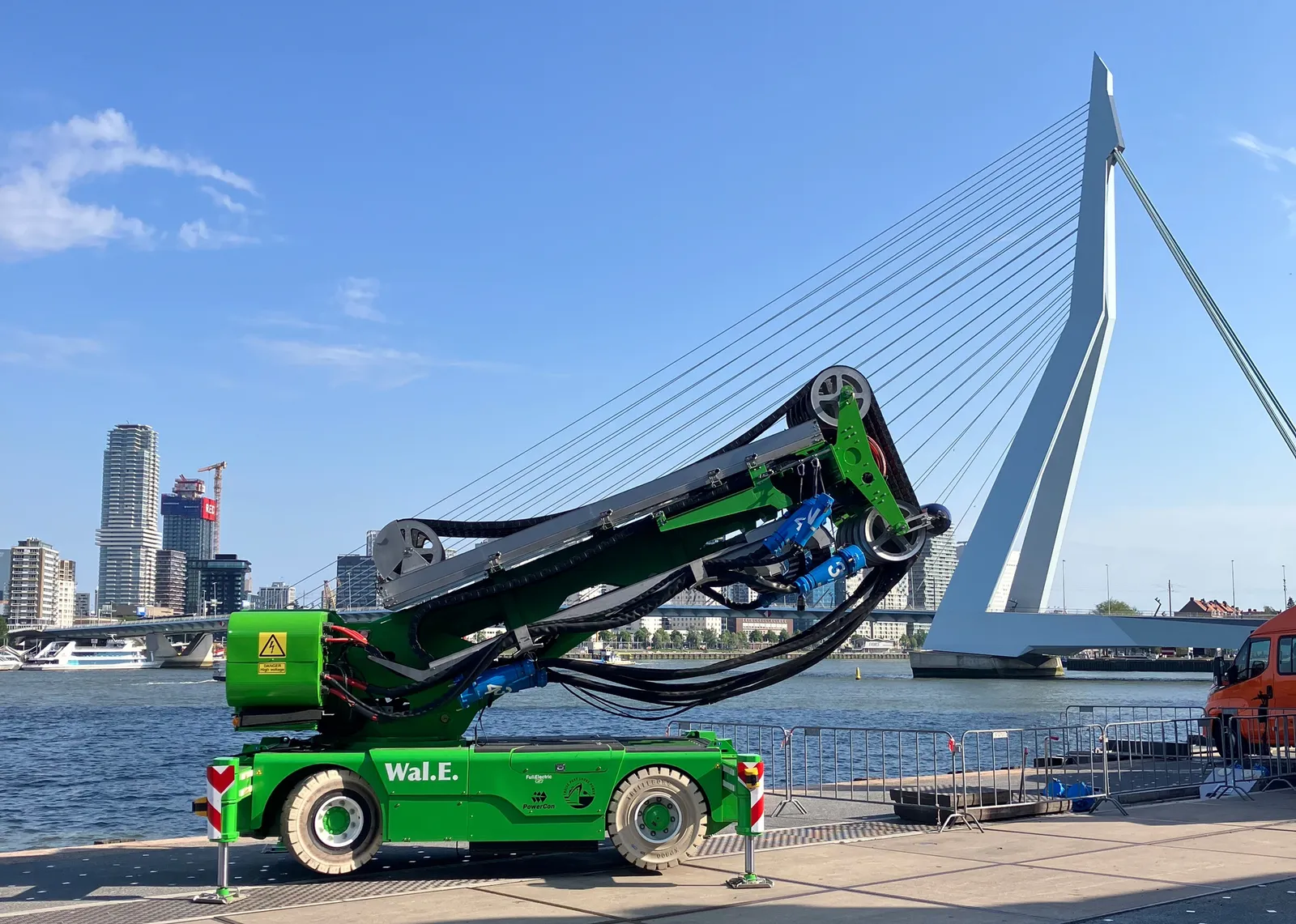
Integrated mobile shore power solution
Providing shore power at Wilhelminakade in Rotterdam, where CPSP is based, is not straightforward. This is because the quayside is, in principle, publicly accessible. Equipment used to supply cruise ships with shore power while they are docked must therefore not obstruct access. CPSP set out to find a solution, which was ultimately developed by igus in collaboration with Powercon. The solution consists of a 230-metre-long channel running parallel to the waterfront. An electrically powered trolley runs in the channel, fitted with what is essentially a large socket: the igus Mobile Shore Power Outlet, or iMSPO for short. The iMSPO supplies shore power generated almost entirely by wind and solar energy. As it can travel 230 metres along the quayside, the connection can be positioned precisely opposite the point where the ship’s electrical connection is located.
Once positioned, the Wal.E. is driven over the channel and one end of a heavy-duty cable is brought to the ship, while the other is connected to the connector interface. When the ship departs, the cable is disconnected at both ends, the Wal.E. is moved away and the system, including the connector interface, is lowered back into the channel. The channel is then covered with heavy-duty plates, restoring public access to the quayside.
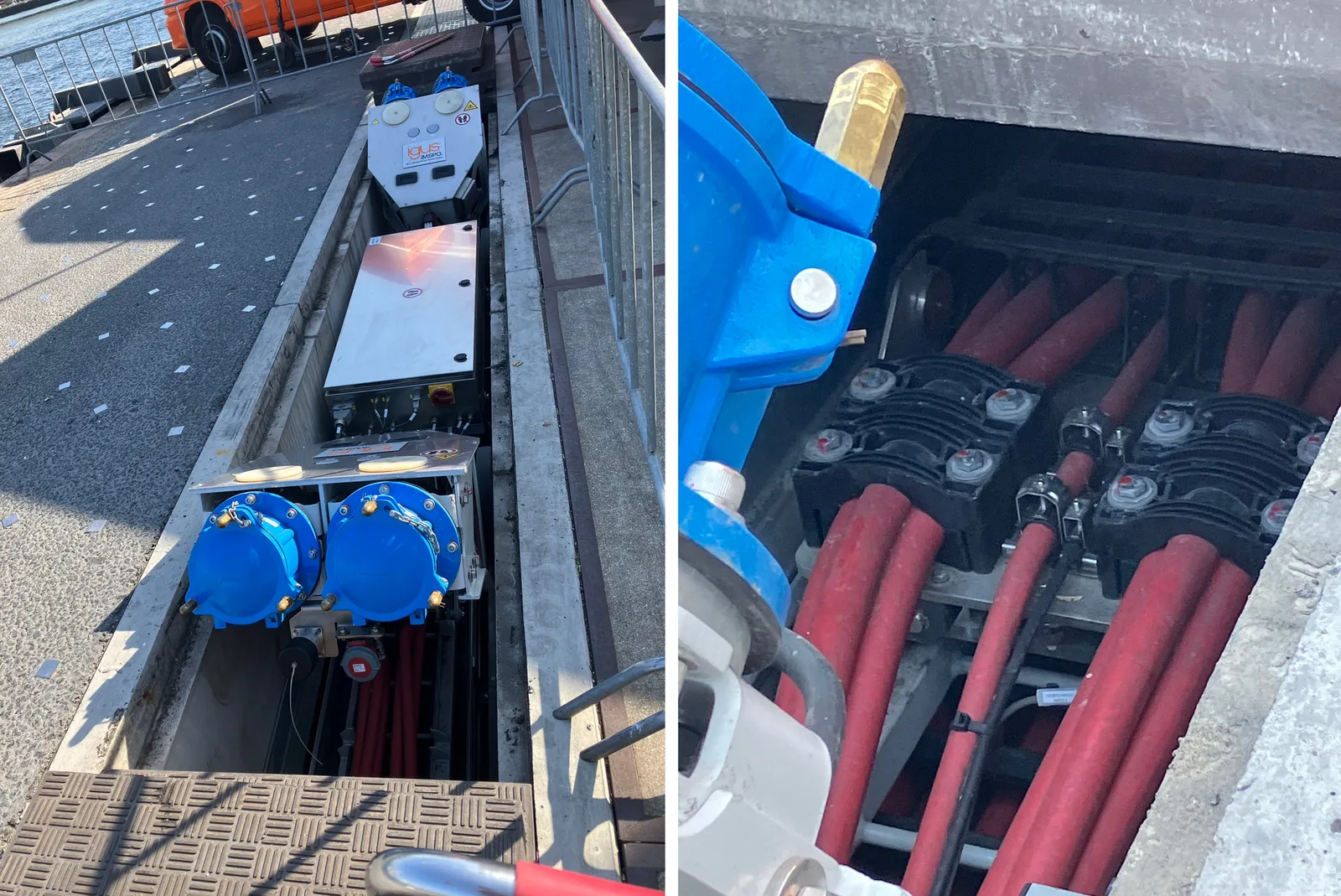
Cable carriers
igus expertise and products can be found in various parts of the installation. The roller cable carrier used in the channel, for example, is also used in heavy industrial environments such as cranes. The roller guide helps move the heavy cable bundle smoothly and reliably over long distances. In addition to power cables, the installation also includes fibre-optic and control cables for communication, monitoring and safety checks.
The jury praised the project for its sustainability, technical innovation and practical applicability.
A business enquiry for Igus? Get in touch
Companies in this story

Keep following this
Get an email when a new story is published. No account needed.
- ThemeLower-emission transport
- SubjectGeneral
- CompanyIgus







