












Choosing certainty
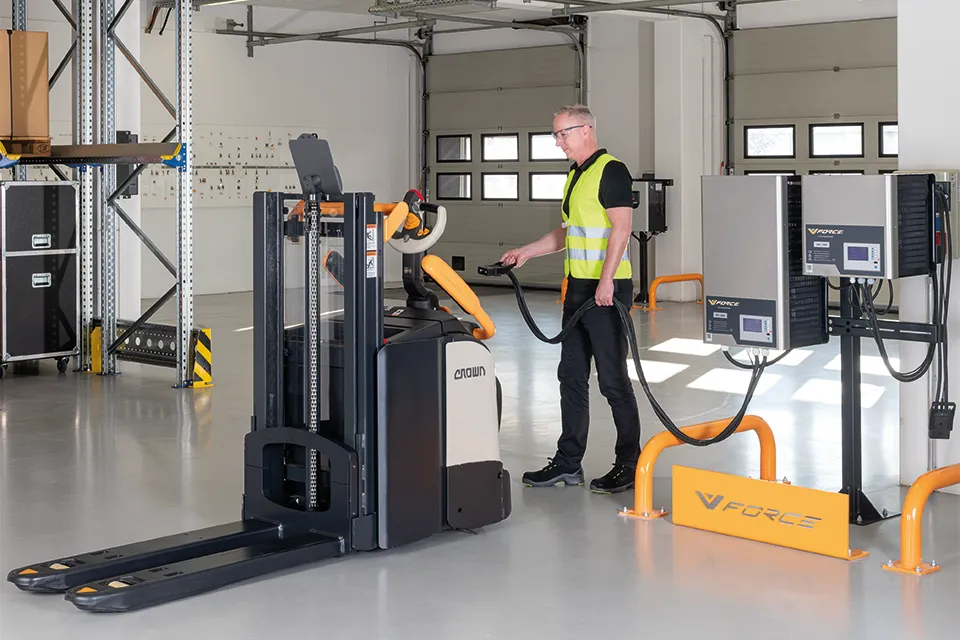
Warehouse managers who choose a reliable materials handling partner can also benefit from lithium-ion battery technology. Find out how.
By D.Eng Danilo Schmidt, Team Lead Product Management, Crown Gabelstapler
In the demanding working environments of modern warehouses, fleet managers have many different factors to weigh up when planning or upgrading their forklift fleet. Choosing the right battery type can be decisive. The right partner, with proven expertise in forklift technology, can help decision-makers understand these complex issues and make informed choices.
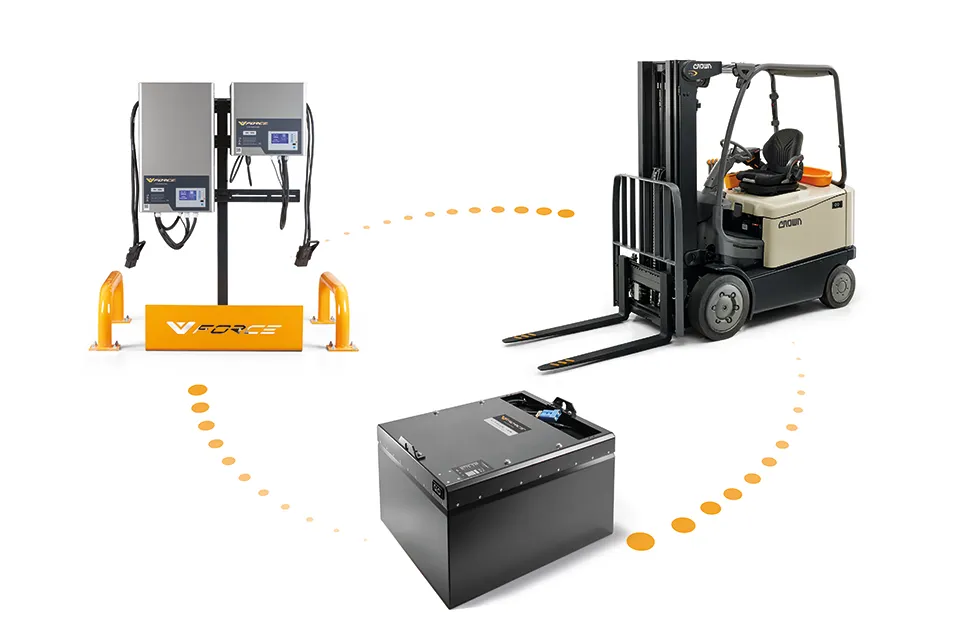
Lead-acid or lithium-ion: an important decision
Lead-acid batteries require a lower initial investment and may be a better option for certain applications, for example where charging infrastructure is already in place or the available power supply is limited. However, depending on the application, lithium-ion systems can offer significant benefits. With no need to maintain or replace batteries regularly, or top them up with water, you benefit from lower operating and maintenance costs and greater truck availability. As lithium-ion batteries produce no emissions while charging, dedicated battery charging rooms are unnecessary.
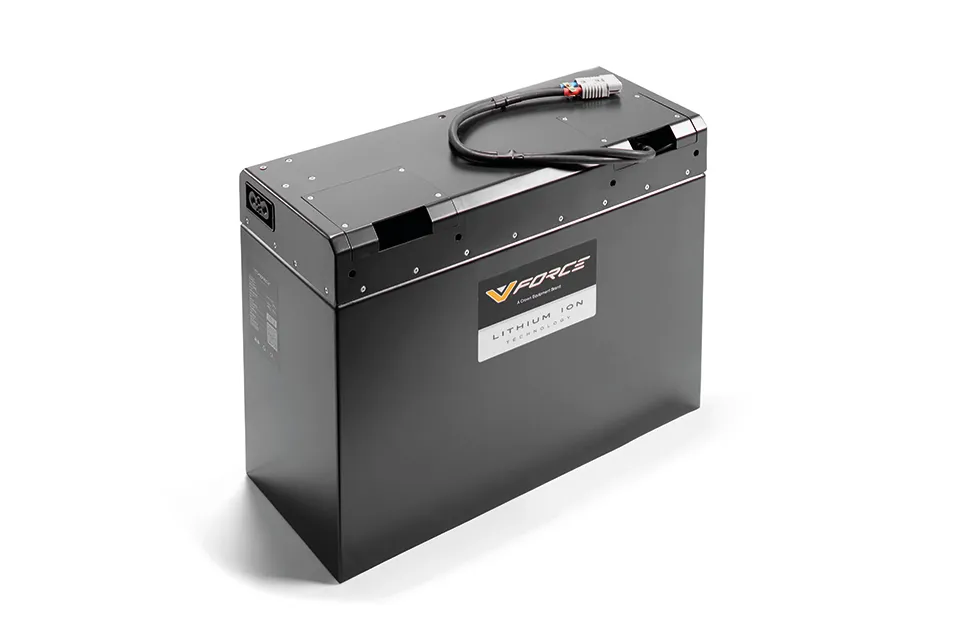
Lithium-ion battery systems also offer significantly higher energy efficiency and a longer service life. Because they charge more quickly than lead-acid batteries, lower-capacity batteries may be sufficient for the same application. Crown’s V-Force technology allows batteries to be fully charged in a short time.

The right materials handling partner can help you find the right solution
Customers looking to implement lithium-ion battery technology should first gain a clear understanding of their application, including factors such as usage, shift patterns, opportunity charging and seasonal variations. The shorter charging time of lithium-ion batteries, for example, results in higher electricity demand, also known as peak load. It is therefore essential that the energy supplier can meet the total energy demand, and that the electrical infrastructure can support the simultaneous use of all charging points.
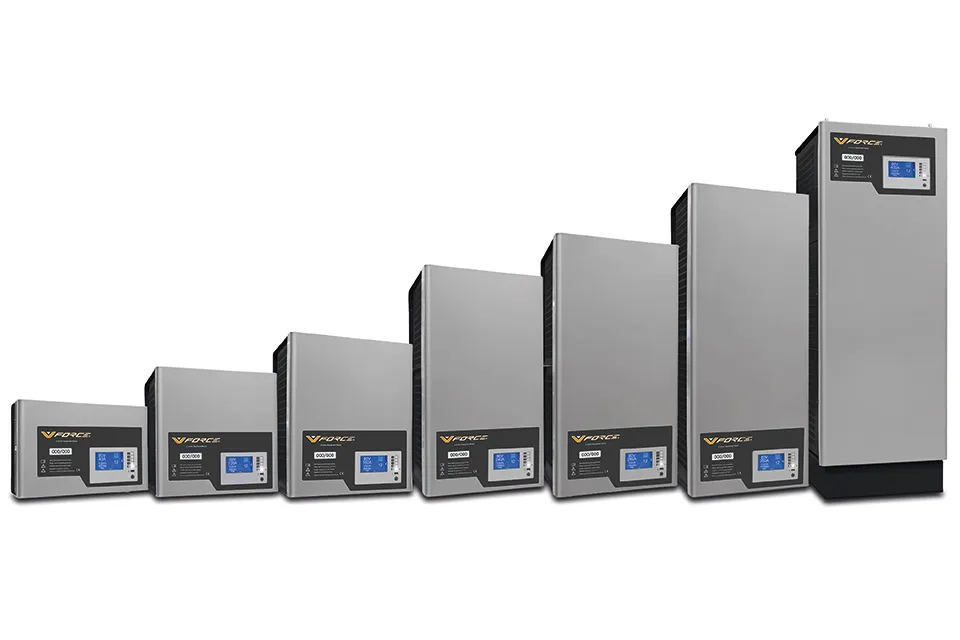
From the early planning stages, Crown’s energy experts can support customers on site to help them better understand their logistics processes and applications. Working with the energy supplier, Crown can develop bespoke solutions for the most cost-effective combination of batteries and chargers. If necessary, energy analyses can also be carried out, with data loggers fitted to existing forklifts to determine the exact energy requirements and the charging time needed for optimal charging. In addition, a reliable materials handling partner can support the lithium-ion power supply through its own service and support network, ensuring that trucks, chargers and batteries are in excellent condition and work efficiently together at every location.
Choosing the right partner is essential to achieving significant benefits in terms of costs, productivity and warehouse efficiency.
Gain a clear understanding of your specific application and energy infrastructure. Ask yourself the following questions:
- How many shifts are my trucks currently used for, and how many hours a day are they in operation?
- Which breaks during a shift are suitable for opportunity charging?
- How much time is available for charging outside scheduled breaks?
- How well documented are the characteristics of my application, such as load weight, lift height and handling speed?
- Are there seasonal peaks or fluctuations in my operations during the year?
- Can the local energy supplier meet the total energy demand of all chargers?
- Does each potential charging point have sufficient electrical infrastructure?
A business question for CROWN Intern Transport? Get in touch
Companies in this story
Keep following this
Get an email when a new story is published. No account needed.
- ThemeMaterials handling in motion
- SubjectGeneral
- CompanyCROWN Intern Transport







