Why are we still pushing pallets by hand?
Text Stefan Staes Image Immer-goed
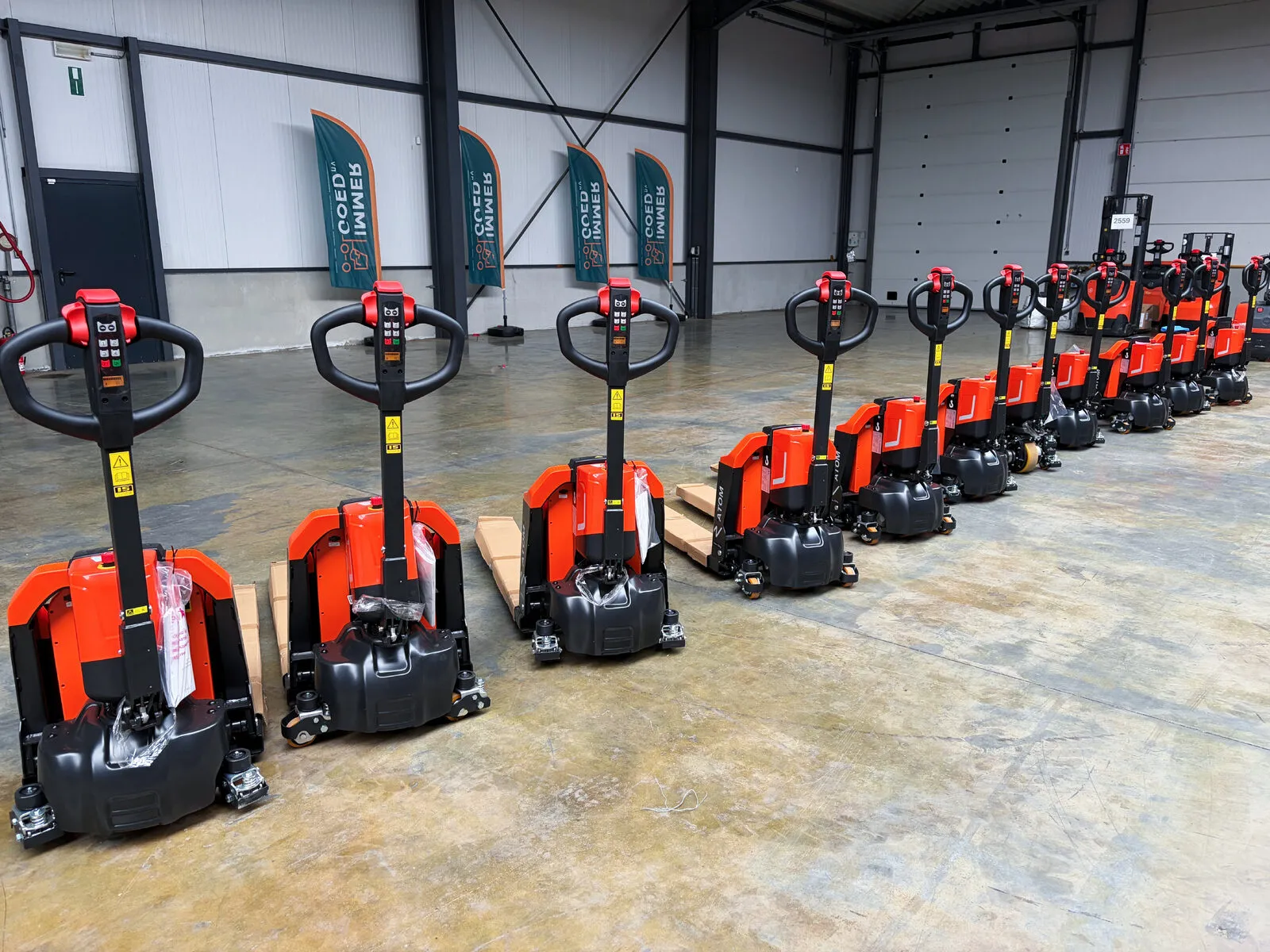
A warehouse may be equipped with WMS software, automated storage and even AGVs. Yet just a few metres away, an employee is using muscle power to move a pallet weighing hundreds of kilos. The contrast is striking.
A hand pallet truck is a simple and effective tool. It is inexpensive, reliable, ready to use straight away and hard to beat for occasional moves. But when employees move dozens of pallets every day, another question arises: what is the true cost of manual pallet transport?
While companies carefully assess major investments, thousands of small internal transport movements often go unnoticed. Productivity losses rarely stem from one major inefficiency. Much more often, they come from small tasks that are repeated over and over.
Take a company that moves sixty pallets a day. Suppose electric assistance saves an average of just fifteen seconds per move. That may not seem worthwhile. But sixty times fifteen seconds adds up to fifteen minutes a day. Over 220 working days, that amounts to around 55 labour hours a year. At a total labour cost of 35 euros per hour, that theoretically represents more than 1,900 euros in working time.
That figure does not equate to a guaranteed saving: the actual benefit depends on distance, weight and application. But the calculation shows how a few seconds become economically significant when a task is repeated constantly.
Time and muscle power
Productivity is only part of the story, too. The employee has to get a hand pallet truck moving, steer it and bring it to a stop. With heavy loads and dozens of moves a day, this creates repeated physical strain.
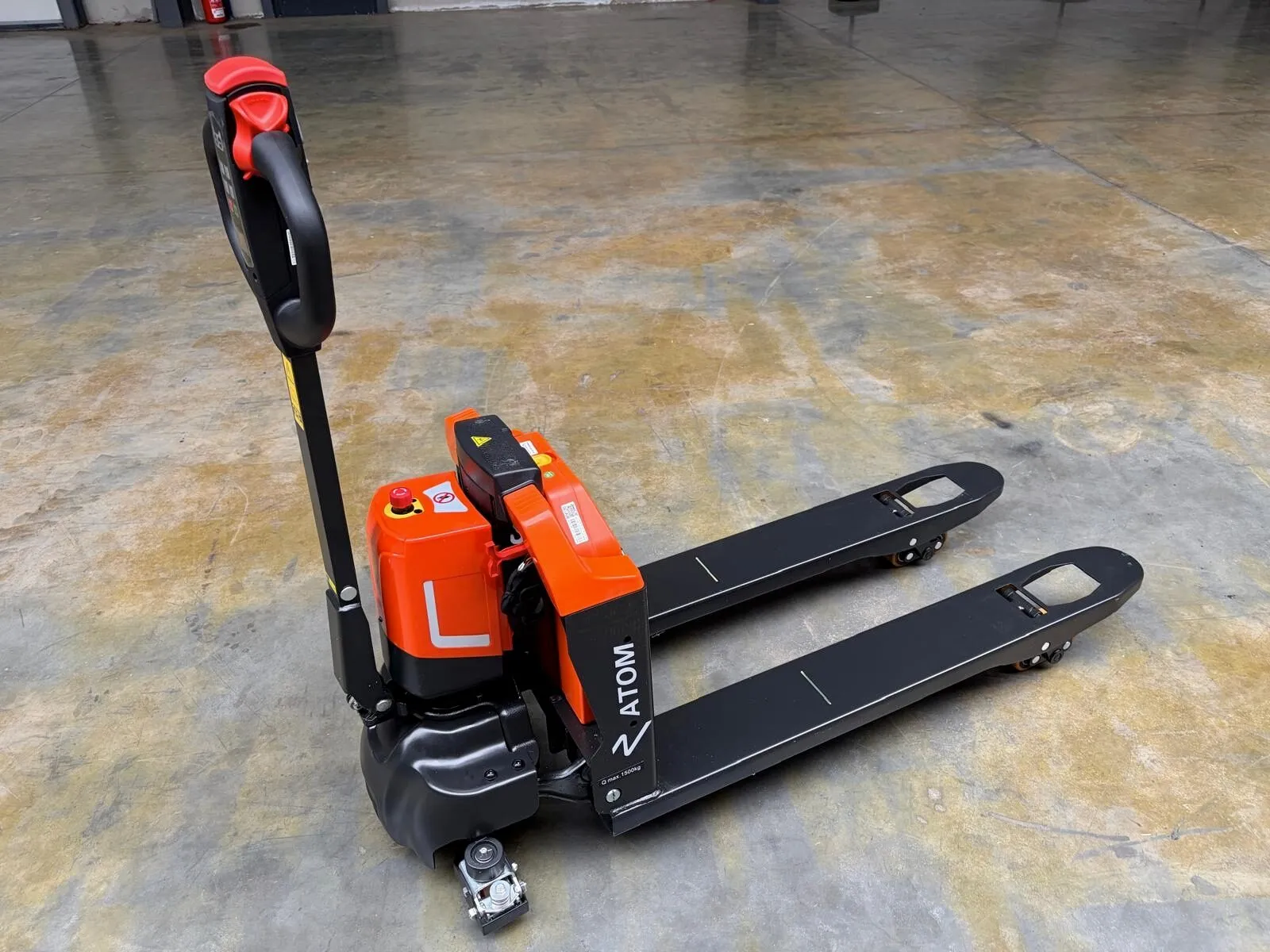
An electric pallet truck takes over the driving force and maintains a steady pace. A modern, compact lithium-ion pallet truck such as the Noblelift ATOM 2 PTE15Q2B, for example, travels at up to 4.4 km/h with a load and 4.9 km/h without one. With a heavy manual pallet truck, fatigue can slow the pace as the day goes on, while electric drive makes a constant speed possible. The question then becomes less about whether an employee can move a pallet by hand. What is more interesting is whether it makes sense to keep doing so dozens of times a day.
Electric power in a compact package
There used to be a considerable difference in size, weight and price between a basic hand pallet truck and a conventional electric pallet truck. The arrival of compact lithium-ion pallet trucks has narrowed that gap.
With a capacity of 1.5 tonnes, this type of truck combines electric drive with dimensions and a turning circle that are almost identical to those of a traditional hand pallet truck. This means electric pallet transport is also an option in places where manual transport was long the obvious choice. That applies both in warehouses and for deliveries to locations without a permanent unloading facility.
Swap batteries instead of waiting
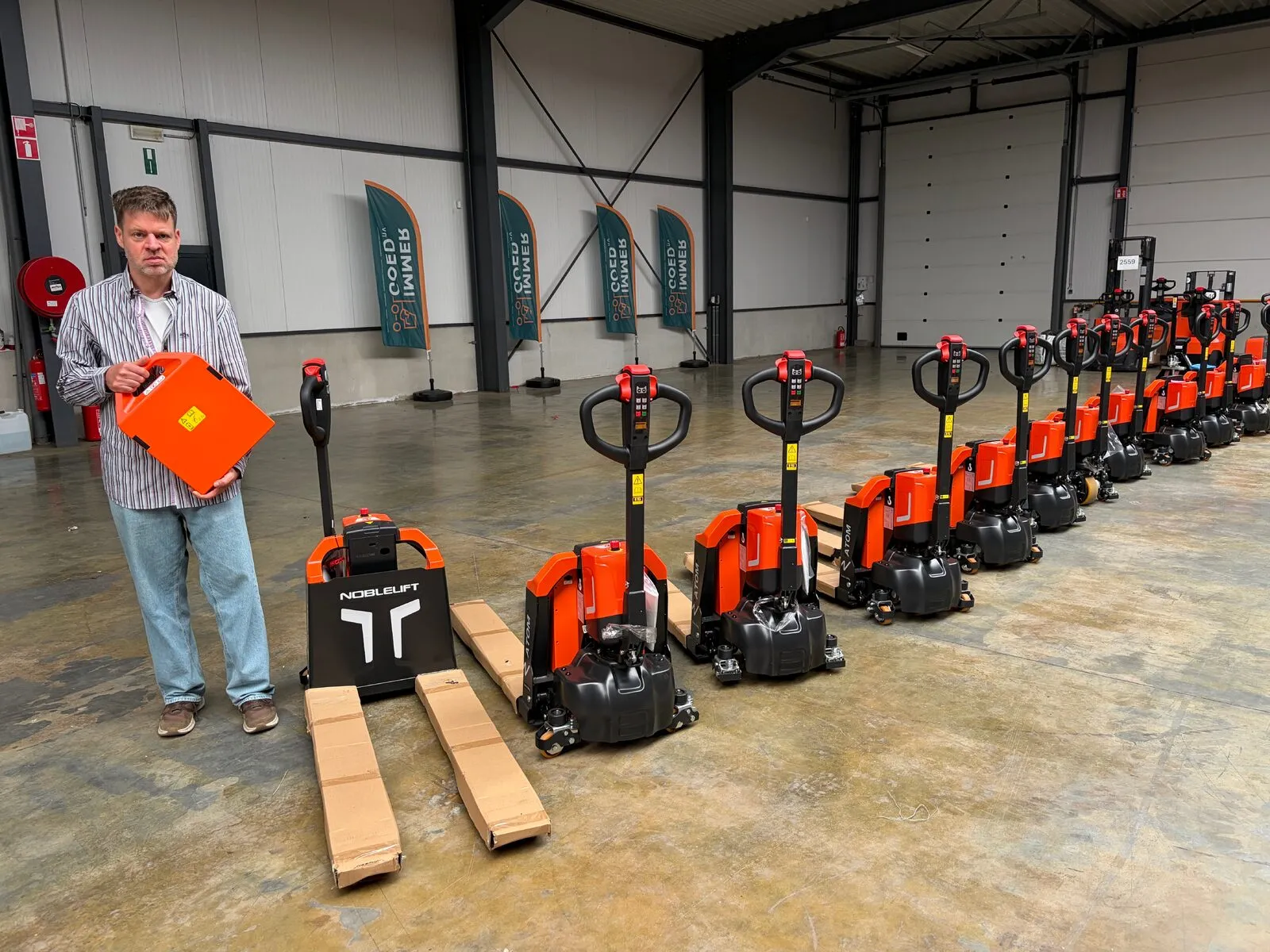
Battery technology has also lowered the practical barrier. Lithium-ion batteries can be charged during breaks and are often easy to remove on compact machines. With a spare battery, the truck can keep working while the other battery charges. This keeps it available even during more intensive use.
Additional features such as lateral support wheels improve stability. A creep-speed function, or tiller-up drive, allows the truck to be driven with the tiller fully upright, making it easier to manoeuvre in tight lorries or narrow aisles. These are precisely the kinds of technical details that determine how practical a machine is for everyday use.
Measure first, invest afterwards
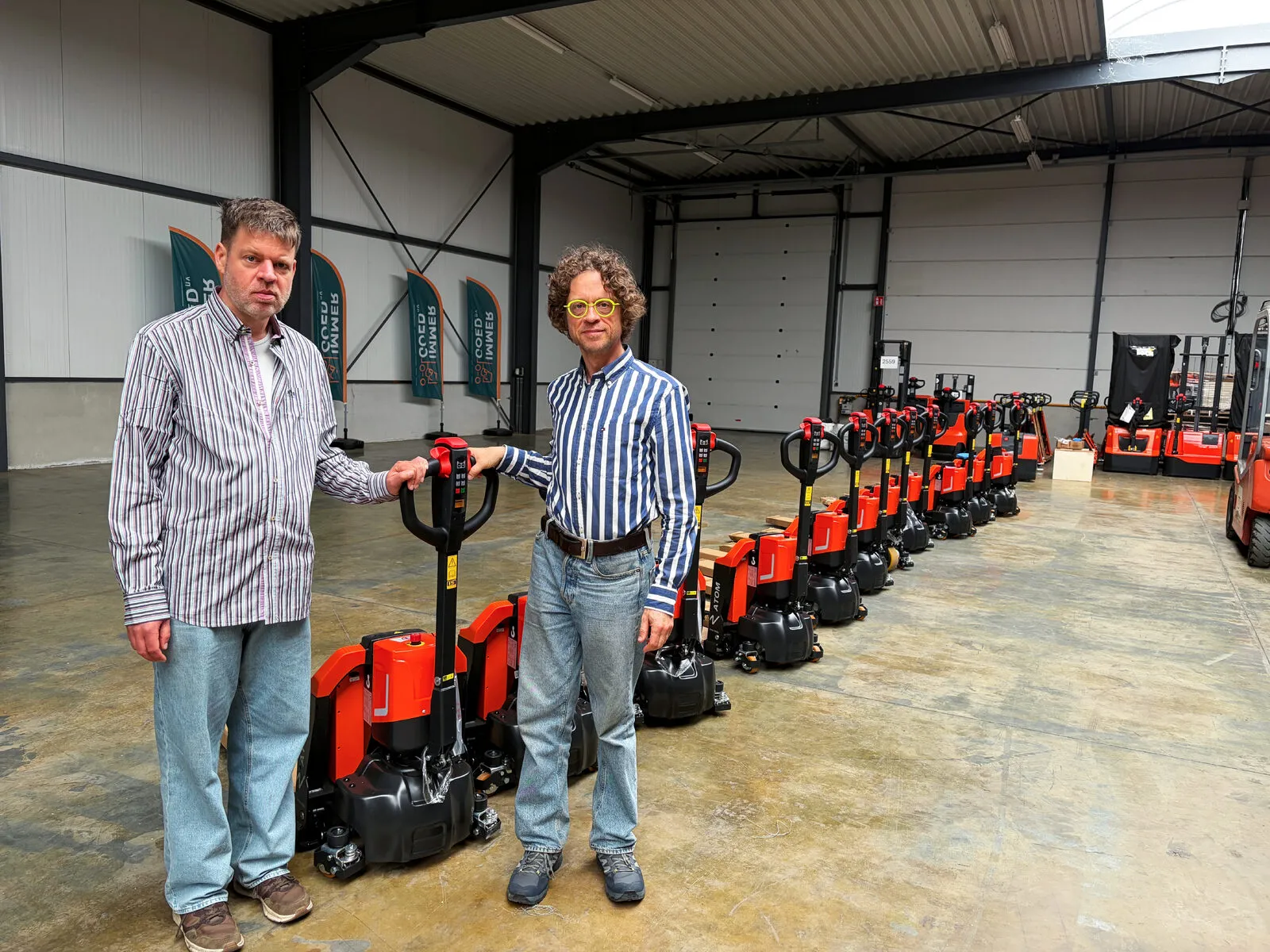
Does that mean the hand pallet truck has had its day? For anyone moving a light pallet five metres twice a day, it remains a sensible choice. The key is to identify where electric assistance adds value in day-to-day operations.
How many pallets are moved each day? How heavy are they? Over what distance? How often is the same move repeated? A few simple figures are enough to build a useful picture of the potential time savings and physical strain.
There is rarely any need to replace existing equipment immediately. But it is worth checking regularly whether the reasons that once led to manual transport still apply. Technology has since become more compact and accessible. As a result, a relatively modest investment can make a noticeable difference to a task that is repeated dozens of times every working day. Sometimes productivity gains start with a simple question: why are we still pushing that pallet by hand?
Question about this story? Ask your question
Keep following this
Get an email when a new story is published. No account needed.
- SubjectTransport