From dashboard to digital colleague on the warehouse floor
Text Kris Vandekerckhove Beeld Manhattan / Kris Vandekerckhove
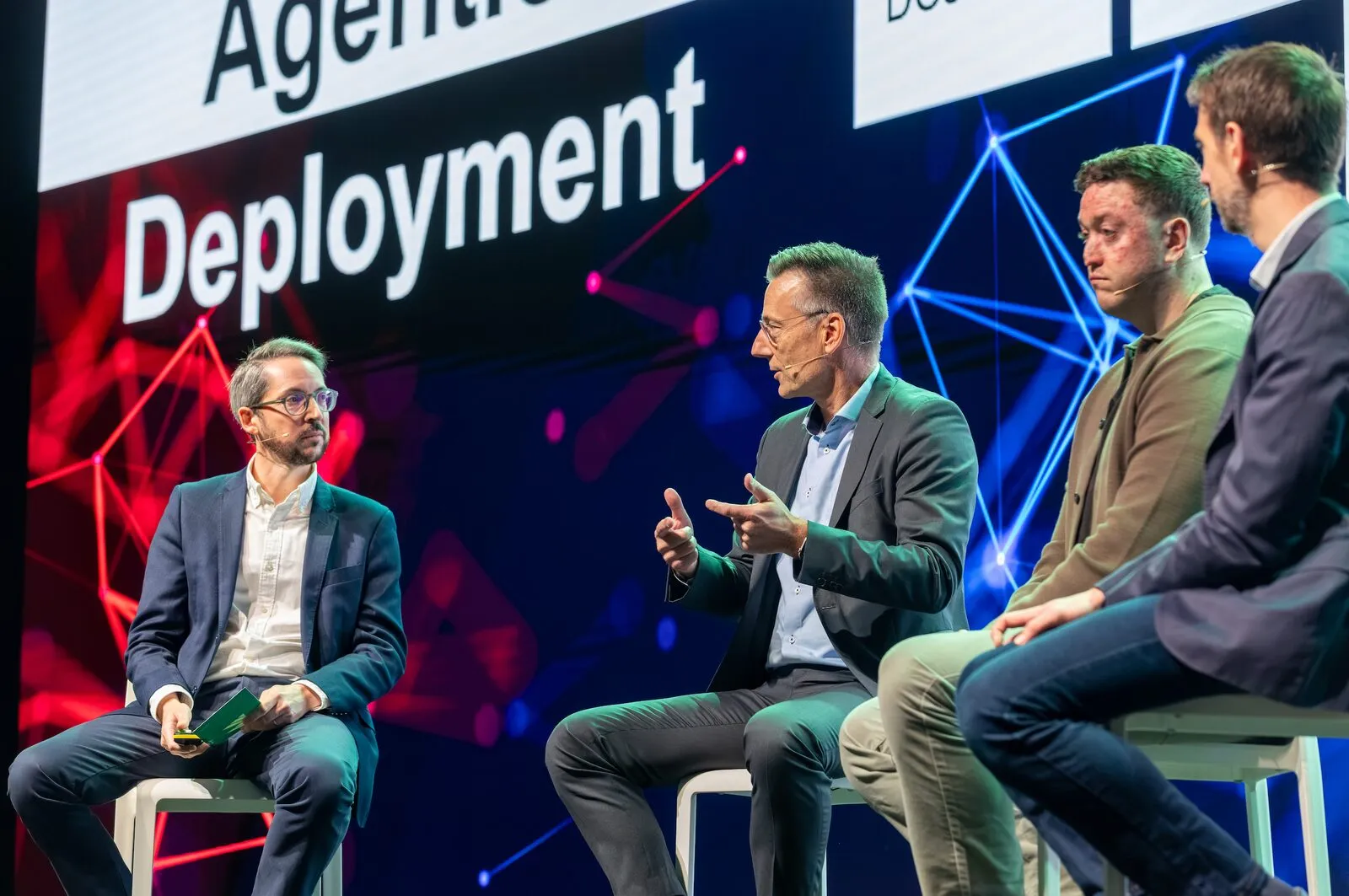
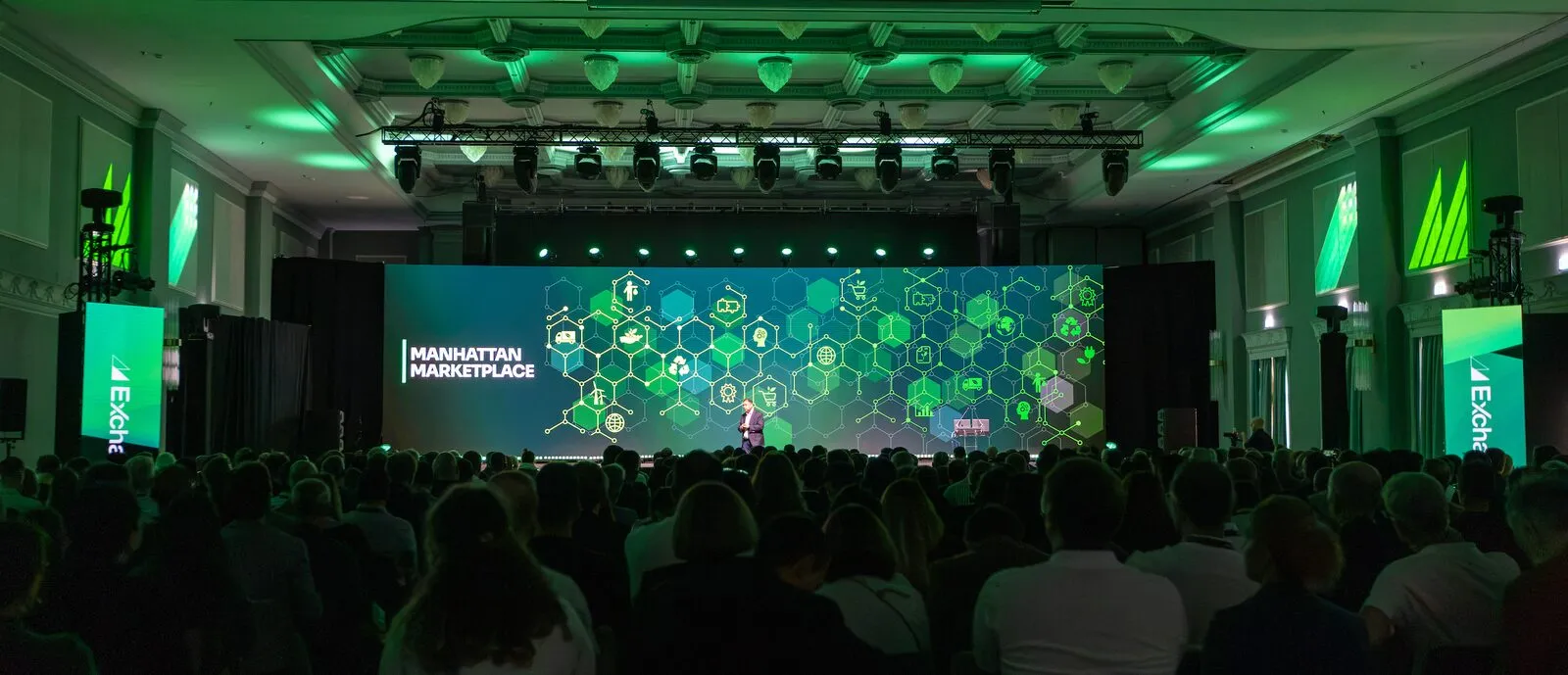
AI was unavoidable at Manhattan Exchange 2026 in Milan. But behind all the talk of agentic AI, natural language and autonomous decision-making was a more interesting message. Supply chain software should not bombard people with even more information, but instead take complexity off their hands. That means implementing faster, breaking down silos between systems and increasingly letting software act on its own. Case studies from L’Oréal, Nespresso and Bauhaus, among others, show that this shift is already under way. At the same time, they make clear that technology is only part of the story.
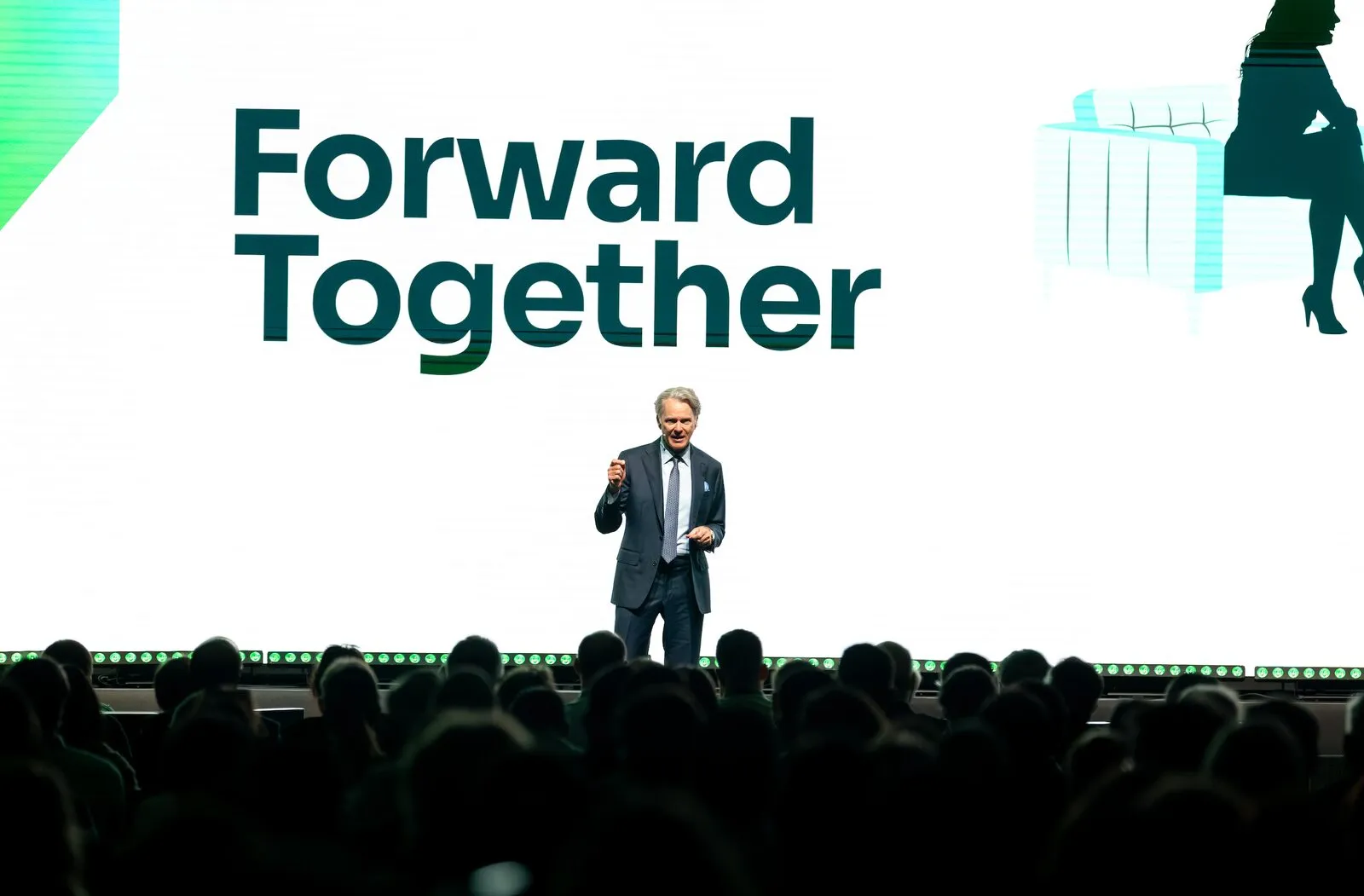
A cockpit may have been the best metaphor for Manhattan Exchange. In his opening keynote, CEO Eric Clark pointed to the evolution of aviation. Not because flying has become simpler, quite the opposite. Airspace has become busier, regulations more complex and demands higher. But aircraft systems have taken on an increasing share of the complexity that once fell to the crew.
According to Manhattan, the same needs to happen in supply chain. Planners, warehouse staff and store teams are still too often presented with another dashboard, alert or application that they then have to deal with themselves. Clark summed it up succinctly: “Complexity in the market is an opportunity. Complexity in software is a burden.”

Faster time to value
The drive for simplicity is reflected first and foremost in speed. Manhattan says it has cut the standard implementation time for its warehouse solution by up to 50%. AI agents help, among other things, to set up configurations using natural language, configure extensions more quickly, and generate labels and reports.
For order and store management, the company says go-lives can be achieved in as little as 100 days. In transport, individual inbound or outbound functions can now be rolled out in 14 weeks, according to Manhattan, around 40% faster than a year ago. In some cases, migrating from older Manhattan systems to the new platform should also be possible within 100 days.
At the same time, Manhattan is working to make its technology more accessible to organisations beyond the very largest logistics players. ActiveWarehouse, ActiveTransportation, ActiveStore and ActiveOrder are now available in three editions: Essentials, Enterprise and Enterprise Premier. All run on the same platform. According to the company, organisations that grow do not need to implement again, but can activate additional functionality.
From insight to action
The second shift is more fundamental. AI should not only analyse or advise, but ultimately act as well.
Manhattan is explicitly opting for AI embedded in its existing platform. Agents can only use the APIs they have been authorised to access. For example, an agent can be given access to three specific APIs out of a much larger set, without direct access to the underlying database. External interaction via MCP also passes through this controlled agent layer. Manhattan is trying to address one of the biggest questions around autonomous AI: how do you prevent an agent from taking actions outside its remit?
Full autonomy is not (yet) the goal, however. Clark stressed that human experience remains essential. The best superuser can sometimes intuitively recognise which customer should take priority at that moment, which constraint can be negotiated or which rule was written for a different reality. “That’s not data, that’s instinct,” said Clark.
L’Oréal: problem first, agent second
The most interesting reality check came from L’Oréal. The company initially experimented broadly with AI agents, but soon discovered that exploring technology is not the same as creating operational value. The focus therefore shifted to specific warehouse problems: wave readiness, replenishment and inventory decisions. One agent can predict in advance where a wave is at risk of going wrong, while another analyses the cause of an existing problem and proposes a next step.
The figures from the pilot bring the story to life. At one site, a pre-wave agent delivered 14% higher picking productivity and an estimated time saving of 352 hours a year. A replenishment monitor, in turn, cut the time between waving and loading by around 8%, saving 440 hours a year. Results for cycle counting varied considerably: decision delays fell by an average of 13%, while the best-performing site recorded a reduction of up to 70%. Those differences are precisely what make the results interesting. The same technology did not deliver the same results everywhere.
“Global access is not giving you global adoption” was one of the lessons from the project. Simply providing access to an agent proved insufficient. Adoption only began to grow once L’Oréal clearly established who owned the process, which operational staff were expected to use it and which KPIs would be tracked. The conclusion was strikingly down-to-earth: do not start by asking how many agents you can install. Start with the problem you want to solve for employees. Define a baseline, then measure continuously and provide support close to the operation.
Customers want AI, but (sometimes) keep their foot on the brake
The same nuance came through in the remarks of Frank Soudan, who recently took responsibility for Manhattan in the Benelux, Germany and Scandinavia, among other markets. According to him, every new commercial opportunity Manhattan discusses in Germany today includes an AI component. So the demand is definitely coming from the market.
But asking for AI and letting the technology make decisions autonomously are two different things. “Where do we draw the line?” was how Soudan summed up the current debate. Agents can detect shortcomings and suggest improvements, but companies are still hesitant to relinquish human oversight entirely.
In the Benelux, there are also very tangible logistics challenges behind this. In the Netherlands, available space is becoming scarcer, forcing companies to get more out of their existing buildings. In Belgium, labour costs are particularly high on the agenda. Automation, robotics and AI therefore come together in the same equation: getting more done with fewer resources, while increasingly enabling people to focus on exceptions rather than repetitive decisions.
Not more stock, but smarter use of it
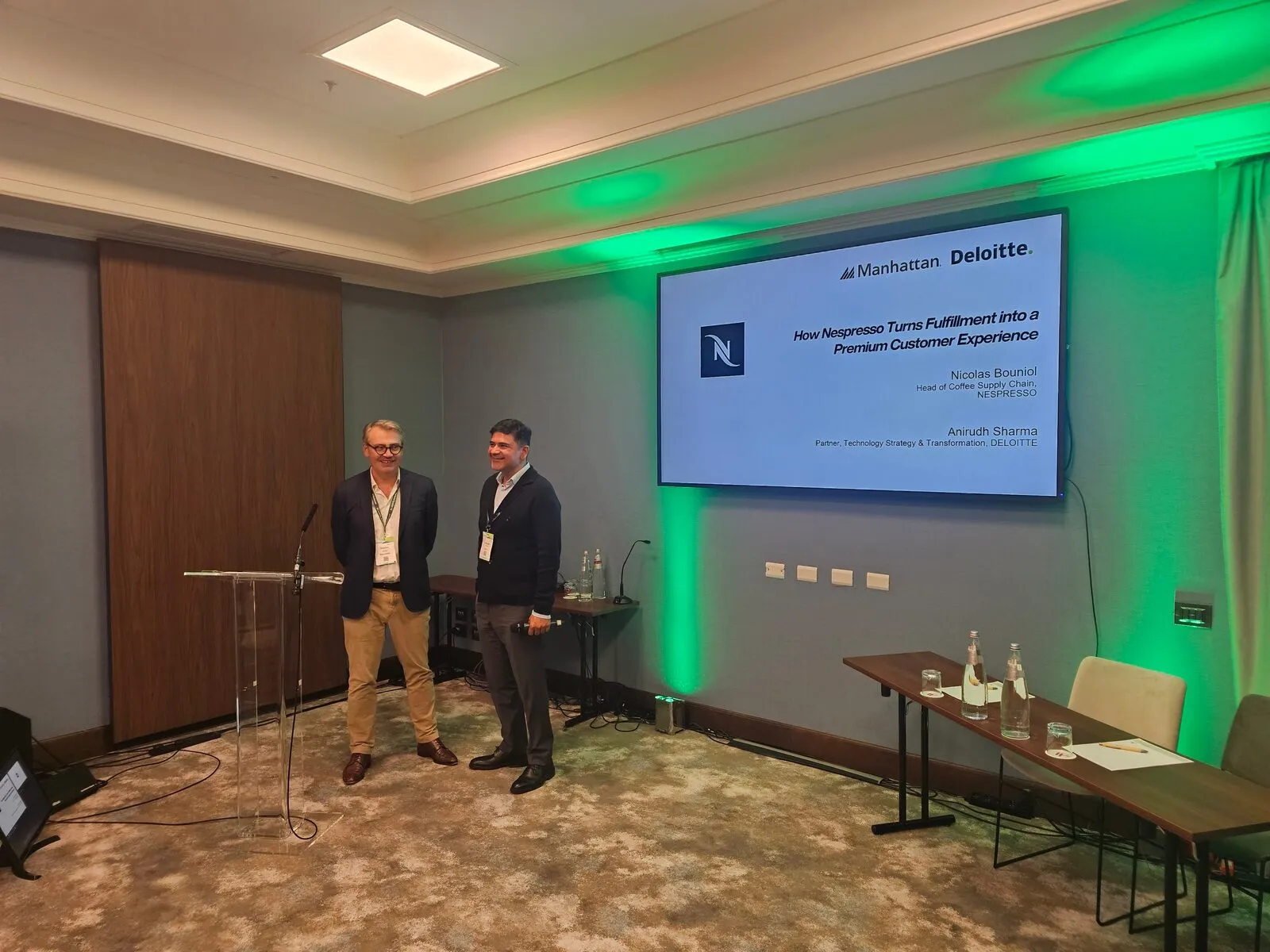
Nespresso showed how technology and customer experience are becoming increasingly difficult to separate. The coffee specialist has been using Manhattan for warehouse management for 20 years and is now building on this with a broader order management transformation that is ultimately set to cover 42 countries.
It is a complex environment. B2C, B2B, marketplace, replenishment and transfer orders all converge in a network of production sites, distribution centres, regional warehouses and boutiques. The ambition is to have a single, central view of orders and inventory. One statement stood out: fulfilling a customer promise 100% does not necessarily mean holding more stock. It is about making better use of the inventory available somewhere in the network.
A screw is not an iPhone
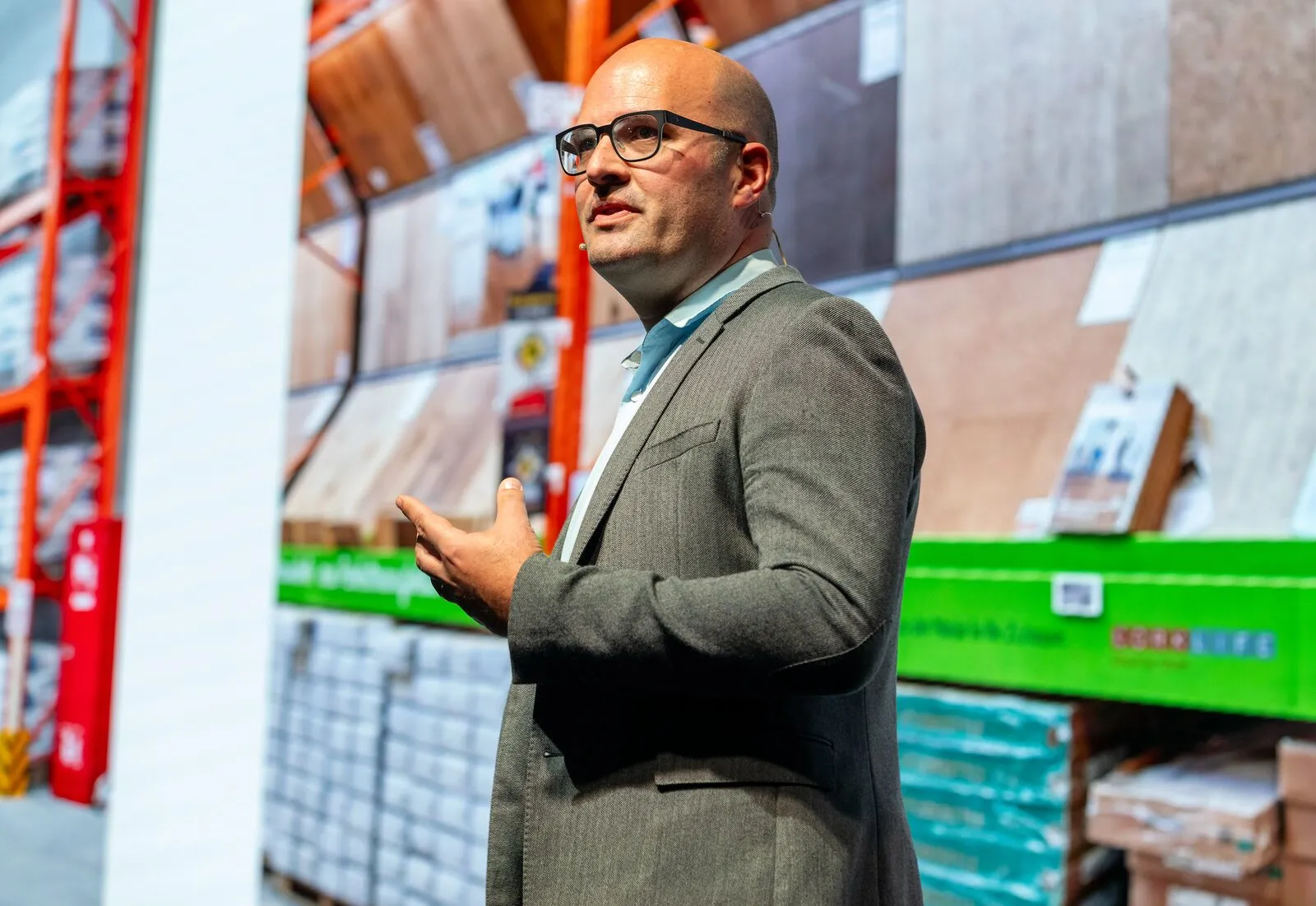
Bauhaus made the same principle especially tangible. For a retailer selling everything from bags of cement and long wooden beams to individual screws, there is no one-size-fits-all fulfilment strategy. The company uses a single inventory view across its digital touchpoints. According to Bauhaus, an API provides inventory data in around 70 milliseconds and is called up to 40 million times. Click & collect must make products available within 90 minutes. Whereas an online order used to take up to 15 minutes to reach a store, it now happens within seconds.
Software is increasingly determining delivery choices, too. If the nearest store only has part of an order, a slightly more distant branch with all the products may be a better option. After all, one slightly longer journey is often both cheaper and more customer-friendly than two separate deliveries.
The real test starts now
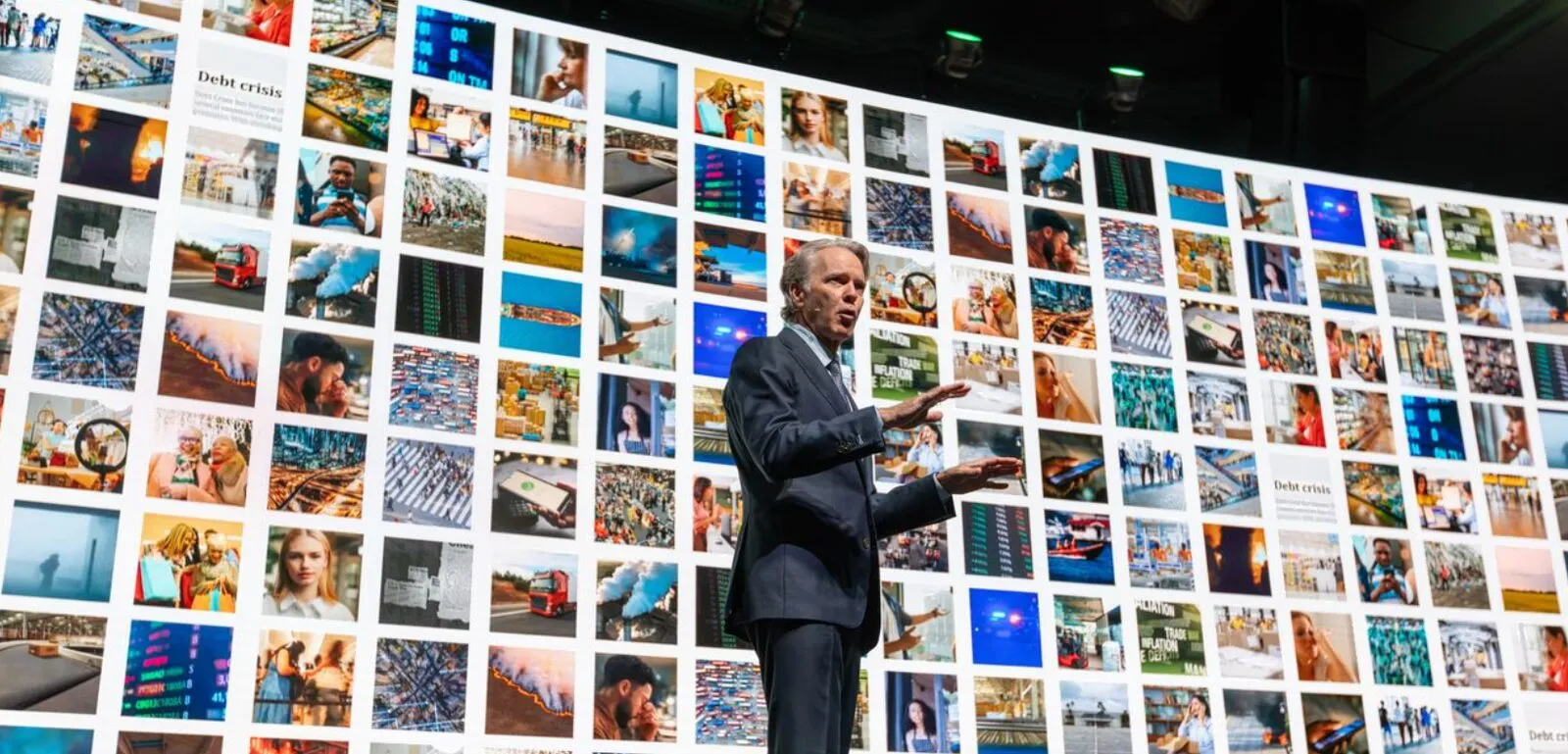
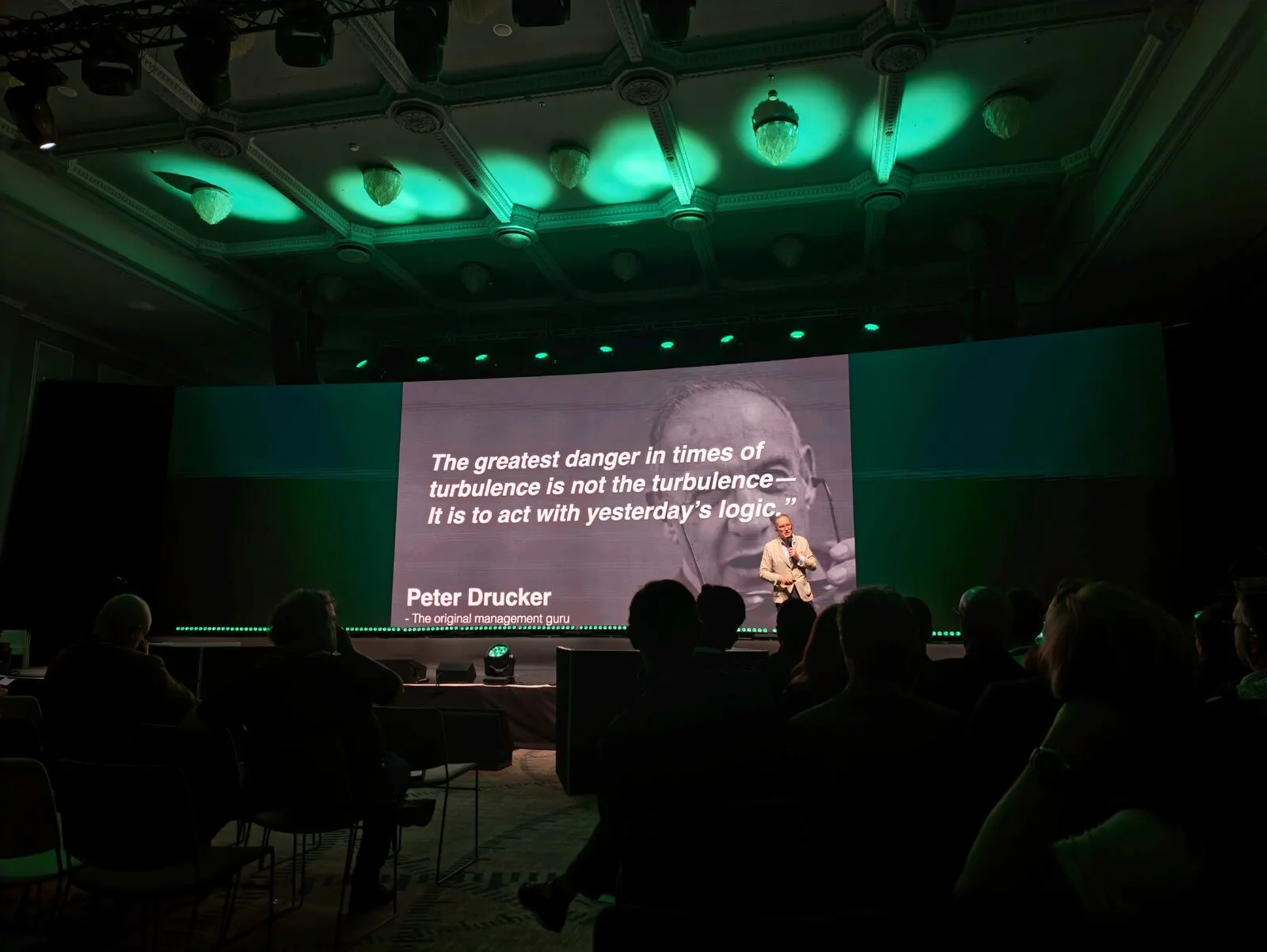
AI was everywhere in Milan. Keynote speaker Peter Hinssen joked that these days, walking through San Francisco, you barely see anything other than “AI, AI, AI”. He described the speed of technological change as a rollercoaster. But that is precisely why the most interesting stories at Exchange were not the spectacular visions of the future. They were the examples where companies could show what had genuinely improved and become more efficient.
That may well be the next phase of agentic AI in logistics. Not another agent, another model or another dashboard, but whether software can genuinely take on some of the operational complexity. Safely, measurably and, above all, without sidelining the knowledge of the people on the warehouse floor. From insight to action, then. But for the time being, people will still decide how much action they are willing to hand over…

Een zakelijke vraag aan Manhattan Associates Europe B.V.? Get in touch
Companies in this story

Keep following this
Get an email when a new story is published. No account needed.
- ThemeLogistics property that grows with you
- SubjectSoftware
- CompanyManhattan Associates Europe B.V.