Get more out of your production. Connect production and logistics!!
Your production machines are automated. But how efficient is your material flow?
Manufacturing and assembly companies are investing in efficient machines, robotics and automation. Yet components, semi-finished products and finished goods are still often moved manually between different process steps. Employees supply the various departments using forklifts, pallet trucks or trolleys. To prevent downtime, the various departments often hold enough stock for one or more days.
This is where the opportunities lie. Organising production, assembly and logistics as one integrated process can boost productivity, shorten lead times and make more efficient use of staff. It also reduces the space needed in production, because stock can be stored centrally.
Less searching, waiting and transport
Even the most efficient production machine will still come to a standstill if the right materials are not available at the right time. The same applies to an assembly worker who has to wait for components or fetch materials from the warehouse themselves.
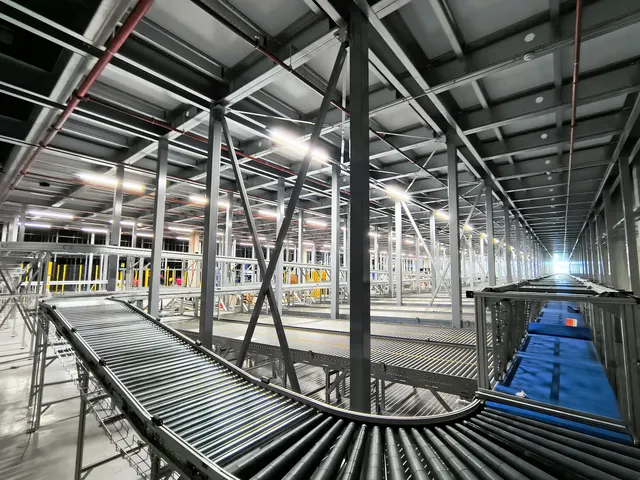
By linking storage and internal transport directly to production, materials can be delivered at the right time and in the right sequence. After processing, semi-finished products or finished goods can be buffered, moved to the next production step or returned to storage.
The result: less manual transport, shorter waiting times and more time for value-adding work. Scalable automation offers solutions for almost every situation, making these benefits achievable.
From work-in-progress stock to an intelligent buffer
In many production environments, stock is held between process steps to accommodate differences in speed. This work in progress takes up space, makes processes less transparent and limits the flexibility to adjust the schedule.
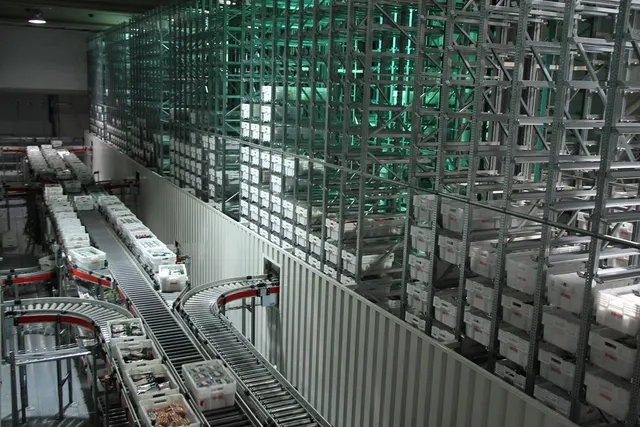
Automated storage can take over this function. Materials are stored temporarily, automatically sequenced and made available as soon as the next process step requires them. A warehouse is therefore no longer just a storage location, but a dynamic part of production.
Gebhardt offers a range of products to help manufacturing and assembly companies optimise their material flow. Together with StoreWare, our in-house developed WCS and WMS software, we design and deliver automation solutions from a single source. We would like to highlight two product groups in particular.
Versastore®: storage becomes part of the production process
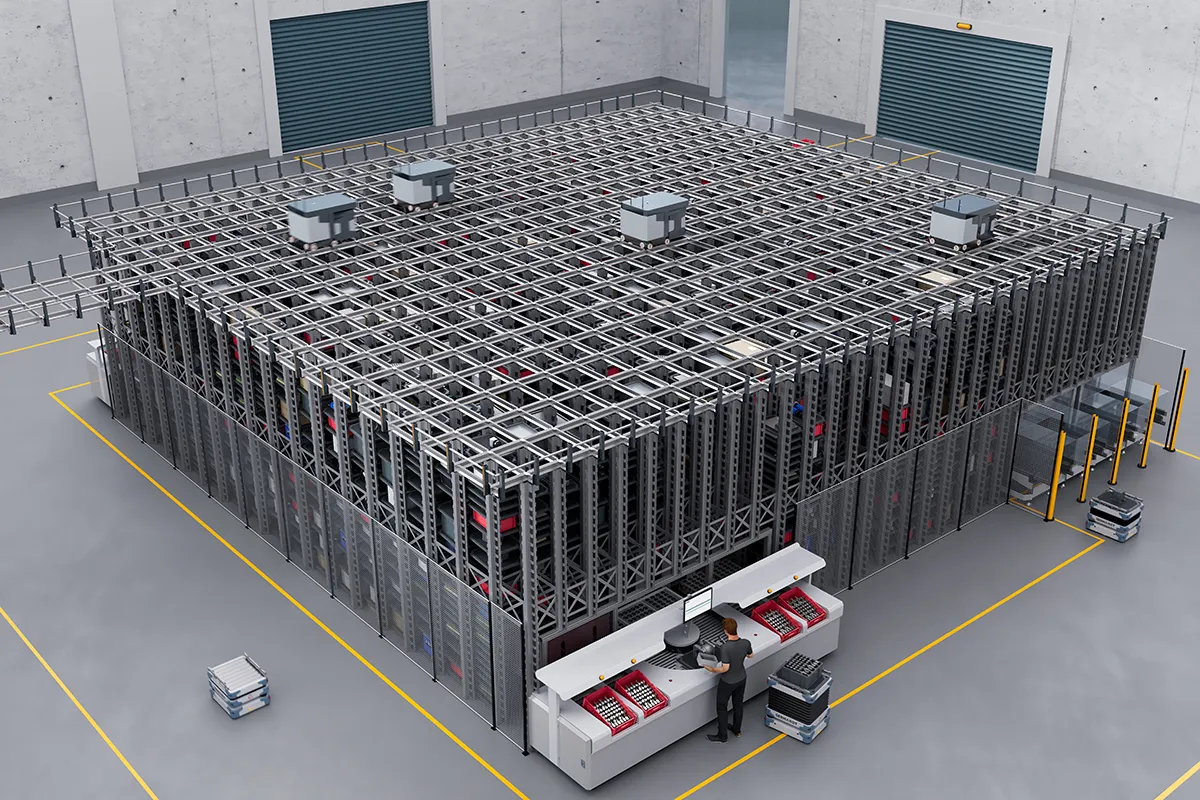
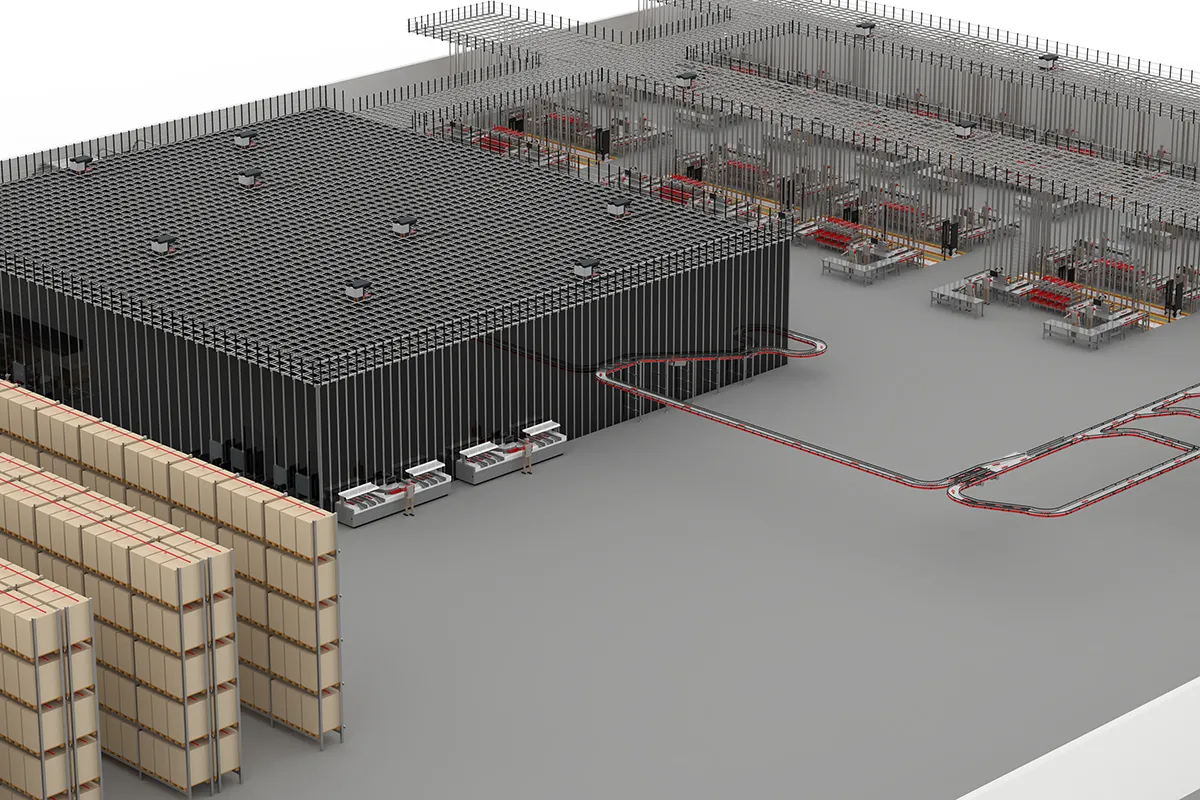
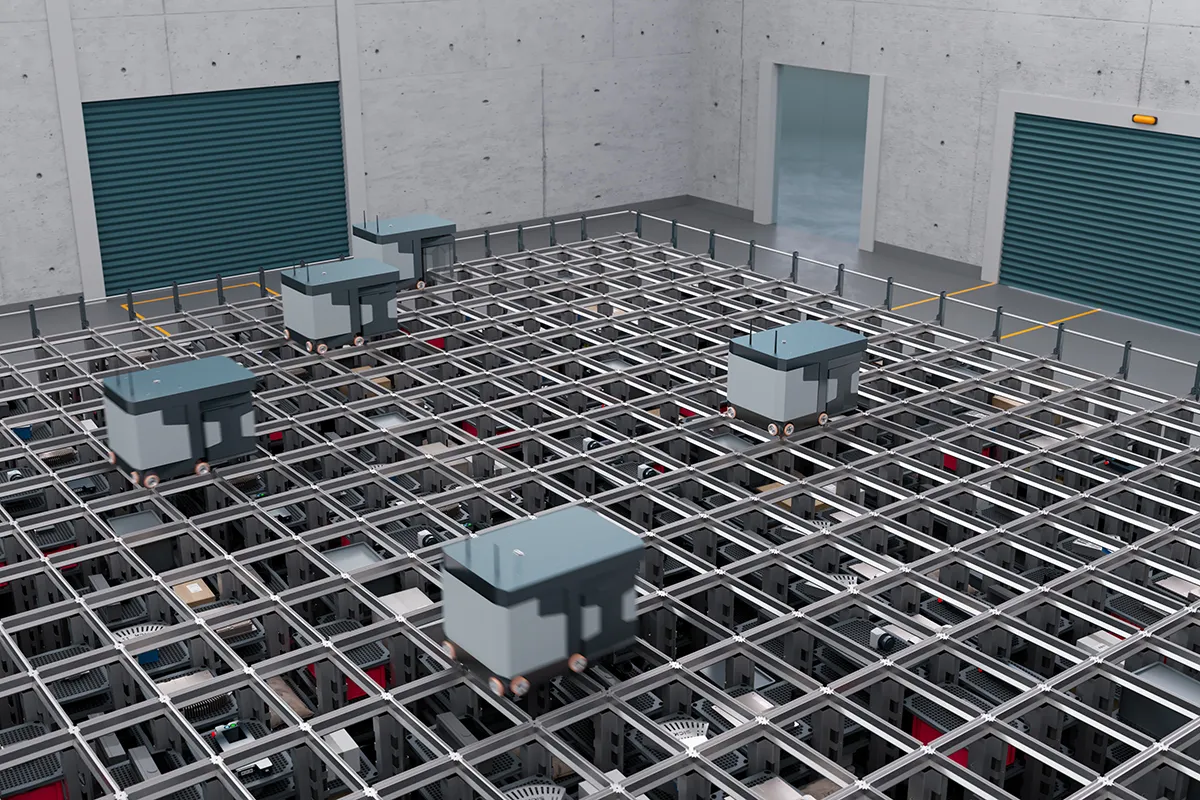
GEBHARDT Versastore® is a good example. The system combines storage, buffering, transport and connections to workstations or robot stations within a single system. This removes the traditional boundaries between warehousing, logistics and production or assembly departments.
Materials are stored on trays, which can themselves become part of the production process. A tray can hold boxes, totes or individual products, and products can also be placed in specific positions for assembly or processing.
This opens up interesting possibilities for manufacturing companies. A tray of components can be moved automatically from storage to an assembly workstation. After processing, the same tray can be buffered, sent on to another workstation or returned to storage.
As a result, the product needs to be transferred between different load carriers and subsystems less often. This can reduce the number of transfer points and help make material flows shorter and easier to manage.
Versastore® can also be connected to conveyors, robots and AMRs, and its capacity can be expanded as production requirements change.
Omnipallet®: integrated pallet-level material flows
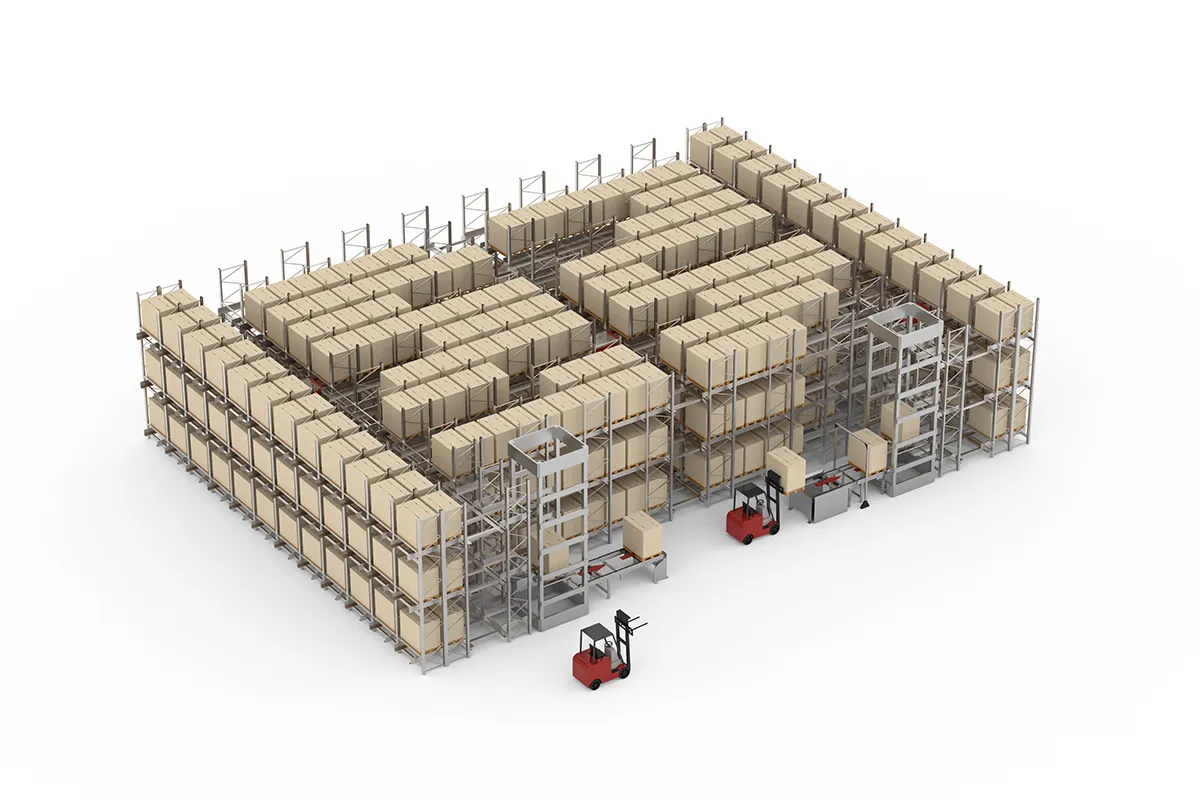
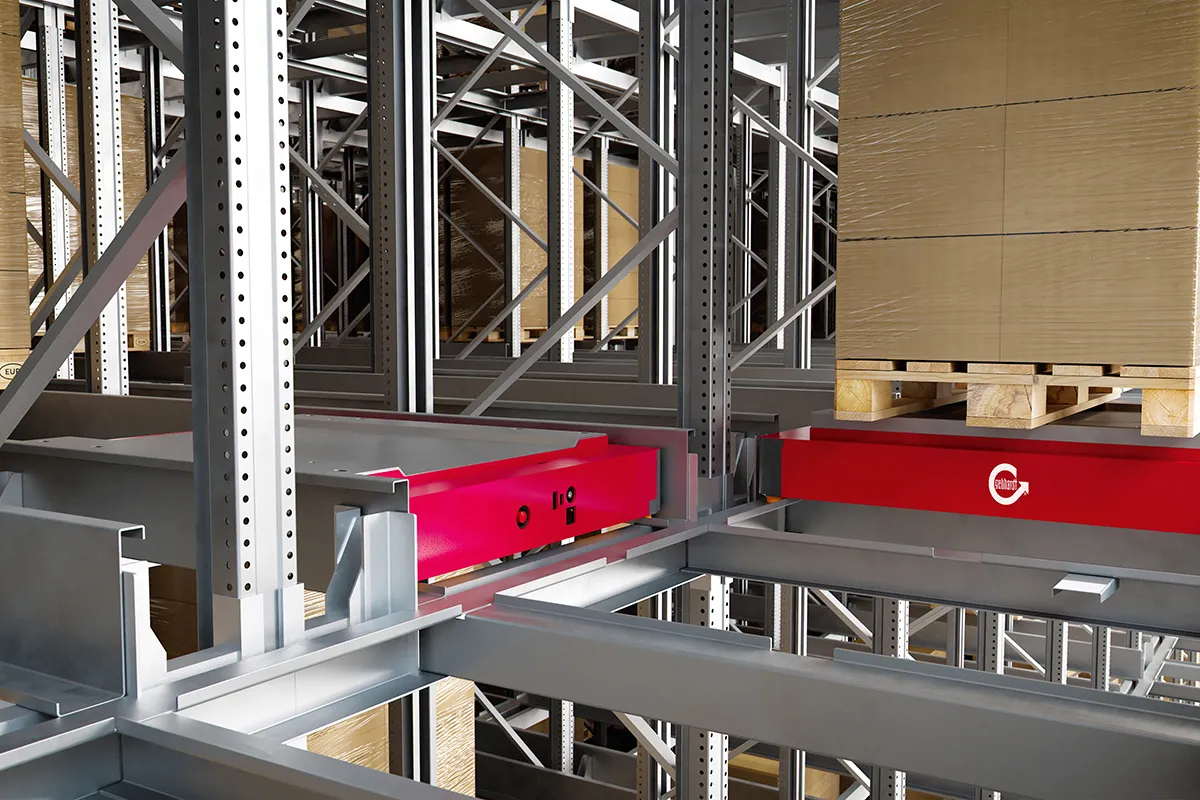
GEBHARDT Omnipallet® combines high storage density with free-moving shuttles that transport pallets through the system. The system supports various pallet sizes and loads of up to 1,500 kg.
For manufacturing companies, it is particularly useful that such a system does not have to function solely as a conventional pallet warehouse. It can also be used as a dynamic material buffer between different production processes.
For example, pallets can be stored after goods-in and then released according to current production requirements. Semi-finished products can be buffered temporarily before moving on to the next process step. Finished goods can be collected automatically and ultimately moved to dispatch.
Start with the material flow, not the technology
Integrating production and logistics does not mean that an entire factory has to be automated all at once.
Often, the best business case starts with a simple question: where is a lot of time being lost today to searching, waiting, transporting and buffering?
Because anyone looking to get more out of their production must look beyond what happens inside the machines. It is the connections between storage, production, assembly and dispatch that determine how efficiently the factory as a whole can operate.
Een zakelijke vraag aan Gebhardt Intralogistics Netherlands B.V.? Get in touch
Companies in this story

Keep following this
Get an email when a new story is published. No account needed.
- ThemeAutomating goods flows
- SubjectAutomation
- CompanyGebhardt Intralogistics Netherlands B.V.