












How Hoogvliet integrated electric vehicles into day-to-day distribution
Text Armand Landman Image Hoogvliet
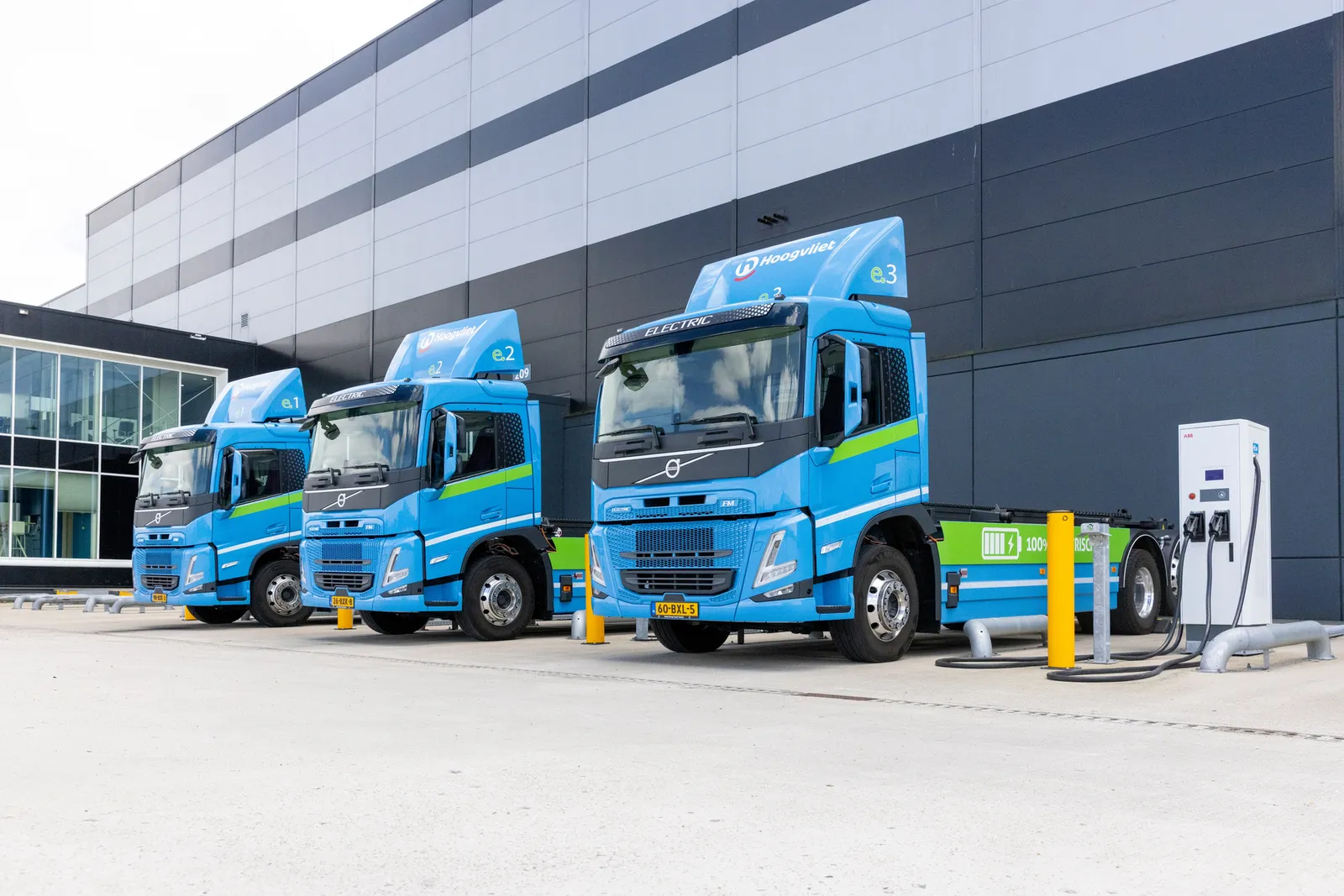
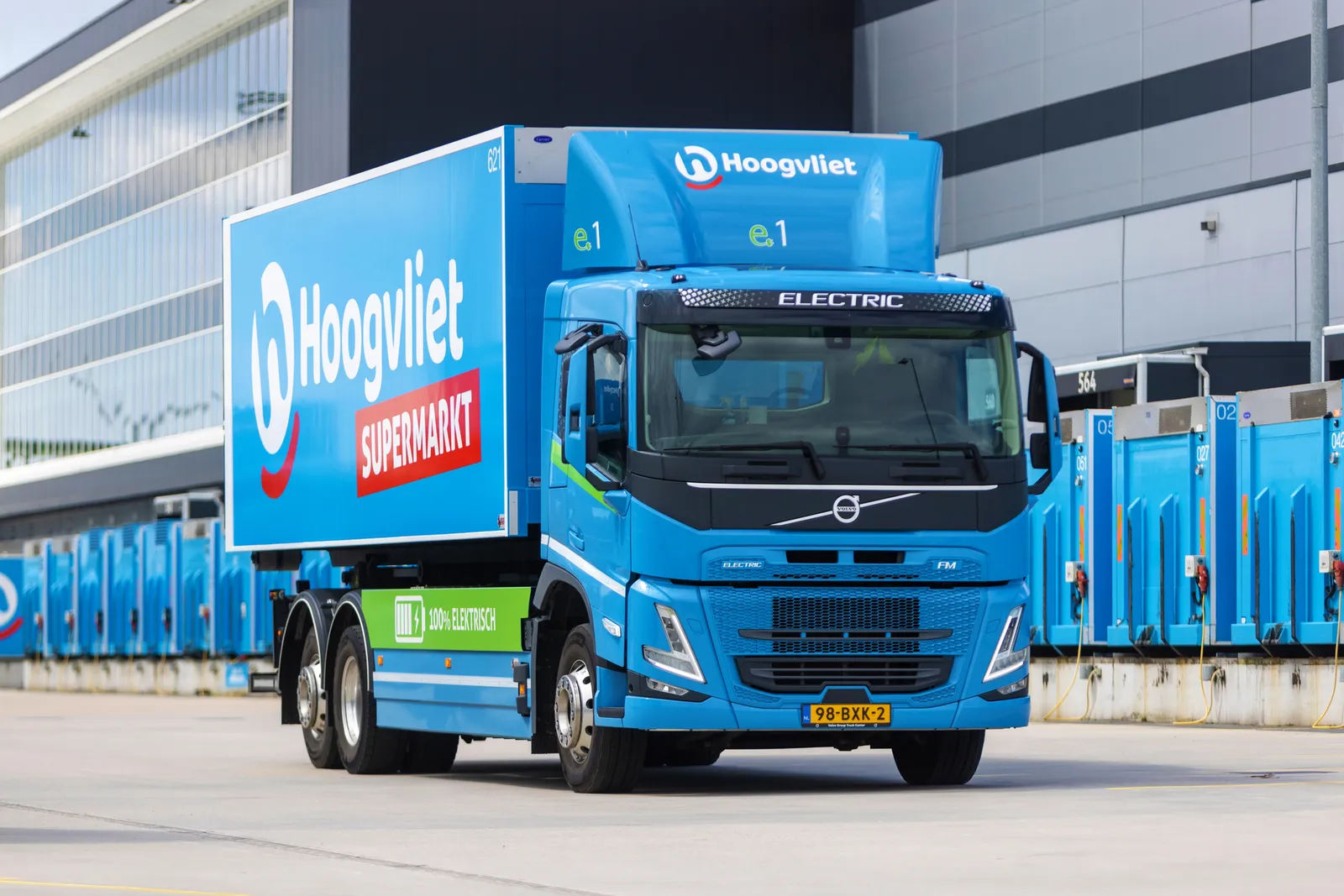
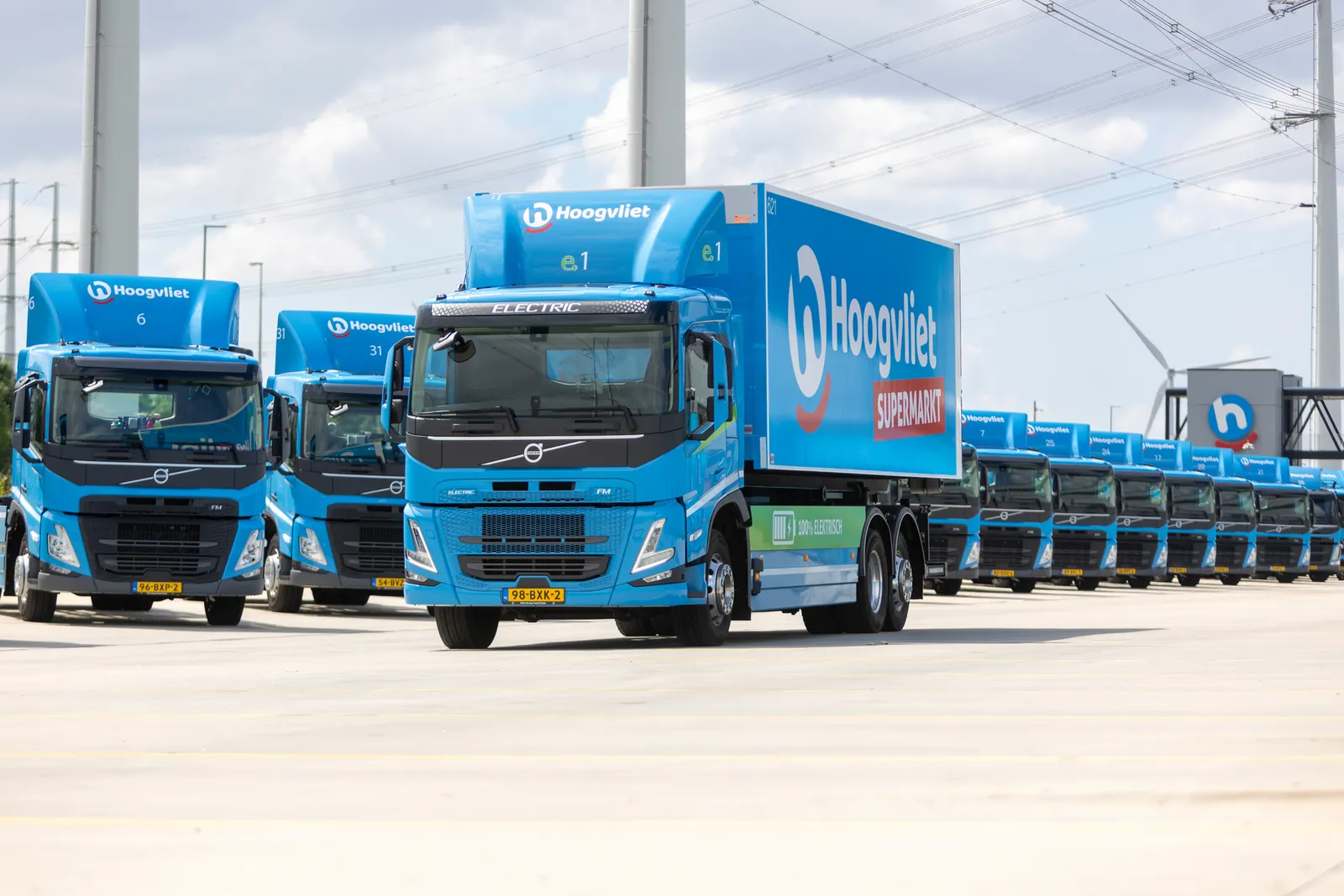
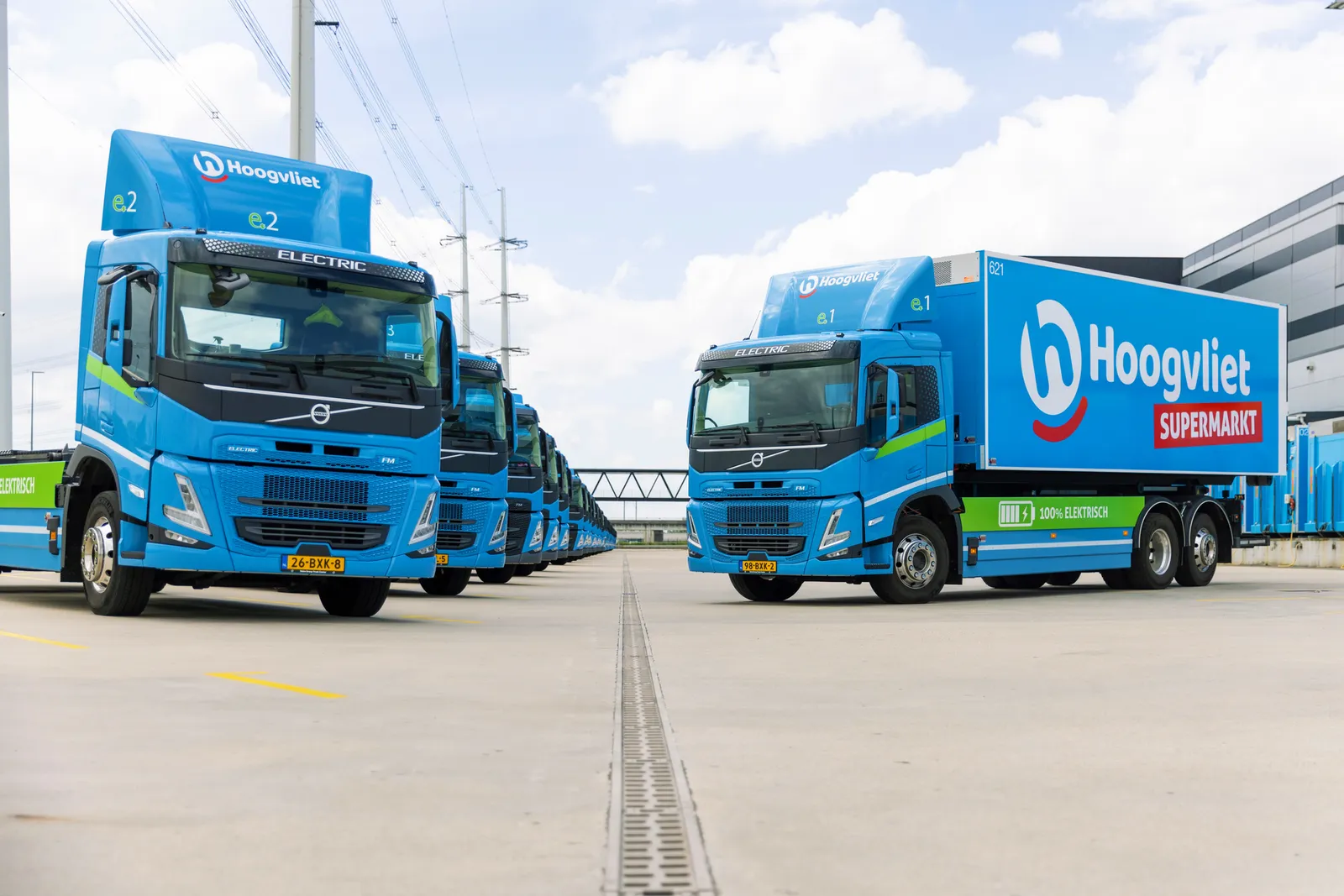
Electrifying distribution transport at supermarket chain Hoogvliet is no longer a pilot project. What started with three electric Volvo trucks has now become a permanent part of the fleet. This was not down to one decisive factor, but to regulation, practical experience and CO2 reduction all pointing in the same direction. Volvo Connect is used in the background to monitor the vehicles. The system is part of day-to-day operations and provides data on utilisation and performance, although it still plays mainly a supporting role in daily planning.
“It really has been a combination of factors,” says transport manager Kees Twilt. “The first three electric vehicles performed well. At the same time, we are seeing low-emission zones, the HGV levy and, of course, the desire to reduce CO2 emissions. Taken together, all these factors make you invest further.”
According to Twilt, the key decision was not to buy the trucks, but how to deploy them. Hoogvliet decided quite quickly not to treat the vehicles as a separate pilot.
“We started cautiously with a small group of drivers, but soon we were simply including them in the schedule,” he says. “They do the same work as the diesel trucks. That was a deliberate choice. If you keep them separate, it remains a test. We wanted to know: does this work in practice?”
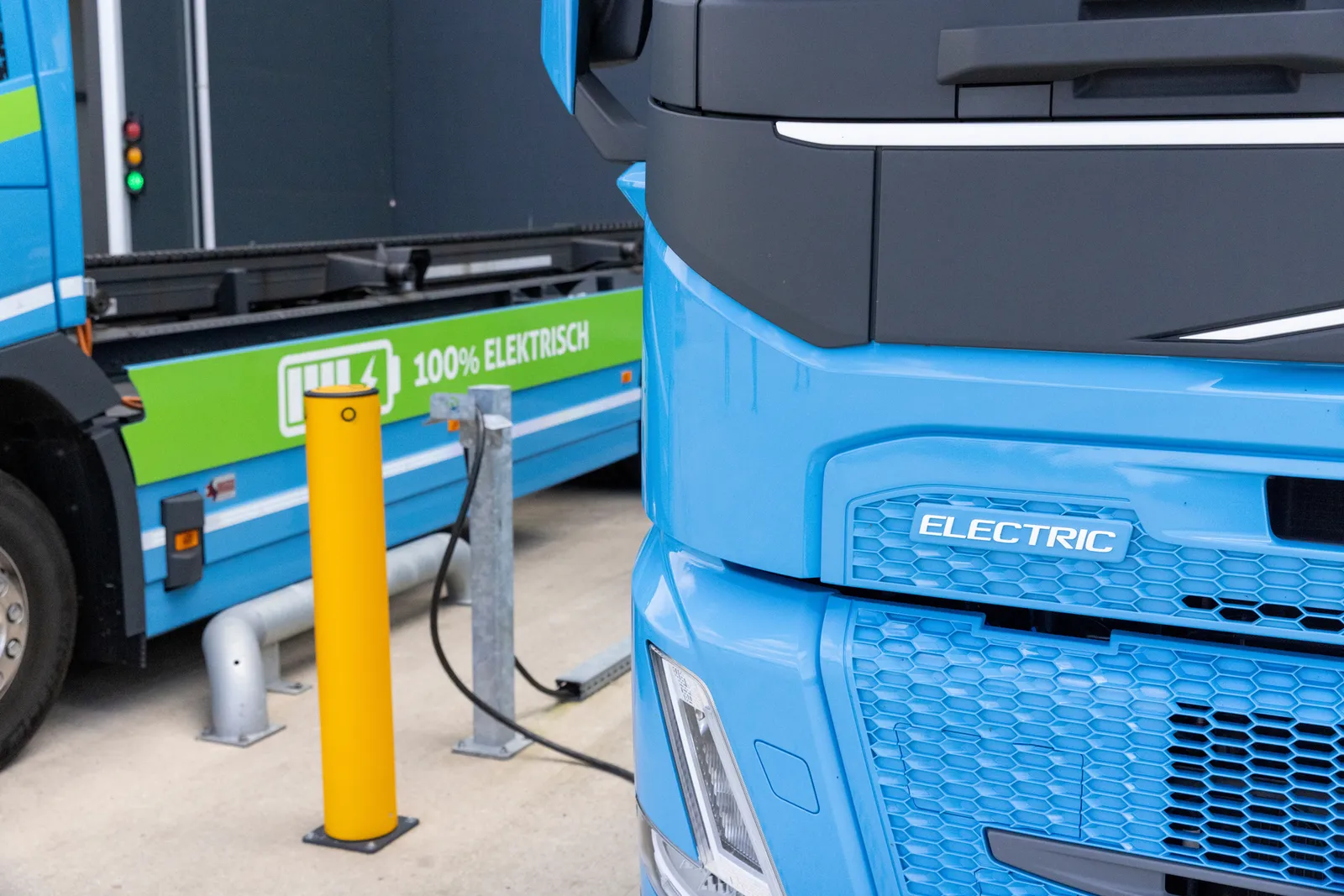
In addition to driving time, battery charge is also factored into route planning. When a driver reports in for the next run, the planners look not only at the time, but also at the available charge. Breaks are taken at charging points wherever possible.
It took some getting used to at first, particularly for the drivers. “They drive more consciously,” says Twilt. “They pay more attention to coasting and anticipating. But ultimately, there is also a lot in common with diesel. If you make it complicated as an organisation, everyone will think it is complicated. That is exactly what we try not to do.”
Less noise, greater comfort
Drivers were initially somewhat hesitant. Some thought they would only be given short runs. In practice, that proved not to be the case.
“What we hear is that the ride is more comfortable,” says Twilt. “There is less noise in the cab and outside. And taking breaks at charging points has now simply become part of the job.”
Hoogvliet is also seeing an impact around its stores. Local residents have responded positively to quieter deliveries. Some have even asked for deliveries to be made by electric vehicles as standard. “It shows that, as a company, you are investing in cleaner logistics,” says Twilt. “People can see it on the street.”
Costs come before the benefits
Financially, electrification is not yet an obvious business case. Investment in vehicles and charging infrastructure is high, and the costs come before the benefits.
“Ultimately, an electric vehicle needs to be cheaper than a diesel one over its lifetime,” says Twilt. “But that remains to be proven. Lower maintenance costs should be an advantage, but we are not seeing that reflected in maintenance contract rates yet.”
Uncertainty around the HGV levy and future regulations is also a factor. “The advantage is significant now, but will it stay that way? Only time will tell.”
Electrification as part of a broader sustainability approach
According to sustainability manager Anneke van Kempen, transport electrification is part of a broader, realistic approach.
“The biggest climate impact of Hoogvliet lies in the supply chain for our product range,” she says. “Our own operations account for around five per cent. Electric transport is therefore one of the levers we can use to reduce those emissions.”
For 2026, Hoogvliet has set a concrete interim target: replace three diesel trucks with three electric ones. The targets for 2030 are currently being developed further.
“We are taking a step-by-step approach,” says Van Kempen. “Sustainability needs to remain achievable and affordable for customers and for the organisation. We are not a pioneer looking to be first to do everything, but we do look ahead. Regulations such as zero-emission zones and the HGV levy are accelerating the transition.”
According to her, the collaboration between transport and sustainability is not a separate initiative. “It is a shared responsibility. Sustainability is embedded in day-to-day processes. Strategy and operations are constantly connected.”
Learning by doing
According to both interviewees, the main benefit of recent years has been the knowledge and experience gained. Hoogvliet invested before the new rules had come fully into force.
“We definitely have a head start in terms of knowledge and experience,” says Twilt.
The next step is clear: further electrification of the fleet. But at the same pace and with the same level-headed approach. “The most important thing is simply to get started,” Twilt concludes. “Rather than trying to think everything through in detail, just begin. That is the quickest way to learn what works.”
Question about this story? Ask your question
Keep following this
Get an email when a new story is published. No account needed.
- ThemeLower-emission transport
- SubjectGeneral







