Flanders as a leading logistics region: achievements and recommendations
Text Geert Van Cauwenberge Beeld Picjumbo / Unsplash
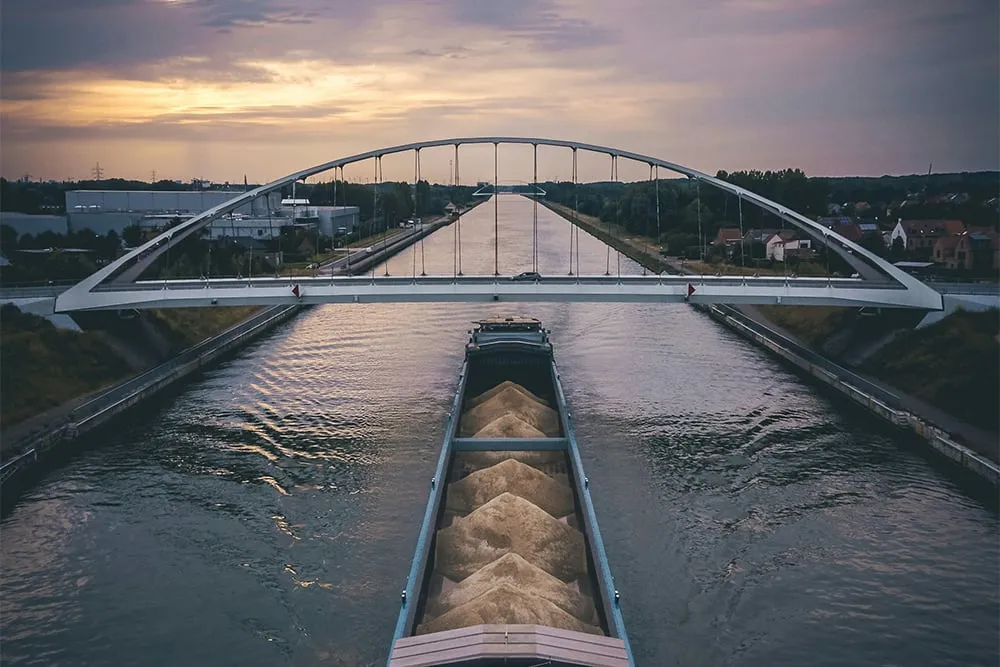
Countless tonnes of goods are transported on Flemish roads day and night. Its central location in the Blue Banana, the busiest region in the world, and a dense network of railways, ports, airports and motorways make Flanders a logistics hub in Western Europe. What does the Flemish Minister for Mobility and Public Works consider the biggest challenges facing logistics and transport companies? And what measures has the Flemish government already put in place to support them?
“As well as its location and infrastructure, the technical expertise, language skills and productivity of Flemish workers are a major asset. And so is the innovative strength of our Flemish logistics companies!”
Accessible jobs
However, the sector also faces many challenges. “Labour shortages are a key concern,” says the minister. “I hope we can find suitable staff here in Belgium, at least in part. Wallonia needs to pursue a stronger activation policy. An ambitious, targeted cooperation agreement between VDAB and Forem is essential to this. We also need to look at the available labour reserve.”
“The logistics sector offers many accessible jobs. Let’s get young people interested while they are still at school! We need to make sure our companies can continue to find enough staff. This is a major challenge, including in other countries. According to The Economist, Germany alone needs 100,000 truck drivers. It is therefore understandable that the sector is also looking for workers abroad.”
Developing additional business space
“We also need to step up our efforts when it comes to business space,” says the minister. “For example, I am focusing on developing sites with access to waterways. At the ENA talks (Economic Network of the Albert Canal, ed.), I strongly support looking for additional sites. Transport by water means less (polluting) road traffic, so it delivers a double benefit for society.”
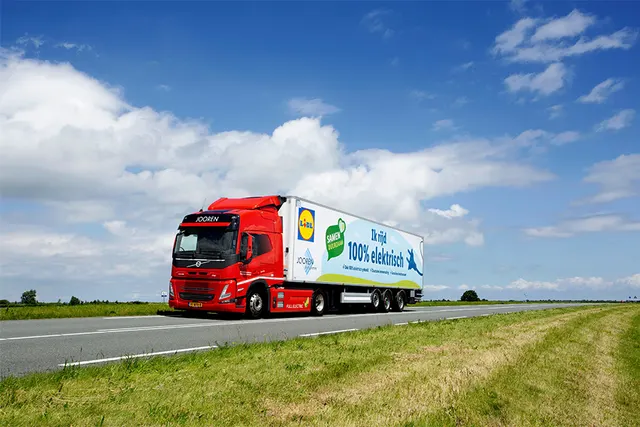
According to the minister, greening the logistics sector is essential. “In Flanders, mobility accounts for around 21% of all CO2 emissions. Freight transport is responsible for half of that. It is therefore important to shift as many vehicle kilometres as possible to more sustainable alternatives such as water and rail, or to decarbonise transport by opting for zero-emission vehicles.”
Green light for modal shift
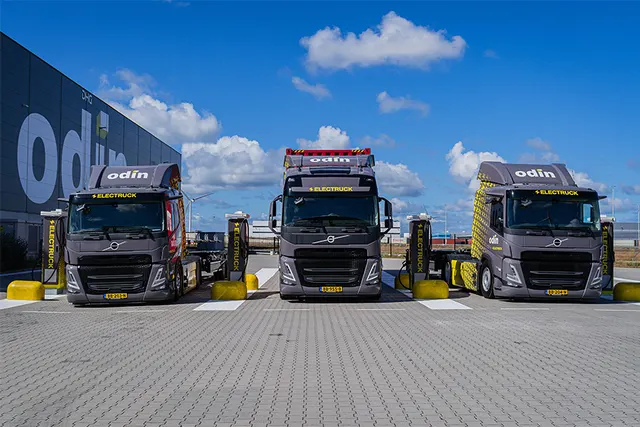
The Flemish government has already taken several initiatives to encourage sustainable logistics and mobility. “I have made significant investments in waterways, rail and multimodal hubs. For example, I had all the bridges over the Albert Canal raised so that higher-stacked cargo vessels can travel further inland. Flanders is also co-investing in rail projects, even though these are essentially a federal responsibility. We have a list of eleven Flemish priorities, for which we have earmarked 100 million euros. These include the 3RX project, which is intended to provide a second link to the hinterland (Germany), and the creation of new sites with access to waterways as part of the aforementioned ENA. At my request, new areas for business development are being investigated in the provinces of Limburg and Antwerp. We are also supporting the sector in its transition to zero-emission trucks. For example, we have already launched two calls for projects on charging solutions for heavy goods vehicles.”
Ambitious VIAVIA project
The minister also refers to the VIAVIA project: “Through this initiative, we aim to make road, water and air freight transport in our region more sustainable, with a modal shift towards water and rail. We are doing this with a Top Team of experts and five dedicated Task Forces involving experts, stakeholders and the sector. They are pooling their efforts to achieve emission-free freight transport in Flanders.”
Question about this story? Ask your question
Keep following this
Get an email when a new story is published. No account needed.
- SubjectTransport