Hazardous vapours and batteries each call for their own safety approach
Text Carolien Klees Beeld Asecos
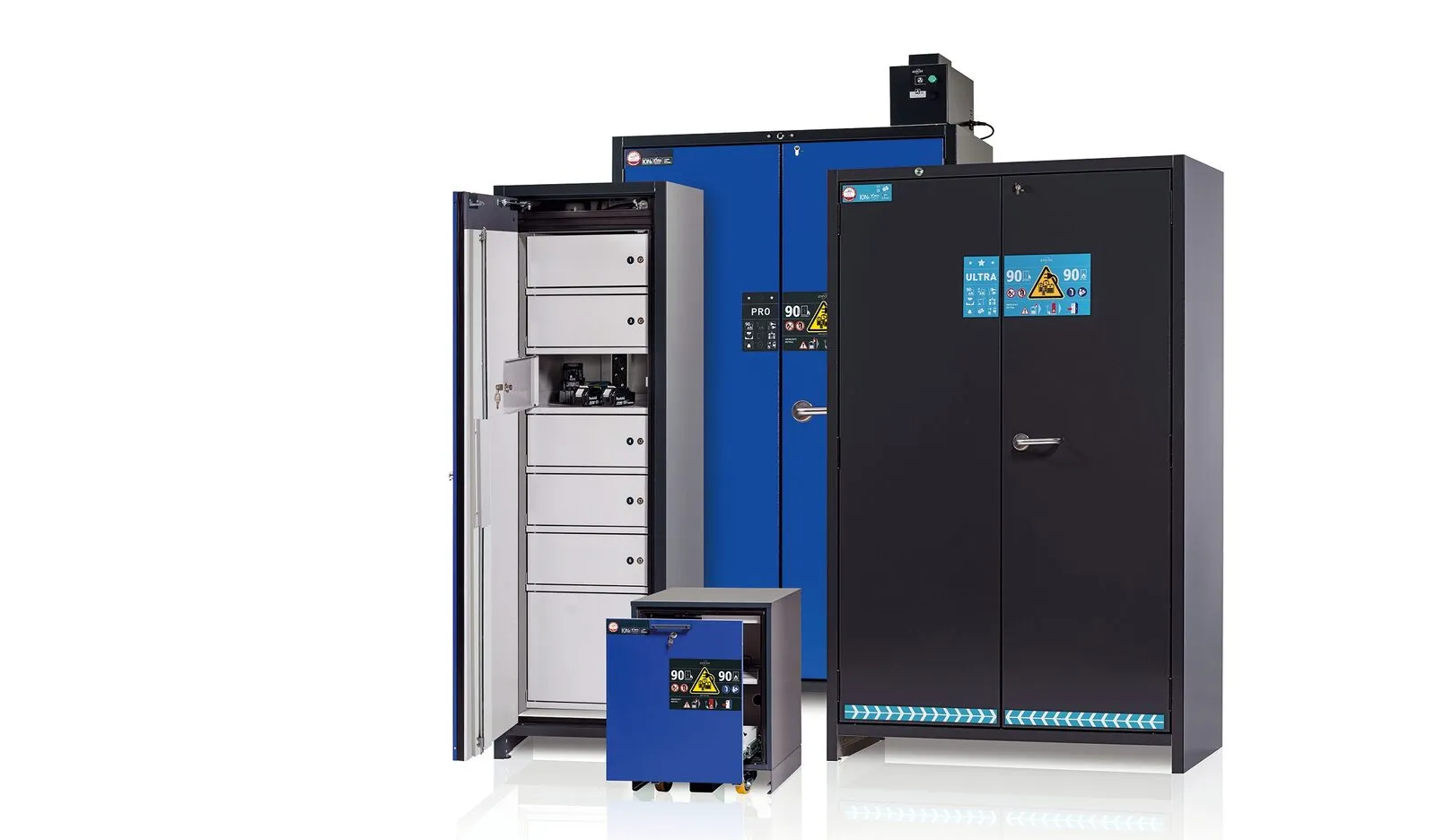
As automation advances, the number of lithium-ion batteries on the shop floor, and with it the risks, is growing. In practice, a certified battery charging cabinet is often a practical and cost-efficient way to meet legal requirements and the demands of an insurer. Hazardous substances also have to be stored safely. In warehouses, where chemical products, handheld scanners, tablets, trackers, AGVs and AMRs come together, safe storage requires more than a cabinet with a closed door. Henk Niewenhuis, director of Asecos, explains how ventilation, detection and alarm systems help to keep risks under control.
The risks of hazardous substances and lithium-ion batteries must be included in the RI&E (risk inventory and evaluation). PGS 15 and PGS 37-2 provide frameworks for packaged hazardous substances and lithium-containing energy carriers respectively.
Asecos is the market leader in safe storage solutions for hazardous substances. With safety cabinets, ventilation solutions and air purifiers, the company contributes to a safe working environment.
Whether a storage cabinet needs mechanical extraction depends on the substances present and the way they are stored. "When assessing the risk, you can distinguish three concentration ranges: below the lower explosive limit, between the explosive limits and above the upper explosive limit. Below the lower limit the mixture is too lean, above the upper limit it is too rich. Only in between can an ignition source lead to an explosion. That is the most dangerous situation."
With unopened packaging only, the chance of vapour formation is nil. Once packaging has been opened, the situation changes. Residues on the outside, a leaking cap or some damage can be enough to create a hazardous air-vapour mixture in the cabinet.
"Then you have to assess what those vapours mean for the employees and for the surroundings," says Niewenhuis. Under certain conditions, flammable vapours can form an explosive mixture with air. Harmful vapours also pose a health risk. The measures must therefore align with the RI&E and with the nature of the stored substances.
Targeted ventilation
For mechanical ventilation, Niewenhuis says the tenfold air change rate under the EN 14470-1 standard is an important starting point. For aggressive and toxic substances, Asecos recommends a considerably higher air change rate. "After all, you don't always notice exposure straight away. The health effects may only appear years later," he warns.
The presence and quality of ventilation influence the ATEX zone classification in and around the cabinet. NPR 7910-1 provides guidance for determining these hazardous zones.
Diagonal ventilation
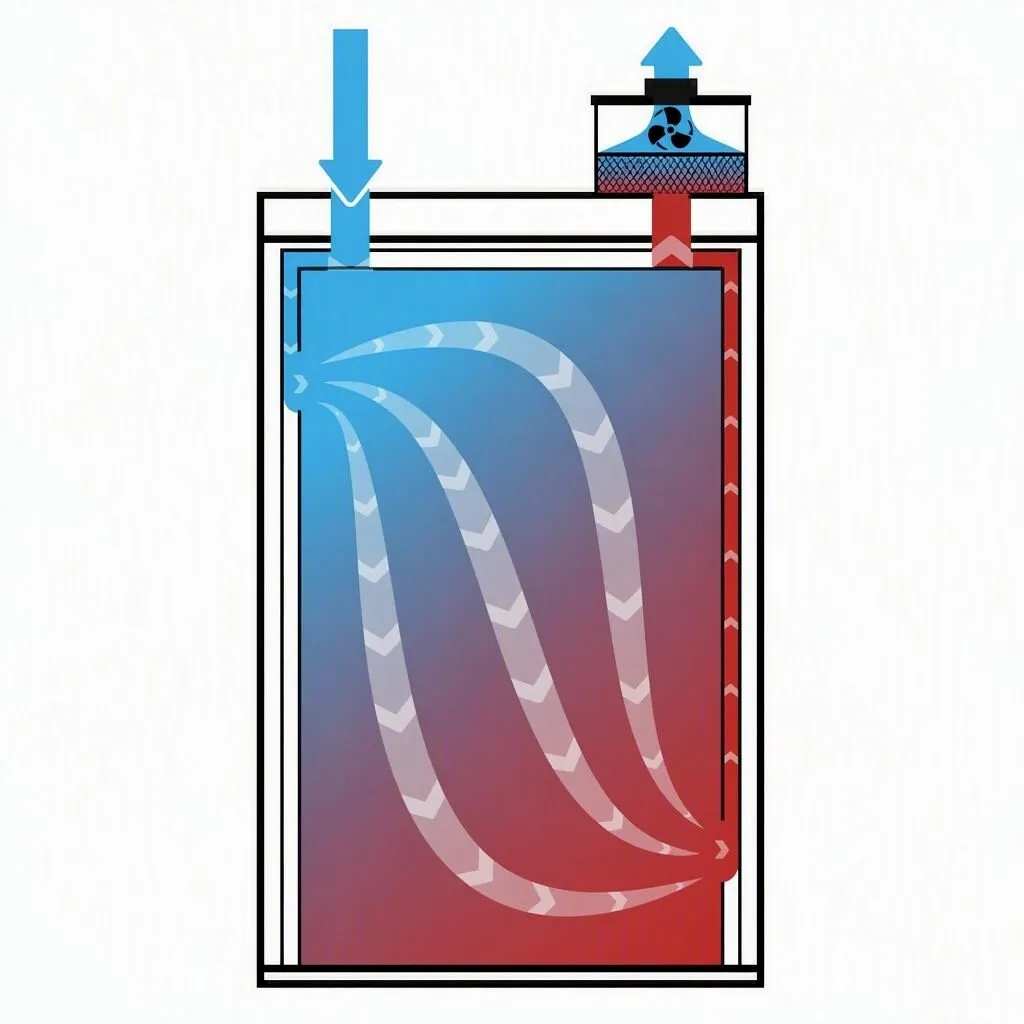
In Asecos safety cabinets, air is supplied at the top left and extracted at the bottom right. This creates a diagonal airflow. Many vapours are heavier than air and collect at the bottom of the cabinet, which is exactly where the extraction takes place. Niewenhuis stresses that the ventilation grilles must be kept clear. "A box or large package in front of the grille can severely restrict air circulation."
The extracted air is either vented outdoors or, with a suitable recirculation system, filtered first. Removing vapours also reduces the likelihood of hazardous concentrations building up in the immediate surroundings when the door is opened.
Lithium-ion batteries
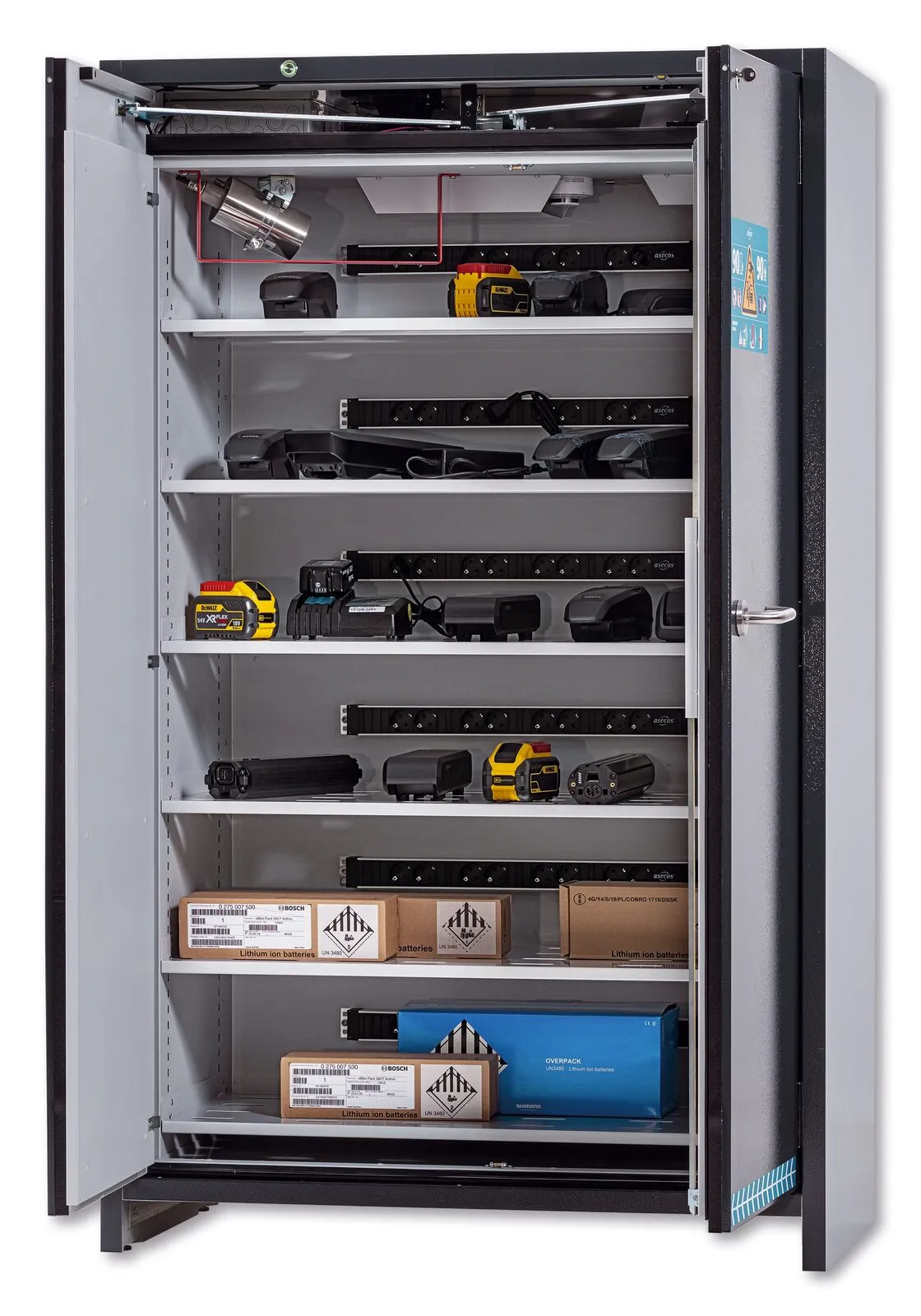
Lithium-ion batteries call for a different approach. Handheld scanners, tablets and electronic trackers are often charged after the shift. Many AGVs and AMRs also use lithium-ion technology. During normal charging, few substances are generally released, but heat is generated. If that heat builds up, the temperature in the cabinet can keep rising. In an unfavourable scenario, this can contribute to thermal runaway, in which a battery heats itself further and further and can eventually ignite.
Insurer's request
Some cabinets in the Asecos ION-LINE series combine ventilation with smoke and temperature detection. Depending on the version, the signal can be forwarded to an alarm centre, a building management system or a contact person.
"Insurers increasingly want batteries to be charged under supervision. Such a forwarded alert can prevent additional labour costs. After all, batteries are often charged precisely in the evenings and at weekends," Niewenhuis concludes.
A business enquiry for Asecos? Get in touch
Companies in this story

Keep following this
Get an email when a new story is published. No account needed.
- SubjectWarehouse equipment & safety
- CompanyAsecos