‘Extra warehouse space without expanding’
Text Jean van Pol Beeld Begra
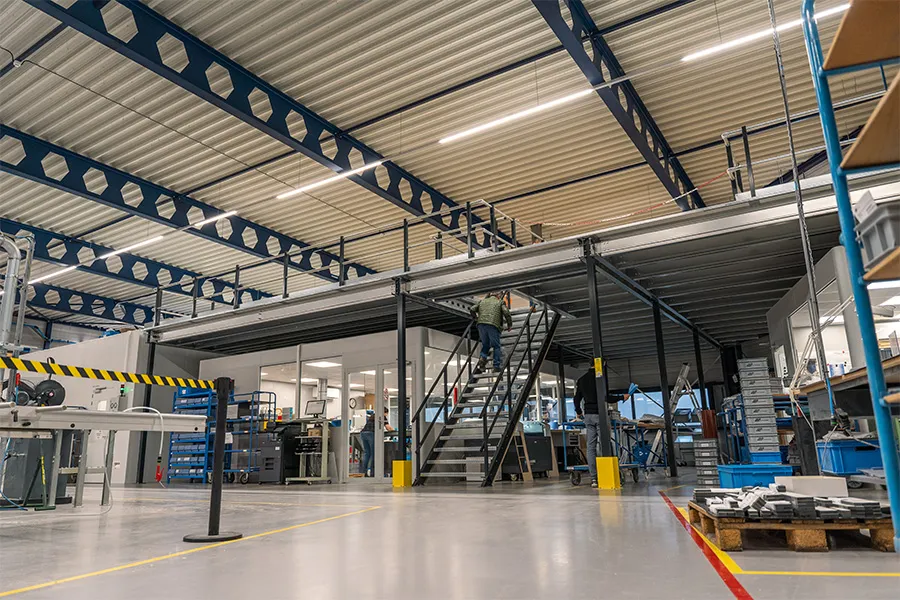
With construction and rental costs soaring, electricity grid capacity in short supply and permits taking time to secure, making creative use of existing warehouse space is becoming increasingly important. Begra Magazijninrichting offers a smart, flexible solution for creating more space in existing buildings with its intermediate floors, also known as mezzanine floors.
The principle behind Begra’s offering is simple but effective: a mezzanine floor makes optimum use of the height of an existing building. Where previously only the ground area was used, a steel structure now makes it easy to add an extra level. This creates space for additional storage, picking locations or even office space.
“A mezzanine floor like this quickly gives you more usable square metres in your warehouse at a relatively competitive price, without the need to expand,” says Jan Machielsen, Team Leader of Begra Magazijninrichting’s Projects and Purchasing department. “We supply these floors in all sorts of sizes, from small 25 m² units to installations of more than 1,000 m². This makes them suitable for SMEs as well as large logistics centres.”
Tailored advice
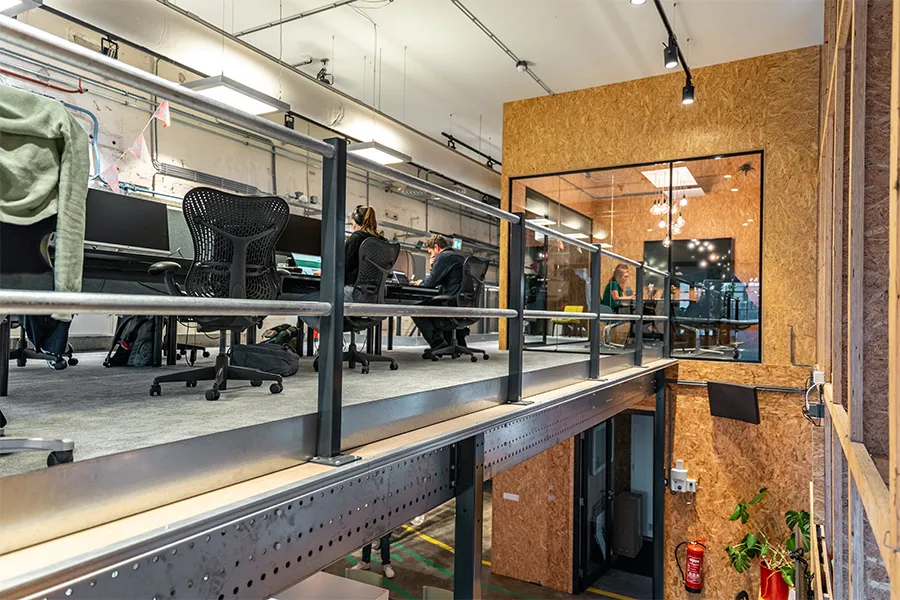
A mezzanine floor is an ideal solution, particularly in warehouses where picking is done manually and the available height is not being used, Machielsen stresses. “Our team of engineers designs each floor to fit the space perfectly and meet all structural calculations. If required, we can also send an account manager to the site to measure up and identify any potential bottlenecks.”
Another major advantage is the level of customisation Begra offers, Machielsen continues. “Each floor is tailored to the space in terms of dimensions and height, and its appearance can also be matched to the company’s colours. Anthracite grey is the standard colour, but columns and guardrails can also be supplied in red, blue or green, for example, to match the customer’s corporate identity.”
Mandatory inspections
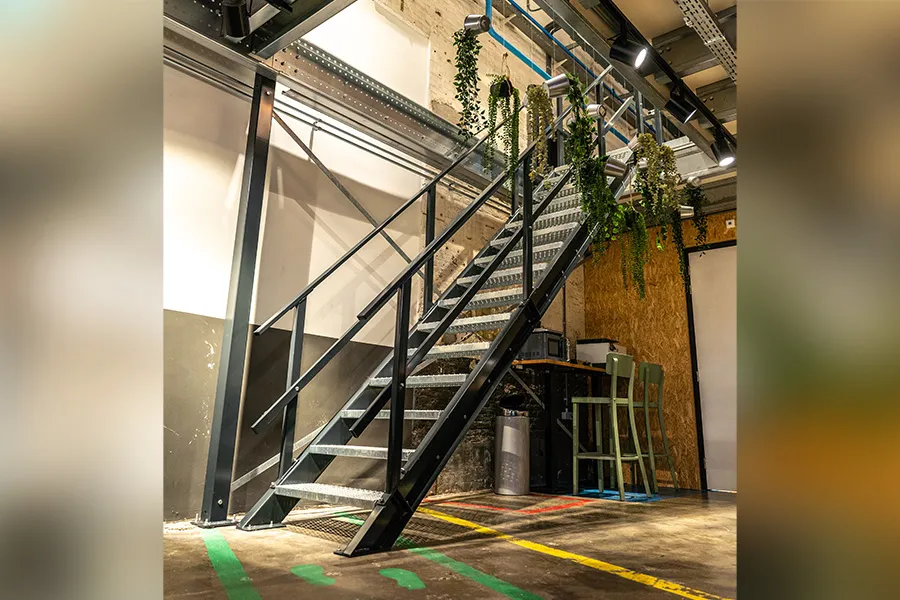
Mezzanine floors may look simple, but appearances can be deceptive. “Companies often overlook the fact that mezzanine floors, like racking, are subject to certain inspection requirements,” says Sander Geurts, manager of Safety Support, Begra’s in-house inspection company and regular partner for inspecting all kinds of racking and mezzanine floors. “An annual safety inspection is required under the Working Conditions Decree, particularly when a mezzanine floor is loaded mechanically, for example with pallets handled by forklift trucks. An inspection is also mandatory before any floor is put into use. Failure to comply with the rules can result in substantial fines. And the consequences of an accident are often serious. If no inspection has taken place, the insurer will in many cases refuse to pay out for the damage.”
On the subject of safety, another way Begra Magazijninrichting’s mezzanine floors stand out is their focus on standard safety features such as toe boards, impact protection and fall protection. Geurts says: “Depending on the preferred operating method and safety requirements, pallet loading points can be fitted with chains, hinged safety gates or sliding gates.”
Logistics benefits
As well as providing extra space, Begra’s mezzanine floors offer other important logistics benefits, Machielsen says. “Mezzanine floors are flexible: they can be installed relatively quickly and are easy to dismantle, which means they can also be reused when a warehouse moves or is redesigned. Different load capacities and heights are available, depending on the load and intended use. Availability is another key advantage. We always hold a large number of standard components in stock. Common sizes of 2.80 metres, 3 metres and 3.20 metres can be delivered quickly, considerably shortening lead times.”
New safety standard
Although all Begra products already meet all applicable requirements, the sector is on the verge of further professionalisation. “European Working Group 14 is developing a new standard, FEM 10.2.21, specifically for industrial platforms,” Geurts explains. “Among other things, the standard will set requirements for the stiffness of floors and connections, with the aim of further minimising workplace risks. It is expected to be published at the end of 2025 or the beginning of 2026.”
Question about this story? Ask your question
Keep following this
Get an email when a new story is published. No account needed.
- ThemeMore warehouse space
- SubjectAutomation