Warehouse & Logistiek is part of Louwers Mediagroep: 45+ specialist platforms in the Netherlands, Flanders and Wallonia. Trade magazines, websites, newsletters, video and podcasts, since 1987.
Ever since the Netherlands came into existence, we have been battling the water around us. Not so surprising, really, when you consider that more than half of our country lies below sea level. Yet this has only made us stronger. Over the centuries, we have developed into expert water managers, reclaiming large areas of land and making them suitable for people to live and work on. This struggle has sometimes come at a great cost. Just think back to the floods of 1916 and the 1953 North Sea flood disaster. These events prompted us to devise unique, innovative and high-profile solutions. The result is a water engineering sector that has built a global reputation for water management.
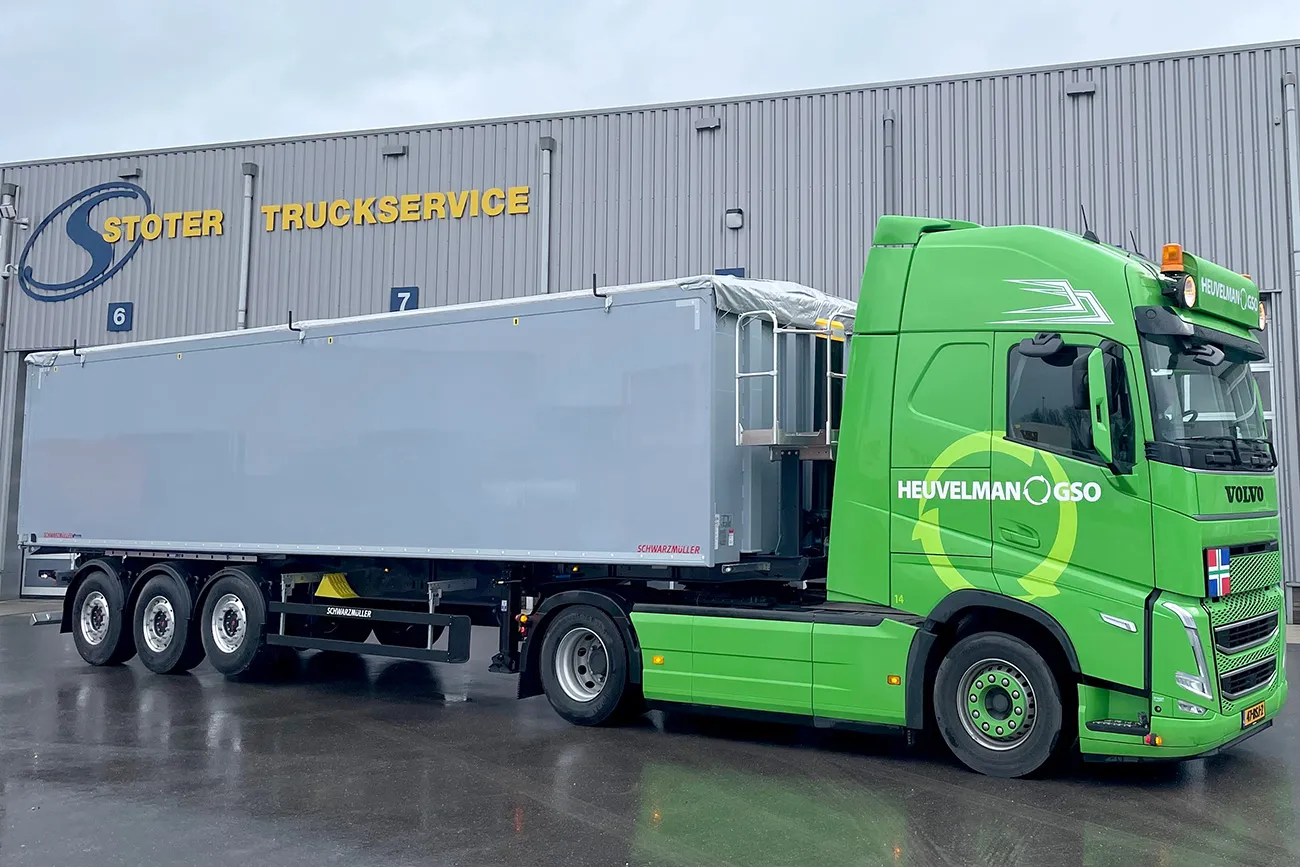
Schwarzmüller volumekipper voor Heuvelmans.
Delta Works
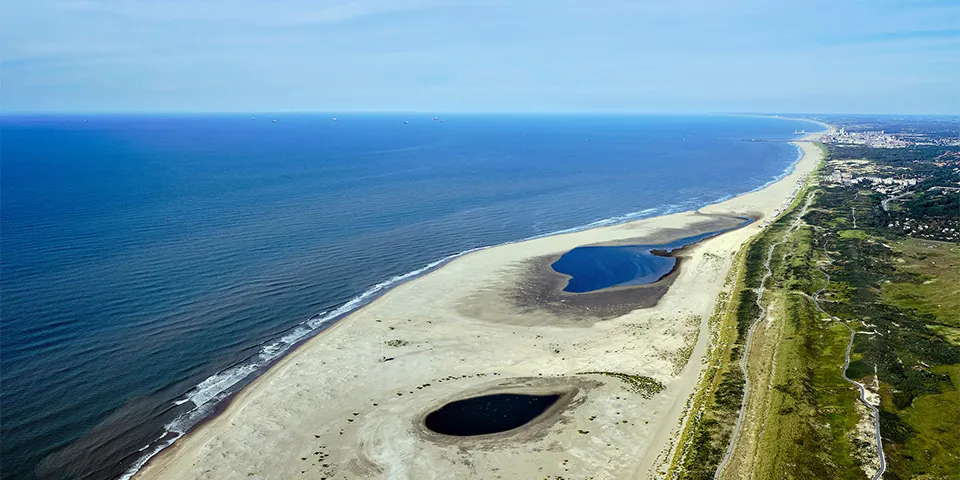
Where the focus in the past was primarily on keeping water out, nature has also come to play an increasingly important role since the Delta Works were built. These smart solutions not only protect the coast and the land behind the dykes, but also make room for other uses. ‘Building with nature’ uses ecosystems that are not only sustainable but also add value for recreation and the local economy. For example, new nature islands with natural shorelines are being created in the Marker Wadden using silt, clay and sand from the Markermeer, giving new habitats, both above and below the water, the chance to develop. Under the ‘Room for the River’ programme, we are deepening and widening rivers and expanding the areas along their banks. This increases the river’s discharge capacity, helps us cope with high water levels and creates space along the banks for nature and/or recreation. A win-win situation.
The Maeslantkering normally closes only when a storm surge threatens and water levels reach 3 metres or more above NAP. The barrier, part of the Delta Works, forms the Europoortkering together with the Hartelkering and protects Rotterdam and the hinterland during extreme water levels. (Image: Siebe Swart)
New developments
As the Vereniging van Waterbouwers, we are on the cusp of new developments. With sea levels rising and the land subsiding, our sector already faces a number of major challenges to get our teeth into. Keeping our feet dry is never a given in this country. New insights lead to new developments, such as offshore islands designed to protect the coast naturally, and plans to return certain areas of land to the water. This is a sector undergoing rapid change.
Developments over the past few months have also shown us how current events can severely constrain our industry’s vision and mission. It is more important than ever to find answers to the effects of PFAS and nitrogen policy and prevent them from becoming a disaster for the sector. By setting a clear direction and bringing the association’s ambitions to the attention of politicians, we can continue to exert influence. The importance of water safety will only grow in the years ahead, and its funding is guaranteed under the Delta Programme. It is up to us to develop a shared perspective so that we can ensure water safety for generations to come.
The water engineering sector is hugely important to life in a delta, whether in the Netherlands or elsewhere in the world. Vital contractors in the Dutch water engineering sector are essential to maintaining life at the desired level and enabling sustainable economic development.
Find the right company in the sectorSearch by product, field, region or project in the company directory and across all Warehouse & Logistiek articles.
We use cookies to keep the site working properly. With your consent, we also use cookies for statistics and third-party banners. Read more in our privacy and cookie statement.