












Veldhuizen delivers no-frills custom solutions for construction. Affordable, reliable and simple
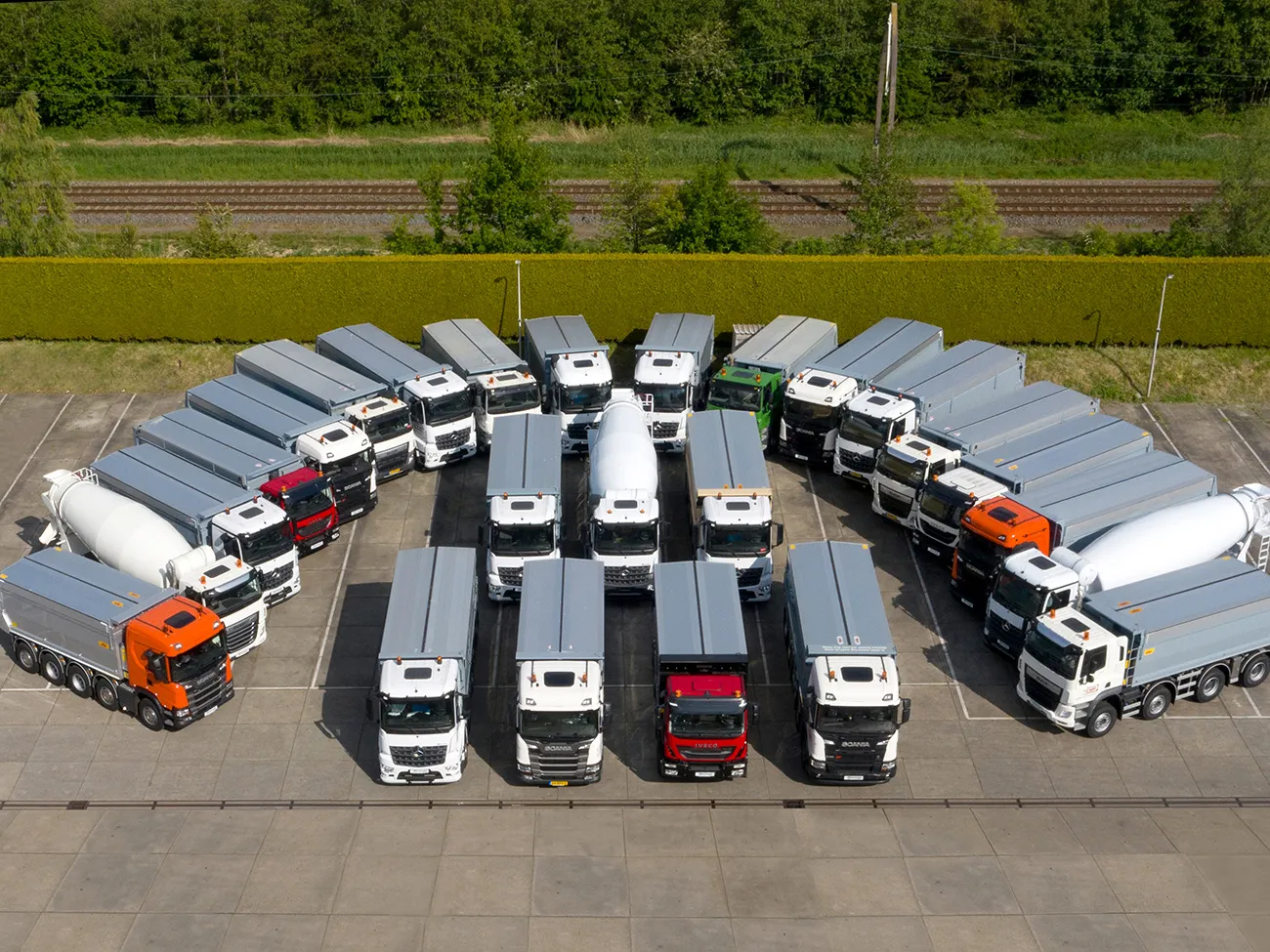
Alongside trailers and semi-trailers for drivers with a B+E licence, Veldhuizen began specialising in construction vehicles in 2011. Successfully so: in terms of sales to the construction market, the company now holds its own against all the major truck brands. The secret? Trucks built for simplicity and reliability.
Veldhuizen builds around a hundred vehicles a year for customers at its Loosdrecht site, plus another fifty trucks for stock or its own rental fleet. The fleet comprises around thirty trucks, available to rent for periods ranging from a week or a month to a year. “This allows customers to cope with a busy period, but renting also offers a solution when a vehicle is damaged or delivery of a new truck is delayed,” says Pieter Veldhuizen. Production figures reflect the Dutch construction vehicle market, with an emphasis on tipper trucks and concrete mixers. Veldhuizen delivers around eighty five-axle trucks a year; the rest have four or three axles.
The manufacturer’s success did not come out of nowhere. “We carried out market research beforehand, which showed that transport operators were not looking for technically sophisticated products packed with computers. They wanted something simpler and therefore less prone to faults. Reliability is extremely important in the construction sector, because heavy loads often cause things to break. In that situation, it is good to be able to work on trucks in your own workshop,” says Pieter. Veldhuizen therefore opted for a leaf-sprung solution with an additional axle, steered without electronics. The benefits? It can withstand overloading, requires little maintenance, has a long service life and retains its value well.
8×8 becomes 10×8
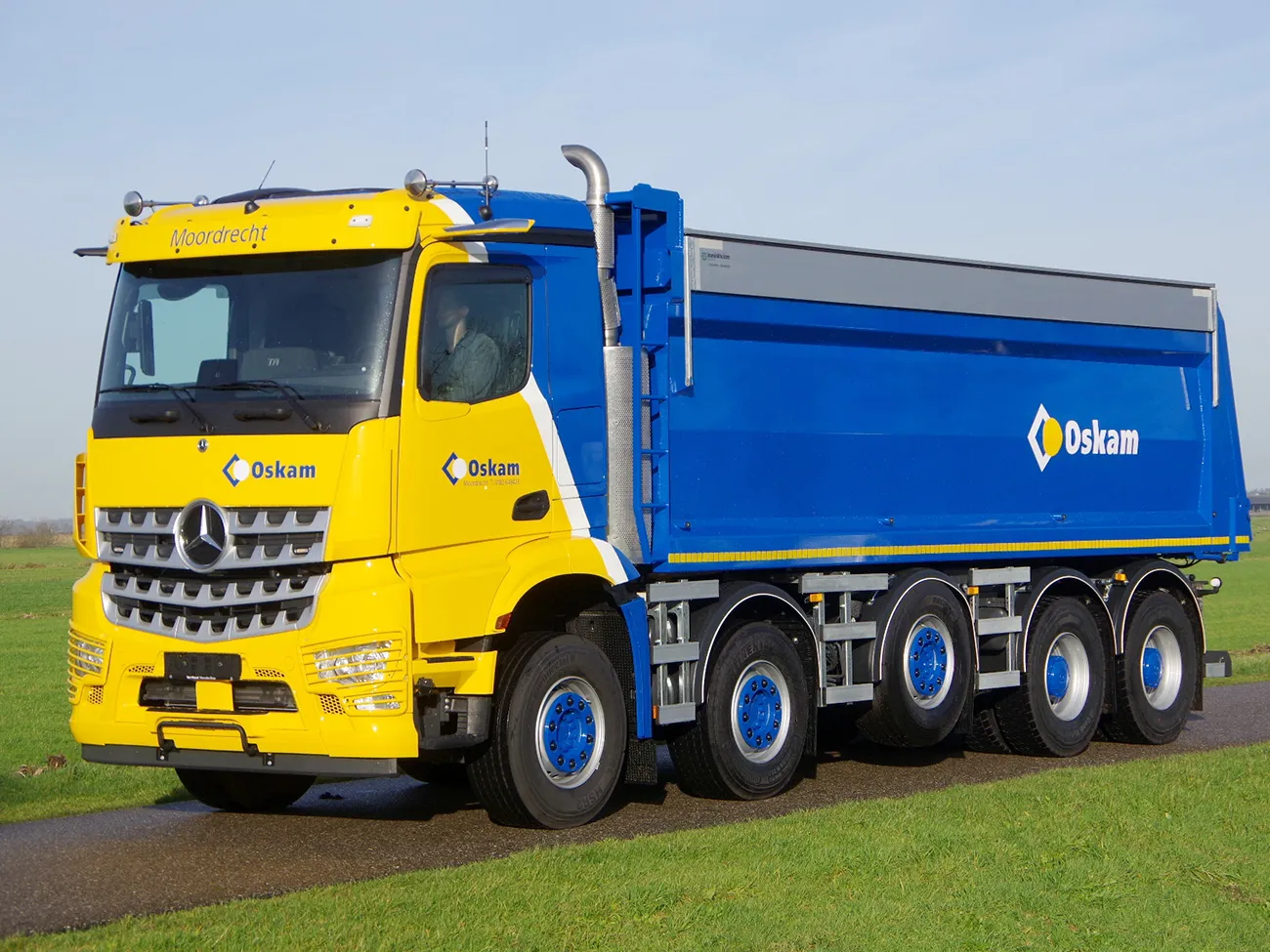
Veldhuizen’s calling card is converting four-axle trucks into five-axle trucks by fitting a liftable axle in the centre. This can be done under an Iveco, Scania, Mercedes-Benz, DAF, Volvo or Renault, depending on the customer’s preference. The company chooses an original 10-tonne axle from the manufacturer, ensuring consistency and making it easier to source parts across Europe. This makes it possible to convert an 8×4 into a 10×4, while for typical Dutch regulations Veldhuizen can just as easily use an 8×8 as the basis for a 10×8 with a maximum gross vehicle weight of 49 tonnes. The additional centre axle is air-suspended and mechanically steered by means of rods. To provide greater ground clearance, the axle can be raised by up to 20 centimetres, preventing it from ‘fighting’ the vehicle on rough terrain. This system also uses no electronics: lifting is done by air bellows.
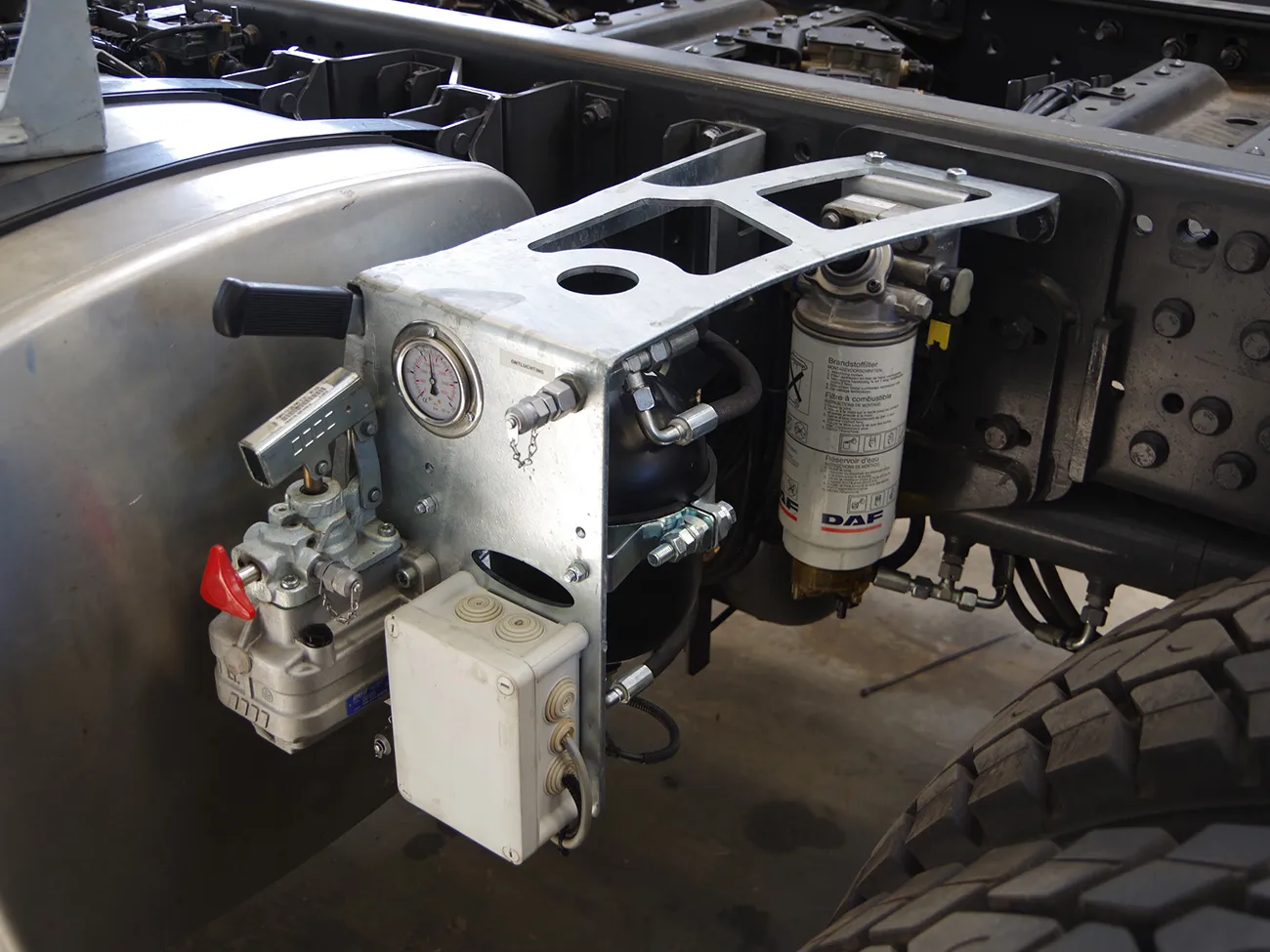
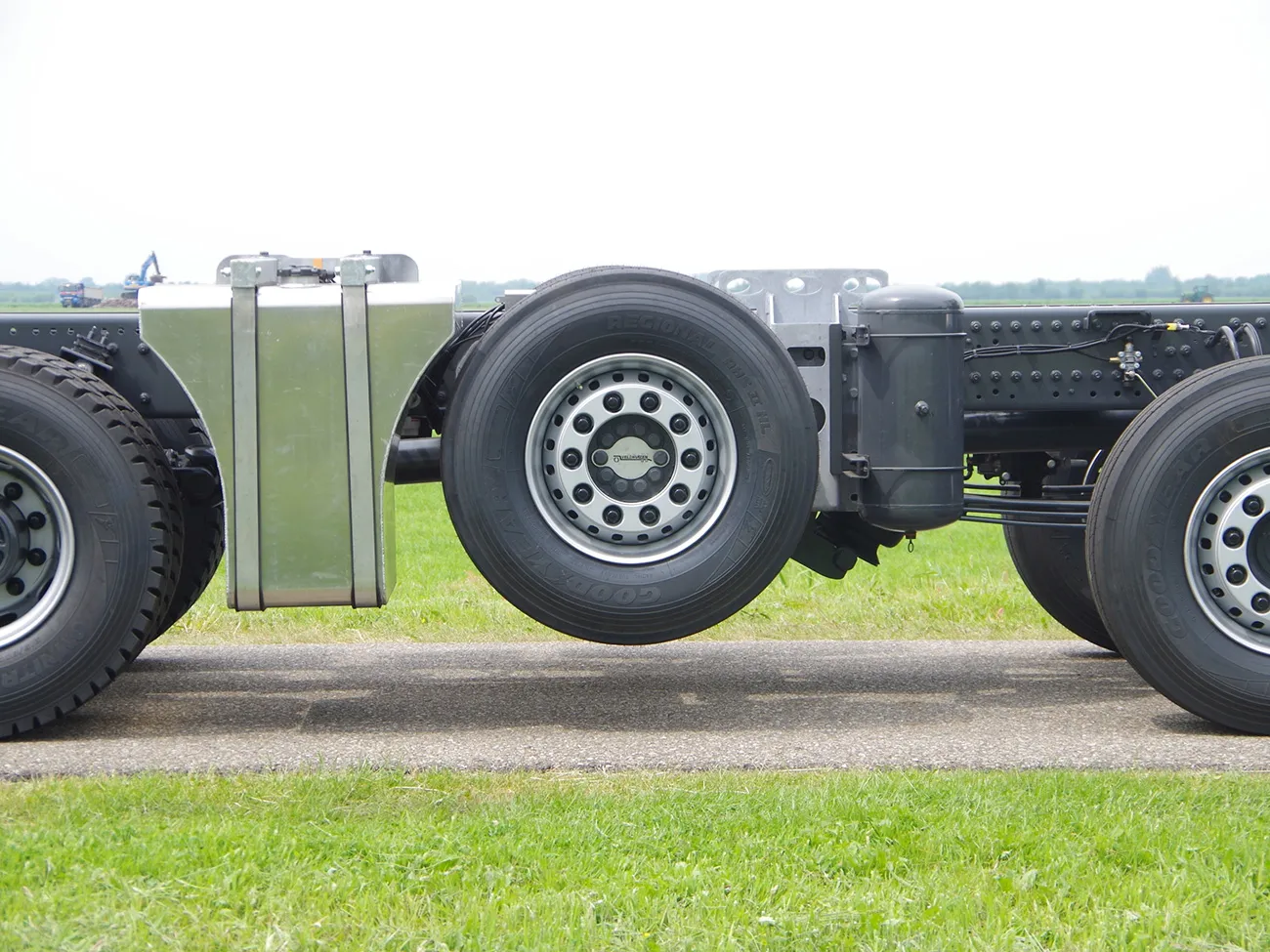
Over the years, Veldhuizen has consistently found a ‘simplified’ solution to complex problems in construction transport. In response to the popular widespread axle configuration, for example, it developed its own system, called WSG (WideSpread Gestuurd), using mechanical suspension and steering. A variant, the Hydro-WSG, was introduced in 2020. On hooklift trucks with a long rear overhang and little weight on the front axles, it is desirable for the additional axle not to steer at higher speeds. It steers along at speeds of up to 40 km/h, above which the axle is locked automatically, simply by means of a nitrogen accumulator.
High payload
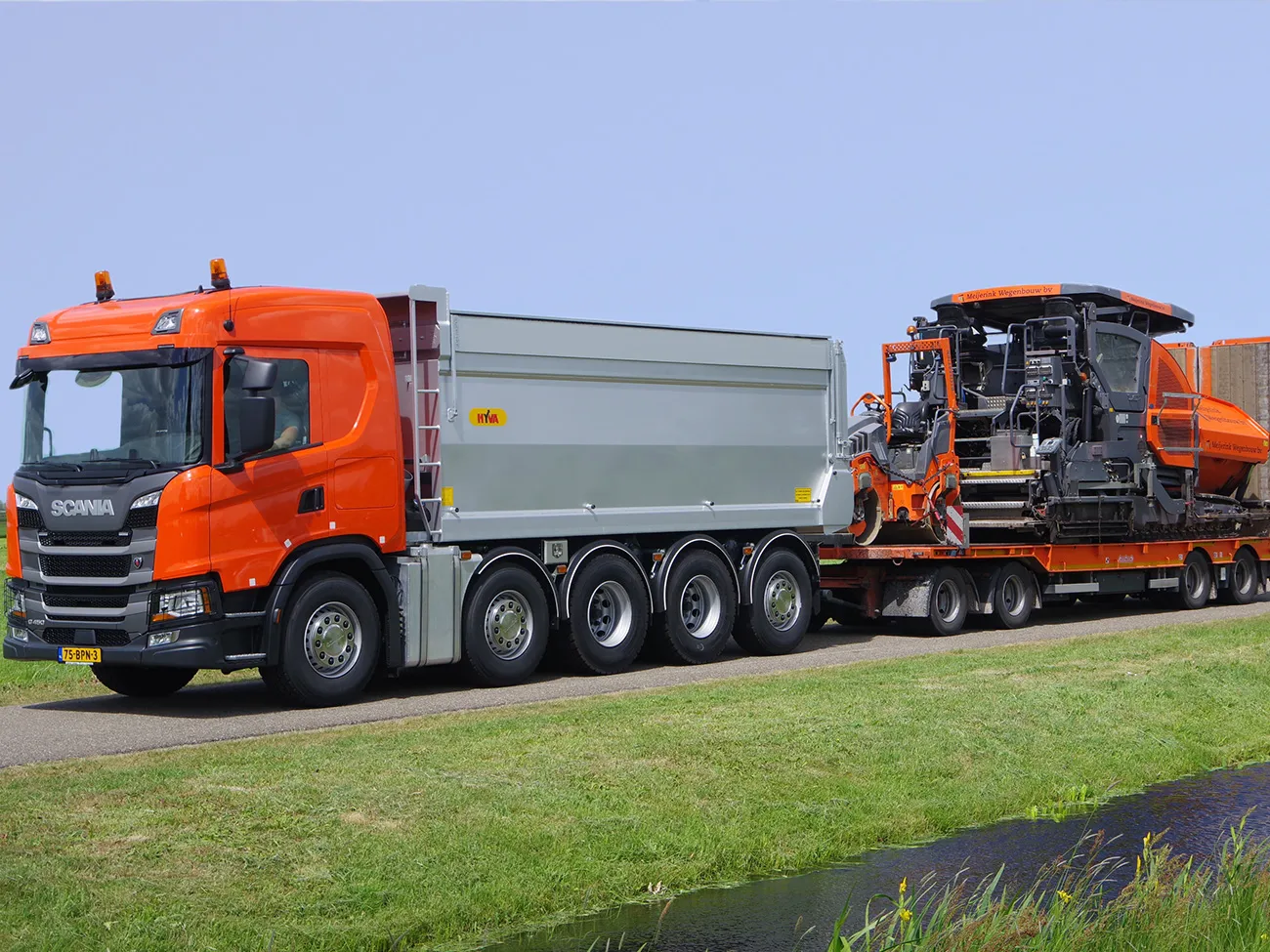
Another typically Veldhuizen solution is the shortened 10×4 Quadro, of which thirty have been delivered since the end of 2020. This tipper truck meets the dimensional requirements for towing a low-loader trailer, yet still offers a high payload for transporting asphalt. The manufacturer achieves this by shortening the original chassis and repositioning axles 3, 4 and 5 to achieve ideal axle load distribution. The result is a compact, manoeuvrable five-axle truck measuring less than 8 metres from the front to the pintle hook. This dimension is important when towing a low-loader carrying an asphalt paver. By choosing a five-axle truck with a gross vehicle weight of 46 tonnes, the 10×4 Quadro can carry 10 to 12 tonnes more asphalt per trip. That saves one trip for every two, improving efficiency and reducing costs and emissions.
Question about this story? Ask your question
Keep following this
Get an email when a new story is published. No account needed.
- SubjectGeneral







