












The Pen | Jan Huijbers
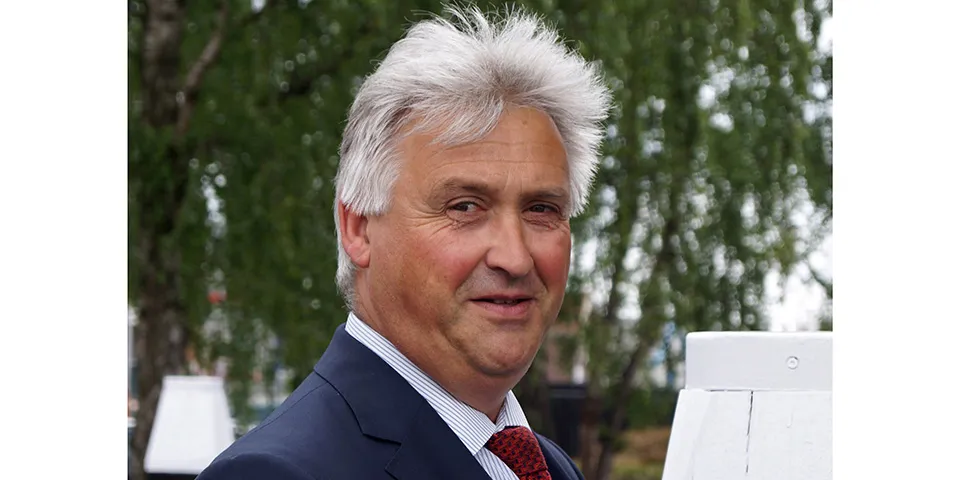
When the Ministry of Defence made fewer personnel available for OCE work (the detection of conventional explosives) in 1998, the government assigned this task to the private sector. This gave rise to a civilian industry specialising in detecting explosives during ground works, in which our marine construction company also came to play a part. At the time, our company worked with other companies, the Ministry of Defence and the Ministry of the Interior to help draw up the BRL, the Assessment Guideline. Today, we refer to the WSCS-OCE, but the work remains the same: we detect conventional explosives, approach them and make the area safe. The EOD (Explosive Ordnance Disposal Service) then makes the explosive harmless or detonates it in a controlled manner. While explosives from the Second World War are found mainly in the ground in the Netherlands, Belgium has to contend primarily with explosives from the First World War. There is enough work for our company to have around 40 employees working full-time in OCE every day.
Our future sand is being blocked by 900,000 naval mines
With offices in the Netherlands and Belgium, we produce risk maps that can be used to avoid explosives during operations. Our engineers specialise in risk assessment. We employ historians with expertise in the use of explosives during the First and Second World Wars, and have a growing archive of information and images. No fewer than 400,000 aerial photographs in this archive show the locations of former fronts, impact craters, gun emplacements and trenches. Every day, two members of staff enter information into a GIS, creating an important source of information for OCE advice. In the field, when detecting conventional explosives, it is important to take the right control measures to manage risks to staff and the surrounding area. If a suspected unexploded bomb has to be excavated, at depths of up to 12 metres, civil engineering expertise in soil conditions, water management and the surrounding environment is particularly important. EOD disposal operations may require entire areas to be evacuated. In short, OCE work can have a major impact on the surrounding area.
The striking thing is that, 74 years after the Second World War, no standards framework has yet been established. We are still in discussions with the government about putting a structure in place. However, the need to clear explosives is no longer limited to individual construction projects that must be carried out safely. Rising sea levels mean that increasing amounts of sand are needed for land reclamation. Consider that more than 900,000 naval mines alone, alongside other categories of explosive ordnance, lie on the seabed in the North Sea. Roughly divided into 300,000 from the First World War and 600,000 from the Second World War, these naval mines are a major obstacle to sand extraction. Every piece of ordnance we have to steer around represents an average of no less than 35,000 cubic metres of sand! The figures show that the 900,000 naval mines alone stand in the way of extracting 31.5 billion cubic metres of sand. This is sand we will urgently need in the future to protect ourselves from rising sea levels. That is why I urge our industry to sit down with the government and consider how we can clear the North Sea bed for sand extraction. Let us once again reward the fishing industry, as we did in the past, by paying them for every piece of ordnance they hand in. This will prevent people throwing the ordnance back overboard after catching it, at locations unknown to us. Let us work together in the public interest.
Question about this story? Ask your question
Keep following this
Get an email when a new story is published. No account needed.
- SubjectGeneral







