












De Pen | ‘A nation that lives, builds its future’
The 10th anniversary of this trade magazine is a good opportunity to take stock of where the civil engineering sector stands in 2019. The World Economic Forum has a clear view on this. According to this leading institution, our infrastructure ranks among the world’s top four this year.
See our country through the eyes of a foreign visitor and it is easy to understand this admiration. The Netherlands is a veritable open-air exhibition of sustainable civil engineering icons. Some fine examples have been completed in the past ten years, too.
Take the cut-and-cover tunnel on the A2 in Maastricht, for example. Since it opened to traffic in 2016, through traffic has no longer polluted the city. The residential areas that the A2 had separated for years are connected again. A green corridor has now been laid over the 2.3-kilometre-long tunnel, creating new space for recreation and housing.
A second icon, for me, is the Markerwadden. The first island in this archipelago, which provides a healthy habitat for birds, fish and aquatic plants, opened in September 2018. It is a fine example of sustainable cooperation between Rijkswaterstaat, Natuurmonumenten and the contractor.
A third icon of sustainable innovation, in my view, is the circular viaduct near Kampen. We developed it with the market over the past year, and it has since been successfully dismantled. While conventional viaducts are demolished after 30 to 50 years, this circular viaduct has a service life of 200 years, around six times as long.
Aerial photograph of the Oosterscheldekering (Image: Thomas Fasting)
Each of these examples shows that working towards a healthy, natural living environment has become one of our key competencies. This knowledge and experience are more valuable than ever. Society is changing at an ever faster pace and on an ever greater scale. Consider the energy transition, population growth, climate change, the government’s sustainability ambitions and growing mobility. All these developments affect health and the environment, as well as the design of public spaces.
Our country will continue to undergo major changes in the coming decades. Not only to build homes and develop wind and solar farms, but also to add many extra lanes to ease traffic bottlenecks. As far as infrastructure is concerned, much of our work will be about ‘maintaining what we have’. Hundreds of bridges, viaducts, locks and weirs need refurbishment or replacement.
This promises to be a major and complex undertaking. We will be working everywhere, and the Netherlands must not grind to a halt. Our challenge is to minimise disruption for traffic and local residents. In line with the Environment and Planning Act, which comes into force in 2010, we will involve the public even more closely in every intervention in the living environment.
The statue of Cornelis Lely. The bronze plaque beneath the monument bears the striking motto: ‘A nation that lives, builds its future’. (Image: Henri Comont)
We will also have to work in increasingly climate-neutral and circular ways. The nitrogen and PFAS issues present us with an enormously complex puzzle to solve. We are doing everything we can to keep the Netherlands moving, but planning infrastructure projects has become no easier.
We therefore face a challenging future in which we can no longer do everything the way we are used to. Is our sector prepared for this? I put that question to consultancy McKinsey at the end of 2018. ‘Success is only possible with a healthy, dynamic, innovative and sustainable market,’ was the conclusion. This has implications for both the market and Rijkswaterstaat. The sector will need to become more productive, reduce failure costs and improve returns.
Rijkswaterstaat will also have to change in its role as a client. It is time to step down from our ivory tower. We need to make the shift from ‘lots of paperwork to boots on the ground’. Rijkswaterstaat must get better at managing projects and take a more substantive approach to commissioning. We also want to invest in different types of contract and a fairer allocation of project risks, so that companies working for us receive fair payment for their work.
We can also make much greater use of new technologies, ICT and data, for example to make our country more climate-resilient, but also to make our infrastructure smarter. ‘Renew, modernise and make sustainable’ is our motto. When renovating a road, we can already make it more sustainable and prepare it for future mobility needs.
The Afsluitdijk will be an icon of renewal, modernisation and sustainability. (Image: Ivo Vrancken)
This will only succeed if we work together. We will increasingly need to involve other sectors in our work and learn to work in changing partnerships. Civil engineering will no longer automatically be the main contractor on major projects. Where the task calls for it, ICT or electrical engineering companies will increasingly take the lead.
In short, future challenges require a transition across the entire construction sector, for both clients and contractors. I am now working with the market on an action plan. On that basis, I want to help build a thriving sector capable of delivering the construction and maintenance work our country needs.
However difficult the challenge may seem, I know it can be done. I already see icons in our country that bear witness to sustainable innovation and new forms of cooperation.
The renovation of the IJsselbruggen on the A12 is a fine example of a new approach to commissioning. Rijkswaterstaat will divide the renovation process into two phases. We will only set the price for the components with the greatest risks once we have assessed those risks properly. We will also trial so-called portfolio contracts. These give the sector opportunities to innovate and the chance to recoup investments across multiple projects.
The renovation of the Wantijbrug between Papendrecht and Dordrecht is a prime example of using data and IT in our work. This bridge is the first to be fitted with the new ‘3B-Bouwblok’. The system makes the bridge smarter and more efficient to operate and manage, while helping to keep it free from faults. This new software and hardware will also enable Rijkswaterstaat to prepare other tunnels, locks and bridges for the future in a standardised way.
Bridge on the Markerwadden. (Image: Shutterstock)
Finally, there is the Afsluitdijk. By 2022, we will have transformed this 87-year-old icon of flood protection into a safe, sustainable, smart dike. The dike will be an icon of renewal, modernisation and sustainability, with new cladding made up of 75,000 huge concrete blocks, new, powerful discharge sluices, a sustainable fish migration river and technologies for generating energy from seawater.
One thing about the new Afsluitdijk will remain unchanged. The great Cornelis Lely’s statue will still stand at the point where the dike was originally closed. The bronze plaque beneath the monument bears the striking motto: ‘A nation that lives, builds its future’.
For me, that is the motto that continues to drive us today. Over the coming decades, we will once again shape the Netherlands through our work, by collaborating on sustainable innovations that we carefully integrate into the living environment of our children and grandchildren.
I wish the civil engineering sector a sustainable and challenging future!
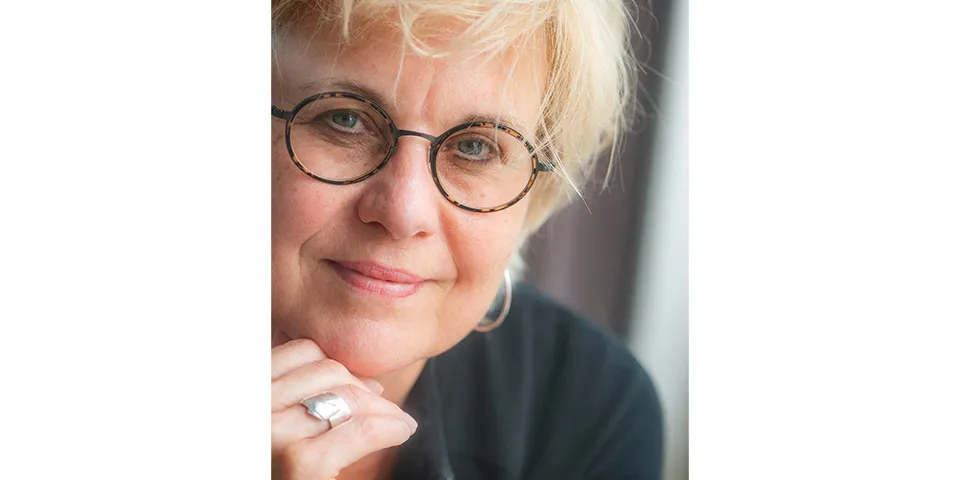
Michèle Blom,
Director-General of Rijkswaterstaat.
Question about this story? Ask your question
Keep following this
Get an email when a new story is published. No account needed.
- SubjectGeneral







