












The Netherlands is seen internationally as a test bed for electric equipment
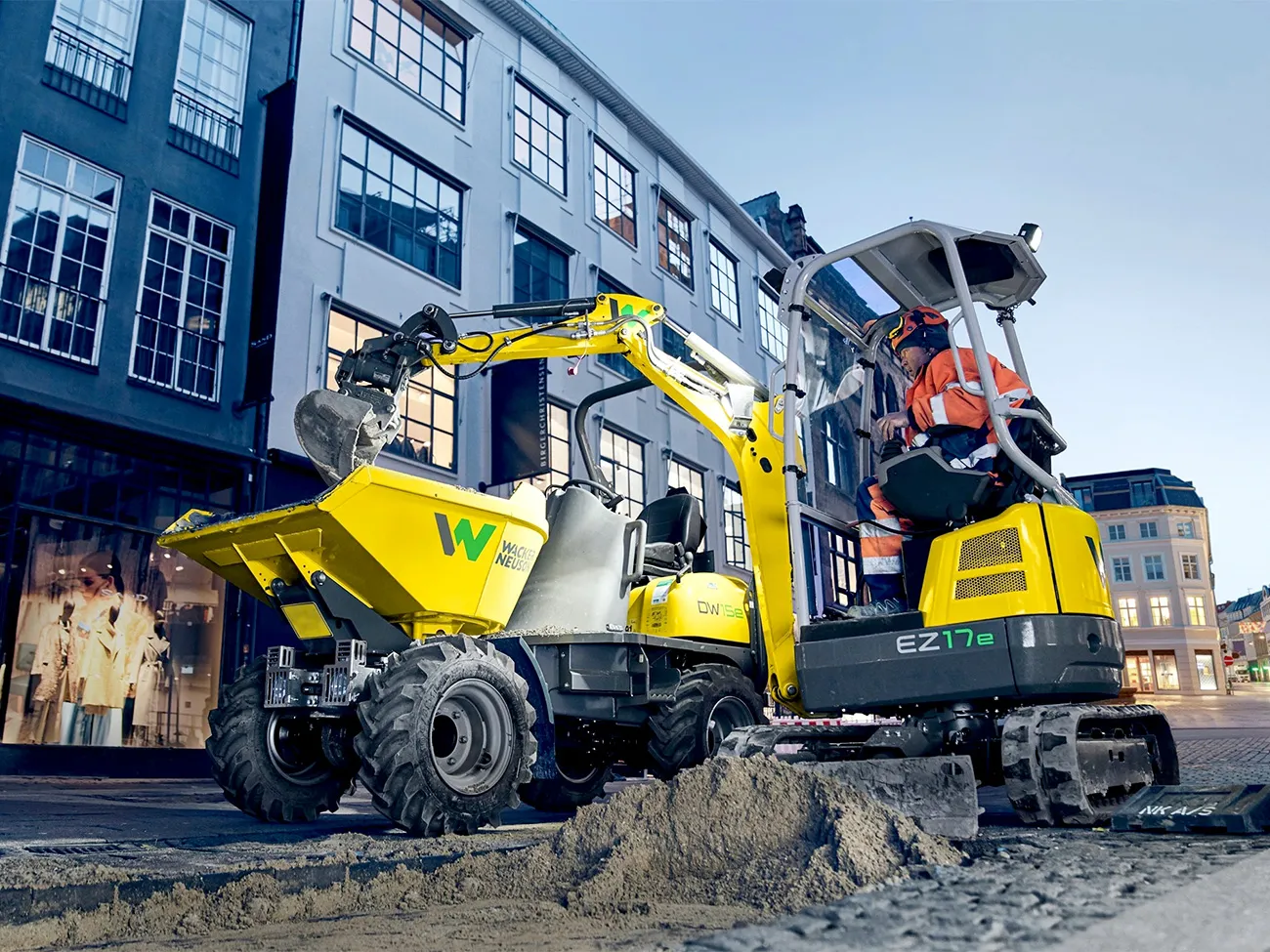
The recent climate summit in Glasgow showed just how difficult it is to halt global warming through collective action. That is a shame, because the Dutch equipment sector demonstrates that when the pressure is on, as during the PFAS and nitrogen crises, many positive initiatives can emerge in a short time.
The construction industry has been feeling the effects of excessive emissions for two years now and is responding by accelerating the shift to electrically powered machinery. The transition is still modest, but the Netherlands is ahead of what manufacturers currently have to offer in terms of sustainability. Companies such as Electric Construction Equipment, ELEO, ETEC, Limach, UMS and Q-Lectra are working hard to make the machinery fleet more sustainable, and the need is clear. A TNO survey published in June on behalf of the government found that more than a third of machines used in agriculture and construction still met the Stage IIIa emissions standard dating from 2006… The shares of Stage II, Stage IIIb, Stage IV and Stage V machines each hover around 15%.
A race appears to be under way to green the country’s equipment fleet more quickly. After all, those able to demonstrate that they are reducing nitrogen emissions can continue construction work without restrictions for the time being. A recent EIB study shows that around €2 billion will be invested in new machinery by 2025. A further €2.5 billion will follow over the next 5 years, and 80% of the current 43,000 mobile machines are expected to be replaced. More than €1 billion worth of replacement investment is being deferred until after 2030. Electric machines are considerably more expensive than models with combustion engines, but maintenance and energy costs are also 50% lower. According to the Economic Institute for Construction (EIB), conditions are already favourable for investment in compact equipment.
Limiting factors
The business case for (medium-)large machines is currently less promising. Purchase prices are two to three times higher, and there is often no infrastructure for charging such equipment on site. Residual values are also uncertain, as there is little or no demand for electric machines abroad. To improve the business case, battery prices will have to fall significantly or additional government subsidies will be needed. It is now known that the Dutch government is making €50 million available to establish a knowledge and innovation programme under the Clean and Emission-Free Construction (SEB) roadmap, to develop clean construction concepts and logistics.
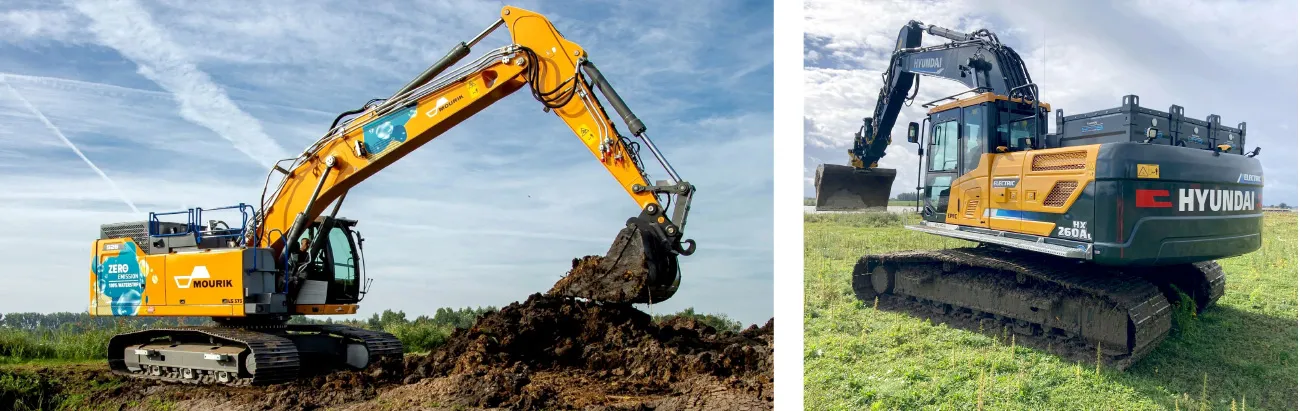
The roadmap sets the ambition of achieving a 60% reduction in nitrogen emissions, a 75% health improvement and a 400,000-tonne reduction in CO2 emissions in construction by 2030. The major construction groups have even more ambitious targets and want to work emission-free sooner. Heijmans, for example, has set 2026 as its target date and aims to be CO2-neutral from 2023. Two electric 24-tonne Liebherr crawler excavators are scheduled to enter service in 2022. They are being developed by UMS in Oss together with importer Wynmalen & Hausmann. A similar project has been completed with Van der Spek for GMB, which recently became the proud owner of a 28-tonne zero-emission Hyundai based on the HX260A. So it is clearly possible to electrify large equipment.
Making major strides
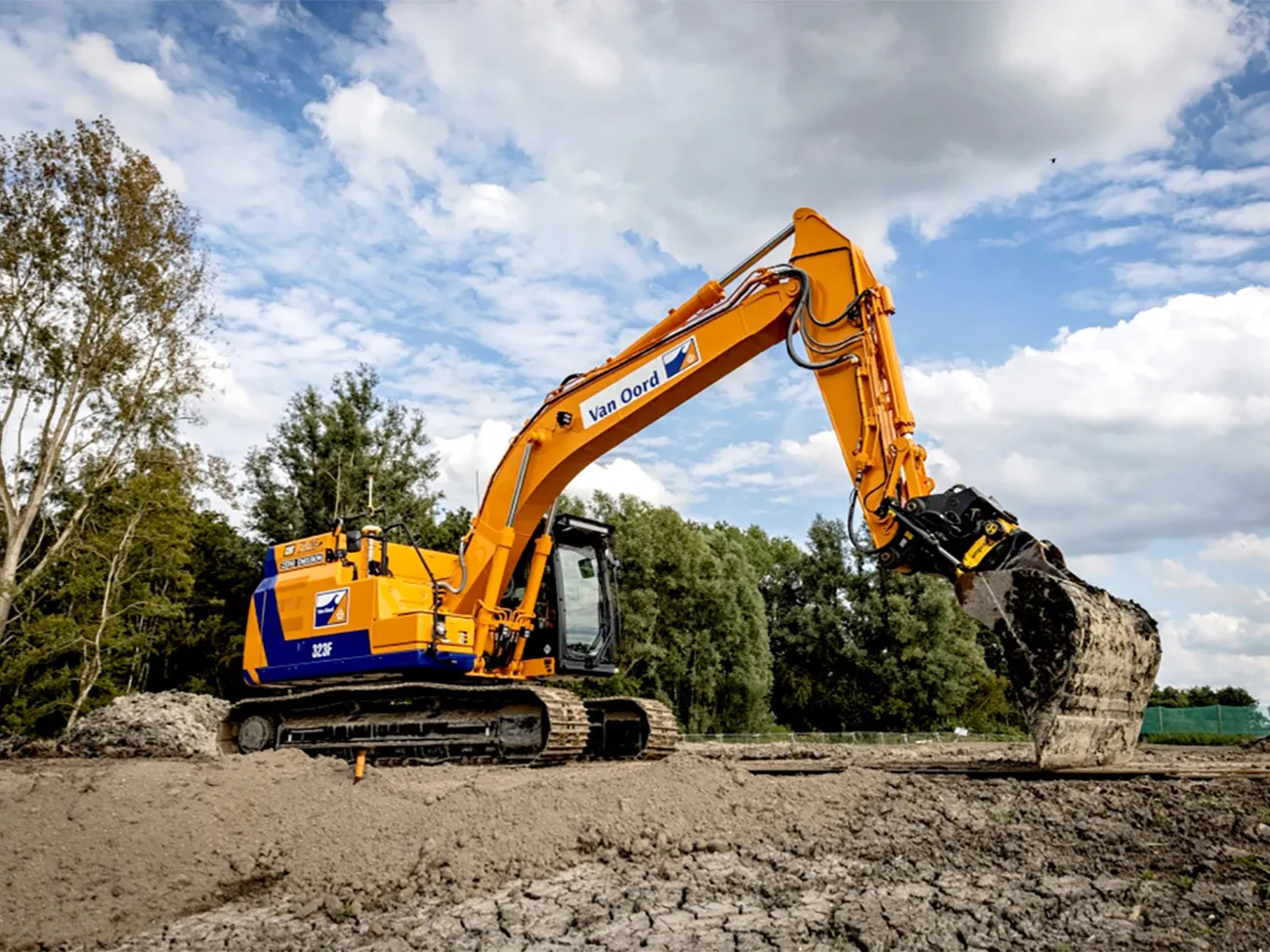
Internationally, the Netherlands is seen as a test bed for electric equipment. Alongside excavators of all sizes, battery packs are also being fitted to mini-loaders, telehandlers, rollers and even an asphalt paver. There are plenty of examples. In just two years, Tobroco-Giant in Oisterwijk built slightly more than six hundred battery-powered articulated loaders, 60% of which were sold in the Netherlands. In the coming years, an emission-free version of almost every type is expected to become available, making it possible to take major strides towards a green construction site. After supplying many mini and midi excavators, Limach delivered its first EW60.1, a 6-tonne wheeled excavator, to Van Gelder in early November.
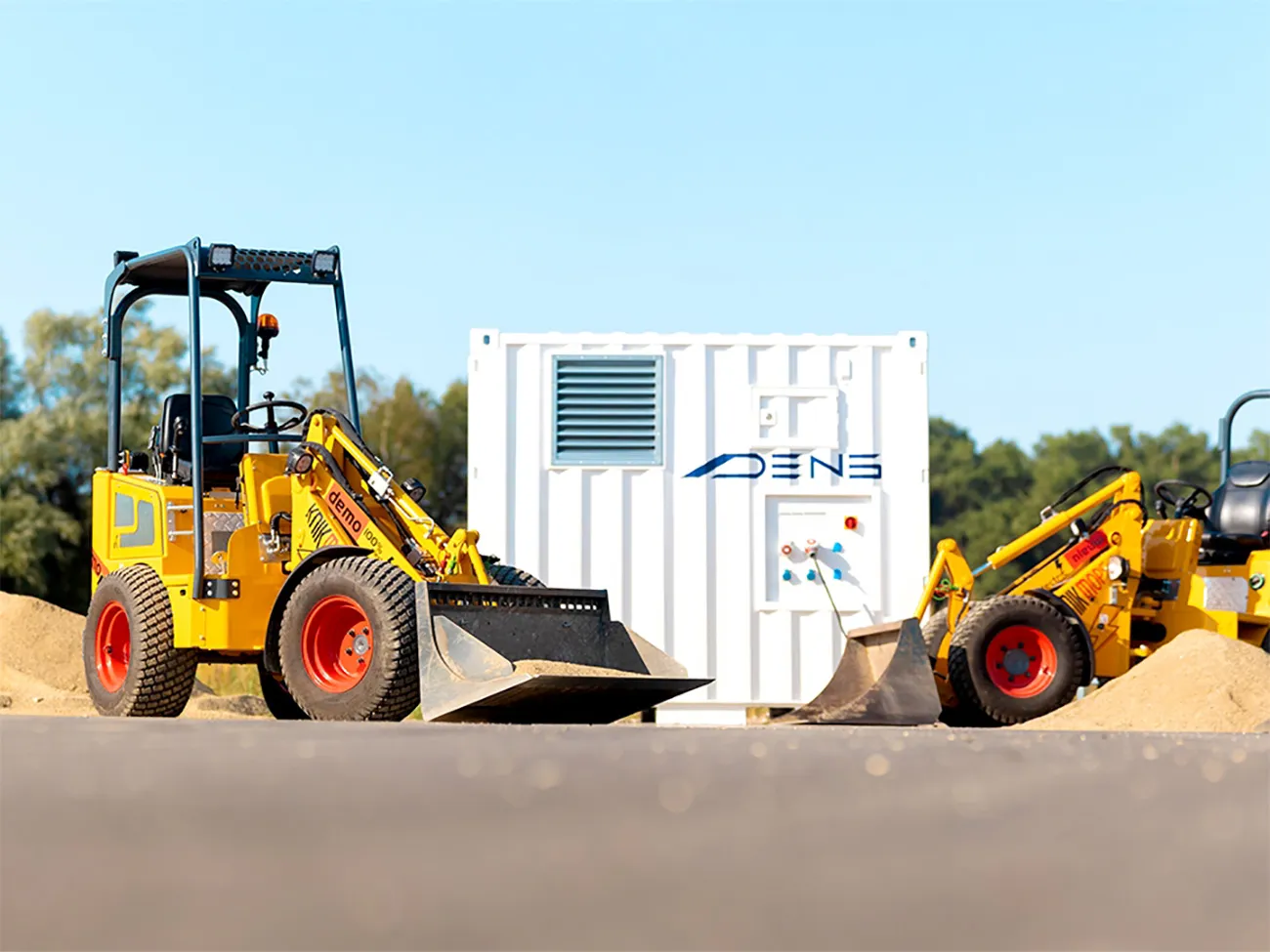
Kovaco entered the Dutch market with an electric skid-steer loader and compact tracked dumper, while Hanenberg Materieel put the Sherpa skid-steer through its improvement process. Conmeq signed agreements with ELEO and Vermeer in the hope of bringing a thousand electric mini-loaders to the European market within 3 years. In a final flourish, Mourik, with help from Accenda, converted a Liebherr R926 into the world’s first deployable hydrogen-powered crawler excavator. And what about the major manufacturers? JCB, Volvo and Wacker Neuson are leading the way with zero-emission machines, but more and more brands are launching their first battery-powered models. Hitachi, for example, now offers the ZE85 as an alternative in the under-10-tonne class.
Question about this story? Ask your question
Keep following this
Get an email when a new story is published. No account needed.
- SubjectGeneral







