












The Future of Work: what does the future of work in logistics look like?
Text Geert Van Cauwenberge Beeld LogiVille / Geert Van Cauwenberge
At the preview of the ‘The Future of Work’ Thematour on 10 March 2025, LogiVille, VIL’s innovative demonstration centre, offered a forward-looking view of how technology is changing the logistics sector. Around 60 professionals and entrepreneurs from the sector saw demonstrations by 15 LogiVille partners, exploring how automation, AI, sustainability and talent development are reshaping tomorrow’s workplace.
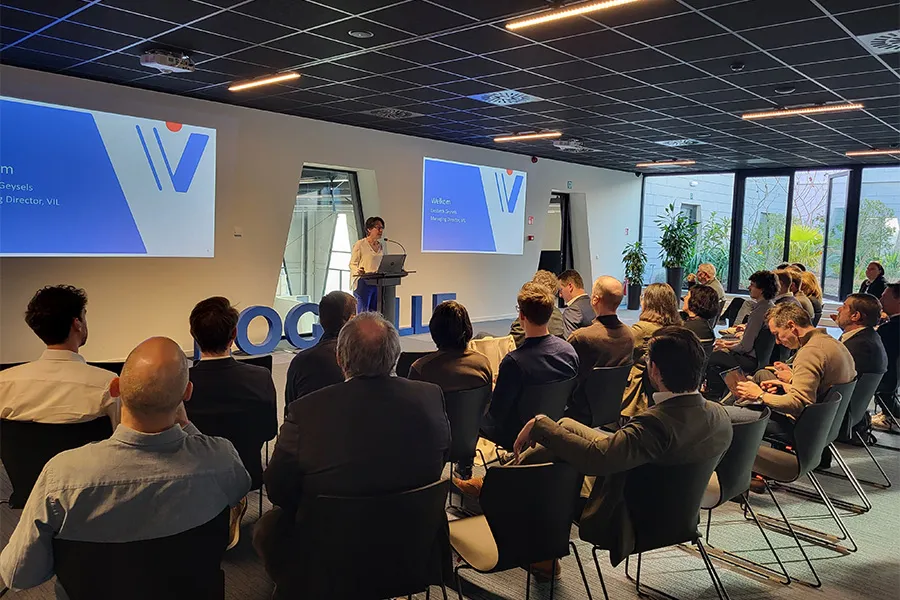
The event opened with remarks from Liesbeth Geysels, Managing Director of VIL, who stressed the importance of proactively responding to change. Logistics is at a crossroads: technological advances are forcing companies to transform, while they must also remain attractive to new talent. Geysels called for a forward-looking vision in which innovation goes hand in hand with human development.
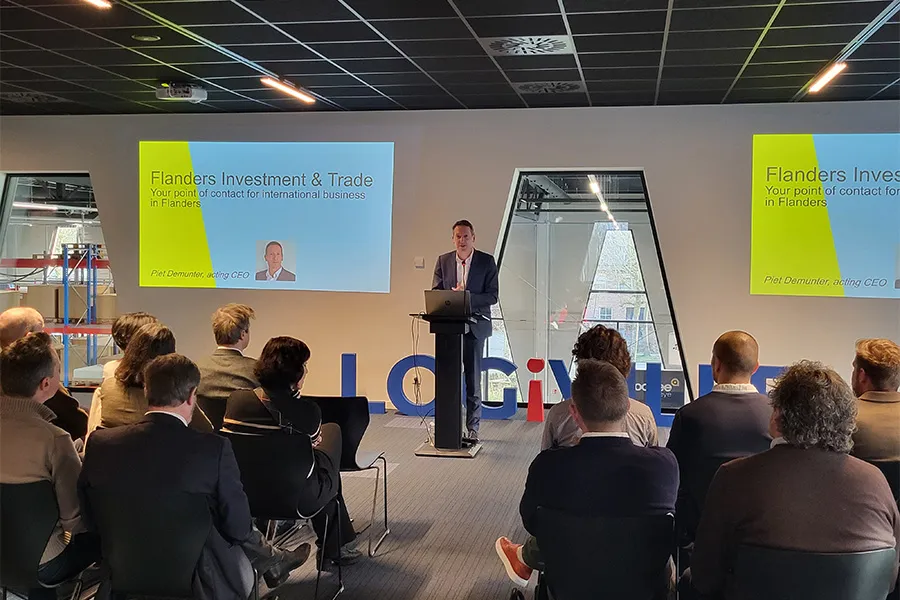
Piet Demunter, Acting CEO of Flanders Investment & Trade (FIT), gave a keynote on the economic role of logistics. The sector is the lifeblood of our economy, Demunter said: without efficient logistics networks, markets grind to a halt and economies stagnate. His experience during a recent Belgian Economic Mission to India, where digital transformation is happening at breakneck speed, illustrates why Flemish companies need to keep pace with the international acceleration.
Three trends that make a difference
Demunter focused on three key areas shaping the future of work in logistics:
- Automation and AI
Technologies such as autonomous trucks, drones and cobots are being deployed increasingly widely. According to McKinsey, up to 30 per cent of working hours in the sector could be automated. But automation does not make people redundant. On the contrary, there is a strong need for reskilling and upskilling to take on new roles. - Sustainability as a strategic asset
Accounting for more than 10 per cent of global CO2 emissions, the sector faces a major climate challenge. Electric trucks, hydrogen solutions and circular supply chains offer both environmental and economic benefits. Sustainability is therefore becoming a driver of innovation. - The talent of the future
Good-quality work, attractive employment conditions and digital training are essential to attracting young talent. Without sufficient recruitment and employee retention, the sector risks running out of steam.
Technology in action
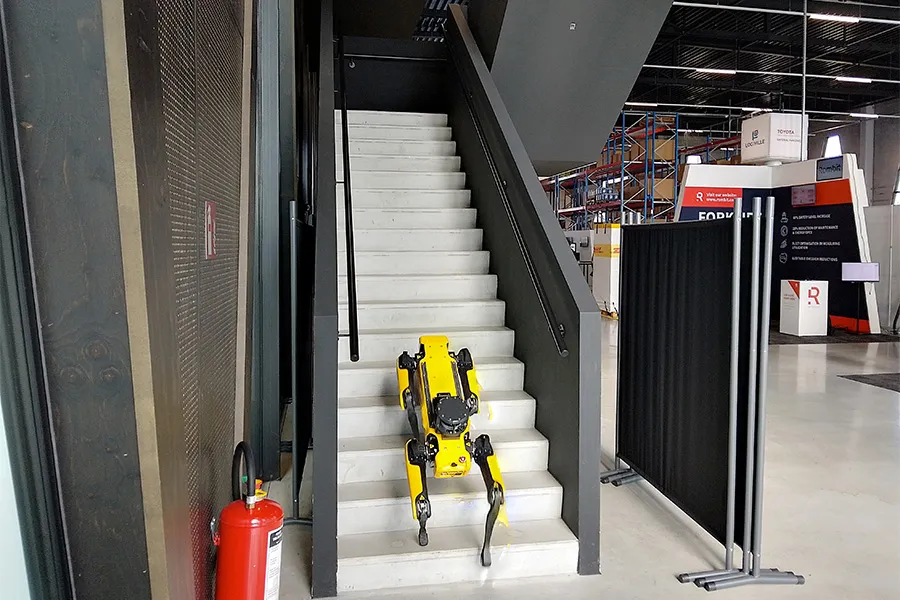
Participants did not just hear about the technology, they also saw it in action. Boston Dynamics’ robotic dog Spot demonstrated its value as a mobile inspection tool, equipped with cameras and sensors. Proximus showcased smart glasses that give technicians hands-free access to information and live support via Teams, particularly useful in maintenance or warehouse environments. Its VR solutions enable digital training, from evacuation drills
to safety instructions.
Customaite automates customs declarations using AI, increasing processing capacity to as many as 140 declarations a day. Artion uses AI and data analytics to make processes smarter and more efficient. Othus offers advanced warehouse automation, with software and robots taking over repetitive tasks.
Flemish start-ups also made their mark. Datashift uses AI to automate repetitive business processes. Altheria introduced XR training to promote safety. NEXTdriver coaches drivers to adopt safer, more fuel-efficient driving habits through data analytics and feedback.
Innovation on the warehouse floor
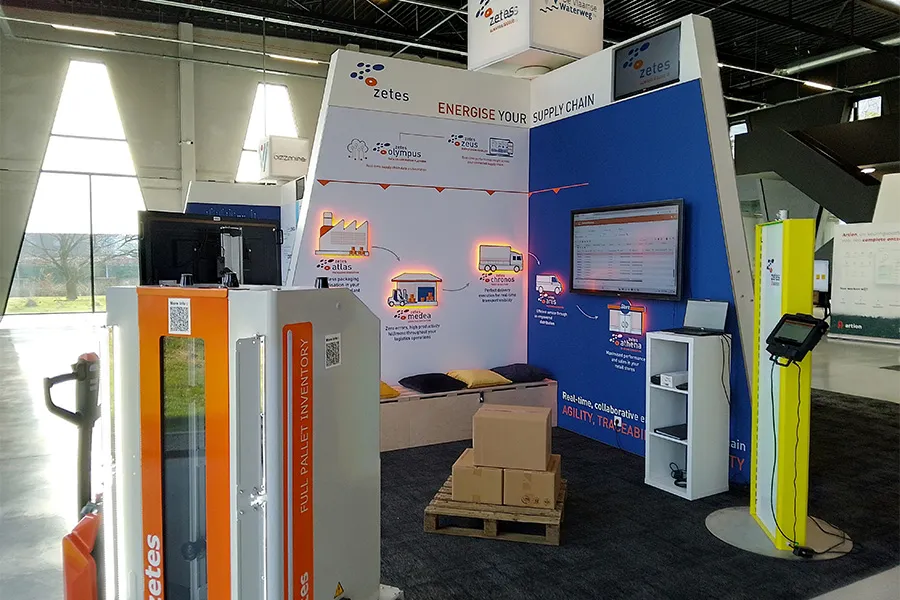
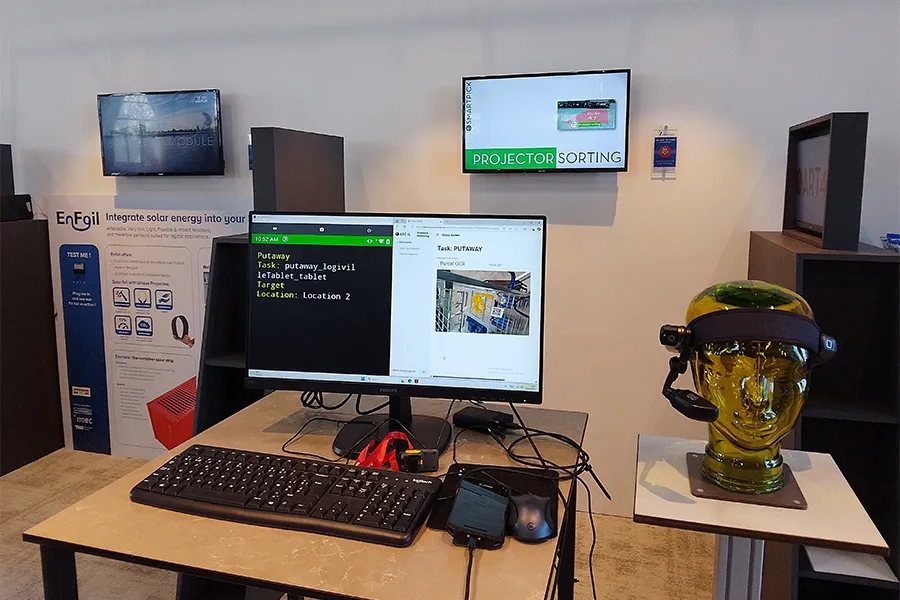
Alongside software, the event also featured practical warehouse solutions. Toyota Material Handling Belgium demonstrated an automated reach truck combined with a radio shuttle, a first for the sector. Zetes showed how forklift operators can scan pallets without any additional steps, thanks to automated inventory capture. Art4L developed SMARTPICK, a flexible platform that guides operators through their tasks in real time.
Zeal Robotics and Alax Automation showcased autonomous mobile robots (AMRs) that move goods independently without requiring additional infrastructure. EYESEE offers drones for inventory management that count stock efficiently and accurately. Sensolus, founded in Ghent, completed the picture with wireless IoT trackers that monitor non-powered assets, such as containers and pallets, in real time, without the need for cabling or expensive infrastructure.
The ‘The Future of Work’ Thematour made it clear that the logistics sector is facing major but exciting changes. Thanks to its strong innovation climate and entrepreneurial spirit, Flanders is ready to continue playing a pioneering role.
Question about this story? Ask your question
Companies in this story

Keep following this
Get an email when a new story is published. No account needed.
- SubjectGeneral
- CompanyToyota Material Handling Belgium
- CompanySensolus







