












The attractive properties of Douglas fir timber
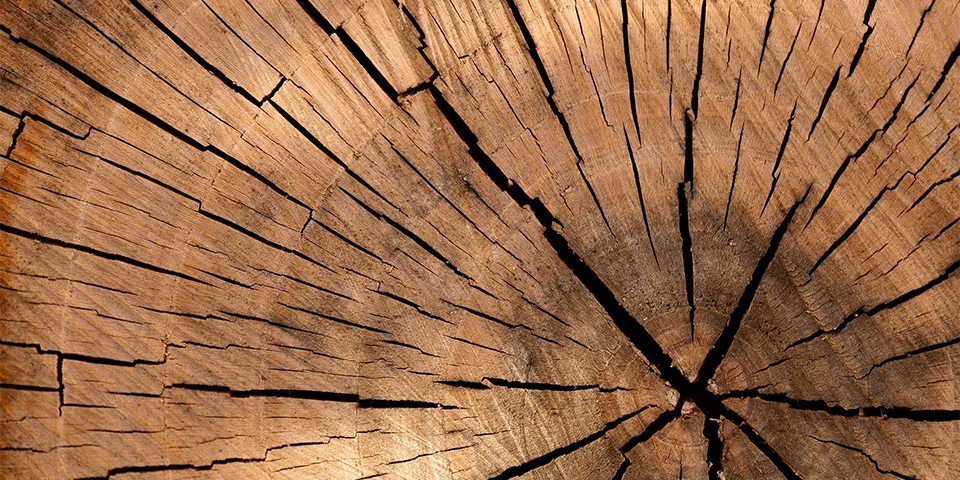
Douglas fir is a softwood that is increasingly used for bank protection and flood defences. It is one of the hardest European softwoods and is also used in structures such as bridges, decking and verandas. It is a cheaper alternative to more expensive hardwood.
This is just one of the many properties of affordable Douglas fir timber. The wood is also very attractive, with a fine to moderately coarse grain. Untreated Douglas fir boards have a service life of 10 to 15 years. Once dried, Douglas fir becomes harder, another useful property of this attractive softwood. Garden timber made from Douglas fir is recognisable by its beautiful reddish-brown heartwood and yellowish sapwood. If left untreated, it gradually turns blue-grey. To prevent this, it can be treated with stain or another wood preservative.
Working with the timber
Although even the cheapest Douglas fir timber is a very hard wood, there are a few things to bear in mind when working with it. Pre-drilling before inserting screws is recommended, although very good specialist screws with drill points are now available. Douglas fir is easy and quick to glue, but difficult to bend. With good, sharp tools, this hard wood is easy to work.
Applications
The quality of Douglas fir timber makes it suitable for a wide range of applications. As mentioned above, it is used for bank protection, flood defences and sheet piling. Other outdoor applications include fencing, pergolas, verandas, flooring, decking, terraces, bridges and footbridges. Indoors, it can be used for floors, ceilings, dado panelling and other wall cladding. This softwood from north-western Europe is highly durable and naturally strong. Douglas fir is also found in the Netherlands. It is an environmentally friendly, sustainable alternative both to pressure-treated spruce, which contains harmful substances, and to more expensive hardwood, which usually has to be imported and is therefore not sustainable. Douglas fir timber is also much more attractive than cheaper spruce. Thanks to increased planting of Douglas fir, particularly in France and Germany, it is now more widely available.
Question about this story? Ask your question
Keep following this
Get an email when a new story is published. No account needed.
- SubjectGeneral







