












Stage V environmental standards
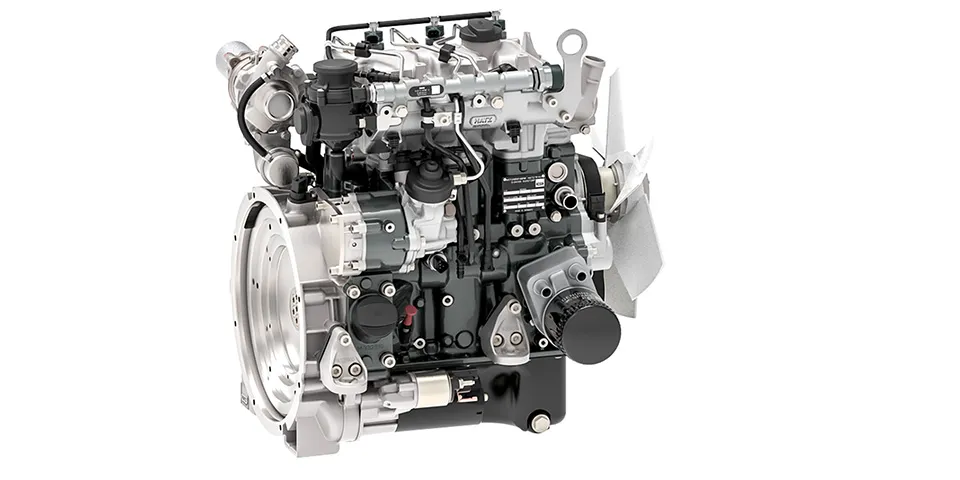
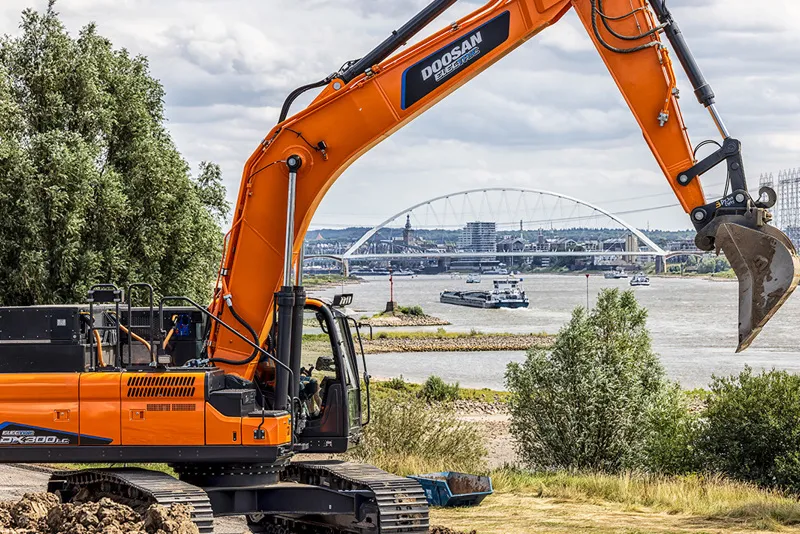
European emissions standards for engines used in non-road mobile machinery (NRMM) have gradually become stricter since the introduction of the Stage I standard in 1997. Since 2019, the Stage V standard, Regulation 2016/1628, which replaces Directive 97/68/EC, has applied to most engines. These standards cover equipment such as industrial drilling rigs, compressors, wheel loaders, bulldozers, non-road trucks, excavators, forklifts, road construction machinery, snowploughs and mobile cranes.
The Stage V legislation was proposed in 2014 and finalised in 2016. The standards came into force in 2019 for engines with an output of less than 56 kW and more than 130 kW. From 2020, they also apply to engines rated at 56 to 130 kW. Stage V was also extended to cover a number of engines that had not previously been regulated. The standards are due to be reviewed at the end of 2020, with a view to introducing even stricter requirements. While the Stage III and IV standards were broadly aligned with the US (Tier 3/7) and Japanese standards, Stage V diverges once again. For example, US Tier 4 standards can be met without filters. Stage V standards cover emissions of CO, HC, NOx and particulate matter. The limit for the latter is much stricter, falling from 0.025 g/kWh to 0.015 g/kWh.
Compact installations
To meet Stage V standards, a particulate filter is almost always required, in addition to selective catalytic reduction (SCR) and a diesel oxidation catalyst (DOC), primarily to limit the number of particulate emissions. This makes the complete engine package larger, something machine builders need to take into account, particularly if they also use EGR (exhaust gas recirculation), which requires a larger cooling system.
Even so, most engine manufacturers have managed to keep their engine packages as compact as possible while still meeting the Stage V standard.
Volvo Penta engine package, with the exhaust gas aftertreatment system clearly visible.
Examples
This year, Perkins introduced a range of engines with displacements of 0.5 to 18 litres (4 to 597 kW) that meet the Stage V standard. Perkins is also working on electric-hybrid, mechanical-hybrid and hydraulic-hybrid solutions. Volvo Penta’s entire engine range (D5, D8, D11, D13 and D16) meets the latest standard, with outputs from 105 to 585 kW. Notably, the engines require 20 % less cooling, allowing the radiator to be made smaller. In terms of TCO, the oil change interval has been extended from 500 to 1,000 operating hours. John Deere, in turn, offers a range of Stage V engines with displacements of 2.9 to 13.6 litres and outputs from 36 to 500 kW. The engines have been optimised for easy installation. Cummins meets Stage V standards with all engines in its F3.8 to X15 series, while Hatz has launched the E1, its first electronically controlled single-cylinder engine, with outputs of up to 12 kW.
Deutz can also supply all its engines in Stage V versions, and has also developed gas- and hydrogen-powered engines. Kubota does the same, offering engines that run on diesel, petrol, LPG and natural gas. Yanmar has developed LPG-powered industrial engines that meet the Stage V standard. Gas engines produce fewer particulates. Kohler engines with
Bluetooth technology are also already Stage V-compliant, and FPT Industrial’s range includes both combustion engines and electric solutions, with the Cursor X 4.0 as a highlight. Finally, MAN Engines has introduced, among other models, the new D4276 six-cylinder Stage V engine with outputs of 450 to 515 kW; Caterpillar markets the C2.2, C3.6, C4.4, C13B and C27 as Stage V engines; and Doosan offers a range of portable compressors that meet Stage V. These are just a few examples, but all engine manufacturers now offer Stage V versions, while also working on hybrid and electric solutions and the use of alternative fuels.
Question about this story? Ask your question
Keep following this
Get an email when a new story is published. No account needed.
- SubjectGeneral







