












Safety standards in construction
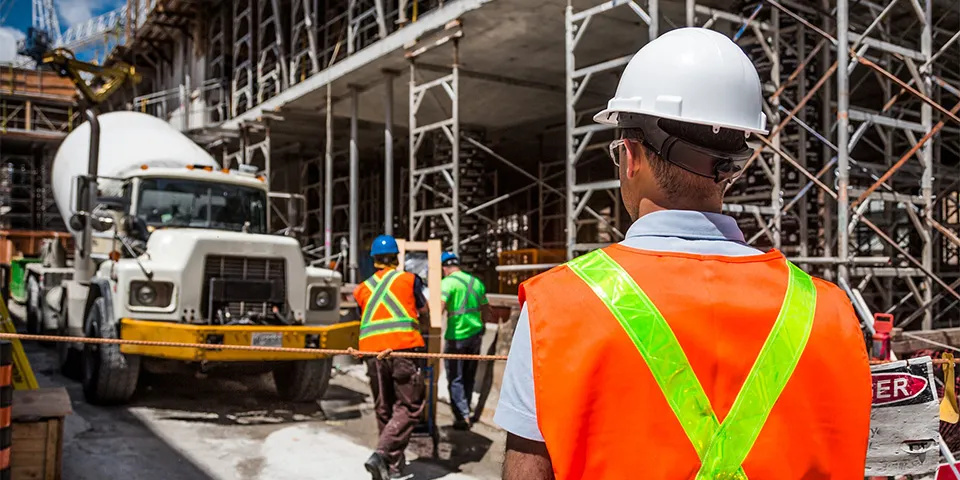
Physical strain is the main cause of work-related illness in the construction industry. A large proportion of accidents in construction are caused by falls and trips. Another cause of accidents in construction is working at height without adequate protection. Falls from height often result in serious injury or even death.
Occupational health and safety
Just over half of construction companies have a risk assessment and evaluation (RI&E), although this is a legal requirement for all companies. However, many companies have not documented all the risks present. Almost half of construction companies have a written action plan, which is also a legal requirement for all companies. The most common occupational risks in construction are lifting, pushing, pulling and carrying. Awkward and/or static working postures are also common. Working at height is a very specific risk. Working with machinery and in confined spaces also poses a genuine risk to employees.
Occupational illness
The most frequently reported occupational illnesses in construction are hearing disorders and musculoskeletal disorders. Together, these two types of illness account for 91% of all reported cases.
Personal protective equipment
To work safely, individual employees may need personal protective equipment. Equipment designed to protect vital areas such as the head, eyes, ears, hands and feet can significantly reduce the risk of injury, including permanent injury. Fall protection is designed to prevent falls from great heights.
There are three categories of personal protective equipment (PPE):
- Category I: protection against low risks, such as sunglasses, waterproof clothing and basic gloves.
- Category II: protection against medium risks, such as safety glasses and a safety helmet.
- Category III: protection against high risks, such as a safety harness.
To ensure your employees are optimally protected, employers must purchase suitable protective equipment. At Bowork, you can be sure that the equipment meets the requirements of the Personal Protective Equipment (Commodities Act) Decree. The safety requirements also vary by risk category.
Quality requirements
PPE may only be used if it meets certain quality requirements. It is important that the PPE bears a CE marking and comes with instructions for use. The manufacturer must compile a technical file for the product and state what level of protection the PPE can be expected to provide. It goes without saying that the requirements are highest for Category III. The manufacture of the protective equipment must be covered by a quality assurance system recognised by the EC. Respiratory protective equipment is one example.
With the right equipment and good guidance, you can protect employees against many risks. Therefore, choose only certified protective equipment.
Question about this story? Ask your question
Keep following this
Get an email when a new story is published. No account needed.
- SubjectGeneral







