












Proximus unveils innovative aR and VR glasses set to transform logistics processes and training
Text Geert Van Cauwenberge Beeld ProximusNXT
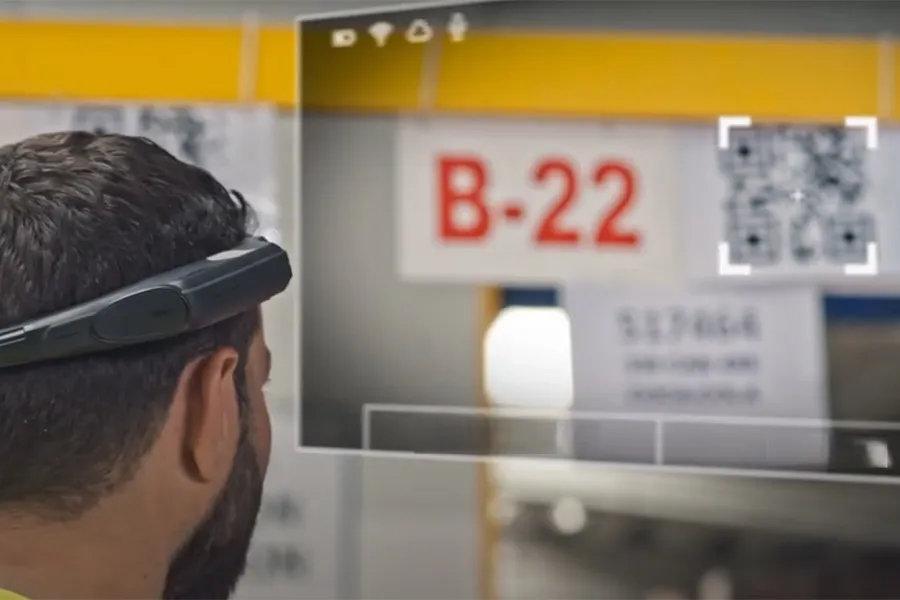
At the preview of the ‘The Future of Work’ Thematour at LogiVille, VIL’s innovative demonstration centre, logistics professionals got a glimpse of how technology is fundamentally reshaping their sector. One standout attraction? ProximusNXT’s smart glasses, which enable warehouse and transport workers to work more efficiently, safely and flexibly. With virtual and assisted reality (VR and aR), training, support and administration are being transformed into a digital experience.
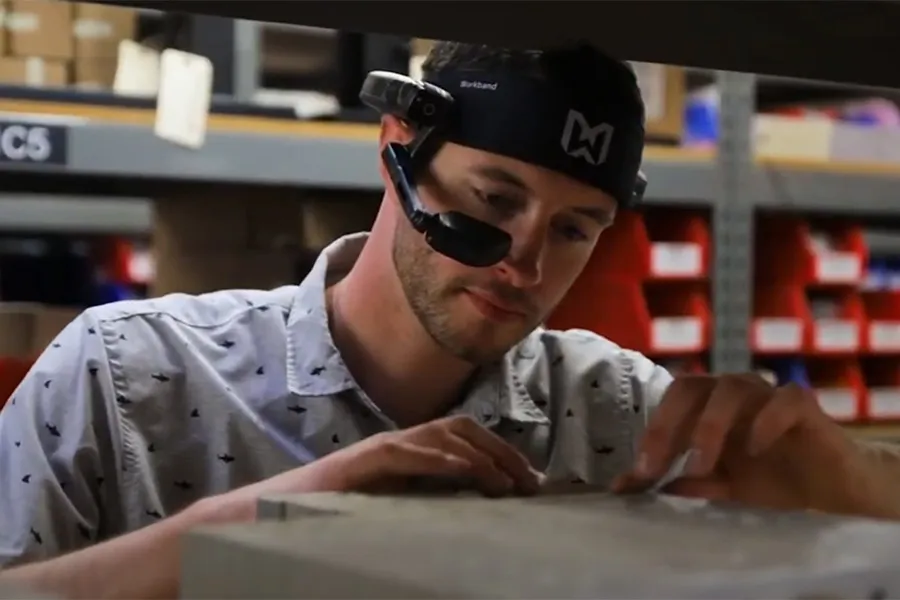
AR and VR technology is no longer science fiction, but a practical tool that delivers immediate value in logistics. This became clear during the ProximusNXT demo session, presented by Francis Duvivier, IoT Business Developer and Solution Manager, and Joke Tisaun, Business Innovation & Development Manager. The innovative applications, designed specifically for operational processes such as warehousing, maintenance, training and transport, attracted the attention of numerous professionals.
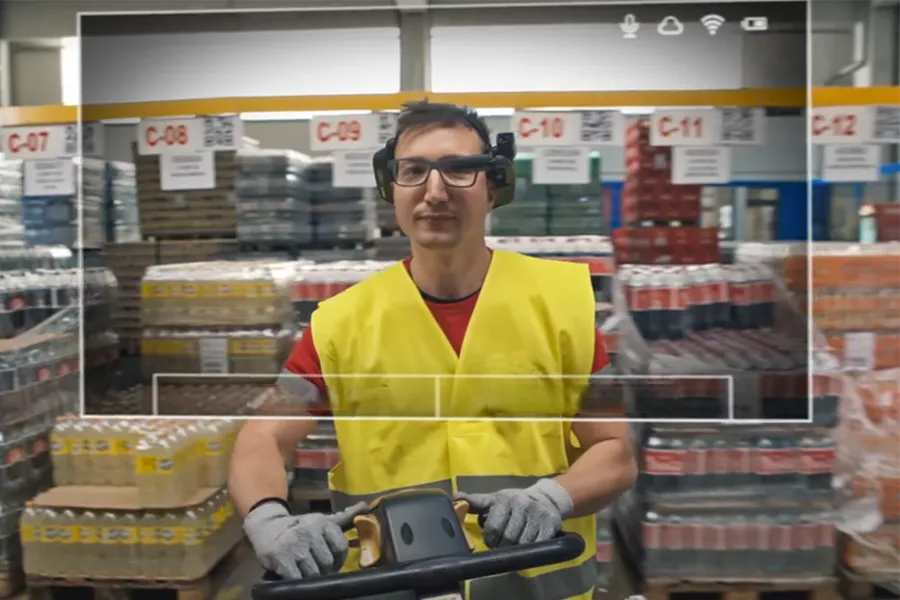
During the Thematour, Francis Duvivier demonstrated the power of Assisted Reality. “With an aR headset, you can provide workers on the shop floor with immediate remote support,” he says. “Imagine a warehouse worker who needs help interpreting a technical drawing: thanks to the built-in camera, an expert can view it remotely and give instructions that the worker sees on a small screen. This not only saves time, but also improves safety and efficiency.”
The headset offers a major advantage for logistics operations such as order picking. “QR codes can be scanned easily while the user accesses documentation, videos and instructions, all hands-free, leaving both hands free to work safely. They also retain their full field of vision and remain aware of their surroundings, which is crucial in a dynamic warehouse environment.”
“The headset can automatically tick off process steps. Think quality control or inventory management: there’s no need to make notes afterwards,” says Duvivier. “The data is stored in real time, resulting in fewer errors and better traceability. And because the headset connects via Wi-Fi, 4G or 5G, it can be used almost anywhere, from the warehouse to a customer’s site.”
Training in a virtual world
While aR provides support on the job, VR focuses on education and training. This was the central theme of Joke Tisaun’s demonstration.
“Virtual reality makes it possible to simulate complex or dangerous situations safely,” says Tisaun. “A fire safety training session or first aid scenario can be experienced in a lifelike way, without having to recreate a physical environment. That is not only safer, but also cost-effective.”
“In sectors where every minute counts, such as healthcare or aviation, training in a VR environment can deliver enormous benefits. Think of cleaning an operating theatre or handling hazardous substances. In a digital twin environment, these situations can be practised without risk. And when you consider that every unused minute in a hospital operating theatre costs a hundred euros, the sums add up quickly.”
“Students or trainees can take the training when it suits them, in their own language and in an environment tailored to their learning style,” says Tisaun. “The technology is backed by scientific research: users absorb information more quickly and feel more engaged with the content.”
Gamification also plays an important role, particularly for younger generations. “We develop avatars that can be used in role-playing exercises, for example in aggression management training or customer conversations. This makes training not only more efficient, but also more enjoyable and realistic.”
Two headsets, one vision
The strength of ProximusNXT’s approach lies in combining aR and VR. Employees first receive thorough training in a safe virtual environment. They are then given further guidance on the shop floor using the aR headset. This creates a continuous learning cycle, from preparation to practice.
“The applications can be fully adapted to a company’s needs,” Tisaun emphasises. “We offer off-the-shelf training that can be used straight away, but can also develop bespoke content with our content partners. Whether it’s forklift training, safety instructions or logistics process flows, anything can be
adapted.”
Question about this story? Ask your question
Keep following this
Get an email when a new story is published. No account needed.
- SubjectGeneral







