












“Smart Mobility” innovations abound. Time to get down to business!
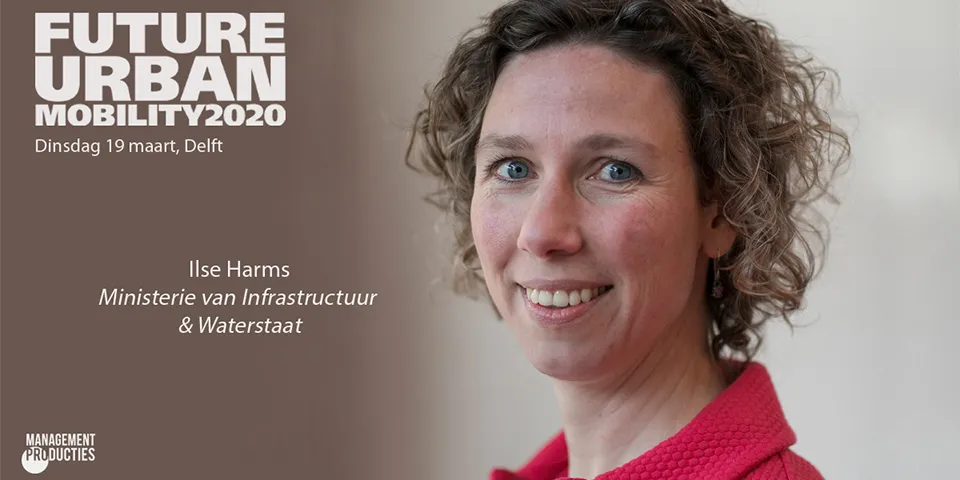
Mobility and urbanisation go hand in hand. A successful combination is only possible if national and regional government join forces to make real progress. But what is needed? Which developments, innovations and partnerships are crucial to making mobility and urbanisation work together as effectively as possible? In 2020, we face a major mobility challenge. We have a demobility task ahead of us. This calls for new transport models, zero-emission urban logistics and the use of technology for intelligent mobility.
Sharing data. As extensively as possible, and as quickly as possible. In the short term, too. That is the direction the Netherlands needs to take: sharing data between central government, municipalities and provinces, as well as with private businesses. This is where the real potential lies: when these parties work together to deliver intelligent mobility. Traffic flows can then be better managed, or even forecast more accurately. By recommending smarter routes and travel times to road users, this can have a positive impact on congestion in cities and on ring roads, as well as on safety. “Tomorrow’s mobility must be more connected than ever, at street level, in our daily lives and in the benefits it delivers,” says Paul van Koningsbruggen, Director Mobility at Technolution. Paul van Koningsbruggen is not alone in this view. Hans Hugo Smit, area marketing manager at BPD, also argues that new mobility applications will allow us to shape cities around people rather than cars.
Policymakers, directors and managers will discuss these visions in Delft on 19 March 2020 at Future Urban Mobility 2020. What challenges do we face? Speakers include:
Lars van der Meulen, Director CSR
Ger Baron, City of Amsterdam
Cathelijne Hermans, Royal HaskoningDHV
Question about this story? Ask your question
Keep following this
Get an email when a new story is published. No account needed.
- SubjectGeneral







