












Mobilis and Croonwolter&dros consortium built new lock and is renovating existing one
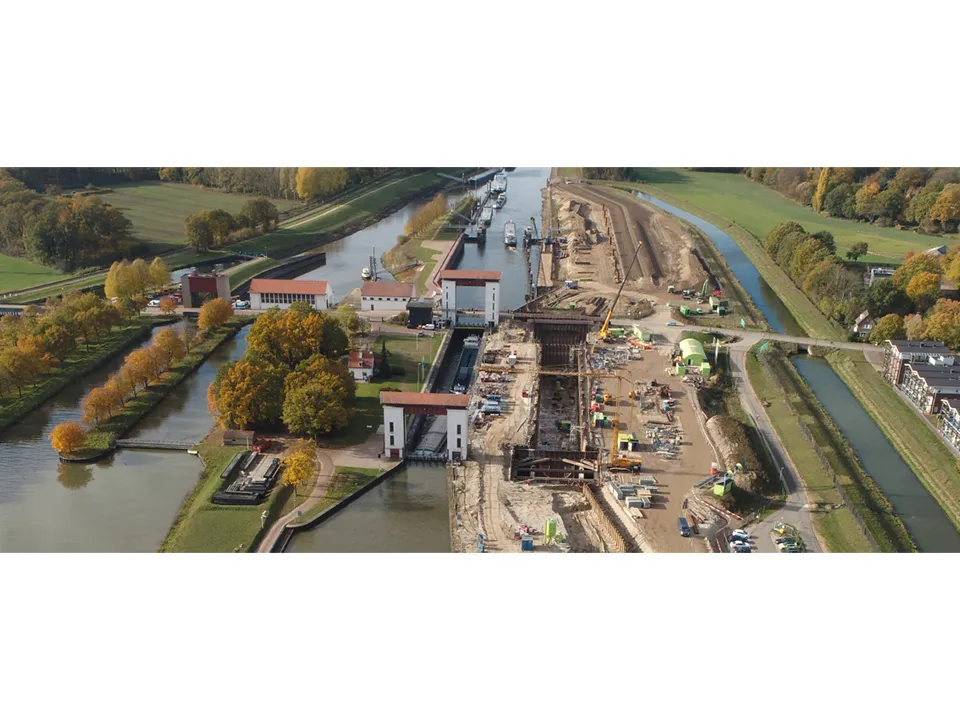
In 2016, the consortium ‘Lock to Twente’, a partnership between TBI companies Mobilis (civil engineering), Croonwolter&dros (technological solutions) and TBI PPP (financing), won the tender to build a second lock at Eefde.
Lock to Twente (L2T) is responsible for the project’s pre-financing, design and construction. The contract also includes 27 years of maintenance for the new lock.
Preparatory work for the expansion began in 2017, with construction starting in January 2018. Ships have been passing through the new lock since April 2020. The second lock chamber at Eefde reduces waiting times for ships and makes access to the Twente Canals less vulnerable to maintenance work and breakdowns. The new lock can accommodate Class Va vessels, the largest type of vessel permitted after the Twente Canals are upgraded. We speak to Paul Schaap, DBM Manager for EPC L2T (representing TBI), and Robbert Visser, Project Manager for the client, Rijkswaterstaat.
Smart choices make Eefde Lock safe and future-proof
“The new lock chamber has now been completed and is in use. In the second phase, which we are currently in, the old lock is being renovated,” Paul begins. Robbert adds: “The remaining work on the new lock involves completing the buildings and installing new sheet piles in the outer harbours.” L2T impressed in the tender with innovative and sustainable choices. Robbert explains: “For example, we proposed a sector gate. It is no cheaper to build than two mitre gates, but is considerably cheaper to maintain.” Paul says: “This sector gate is unique in the Netherlands on this scale. It is located on the canal side of the lock complex and lies flat on the bottom when the lock is open. From this position, it swings upwards as the lock closes. The gate also works under very high water pressure, for example if the other lock gate loses its watertight function due to damage. This can lead to large differences in water levels. In the event of an incident in the lock, this feature contributes to safety.” The new chamber was designed to be energy-neutral. Robbert says: “The technical installations will be energy-efficient. The energy still needed to operate the chamber will be generated at the lock complex using solar panels.”
Question about this story? Ask your question
Keep following this
Get an email when a new story is published. No account needed.
- SubjectGeneral







