












Lokhorst expands its fleet with new Doosan DX140W-7
Earthmoving company Lokhorst, based in Epe, has been in business for over half a century and employs eighteen people. During the peak season, however, that number can rise to fifty. The company mainly carries out earthworks, particularly in road construction. It has many regular customers and maintains close contact with them. “It’s better to call ten times too often than once too little,” says owner Peter.
Versatile all-rounder proves its worth in the polders
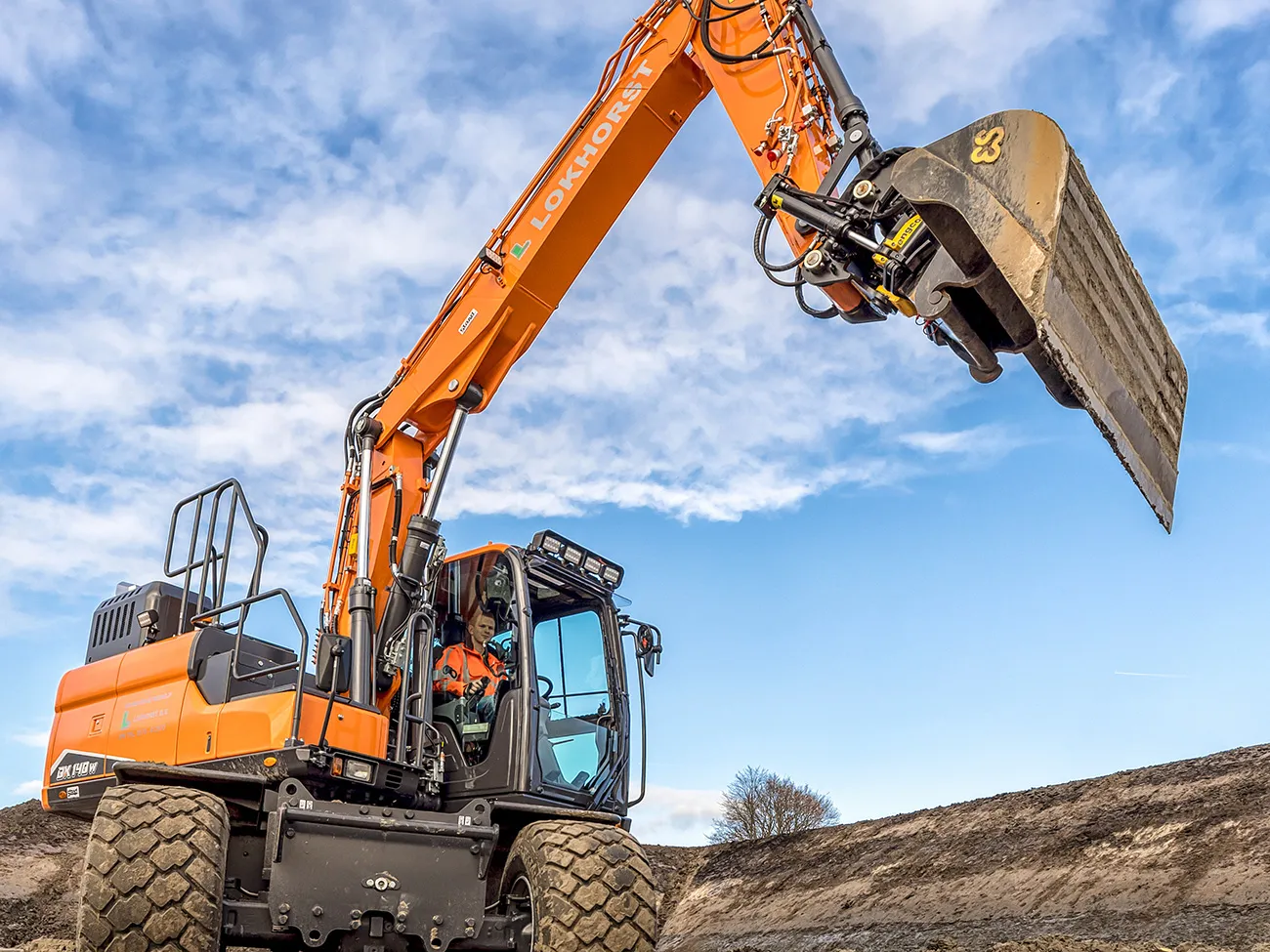
The new Doosan DX140W-7 wheeled excavator in Peter’s fleet is a true all-rounder. It is the most reliable, hard-working machine on the market, powered by a high-performance Stage V engine. It is no coincidence that another one will soon be joining the fleet. Other Doosan machines operated by Lokhorst include the DX225LC-5 crawler excavator, with its 6-cylinder Doosan DL06 engine, and the powerful Doosan DX300LC-5 crawler excavator.
A change of direction
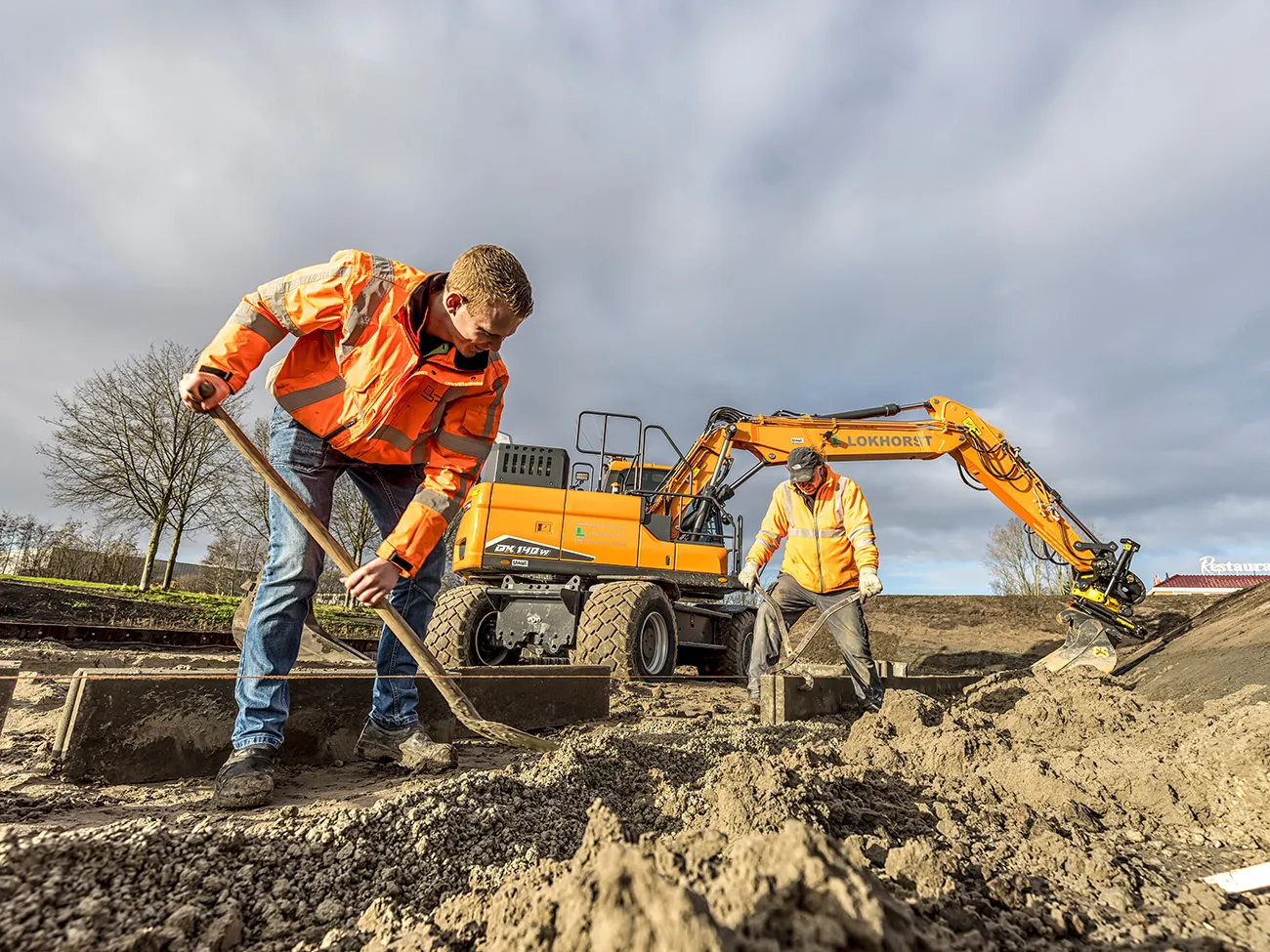
Peter’s grandfather started out small, loading timber in the forest. Peter’s father, however, was not particularly interested in timber and decided to switch to the excavator business. Peter always knew he would follow in his footsteps. “I can’t remember a time when I didn’t go along to look around and occasionally lend a hand. That was still allowed back then, but things are different nowadays.”
The company has been based at the same site for three generations, with the family home right next door. In the past, Peter’s mother Gerrie handled everything behind the scenes, while his father Gijs operated the machines. Both still feel closely involved with the business. Peter does not yet know whether his children will follow in his footsteps. “It shouldn’t be an obligation. If you don’t have a passion for it, you shouldn’t do it.”
Extensive fleet
Lokhorst’s fleet includes a wide range of equipment: midi excavators, lorries, wheeled excavators, crawler excavators and a brand-new DX140W-7 wheeled excavator, with Jurgen as its regular operator. Each machine has a regular operator who can work closely with Peter. When purchasing a machine, he considers various options, such as GPS and a tiltrotator. “We try to make sure each machine is fully equipped. It’s our calling card, after all.”
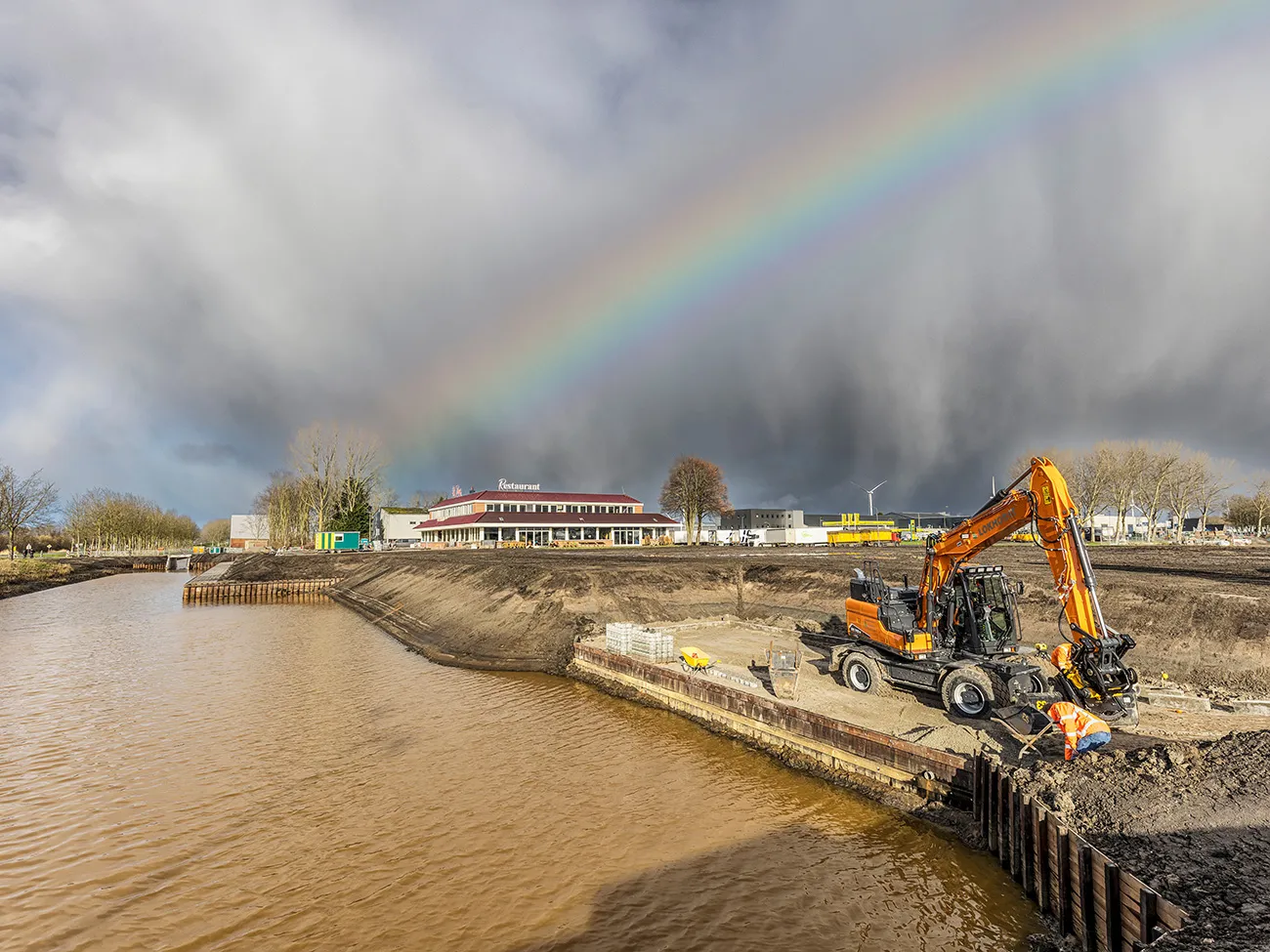
Lokhorst’s customers are mainly contractors in the infrastructure sector and related fields. Much of the work is carried out in the Flevopolder. The DX140W-7 is currently operating in Zeewolde, where the entire sewer system on an industrial estate is being replaced. In Almere, Lokhorst is working on Floriade, a world horticultural exhibition held in the Netherlands once every ten years. The DX225LC-5 is being used there to bring the ‘Growing Green Cities’ theme to life.
Taking the hassle out of it
Peter places great importance on maintaining contact with customers and considers their satisfaction essential. “We’re here to take the hassle out of it and sort things out when something isn’t right.” He is happy with how things are going and has no need to grow too much, so he can continue transporting the machines himself and keep an overview.
Fuel prices rose sharply last year. Because of coronavirus, everyone also has to travel separately. “You can’t always pass costs like that on to clients, but sooner or later we’ll have to.” At the same time, the company is under growing pressure to operate sustainably. Lokhorst’s machines therefore run on HVO biodiesel when requested, and the company has bought its first electric mini excavator.
A new challenge
Peter sees charging as the biggest challenge when it comes to sustainability. “You really need a job that’s suited to it. If you send an electric excavator out into the polder, it needs to reach a charging point after a few hours, or you need to be able to swap its battery.” The operators also have to make the switch. “Fortunately, they understand that things are going to change.”
Question about this story? Ask your question
Keep following this
Get an email when a new story is published. No account needed.
- SubjectGeneral







