












Logistics & Real Estate Belgium 2025: inspiration, networking and visions of the future
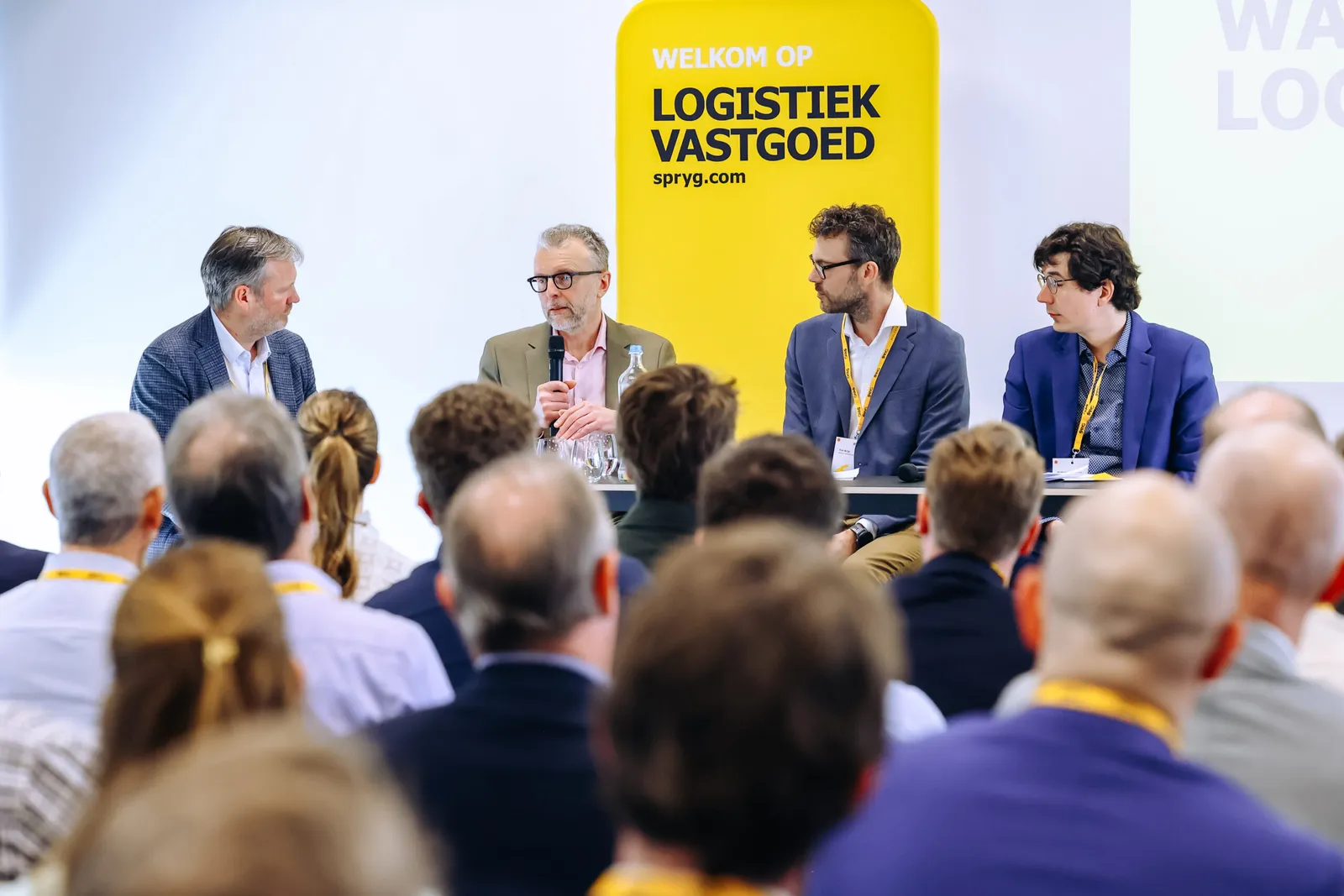
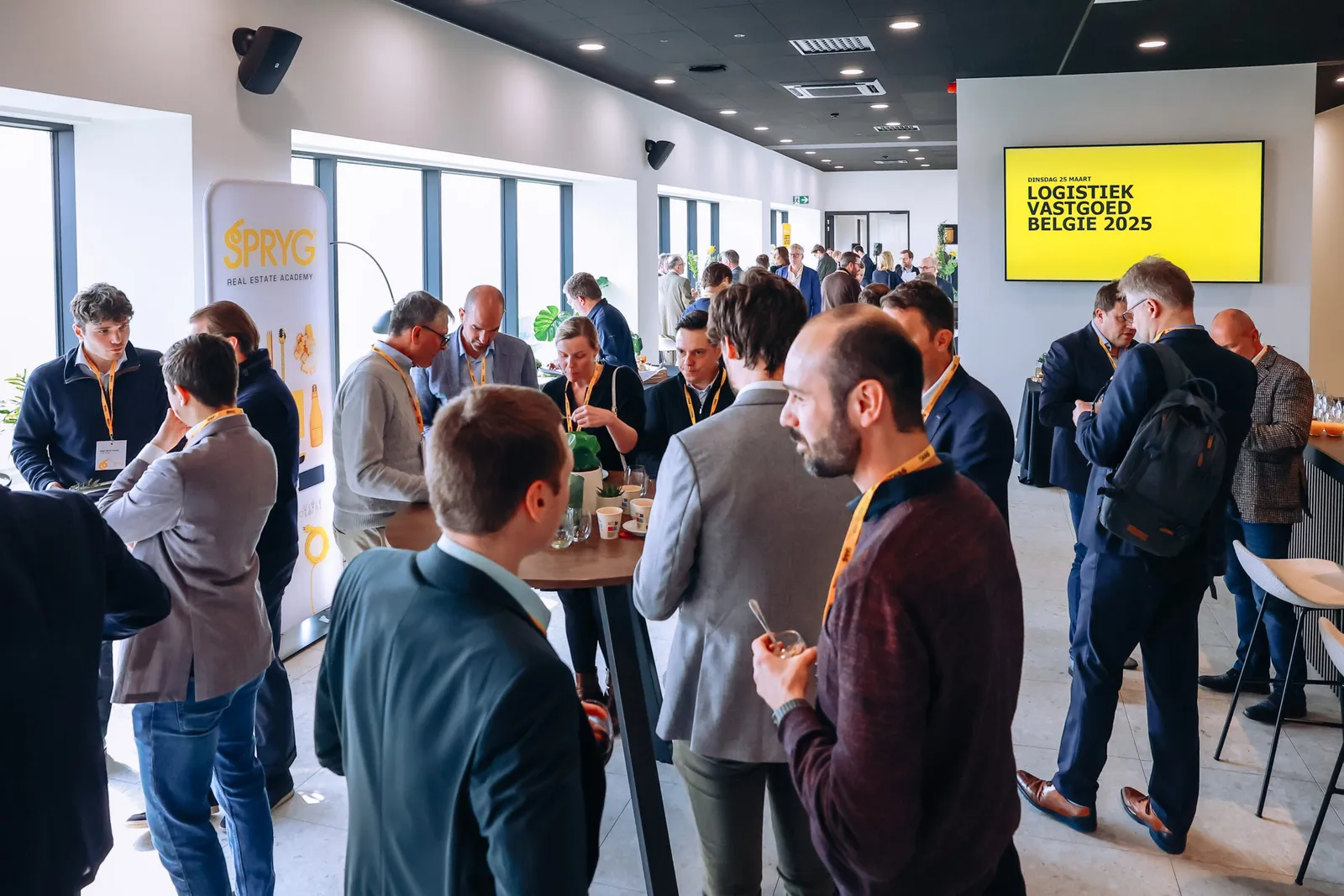
The 14th edition of ‘Logistics & Real Estate Belgium’ took place in Lokeren on 25 March 2025, organised by SPRYG Real Estate Academy. More than eighty professionals from the logistics real estate sector gathered at La Vue, KDL’s event venue, for inspiring keynote speeches, debates and networking opportunities. This annual event brings together property developers, investors, policymakers and logistics service providers to discuss the key trends and challenges in logistics real estate.
The current logistics real estate market
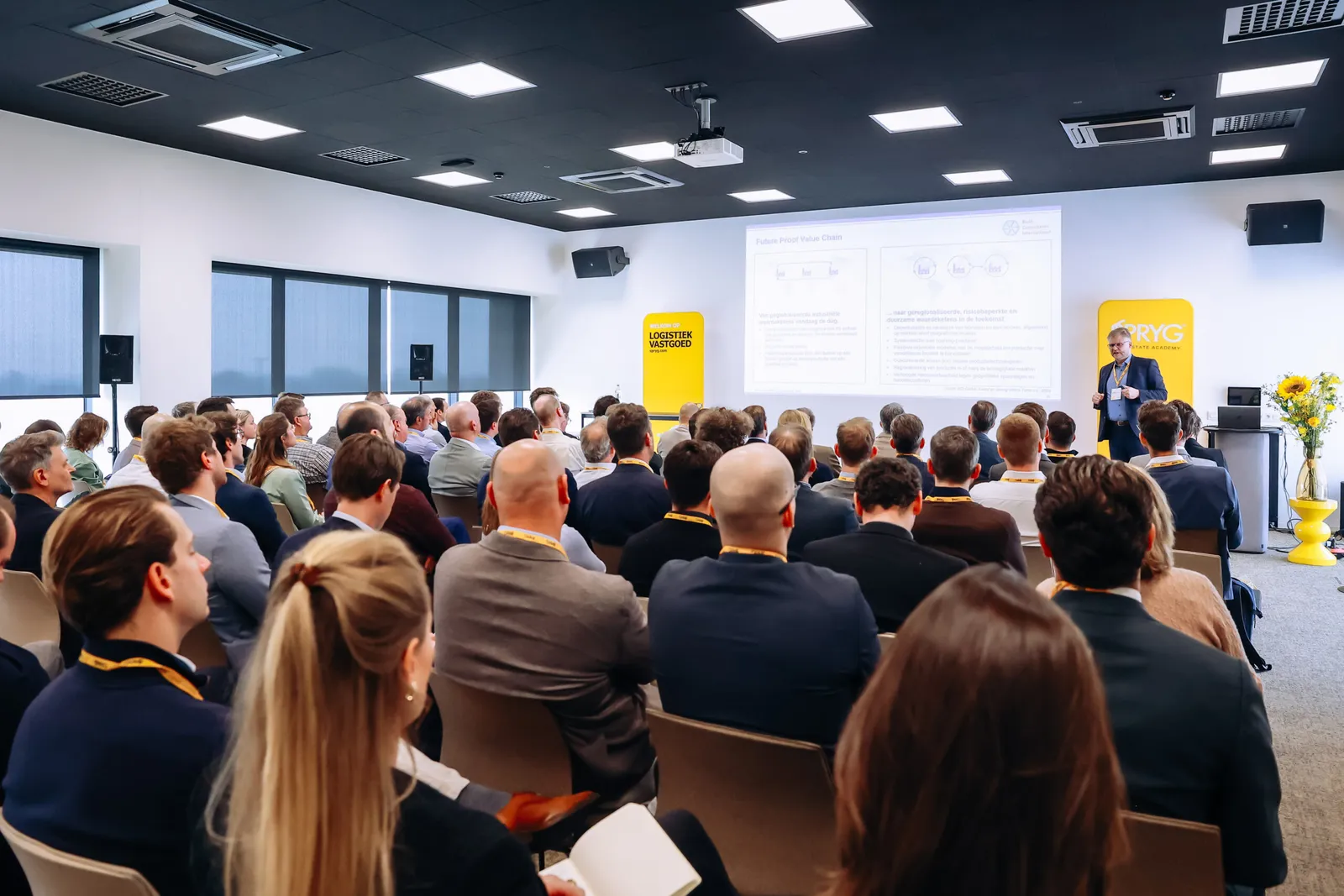
After a short welcome from Kris De Leeneer, CEO of KDL, event chair Bart Vanderhoydonck, partner and head of Industrial & Logistics Agency at Cushman & Wakefield, opened the event with an introduction to the current state of the logistics real estate market. Johan Beukema, managing partner at Buck Consultants International, then gave an in-depth overview of global trends and their impact on the Belgian logistics sector. He discussed how globalisation, digitalisation and geopolitical tensions, including trade sanctions and armed conflicts, are forcing companies to make their supply chains more flexible and resilient.
Johan Beukema also discussed current economic uncertainty, rising construction costs and the impact of inflation on property investments. Growing demand for e-commerce and rapid deliveries means logistics companies need to work more efficiently and make more creative use of scarce available space. The shift towards more automated warehouses and AI-driven logistics solutions is also booming business.
Another key theme in the logistics real estate sector is sustainability. The head of Buck Consultants International emphasised the importance of environmentally friendly transport and CO₂ reduction, as well as the contribution technologies such as AI and data analytics can make to more efficient logistics. His advice: invest in strategic partnerships, diversify suppliers and optimise warehousing and transport processes. Circular construction was also highlighted as an important trend: new logistics centres need to factor in material reuse and energy-efficient designs.
Geopolitics and the future of logistics
Alex Van Breedam, CEO of TRI-VIZOR and professor at, among others, Antwerp Management School, discussed the impact of geopolitical developments on supply chains. He pointed to disruptions caused by Covid-19, the energy crisis and raw material shortages, which are prompting companies to opt increasingly for “reshoring” and “nearshoring”. Protectionism and trade restrictions are also playing a growing role, forcing companies to find alternative suppliers and redesign their supply chains.
His recommendations? Make use of AI and technology, strengthen risk management and invest in sustainable logistics. Flexibility and agility are key in this new reality. He also noted that companies investing in digital twins, virtual replicas of logistics processes, will be better placed to absorb shocks and optimise their operations.
Debate: where is there still room for logistics real estate in Belgium?
The first debate focused on the sector’s spatial challenges. Mattias Van Vooren, director of the Economy Department at the City of Ghent, Tim Brijs, head of business development at Heylen Warehouses, and Alex Van Breedam discussed, among other things:
- More efficient use of existing warehouses: automation can and will help replace scarce logistics workers and boost productivity.
- Space shortages and brownfield redevelopment: redeveloping old business parks could help address the shortage of suitable sites. Optimising existing infrastructure is crucial to supporting the sector’s growth.
- Smarter use of logistics space: building upwards and combining functions, such as shared parking towers and charging points, can help use space more efficiently. Introducing shared warehouses for different companies can also increase the utilisation of available capacity.
- Challenges in brownfield redevelopment: contamination, permitting procedures and the choice between renovation and rebuilding remain challenges. However, governments can offer support through subsidies and more flexible permitting procedures.
Liege Airport: Masterplan 2040
Laurent Jossart, CEO of Liege Airport, presented its ambitious Masterplan 2040. With current cargo capacity of 1.16 million tonnes, the airport aims to double this to 2.3 million tonnes and become one of Europe’s top three cargo airports. Strategic advantages such as its location within Europe’s “golden triangle” and 24/7 operations make Liege Airport an attractive proposition for logistics investors.
Sustainability plays an important role: the airport aims to be CO₂-neutral by 2030-2050, with investment in noise reduction, water management and environmentally friendly transport options. Cooperation with Port of Antwerp-Bruges and the Port of Liège is strengthening multimodal connections. Expanding airport-related infrastructure and improving road links will have a major impact on the regional economy.
Port of Antwerp-Bruges: ambitious growth plans
Dries Van Gheluwe, investment manager at Port of Antwerp-Bruges, outlined the port’s plans for the future. With annual cargo volumes of 277.7 million tonnes and billions in investment in infrastructure and sustainability, including a green hydrogen plant and circular economy projects, the port continues to position itself as an innovative logistics hub.
New terminals and high-tech storage facilities are strengthening the port’s competitive position, while digitalisation and automation are helping to make logistics more efficient and sustainable. The port is also investing in smart logistics solutions and blockchain technology for transparent, efficient data exchange between stakeholders. Strategic projects such as NextGen and the expansion of container capacity (ECA) are supporting its competitive position.
PostNL: the green warehouse of the future
Arvin Willemse, CEO of PostNL Belgium, presented the company’s sustainability strategy. PostNL is focusing on zero-emission deliveries and environmentally friendly distribution centres. The four pillars of its approach:
- Sustainable buildings: solar energy, water recovery and waste reduction.
- Emission-free kilometres: electric vehicles and rail transport.
- Efficient network: route optimisation and smart logistics.
- Green products and services: reusable packaging and circular initiatives.
The head of PostNL Belgium also outlined the company’s plans for a zero-emission last mile:
- 2024: 130 electric vans and cargo bikes in various cities.
- 2025: zero-emission deliveries in 30 city centres.
- 2030: a fully zero-emission last mile in the Benelux.
Closing debate: opportunities and challenges in logistics real estate
The event concluded with a debate between Jonas De Lannoy, director of capital deployment & leasing at Prologis, Jurgen Bevelander, director of corporate real estate at DHL Benelux, Ivo van Hauten, account manager for Spatial Economy at the Agency for Innovation and Entrepreneurship (VLAIO), and Robin Bruninx, CEO of Enron. Key points of discussion included:
- DHL’s sustainability strategy: CO₂-neutral by 2025, with a checklist of 20 sustainability requirements for new buildings.
- Challenges of renovation versus new-build: logistics real estate projects require careful planning and coordination between tenants and landlords.
- Brownfield redevelopment as booming business: with space in short supply, old sites are increasingly being redeveloped.
- The energy transition and logistics: the electrification of vehicles and buildings offers opportunities, such as investing in batteries to store renewable energy.
In summary
‘Logistics & Real Estate Belgium 2025’ once again offered an inspiring look at the future of the sector. From sustainability and geopolitical challenges to innovation and efficient use of space, the logistics real estate sector is facing major transitions. Insights from the keynote speeches and debates can help companies adapt their strategies and remain fit for the future.
Question about this story? Ask your question
Keep following this
Get an email when a new story is published. No account needed.
- SubjectGeneral







