












Joystick with tactile feedback: a new dimension in communication
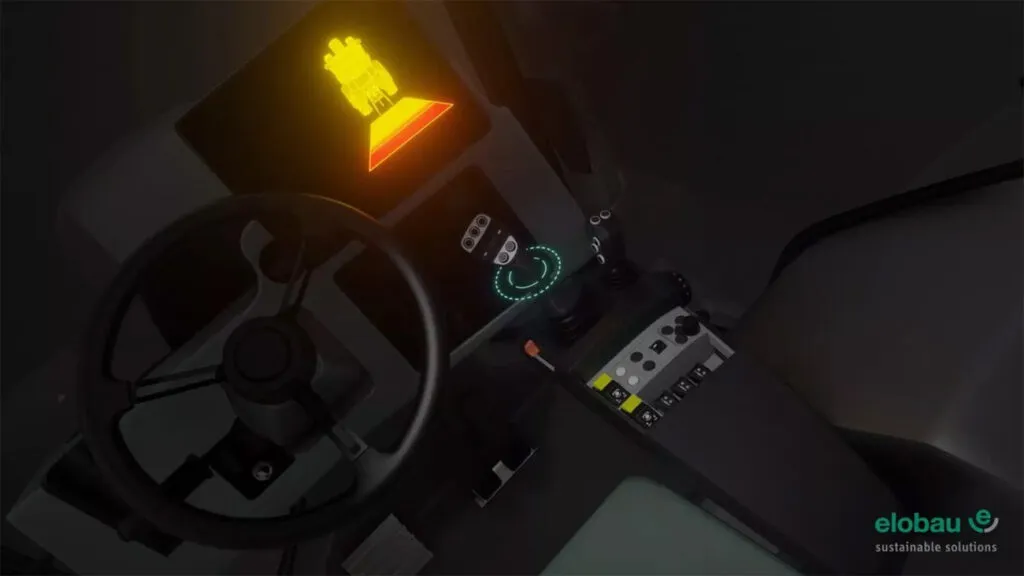
The elobau vibration module for joysticks helps operators work with machines more safely and efficiently through tactile feedback.
The new vibration module from elobau gives machine and vehicle manufacturers a way to engage operators’ tactile sensory systems. The module is compatible with the Heavy Duty J4F joystick and the modular midi armrest 225MA. It is integrated into the 361G/362G and 341G/342G multifunction handles.
Operators of mobile machinery are exposed to a great deal of noise and visual stimuli, all of which they must filter or process. Loud engine noise, flashing warning lights, displays and a hectic, dusty working environment take their toll, placing a strain on both the auditory and visual sensory systems. All the while, the operator is trying to concentrate on the task at hand. Tactile perception, that is, the sensitivity of the skin to touch and other sensations, is rarely used.
elobau’s new vibration module harnesses this potential to optimise human-machine interaction and thereby improve efficiency and safety when operating mobile machinery. Specific vibration patterns can provide high-quality tactile feedback, making communication between people and machines more efficient. The amount of information conveyed can be significantly increased compared with simple, occasional tapping signals. Vibration effects make operation more intuitive and reduce the time needed to master a machine. They also reduce the risk of operator error. Improved operating comfort increases stamina and concentration, which also contributes to safe operation.
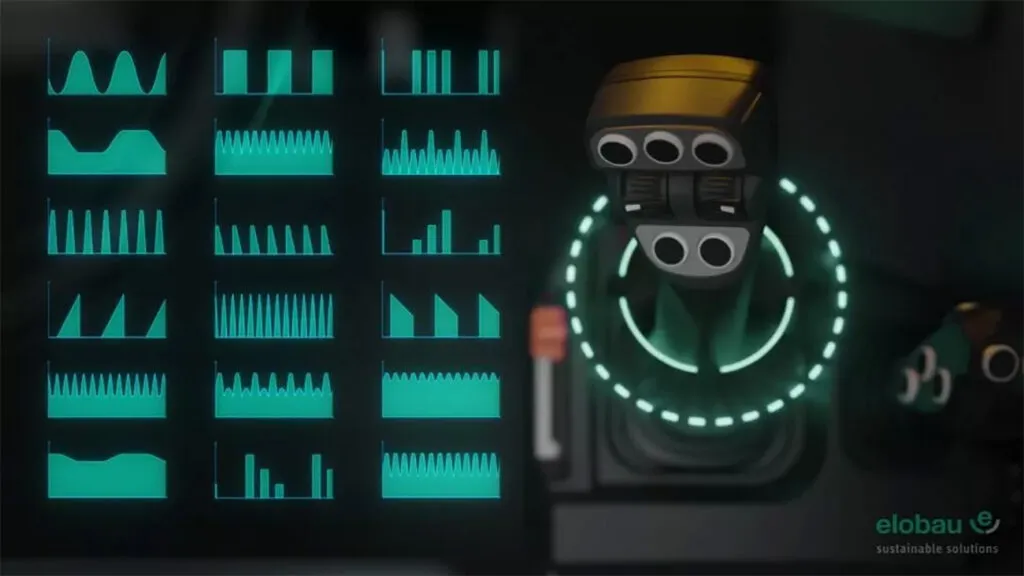
Vibration patterns can be used in many ways to communicate with the operator. For example, prompts or warnings from the vibration module can help speed up response times. Haptic feedback guides the operator through their tasks, improving both efficiency and accuracy.
The vibration motor is controlled via the CAN bus by an electronic module and can generate a variety of vibration characteristics. Manufacturers can use the CAN protocol to define different parameters, such as intensity, duration or the number of vibrations. These parameters generate distinctive vibration effects tailored to the application and, above all, easy to understand intuitively.
Different vibration effects can indicate an overload situation or an emergency stop. They can also confirm that automatic workflows have been completed. In addition, vibrations can indicate the proximity of nearby objects, the position of the machine itself, or when the configured limits of the working range are being approached. They can generate vibrations that become shorter as the operator gets closer to an object, in a similar way to the parking distance control systems used in cars. This is a useful alternative to audible warning signals in the often noisy environment of many workplaces. Fatigue alarms and the detection of nearby pipelines are also possible applications.
The new elobau vibration module is an additional option in the range of human-machine communication equipment for manufacturers of mobile machinery and systems. Vibration alarms and tactile feedback can be used in a variety of ways, creating new opportunities to optimise safe and efficient workflows. The vibration module is now available.
Vibration alarms and tactile feedback can be used in a variety of ways, creating new opportunities to optimise safe and efficient workflows. The vibration module is now available.
Question about this story? Ask your question
Keep following this
Get an email when a new story is published. No account needed.
- SubjectGeneral







