












J. Veldhuizen is committed to a sustainable future
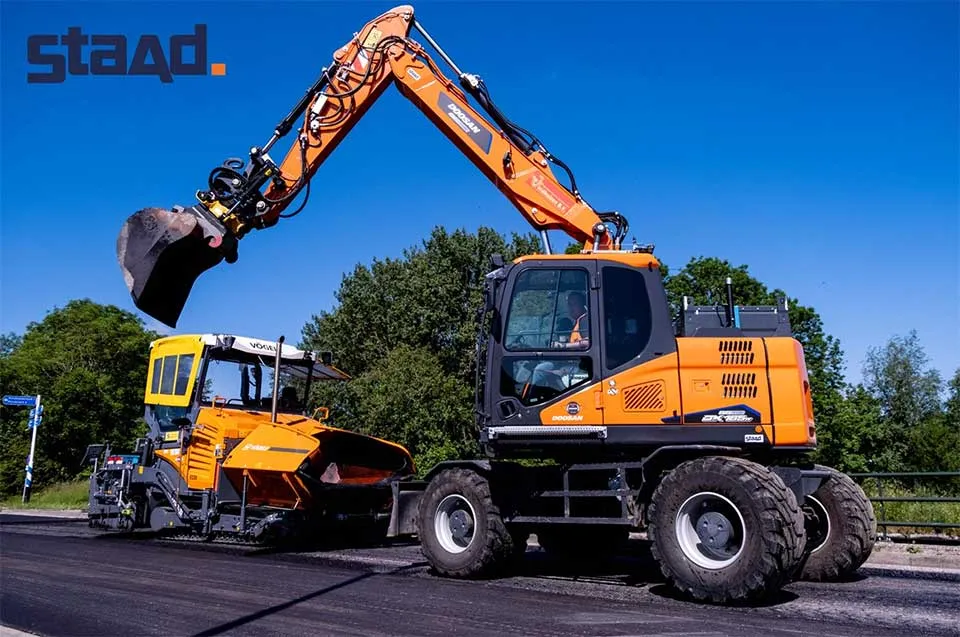
We visit J. Veldhuizen B.V. in Westbroek, in the municipality of De Bilt. Last weekend, operator Stijn put the prototype Doosan DX165W Electric mobile excavator through its paces.
We also speak to Jaap Veldhuizen, the company’s owner, about the future of sustainability and what it means to him.
History
‘My grandfather was a farmer, and my father started an agricultural contracting business in 1956. He ran it successfully, and around 1970 he also began carrying out earthworks for large contractors such as Mourik and KWS. I started working in my father’s business when I was 18. In 1994 we formed a partnership, and in 1999 I became the owner. It was a logical step for me: my father was already 68 and retiring. My son Jordi is now also part of the business, and in due course he will take it over from me. That way, the business stays in the family,’ says Jaap.
Sustainability
For Jaap, sustainability represents a new vision, one he wants to lead the way in with Jordi. ‘We’re willing to take on the challenge of making our business more sustainable. It’s no small undertaking, and we’re very aware of that. It requires significant investment and a willingness to take a leap into the unknown alongside our partners. But we believe this is the path we need to take. We’ve already taken the first steps. A van, wheel loader, tyre saw, jumping jack compactor and vibrating plate are already electric, so we can carry out all the paving work we do entirely electrically. We’re also installing solar panels across the roofs of our business premises so that we can charge all our equipment using green electricity. The only thing still missing is an electric excavator, so that we can soon offer the complete package.’
Raising awareness
‘We currently have one job where we’re using our electric equipment. That’s not enough to earn back the investment in full, but it should help raise awareness among local authorities and government bodies. And not just among public authorities, but also among the major contractors. We can see laws and regulations being introduced by the ministry, but the really big steps still aren’t being taken on site. Projects are tendered as sustainable, but then carried out using diesel because it is simply cheaper and you don’t get the hourly rate needed for zero-emission work. That bothers me, because you stick your neck out to make your fleet emission-free. Local authorities need to enforce the rules and build up their knowledge, so that everyone delivers on what they promised when bidding for a project.’
Putting it through its paces
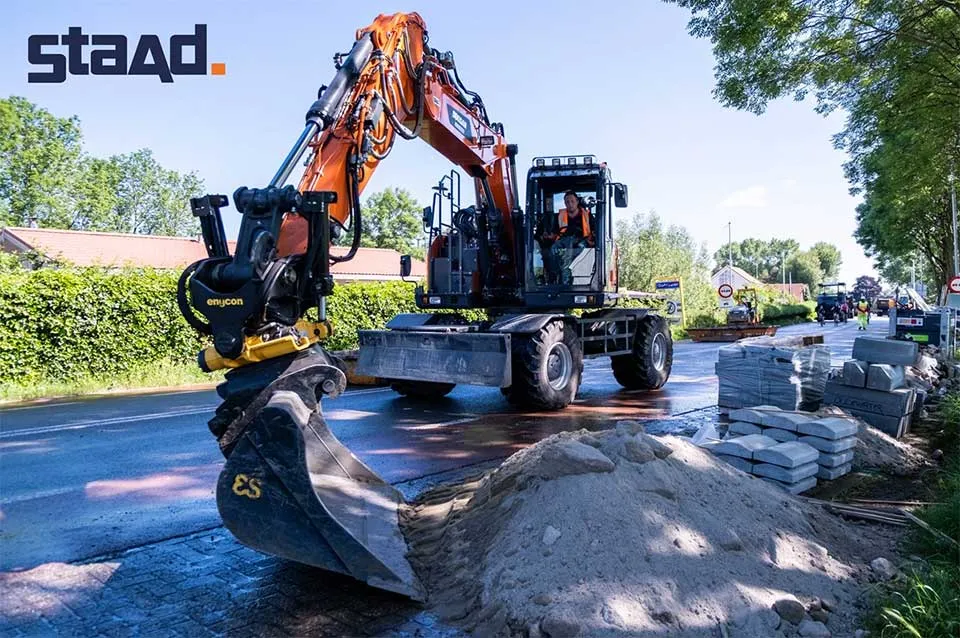
Over the past few weekends, operator Stijn has been working with the prototype Doosan DX165W Electric mobile excavator. ‘I normally operate an excavator from another brand, which I’m perfectly happy with. But when Jaap said that zero-emission equipment is the future of the business, I wanted to give the Doosan DX165W Electric a chance. I have to say, it’s much better than I expected! Electric isn’t something I would have chosen straight away, but it works really well. There are still a few things that could be improved, but it is a prototype, after all. One thing that could be better, for example, is the noise in the cab. If they were to insulate the pump, which is currently noisy, a little better, the excavator would be almost silent. We also need to think carefully about charging as a company, to make sure it works from a logistical point of view and that I can easily charge it at the depot at the end of the day. But my first experience with electric has been very positive. I’m looking forward to more,’ says Stijn.
DKTI
It will take some time, but Jaap hopes to add an electric mobile excavator to the fleet by the end of this year. ‘Together with other parties, we have submitted a proposal to purchase a Doosan DX165W Electric as part of a consortium under the DKTI subsidy scheme run by Netherlands Enterprise Agency (RVO). If we receive the subsidy, the machine will be further developed as part of the DKTI project.’
‘This will be our first step towards CO2-neutral operations, particularly in urban areas. The Doosan Infracore DX165W Electric is still under development. We spent several weekends on a KWS project putting the prototype through its first hours of real-world testing. The tests were positive, although further optimisation will be needed before the machine can go into production.’
Question about this story? Ask your question
Keep following this
Get an email when a new story is published. No account needed.
- SubjectGeneral







