












Inpieq makes strides with customer-specific solutions
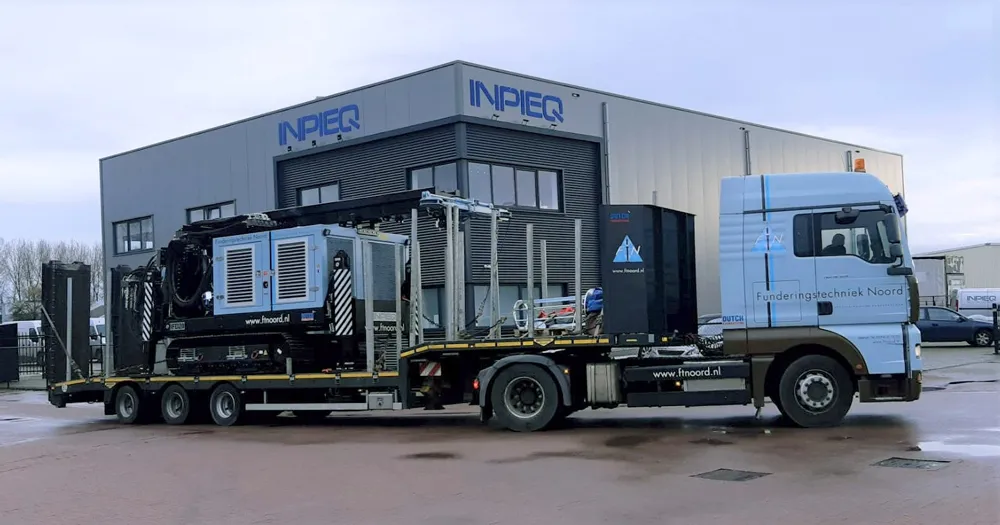
The construction equipment sector, like society as a whole, is on the brink of a major energy transition to meet climate targets. Stage V is currently the minimum standard, but electrification looks to be the key to reducing emissions even further.
This is easier to achieve in some sectors than others. Foundation work, for example, generally requires heavier equipment, which cannot easily be powered by batteries. Even so, electrification is a regular topic of conversation in this close-knit industry, says Frank van Deursen. The owner of Inpieq is receiving an increasing number of enquiries for electric piling rigs. “That’s very interesting, but also a huge challenge. We currently have an enquiry for a larger machine with a 350 kW electric motor, but that comes with a substantial price tag. So the question is: is it viable?”
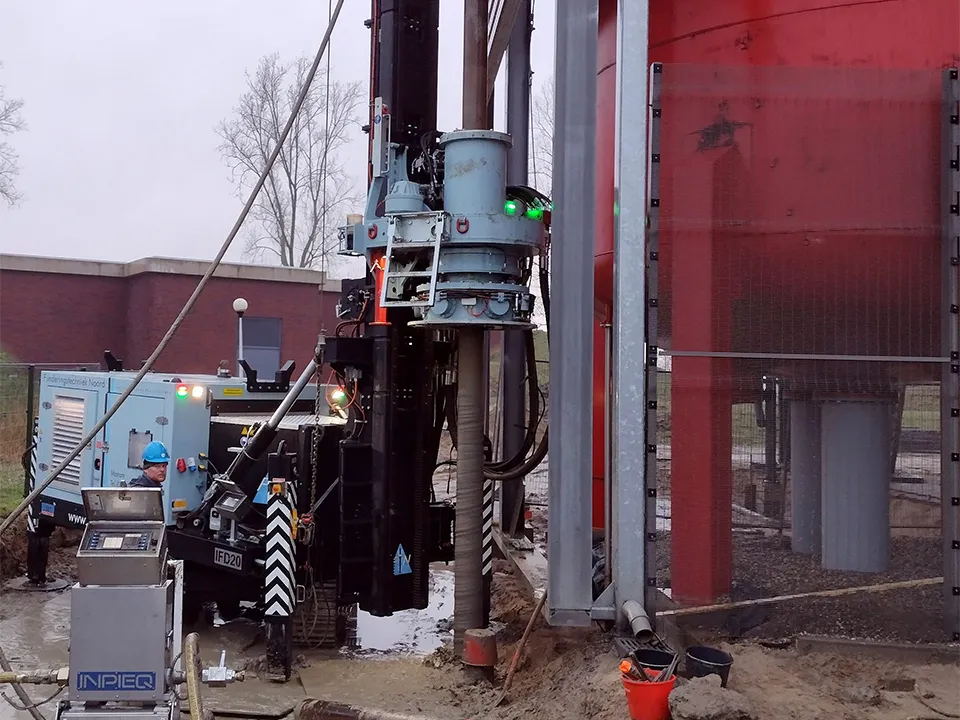
Inpieq therefore sees hybrid foundation equipment as a good interim solution, naturally combined with a Stage V diesel engine. “That makes a machine 10 to 15% more expensive, which is manageable. If a piling or drilling rig is not yet due for replacement, we can modify it to meet the latest emissions standards,” says Van Deursen, who points to one remaining challenge. “Electric equipment with an output of up to around 65 kW can still be connected to the mains, but above that you soon need a three-phase power supply. This will place increasingly stringent demands on clients when it comes to power supply on site.”
A CLEAR CHANGE OF DIRECTION
Van Deursen describes this as an interesting period, and Inpieq is certainly not standing still. Two years ago, the company made a clear change of direction, placing greater emphasis on service, flexibility and innovation. This has led to the development of new, customer-specific machines. “We want to work closely with the market and listen to what customers need. As a result, Inpieq is increasingly becoming a one-stop shop, offering foundation equipment alongside its own grout unit, pile registration system and all related services. This means the customer only needs to source a casing or drilling tool.”
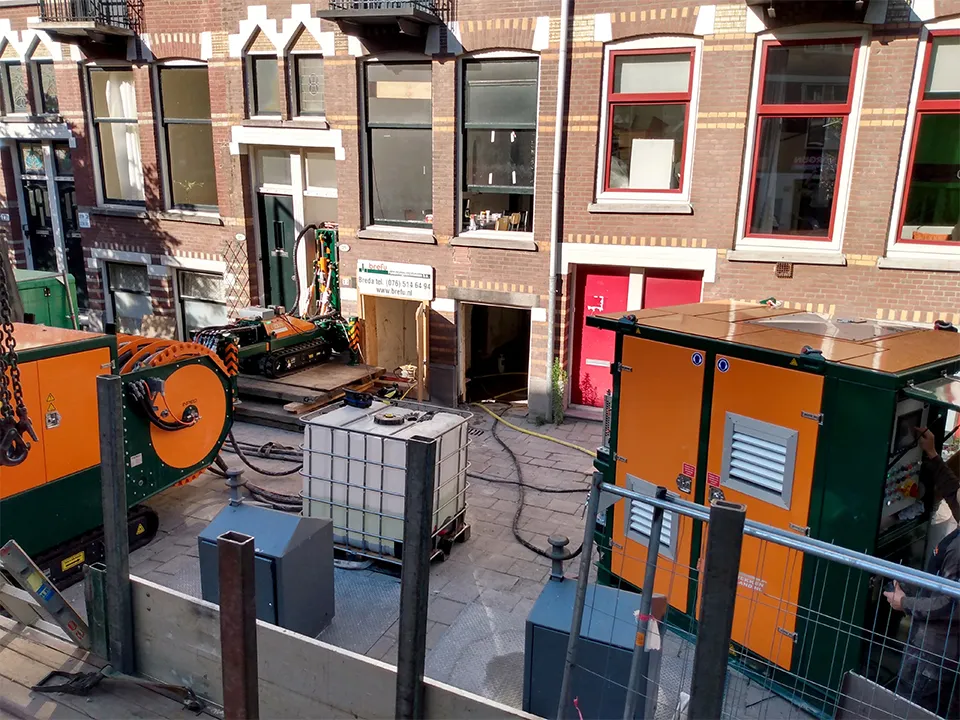
The Steenberg-based company offers a comprehensive range of services to take the pressure off its customers. These include combining maintenance visits with the periodic inspection of stationary equipment. Van Deursen has noticed diesel engines disappearing from stationary machines as customers switch to electric power. Inpieq supplies a battery-powered unit with 45 kW of hydraulic power, which can be deployed flexibly to power a foundation machine or grout unit. Interest in this concept is high because of the extensive foundation repair work taking place in major cities. “We’re seeing a shift from piling to grout injection drilling. The pile is slightly more expensive, but the process is vibration-free, making it particularly attractive in densely built-up areas.”
MODULAR DESIGN
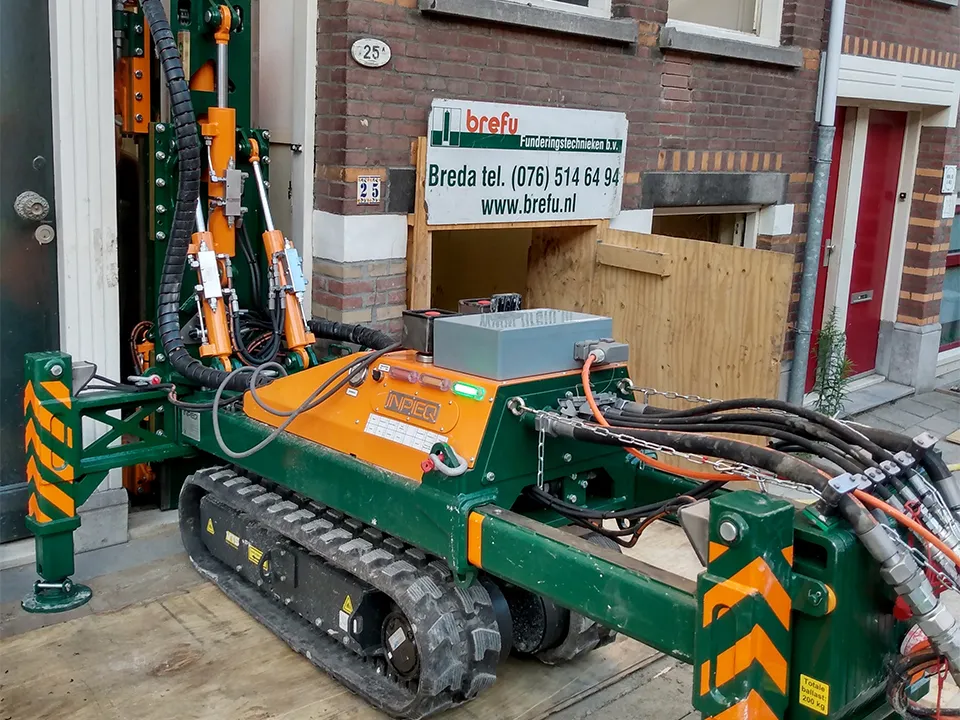
For this type of work, Inpieq has developed the IFD-2.0, a foundation machine that is both compact and powerful, with a flexible design. It delivers a maximum drilling torque of 20 kNm across the full mast and is powered by a tracked electric power pack. Using a modular design based on a single type of upper structure makes it possible to guarantee short lead times. By varying the mast, tracks and support legs, this design can be used for both the piling and drilling ranges. “This concept gives us plenty of scope, which makes it attractive in terms of price. Fit it with a free-fall winch and you have a piling rig.” The same idea can also be seen in its larger sibling, the IFD-20, which delivers a maximum drilling torque of 200 kNm.
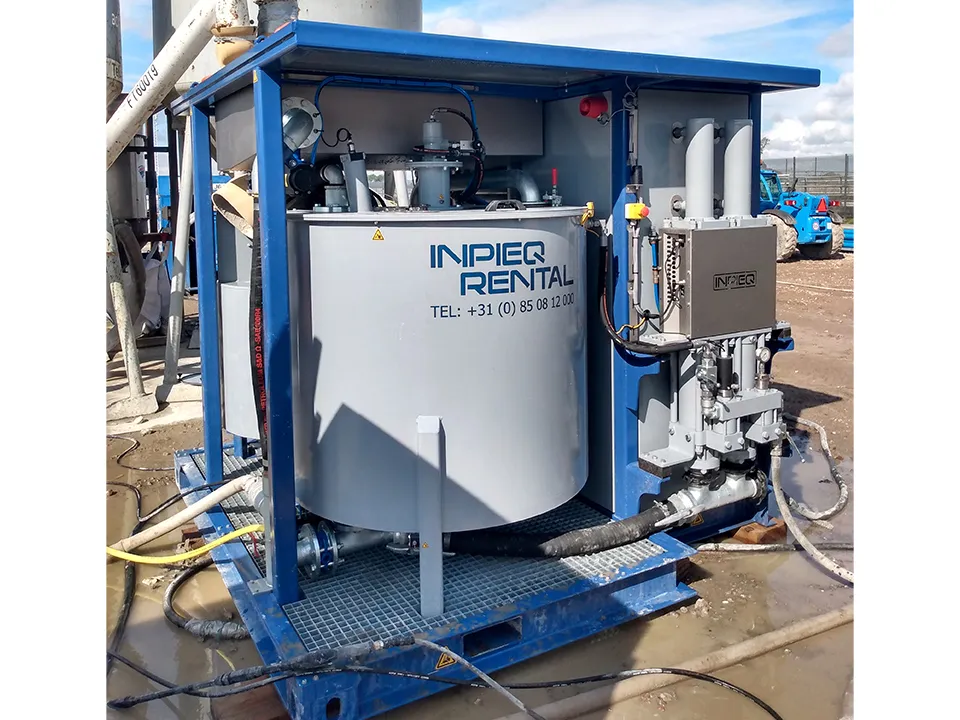
With its DLS Registration System, developed entirely in-house, Inpieq shows that data management (in other words, less paperwork) can go hand in hand with ease of operation for the machine operator. The IGP grout mixing and pumping unit and IFD drilling rig are also impressive examples of engineering ingenuity. What else is in the pipeline? “We want to expand the hydraulic drilling and piling rig range to four or five models, and we’re working on a range of three grout unit models. At present, the IGP-300, with a 300-litre grout pump in a very compact frame, is the largest model in the range.”
Question about this story? Ask your question
Keep following this
Get an email when a new story is published. No account needed.
- SubjectGeneral







