












How do I choose the right aerodynamic options for my operation?
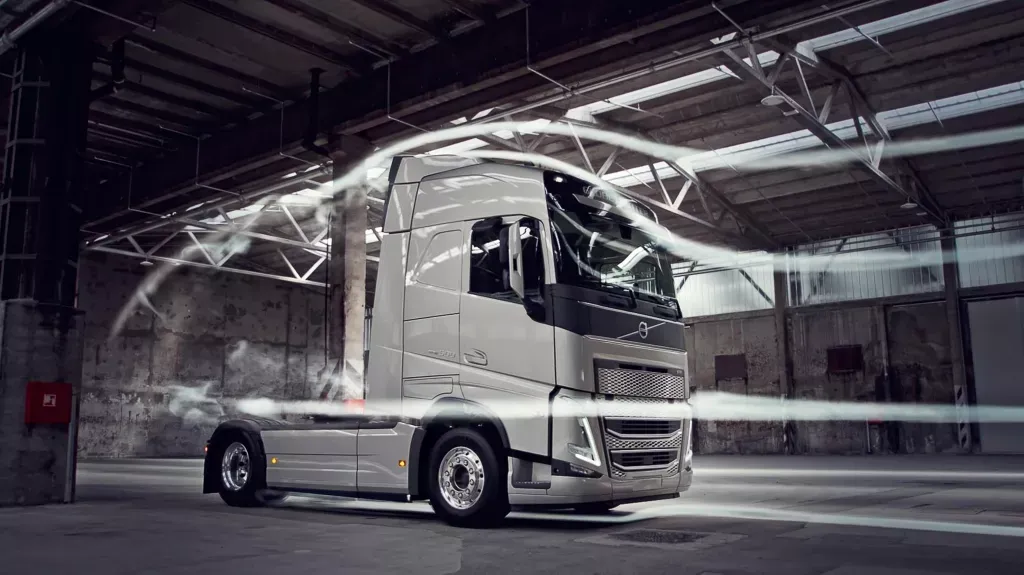
Have you ever struggled to ride a bike faster than 30 km/h? If so, you will have experienced how real aerodynamic drag is, even at low speeds.
The right aerodynamics on trucks can deliver significant fuel savings. But how do you choose the right aerodynamic options for your operation? Read on to find out.
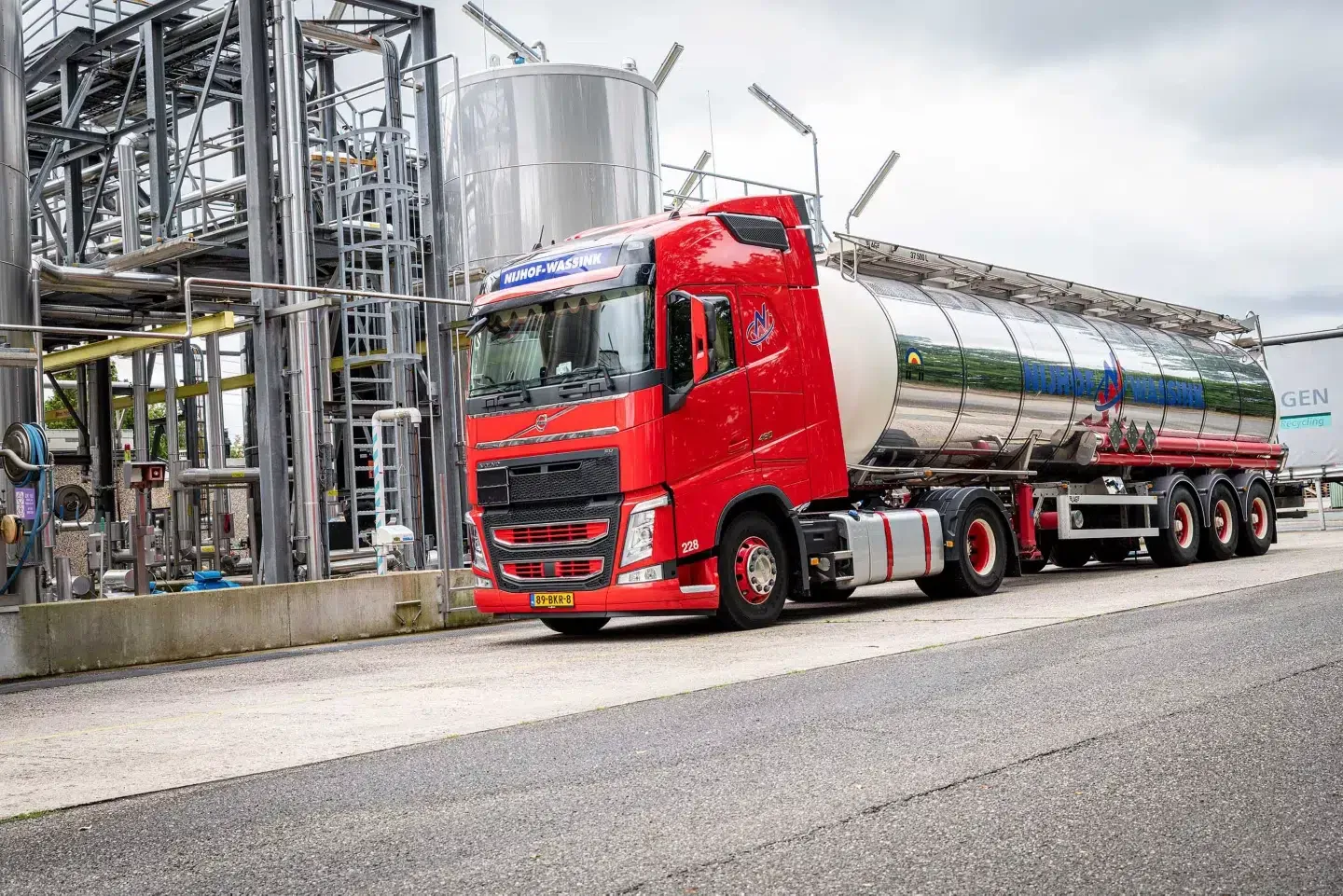
Fitting aerodynamic devices can save up to 10%* on fuel consumption over a typical long-haul route. But it is not just long-haul trucks with a standard trailer configuration that can benefit from the right aerodynamic specifications. Significant fuel savings can also be achieved in other segments, including tanker transport and construction, with the right aerodynamics.
Aerodynamics plays a crucial role in truck cab design. However, vehicles can also be equipped, or retrofitted, with devices to minimise air resistance and thereby reduce fuel consumption and CO2 emissions. Here are some devices that reduce air resistance and save fuel.
Roof spoilers
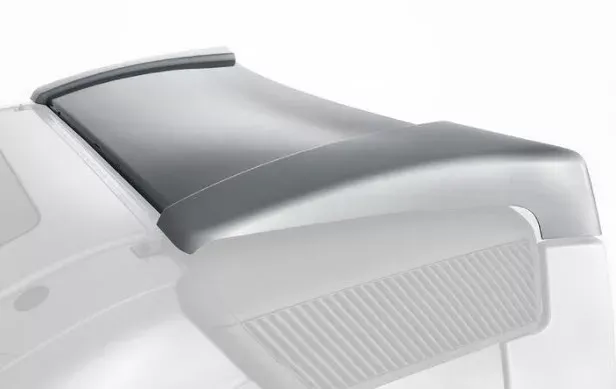
When correctly fitted, a roof spoiler delivers the greatest fuel savings of any aerodynamic device. Without a spoiler, the non-aerodynamic structures on the bodywork are exposed to the airflow. The higher the truck, the greater the air resistance. The roof angle is also important. Adding a roof spoiler can save as much as 5% on fuel at 80-90 km/h. However, it is essential to adjust it to the vehicle’s height correctly. Even a few centimetres too low or too high will reduce your potential savings. The digital driver’s handbook contains detailed instructions on setting the roof spoiler for your specific truck configuration. It may take little effort, but the potential savings are well worth it.
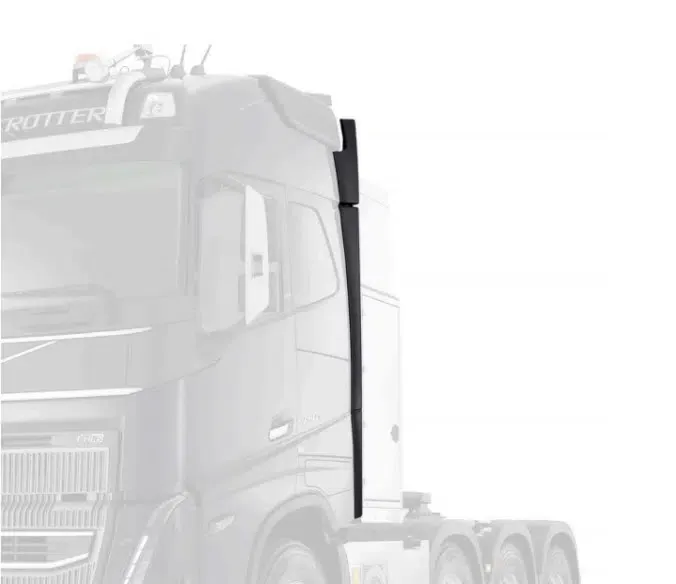
Side spoilers or side deflectors
Designed specifically for each cab type, they are particularly suitable for tractor-trailers, but are also useful on rigid trucks to fill the gap between the cab and bodywork. They help direct airflow from the cab around the sides of the trailer, reducing turbulence between them. Side spoilers can also help save fuel and are especially important at higher speeds, particularly in crosswinds.
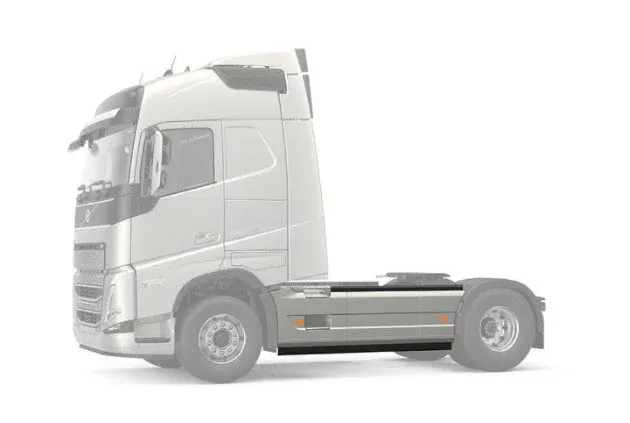
Chassis skirts
Chassis skirts cover the non-aerodynamic components mounted along the side of the truck. They close off gaps, reduce air resistance and lower fuel consumption. Rubber extensions can also be fitted to the top and bottom of the chassis skirts, further closing the gaps between the trailer and skirt, and between the road and skirt.
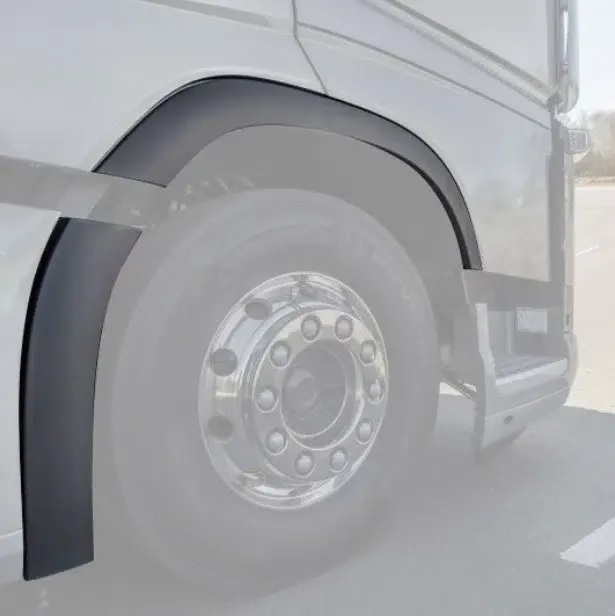
Wheel arch extensions
These further cover the gap between the front wheels and the surrounding bodywork, minimising the impact of swirling, turbulent airflow in and around the front wheel arches on the external airflow. The right type depends on the height and width of the front-axle tyres you choose for your truck.
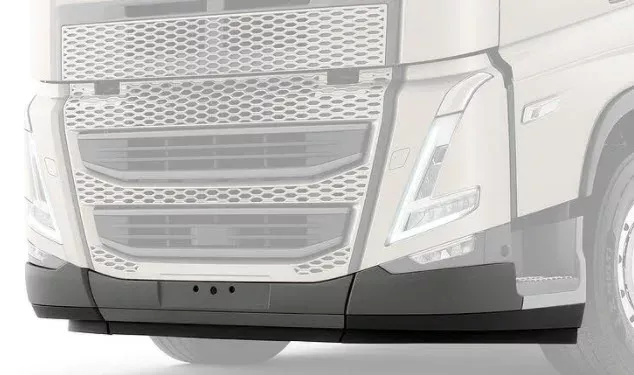
Bumper spoilers
The bumper spoiler is mounted beneath the bumper and acts as an air deflector, redirecting airflow away from the front wheels and the non-aerodynamic underside of the truck and trailer.
There are also other steps you can take to improve the aerodynamics of your combination, such as keeping the gap between the trailer and cab as small as possible. A trailer with closed, smooth side walls will use less fuel than an open trailer, for example. Closed chassis skirts, a sloping roofline or aerodynamic extensions at the rear can further improve the vehicle’s aerodynamics.
Aerodynamics and speed
The use of additional aerodynamic devices is generally standard practice in the long-haul segment. This is because air resistance increases progressively with speed. As a rule of thumb, air resistance quadruples when you double your speed. Although most applications can benefit from aerodynamic modifications, the route, average speed and weight of the combination must be taken into account. In some segments, these devices are often overlooked for no good reason, such as tanker transport, tipper transport and the construction segment. In these applications, simulations typically show that the right aerodynamics can save a significant amount of fuel, even when the bodywork is lower than the truck. This is because the cab’s shape alone cannot effectively guide oncoming air over and around the trailer. Spoilers are designed for this purpose and are just as important in these segments.
Weight versus payload
Finally, it is worth bearing in mind that in some segments, such as tanker transport, the aim is to strike the right balance between the extra weight of aerodynamic devices (and the benefits they offer) and the highest possible payload.
Question about this story? Ask your question
Keep following this
Get an email when a new story is published. No account needed.
- SubjectGeneral







