












H.Essers sets out its sustainable strategy in new sustainability report
Text Geert Van Cauwenberge Beeld H.Essers
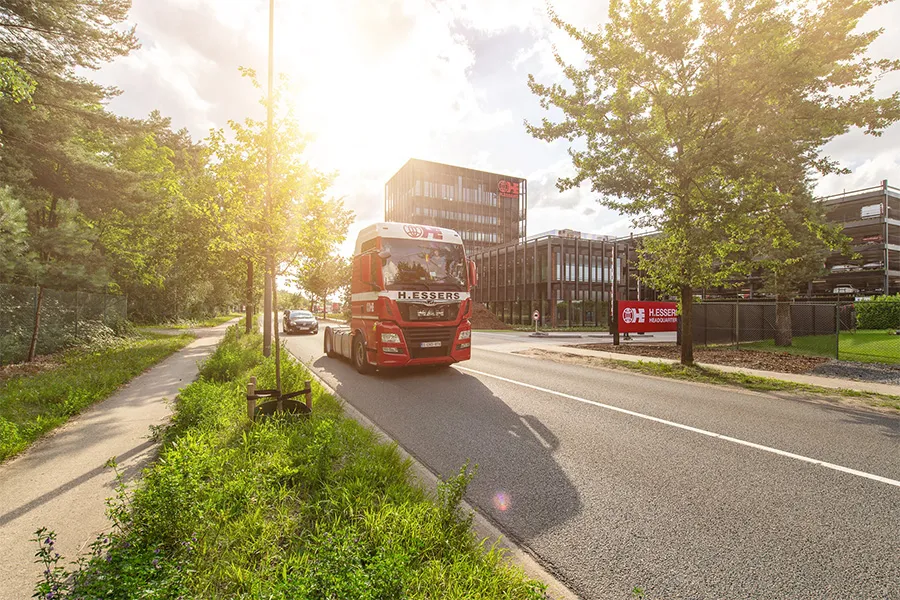
Since its foundation in 1928, H.Essers has grown into a global player in logistics and transport. As a specialist in chemical and healthcare logistics, the company is a frontrunner in sustainable business. In June 2023, H.Essers published the fourth edition of its sustainability report, an 84-page document in which the company reports transparently on its sustainability policy. We asked Bob Van Steenweghen, corporate affairs manager, to talk us through some of the highlights.
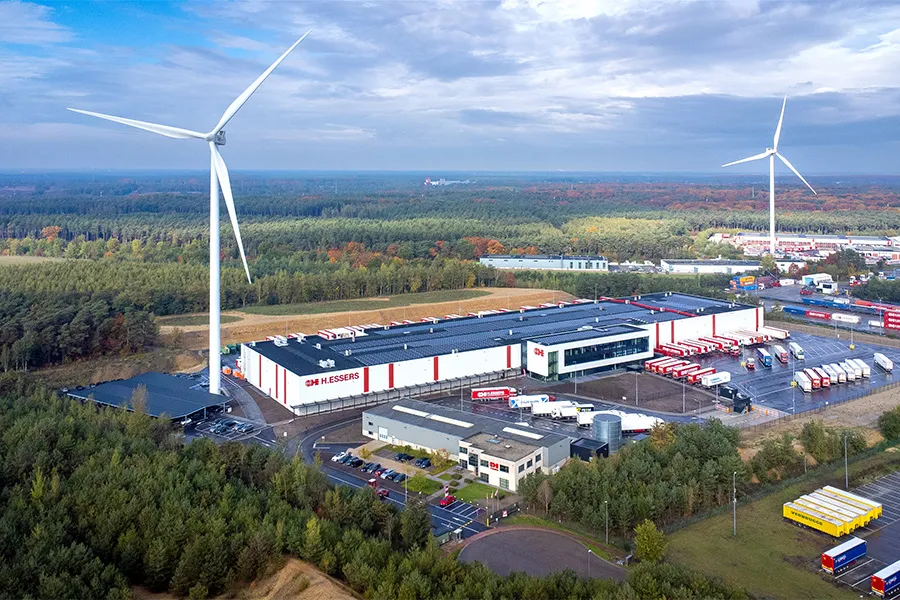
With more than 7,600 employees, 88 sites in 18 countries, over 1.3 million square metres of storage space and a fleet of 1,420 tractor units and 4,060 trailers, H.Essers is clearly one of the leading companies in Belgium. This is reflected in its turnover figures. In 2022, it passed the €1 billion mark. Reaching this new milestone has not prompted the management and employees at the Genk headquarters to rest on their laurels. On the contrary, the bar is being raised once again to ensure the company continues to provide outstanding service to customers and grow further.
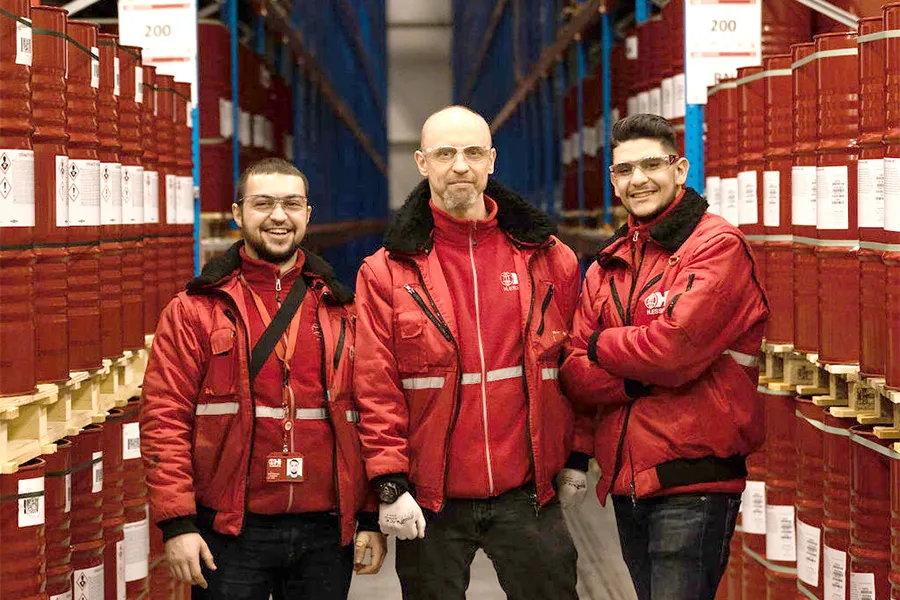
“H.Essers aims to excel not only economically, but also in sustainable business,” says Bob Van Steenweghen. “Our company operates in a sector with a very visible impact on the environment. Transporting goods from point A to point B inevitably requires energy. And developing logistics storage space requires land to be available. Aligning this with our global climate goals is not just our responsibility, it is also our mandate.”
Growing focus on People and Planet
H.Essers’ new sustainability report shows that sustainable business is part of the company’s DNA. “Corporate social responsibility has long been on our agenda, and for the past few years, companies around the world have been taking it seriously. Thankfully, it is not just talk,” Bob explains. “This shift is partly due to the United Nations’ 17 Sustainable Development Goals (the SDGs, ed.). Over the past year, we selected a number of these SDGs at H.Essers, based on our five company values, and translated five of them into sustainability priorities. We then set 19 very specific ambitions that the whole company is working towards, together with all our stakeholders.”
Five SDGs in focus
Which five SDGs did H.Essers prioritise over the past year? “We focused on health and wellbeing, education, decent work and economic growth, innovation and customer focus, and climate action.” In other words, SDGs 3, 4, 8, 9 and 13. “Our 2023 sustainability report explains in detail how we put each goal into practice, and supports this with tangible figures.”
“In terms of health and safety, our 2022 absence figures are encouraging: in the short term, just 3% of our employees in Belgium, Romania and Bulgaria were absent due to illness. At the same time, we are taking more action to report workplace accidents more accurately and prevent them, including through targeted awareness campaigns on the work floor. Every year, we aim to reduce the number of accidents by 10%.”
“On training, our report highlights all the efforts we make at H.Essers to promote lifelong learning among our employees, from management to truck drivers. For example, we invest in at least 20 hours of training per employee per year in every country. We invest heavily in helping our people settle in and progress in their careers, including through our H.Essers Academy.”
Shift towards multi- and synchromodality
H.Essers is also stepping up its efforts on the other three SDGs: decent work and economic growth, innovation and customer focus, and climate action. “Our sustainability report explains how we are fully committed to maximum customer intimacy. We work with our customers to find the most sustainable solutions for their logistics. We also measure their satisfaction using the NPS score, which we aim to increase by 20% by 2025.”
“On climate action, our approach is based on ‘improve, avoid, shift and HVO insetting’, four pillars through which we aim to encourage and inspire other companies in the sector to embrace sustainability too. ‘Improve’ means using energy more efficiently and investing in alternative energy sources. ‘Avoid’ means working with customers to increase the fill rate of trucks, containers and warehouses. Such consolidation often requires complex data analysis and simulations using advanced systems, but it is essential and has great potential. With ‘shift’, we focus on synchromodality: intelligently and dynamically combining available modes of transport. H.Essers has been investing in multimodal concepts, systems, fleet and infrastructure for years. Finally, last year we became the first company in Europe to launch ‘HVO insetting’ for road transport, a ‘book & claim’ solution that allows customers to decarbonise their chosen shipments immediately.”
“In short, these four pillars show that there are many different, achievable ways to make logistics greener!” ■
Question about this story? Ask your question
Keep following this
Get an email when a new story is published. No account needed.
- SubjectGeneral







