












GMB deploys electric Hyundai built by UMS and Van der Spek
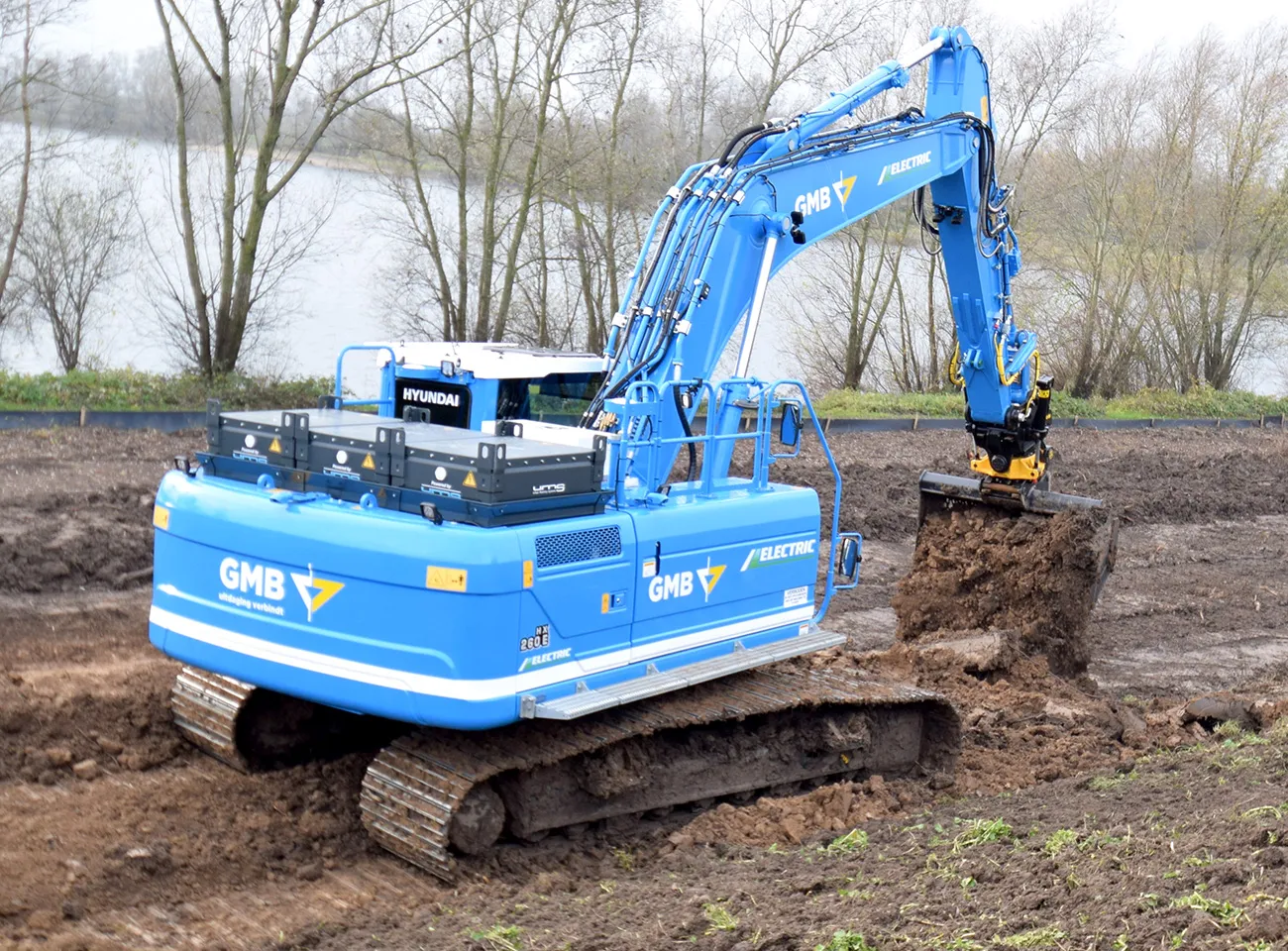
Since late last year, GMB has been operating an electrically powered Hyundai HX260AL excavator, developed through close collaboration between the customer, importer Van der Spek and clean-tech engineering firm Urban Mobility Systems (UMS). Electrification fits perfectly with GMB’s sustainability strategy as it works towards an emissions-free construction site by 2030.
Zero emissions as a mission
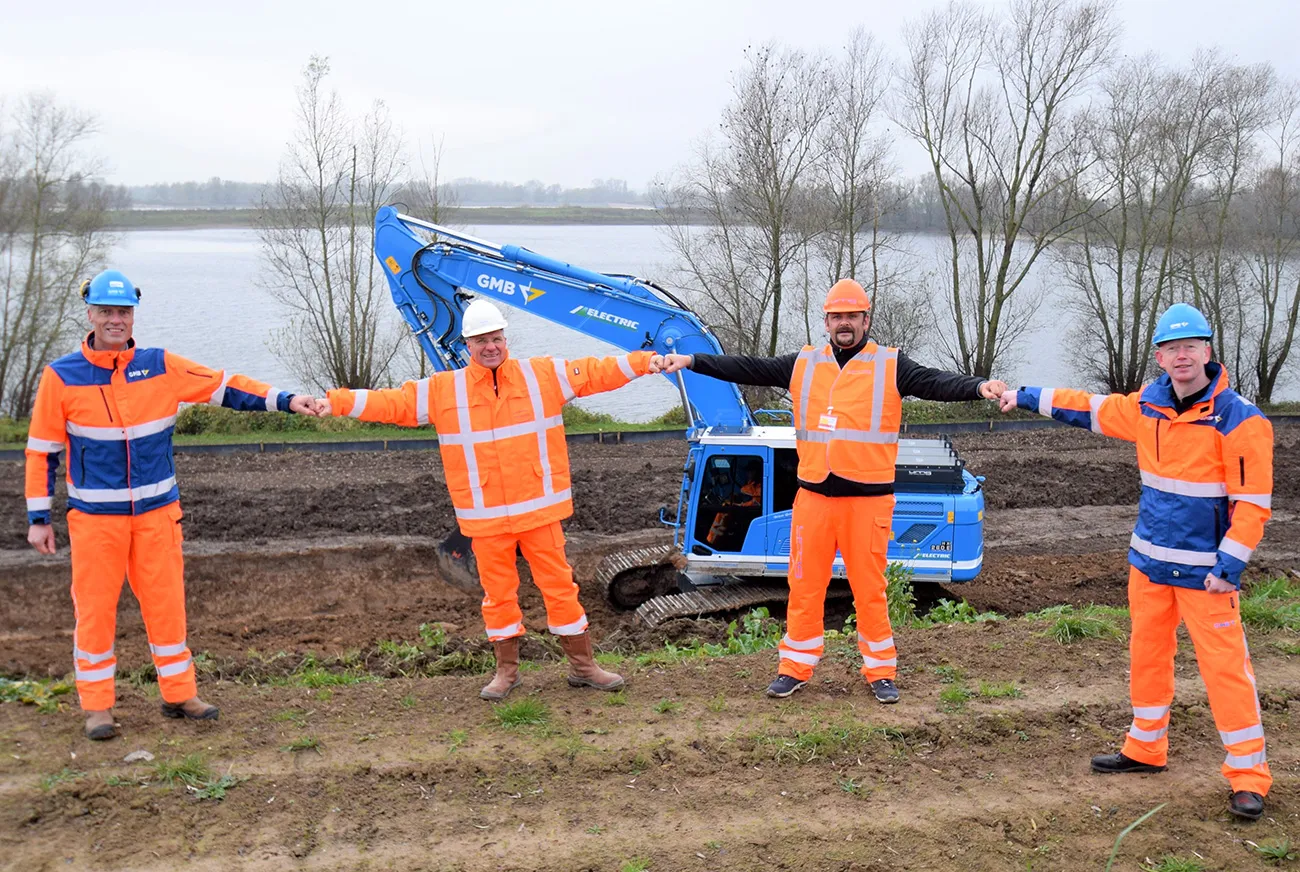
Family-owned GMB wants to lead the way in this area and is actively seeking partnerships to promote emissions-free operations and circularity in tenders. The company previously took delivery of an electric Hyundai mini excavator through Van der Spek, but reducing harmful emissions called for thinking bigger. “By pioneering, we hope to accelerate the development of emissions-free machines, so that other companies in the industry can follow suit and we can make real progress towards zero emissions,” says Gerard van der Veer, head of fleet management at GMB.
Interchangeable batteries
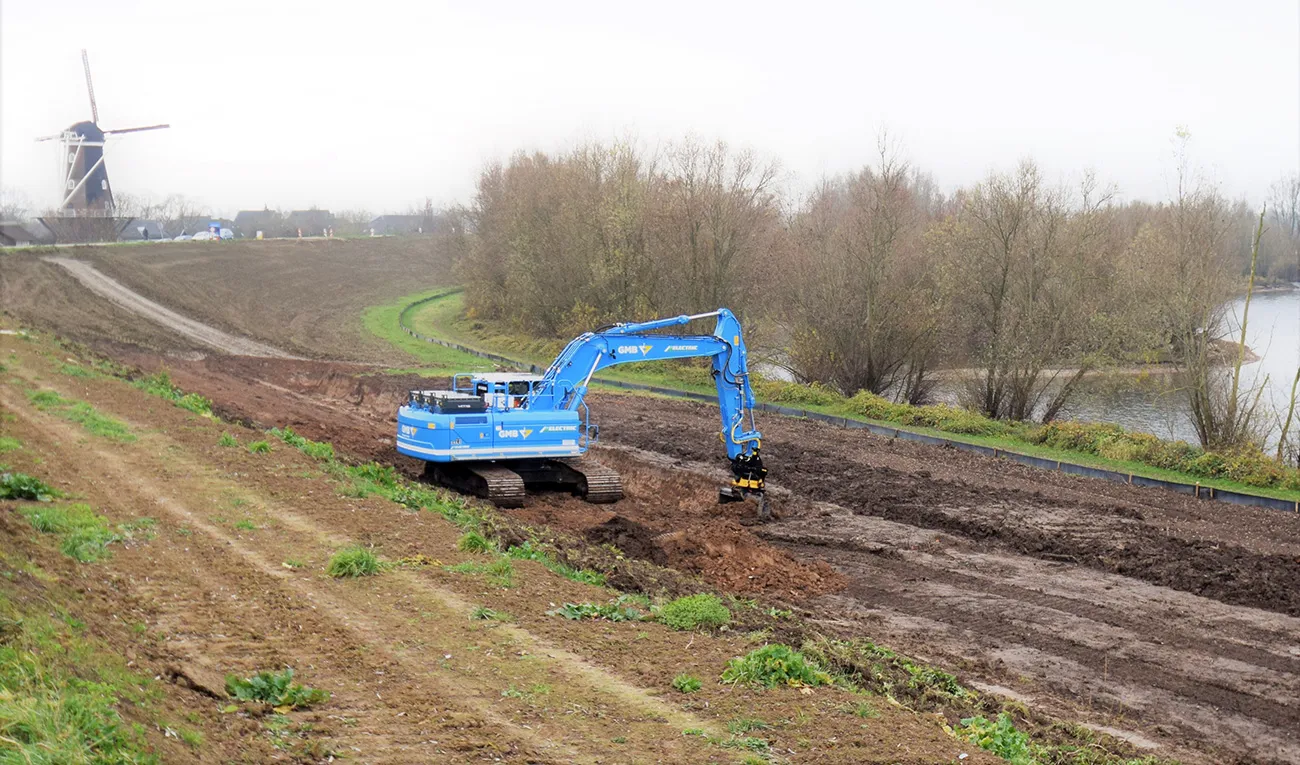
The company is putting the Hyundai HX260 Electric straight to work on the dike reinforcement project along the Waal between Gorinchem and Waardenburg. This 23 km project borders directly on a Natura 2000 site, making the use of zero- or low-emission equipment a clear priority. UMS, based in Oss, has fitted the 28-tonne tracked excavator with an electric drivetrain and a swappable battery pack comprising three LFP batteries. This provides a total capacity of 390 kWh, enough to operate for a full working day. Meanwhile, a spare battery pack is being charged at a nearby depot. GMB uses a truck with a loader crane to swap the batteries. The process takes around 15 to 20 minutes.
The machine has now clocked up a considerable number of operating hours, and GMB is very pleased with its initial experience. “We want to be able to work for a full day on a full charge, and at first we only just managed that,” says Van der Veer. “The low temperatures naturally reduced our available capacity. In addition, the controls needed some fine-tuning at first, and the crane is put under heavy demands here because of the heavy clay.” The Hyundai is therefore equipped with a Verachtert chain bucket, an Engcon tiltrotator and Trimble 3D GPS with automatic steering.
A quarter of the diesel cost
With this operating profile, the electric excavator consumes 65 kWh of electricity per hour, compared with 20 l/hour for a diesel engine. Running costs are therefore three-quarters lower, but GMB is primarily interested in the machine being much cleaner and quieter. The fact that its purchase price is almost three times higher does not put the company off at all. Van der Veer says: “That is a one-off investment. Many hourly costs remain the same. The operator costs the same, as do the tiltrotator and GPS. When you consider that equipment often accounts for only 10 to 15% of total project costs, the cost of carrying out this project emissions-free is 4 to 6% higher.” Rising fuel and raw material prices will only narrow this gap.
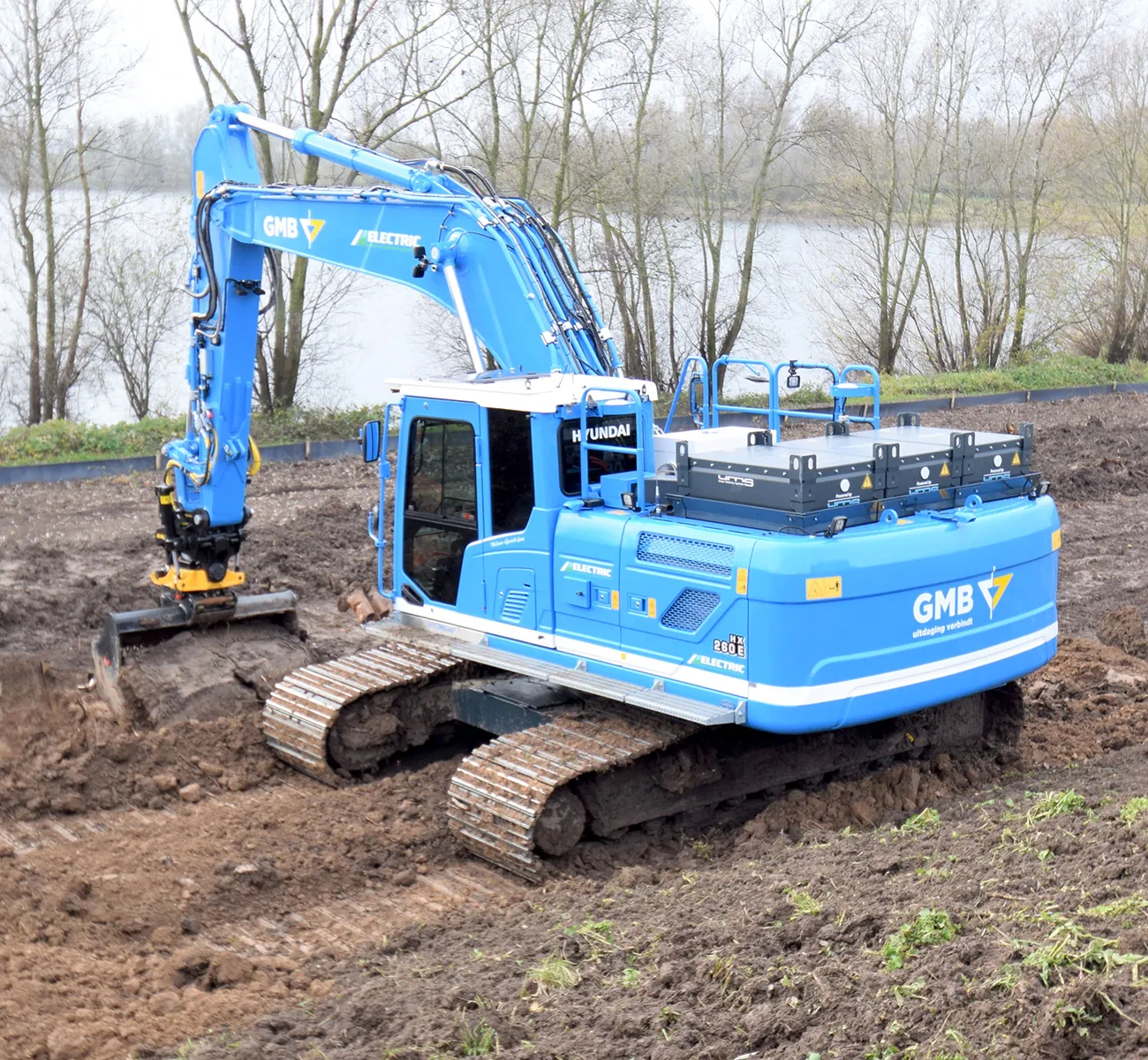
Since operator Gerrit-Jan van de Pol is very enthusiastic about the quiet cab and ease of operation of the HX260 Electric, GMB has ordered a second machine straight away. Importer Van der Spek has also noticed growing interest in electric machines. “Hyundai Europe has given its full support to this initiative, for example by making all the CANbus data available,” says director Jan Nolles. “The initial plan was to supply a hydrogen-powered excavator, but development is moving too slowly. So we approached UMS, and in hindsight I think this was the better route. The first HX85 Electric is also on its way, and we are considering electrifying the HW140A wheeled excavator.”
Successful collaboration
“Our mission is zero emissions,” says UMS director Lars Kool unequivocally. “I want to leave a legacy and aim to supply electric drivetrains directly to machine manufacturers as an OEM partner. That is still some way off, but GMB bought this Hyundai with a full factory warranty. Only successful collaboration can accelerate the energy transition. This project is a good example, because it brought together people with hands-on experience and UMS engineers with expertise in electrifying construction machinery. The people at GMB and Van der Spek are real doers. That cross-pollination results in something that works in practice.”
Question about this story? Ask your question
Keep following this
Get an email when a new story is published. No account needed.
- SubjectGeneral







