












Gamification in logistics: how game elements make a difference to training, motivation and retention
Text Geert Van Cauwenberge Beeld VIL / Geert Van Cauwenberge
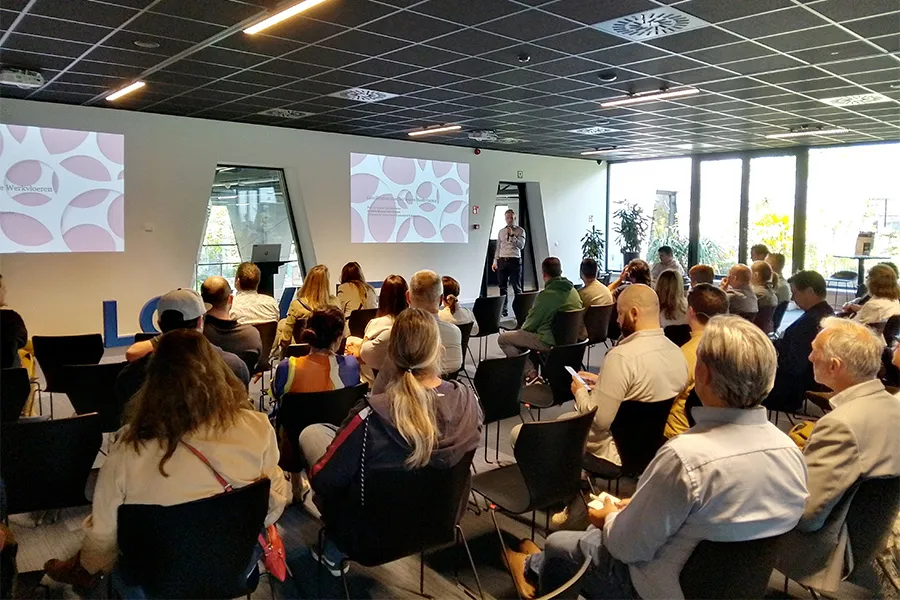
The logistics sector is under pressure: staff shortages, complex onboarding processes and increasing diversity in the workplace are making it ever more difficult to get employees up to speed quickly and effectively. Traditional training methods often prove inadequate, particularly for low-skilled or non-native-speaking workers. In collaboration with Supportsquare, VIL hosted the ‘Gamification in Logistics’ event on 21 May 2025. Around 70 participants gathered at LogiVille to discover how game elements can make a difference to training, motivation and retention.
Geert Verbelen (project leader at VIL) outlined the structural challenges facing the logistics sector. Despite the large number of jobseekers, vacancies for warehouse operatives and forklift drivers remain difficult to fill. The cause is not just a shortage of experience or training, but also factors such as language barriers and digital illiteracy. As a result, onboarding is becoming not only more important, but also more complex.
More and more companies are therefore turning to game elements to make knowledge transfer easier. Simple tools such as card or board games covering company culture and safety rules make training more accessible. This is particularly significant given that 70 per cent of the Belgian population regularly play games, regardless of age or educational level.
LogiBuild: play with impact
The Gamification in Logistics project, set up by VIL in collaboration with UCLL and with support from VLAIO, resulted in the development of LogiBuild: a no-code platform that enables companies to create their own gamified learning modules. The platform focuses on visual communication, intuitive interaction and realistic simulations. It is designed to better engage disadvantaged groups, such as non-native speakers and people with low literacy, in the learning process.
Two pilot cases demonstrated how effective the tool can be. At DSV Contract Logistics, employees learned to recognise hazardous situations through an interactive game. At Solucious, a game was used to teach staff how to unload lorries correctly and safely. In both cases, this led to greater engagement, faster knowledge acquisition and increased motivation among participants. The tool’s user-friendliness and adaptability were also well received.
Learning by doing: the power of simulation
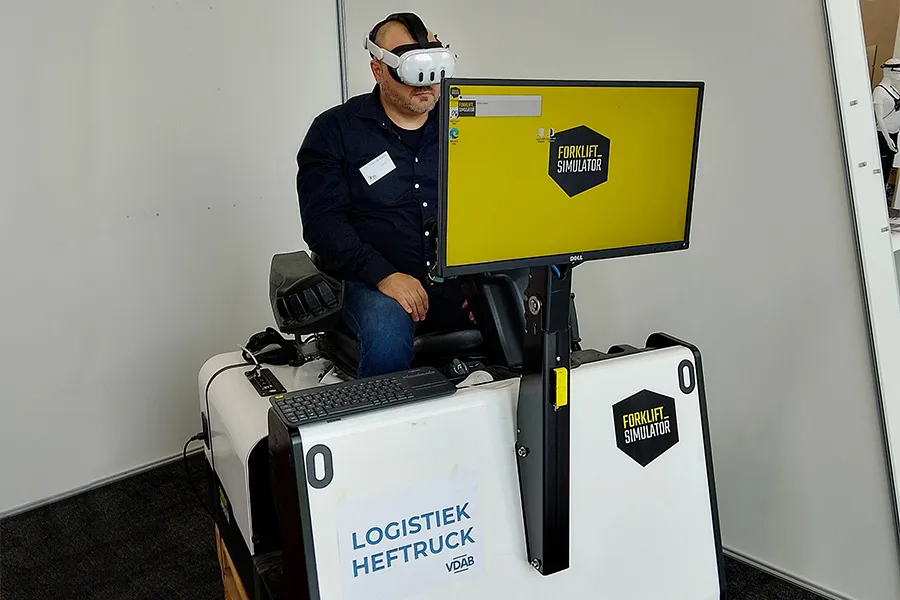
During the event, Ken Van Schaeybroeck, logistics subject-matter expert at VDAB, highlighted the importance of efficient training in a sector that sees around 7,000 logistics training courses launched each year. VDAB is increasingly combining simulation and gamification, for example with a mobile forklift simulator and industrial simulators for welding and spray-painting techniques. These tools make it possible to teach complex tasks safely and cost-effectively, with real-time feedback and game elements such as scores and medals.
Gamification is also used in online courses to reinforce learning or introduce new knowledge. Embedding theory in realistic game scenarios, such as delivering goods correctly, lowers the barrier to learning and increases engagement.
Smart technology meets human psychology
David Vandenbroeck, project manager Digital Solutions at UCLL, stressed that gamification is more than just attractive visual effects. It involves applying game principles to stimulate intrinsic motivation and improve learning outcomes over the long term. This requires considered choices in software, hardware and teaching methods. The LogiBuild tool has already been refined through several versions based on user feedback, with new features such as GPS navigation, quest logs and 3D visualisations.
Prof. dr. Wouter Van Bockhaven (Competence Center Lead: Smart Ecosystems & Networks at AMS) drew a link between gamification and inclusive workplaces. When applied well, gamification can help overcome biases, encourage collaboration and harness diversity in a positive way. From a psychological perspective, techniques such as nudging, personalisation and design thinking are crucial to making a real impact.
Demos: technology in action
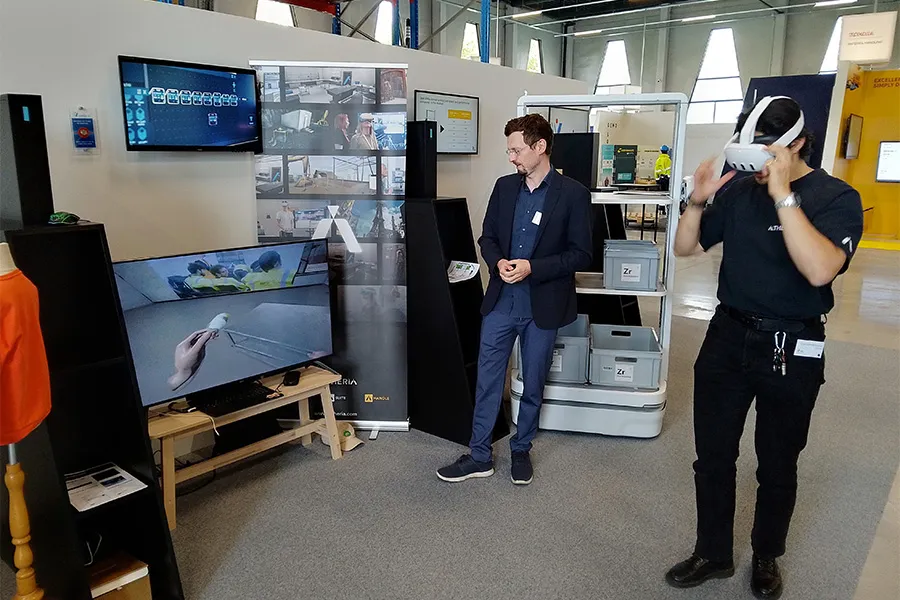
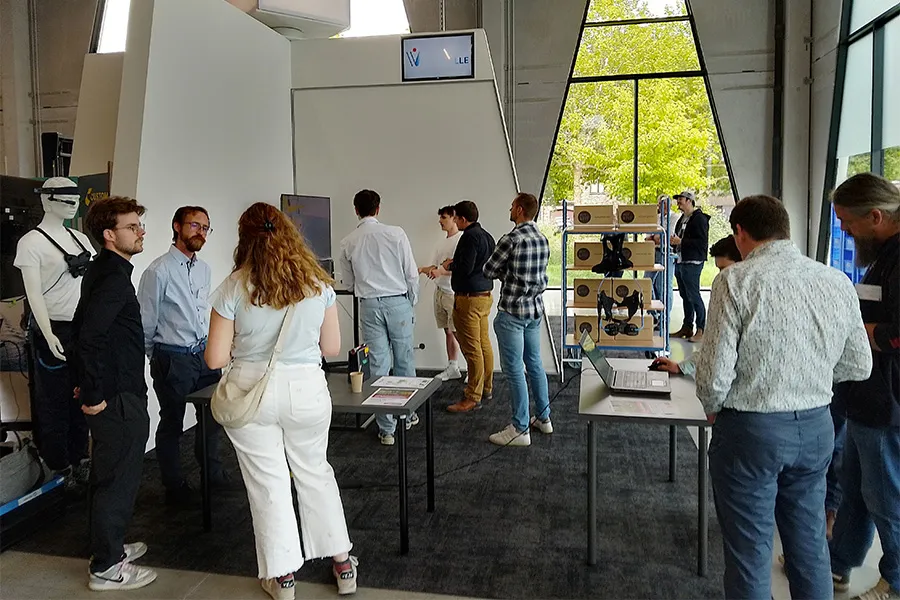
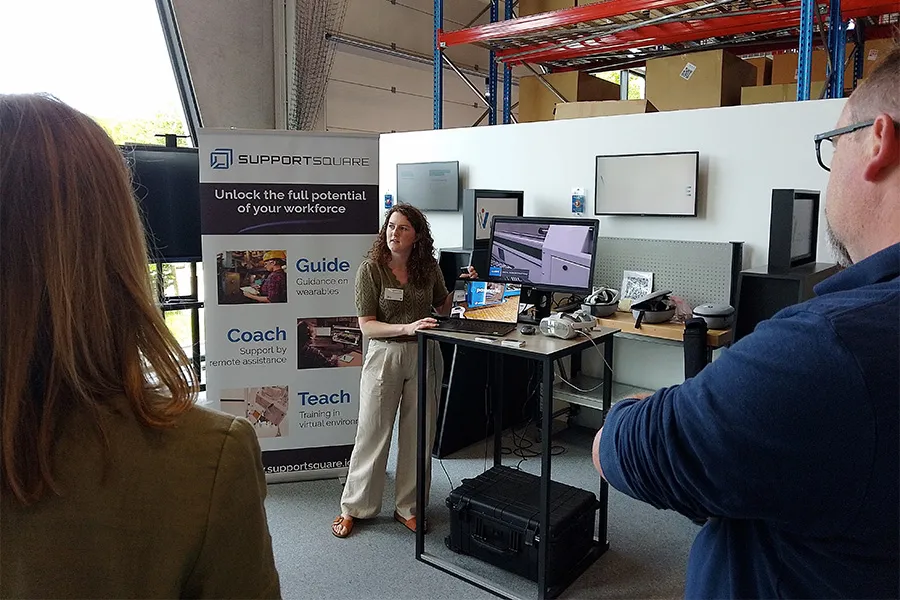
During an interactive demo tour, participants were given live demonstrations of innovative gamification and simulation applications from partners including SupportSquare, UCLL, VDAB, The Hazard Factory, Altheria and Playsight. SupportSquare and UCLL showed how the LMS platform behind LogiBuild tracks learning performance and enables personalisation. VDAB presented its mobile simulators, while Playsight demonstrated how motion capture and visual feedback are used to make safety training more realistic. The demos showed how both established and young technology companies are using gamification to tackle specific logistics challenges.
Question about this story? Ask your question
Keep following this
Get an email when a new story is published. No account needed.
- SubjectGeneral







