












e-CO2tainer brings independence to the A16 Rotterdam project. Sustainable power wherever it is needed
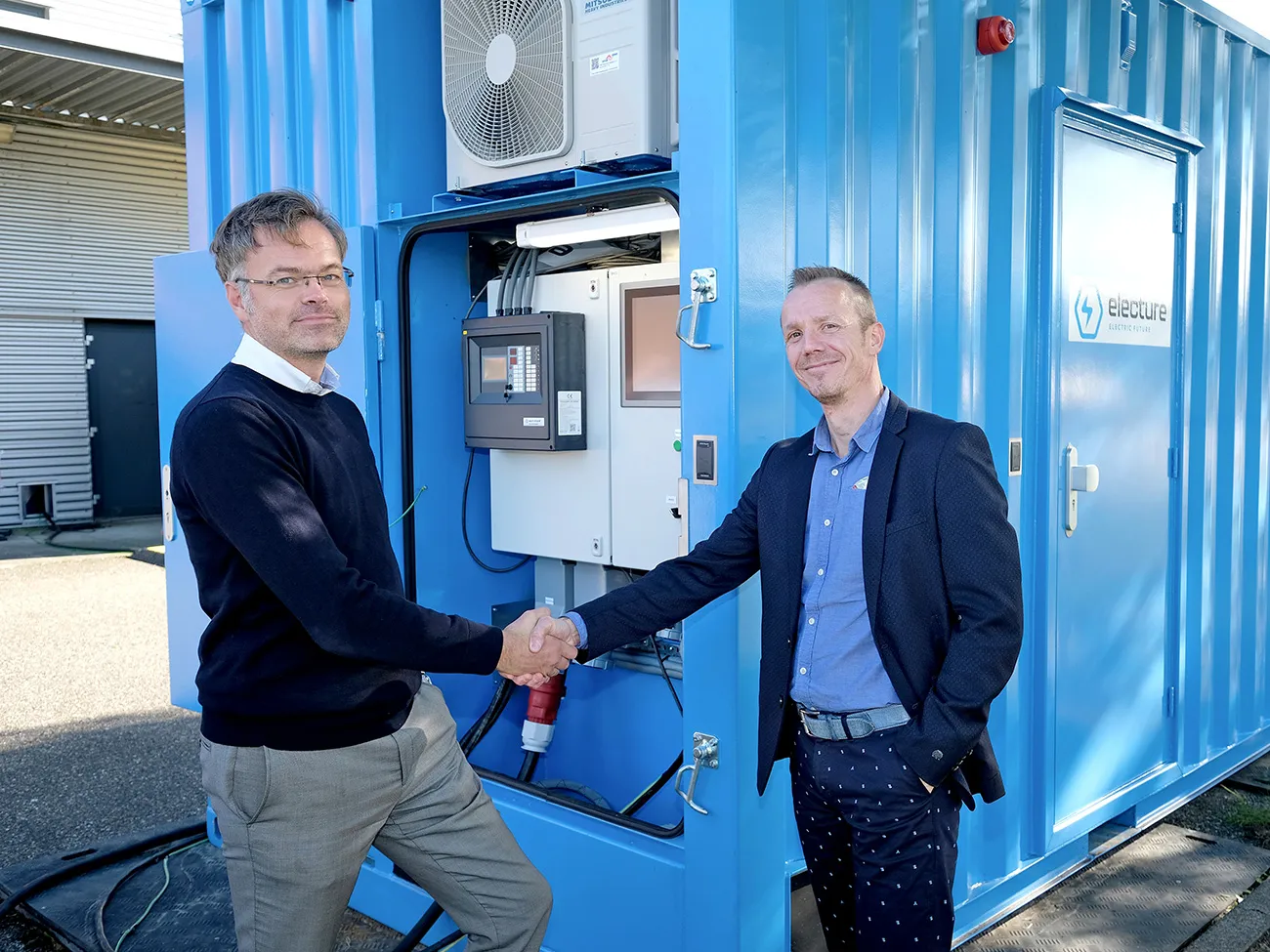
The rise of electric equipment is creating new challenges for site infrastructure. As the ‘father’ of the e-CO2tainer, Jeroen Ritzer-van Dinther explains in detail the sustainable solution Mobilis has developed for independent, mobile power supply. A revolutionary idea that has matured in less than a year and is now being actively used by construction consortium De Groene Boog.
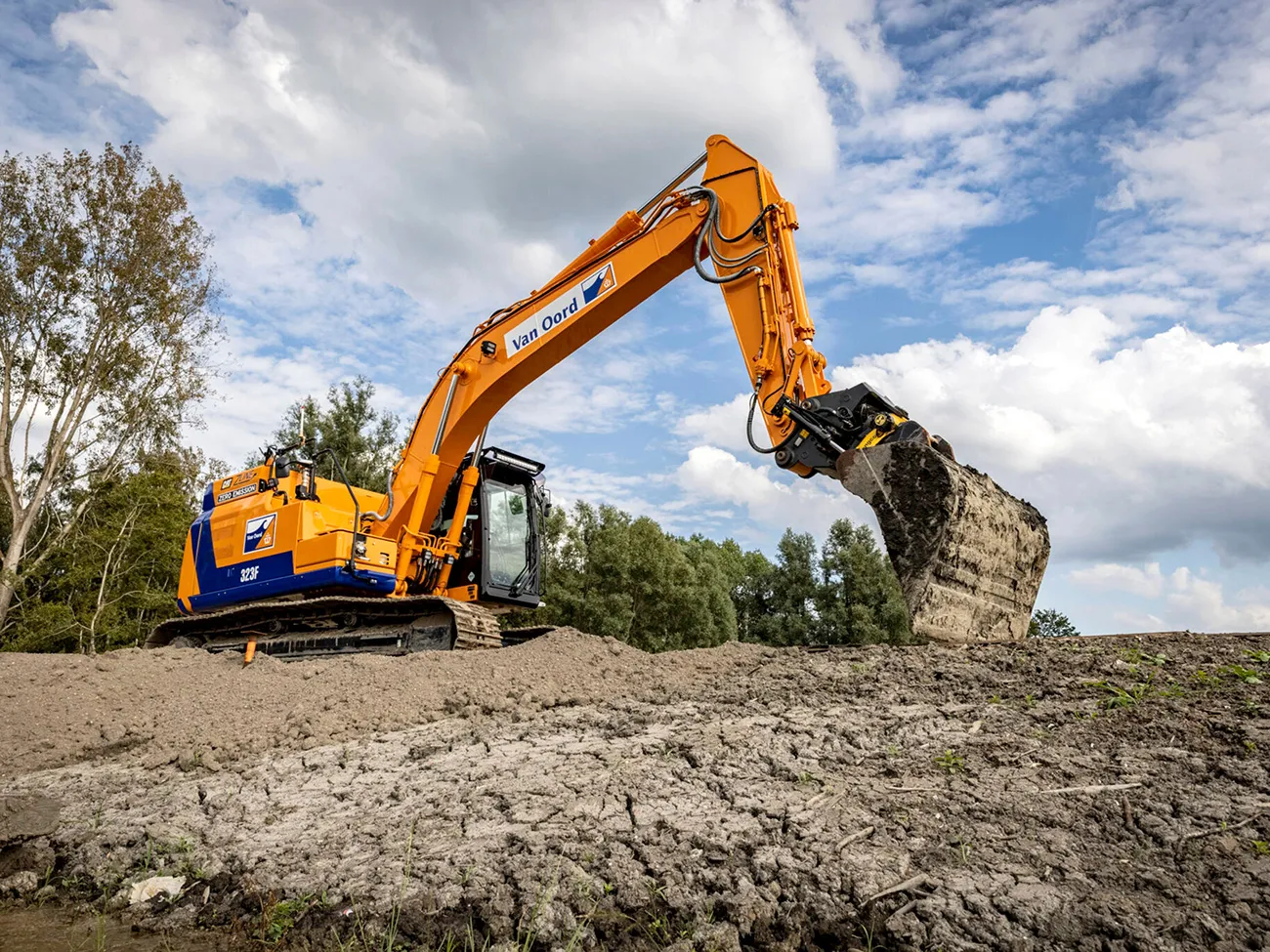
Power from a container
“The e-CO2tainer has been developed into a fully deployable solution for supplying sustainable energy wherever it is needed,” says Ritzer-van Dinther. “Since its introduction at Mobilis, we have kept developing it, and I have been able to make the e-CO2tainer my own specialism. To that end, Electure was set up. The end result is impressive: we are talking about a container measuring 6 x 2.5 x 2.5 metres, packed with energy technology. On board, there is a generator running on HVO 100, the clean biofuel chosen by De Groene Boog. The container also houses an impressive battery bank comprising
batteries, alongside all the electronics that control the system and communicate with the outside world. It is ‘power from a container’, and clean power at that.”
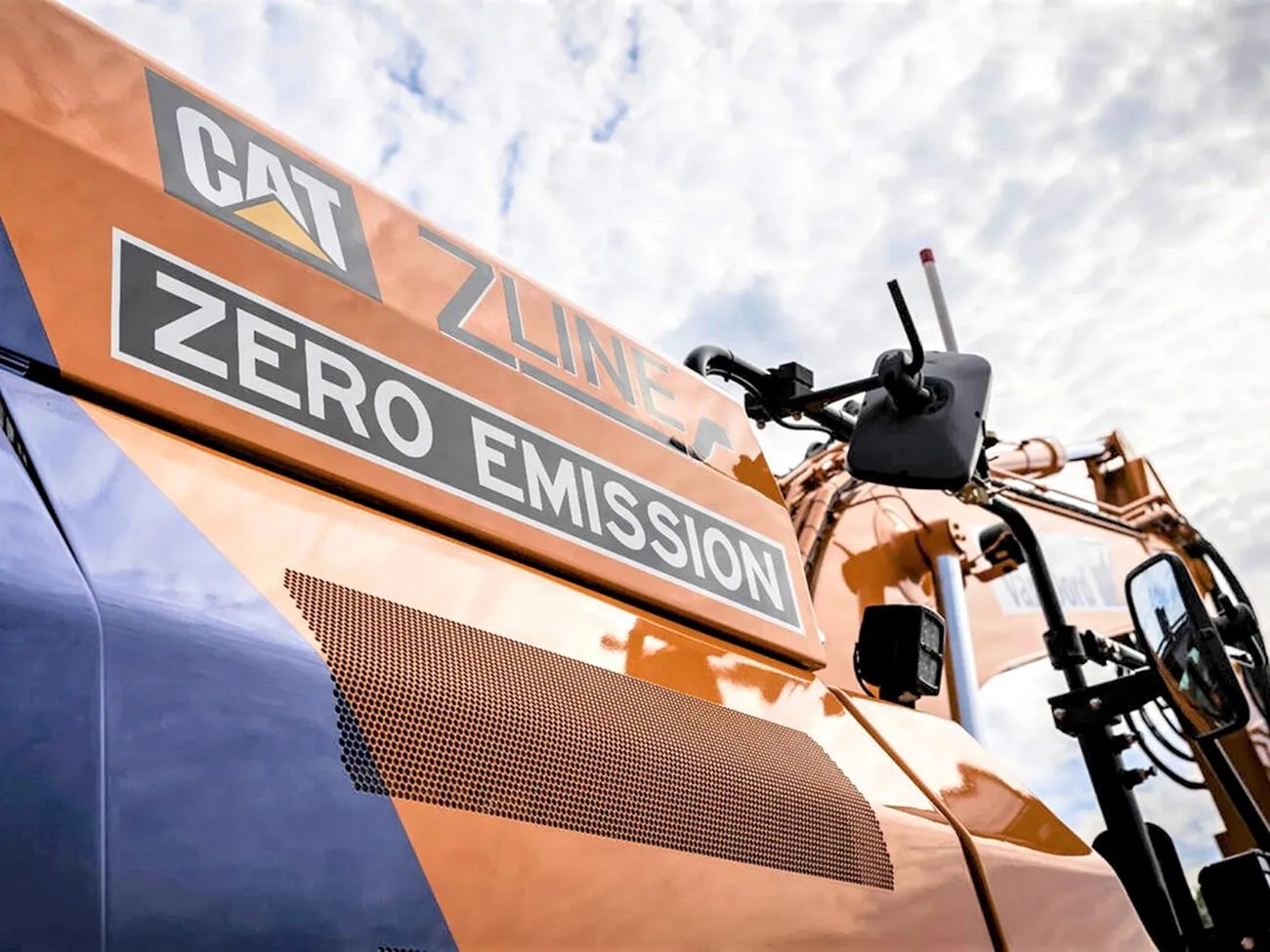
First Euro 5 HVO generator
The generator on board the e-CO2tainer is the world’s first Euro 5-certified HVO generator. “We are proud of that. Alongside the generator, we have batteries on board with a combined capacity of 240 kWh.” A door has been fitted on the outside of the container for the contractor, providing access to a display with a range of monitoring functions and contact details.
There is also a 380 V three-phase mains connection on the outside of the container. This connection can be used to charge the batteries and to draw additional power from the grid during peak demand. Power is supplied via 380 Volt CEE sockets: 1x 125 Ampere and 2x 63 Ampere. You can connect anything that needs a power supply to them. This could be a ‘distribution mushroom’ on site, or electrically powered equipment or vehicles. The priority of each power outlet can be set.
Control via a handy app
The e-CO2tainer can conveniently be switched on and off via an app. “We do this remotely. However, this is the ‘back end’ of the system, and only we have access to it,” explains Ritzer-van Dinther. At the time of writing, one e-CO2tainer is already in operation in sub-area 1 of the project, supplying power to the construction site. A total of five e-CO2tainers are planned for De Groene Boog.
Sustainability is not just about using HVO as a fuel or batteries, but also about smart energy management. Ritzer-van Dinther explains: “Conventional diesel generators run continuously, even when no power is being drawn. This produces a lot of CO2 and particulate emissions. The e-CO2tainer only runs its generator when it is really needed, because when operating off-grid, everything runs on the batteries. When it is on-grid, meaning connected to the mains, we look at the relationship between power input and power output. This allows us to operate the e-CO2tainer as efficiently as possible at all times.”
The sums add up
“An e-CO2tainer has higher fixed costs (purchase price), but lower variable costs (consumption). A traditional diesel generator costs less to buy, but its fuel consumption is many times higher. The combination of the e-CO2tainer and a mains connection also makes it attractive in terms of variable costs and sustainability. It is a win-win situation. I firmly believe in the e-CO2tainer when it comes to TCO (total cost of ownership).”
According to Ritzer-van Dinther, the e-CO2tainer is a true ‘TBI child’. “It was developed at Mobilis and is now being built by our sister company Eekels. It is great to see how this concept has been developed into a solution that can be used in practice!”
Question about this story? Ask your question
Keep following this
Get an email when a new story is published. No account needed.
- SubjectGeneral







