












Ductile iron pipes will outlast us all
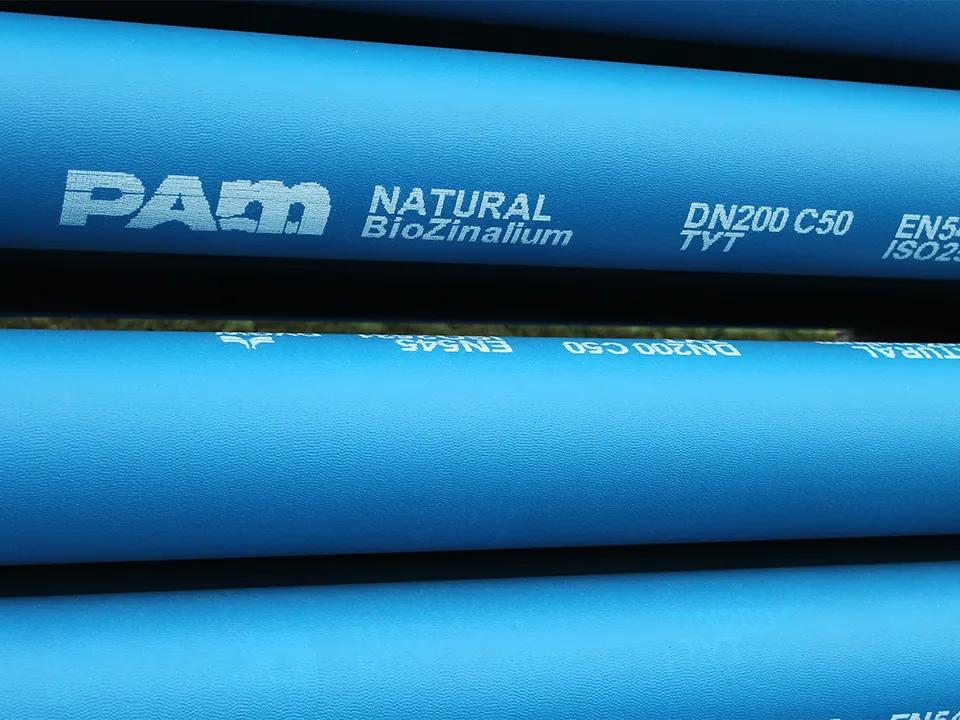
If anyone asks whether ductile iron pipes are the new sustainable alternative in the pipeline sector, we can confidently say that ductile iron pipes are the original. Water pipes have been made from cast iron ever since the invention of iron casting, centuries ago. Pipes that are still in service today. Extending product life is one of the key priorities in sustainability. Given the virtually eternal lifespan of cast iron pipes, we were talking about sustainability avant la lettre.
Today, ductile iron is used to make these pipes, and we’re talking about a product that not only lasts an extremely long time, but can also be recycled indefinitely. Cradle to cradle at its very best. We’re at the offices of PAM Saint-Gobain in Almere, a manufacturer of ductile iron pipes. We’re speaking to Edwin Porssius, project and account manager, and Esther Lindeman, sales and marketing manager.
Water supply for the fountains of the ‘Sun King’
Our first question is about an impressive section of cast iron pipe in the building’s entrance. “That’s a cast iron pipe that formed part of the water supply to the Palace of Versailles. In 1683, King Louis XIV (the Sun King, 1638-1715) commissioned a water main to transport water from the Seine to the gardens and fountains of his famous palace. Pont-a-Mousson (PAM) supplied this water main in 1683, made from grey cast iron. After more than 300 years of faithful service, that pipe system was replaced, with the old pipes recycled and cast into new ones, this time in ductile iron,” Esther explains.
“Ductile iron is extremely strong, tough and flexible,” Edwin adds. “Our pipes are made from iron ore, a natural material that can be recycled indefinitely. When a pipe is no longer needed, it can be melted down and made into a new pipe with exactly the same ring stiffness and flexibility. Ductile iron retains all its original properties, even after recycling.”
The Netherlands is criss-crossed with cast iron pipes
We turn to the use of cast iron pipes in the Netherlands and discover that there’s a very good chance that the water you and I drink has been supplied through a cast iron pipe. “In the Netherlands, the first water transmission main dates back to 1853. It runs beneath the Haarlemmerweg and supplies a third of Amsterdam with drinking water. This cast iron pipe was manufactured in England at the time. It wasn’t replaced until 2018, when roadworks were carried out. Various other ancient cast iron mains are still in widespread use in our country today,” Esther explains.
When you need durability, choose cast iron
Edwin continues: “Almost all the major drinking water companies are our customers. Our product range is therefore focused mainly on ductile iron pipes for drinking water supply. Take any major project and you’ll find our pipes there, as you can see recently at the RijnlandRoute and De Entree, where the contractor is using our pipes. Cast iron pipes are the preferred choice for public-space projects, especially at De Entree, where you don’t want to dig more often than necessary. Because they don’t break. It’s as simple as that.”
A short-term outlook will only cost you more in the long run
To conclude, Esther says: “Choosing ductile iron pipes for drinking water supply reflects a long-term outlook. As Edwin has already explained, their extreme durability means you no longer have to worry about the pipes. That saves money. Our pipes have such a long service life and are so recyclable that they far exceed every requirement and standard on the sustainability ladder. So we’re no longer talking just about sustainability, but about generations. With ductile iron pipes, you can be sure that your children, grandchildren and great-grandchildren will also enjoy clean drinking water.”
Question about this story? Ask your question
Keep following this
Get an email when a new story is published. No account needed.
- SubjectGeneral







