












Digging into data lights the way to knowledge
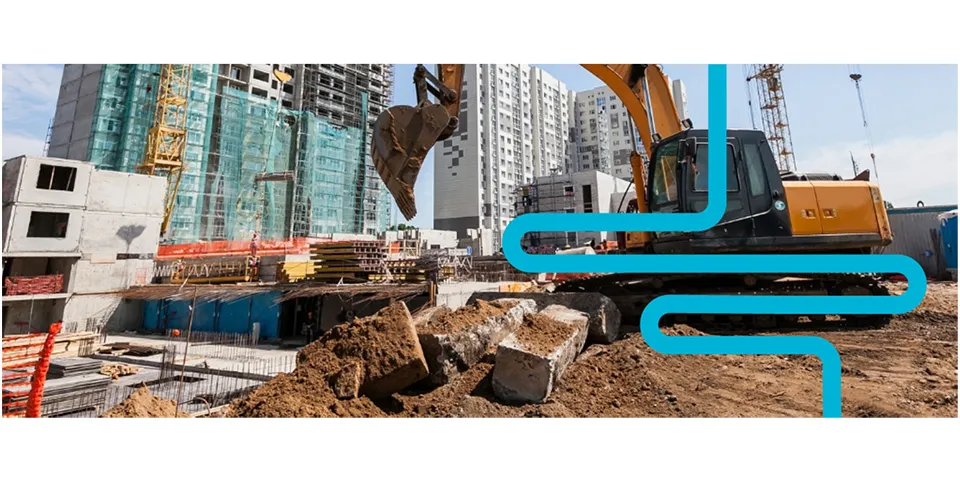
The world and its infrastructure keep changing. Things are getting busier, both above and below ground. Nazca Solutions unlocks data on the surface and underground, turning raw data into information that non-experts can also use. Geodata, sensor data and other information are immediately visible and ready to use through Nazca’s intelligent solutions. Marie-Claire Eichhorn of Nazca Solutions explains, using several real-world examples.
Environmental data make an important contribution to understanding the specifications, possibilities and risks of a site or area. Nazca develops innovative solutions for collecting, storing and unlocking data about the living environment and the underground. “The infrastructure sector is increasingly having to deal with this,” says Eichhorn. “We act as a knowledge partner in the chain that collects, processes, validates and unlocks data through smart software, enabling clients to draw well-founded conclusions.”
Strategic choices
In the field of ‘safe excavation’, Nazca collects and combines various data sources on what ground workers may encounter underground. Information on unexploded ordnance, soil contamination, PFAS and so on is essential. “It is used to determine the CROW safety class, as well as the safety measures to be taken.” Working safely is the priority. Knowledge derived from soil data helps inform strategic choices for a project. Eichhorn gives an example: “It may make sense to move a cable being installed 5 metres, because the underground is less ‘busy’ there. Our intelligent solutions can identify such opportunities for optimisation. This ultimately delivers considerable savings, as we have demonstrated on several occasions.”
Marie-Claire Eichhorn, Nazca Solutions.
Intelligent ‘water management’
Another pioneering solution from Nazca is its Internet of Things (IoT)-enabled groundwater monitoring networks. “Groundwater levels are normally measured using dipwells. Our latest solution automatically generates groundwater-level measurements. Various sensors are installed to monitor groundwater levels in real time. We process this data and combine it with weather data from KNMI. This makes it possible to draw useful conclusions and identify relationships, for example whether a higher water level is the result of heavy rainfall.” Another example is a pilot project with the municipality of Houten. “Here we installed sensors in the perched water in the root zones of trees. Instead of watering the trees every week as a matter of routine, green-space management is now intelligently controlled, and watering takes place only when needed.”
Data becomes knowledge
“Turning data into information is our goal. We want to help companies work smarter, not harder, with our intelligent solutions,” Eichhorn concludes. “Today, this information is still mainly made available through dashboards, but we are also working on augmented reality. For example, people in the field can use these latest technologies to view a borehole digitally in an app. This is also a useful tool for enforcement officers, who can access all the information much more quickly. In this way, together with our partners in the supply chain, we are creating a better living environment.”
Nazca Solutions
Standerdmolen 20-1a,
3995 AA Houten
T +31 30 711 4704
www.nazcai.nl
Question about this story? Ask your question
Keep following this
Get an email when a new story is published. No account needed.
- SubjectGeneral







