












De Groene Boog is pursuing maximum reductions in CO2 emissions
“We’re not there yet: zero emissions. But we are already aiming for maximum reductions in CO2 emissions on site.” Speaking are Stefan van der Voorn, contract manager at Rijkswaterstaat, and Sjoerd Gijezen, CSR manager for construction consortium De Groene Boog, which comprises Besix, Dura Vermeer, Van Oord, TBI (Mobilis, Croonwolter&dros), Rebel and John Laing.
On the way to an emissions-free construction site
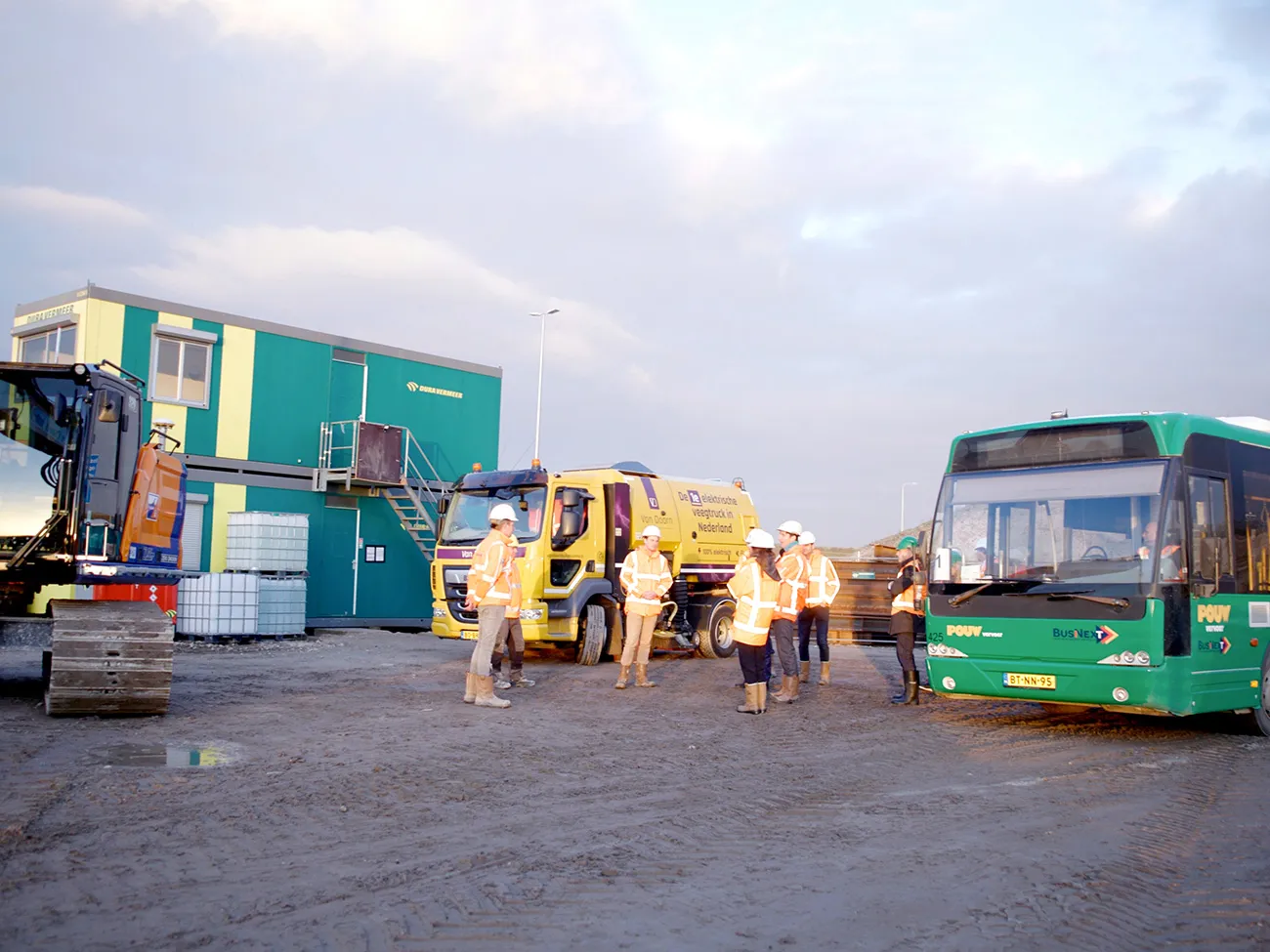
De Groene Boog is delivering the A16 Rotterdam project on behalf of Rijkswaterstaat. The A16 Rotterdam will be an 11-kilometre, energy-neutral national road between the A16/A20 at Terbregseplein and the A13 at Rotterdam The Hague Airport. The new link will help traffic on the A13, A20 and surrounding local roads flow more freely, and contribute to improved mobility, accessibility and quality of life in the region. They explain the green measures being implemented on the project.
Measures at a glance
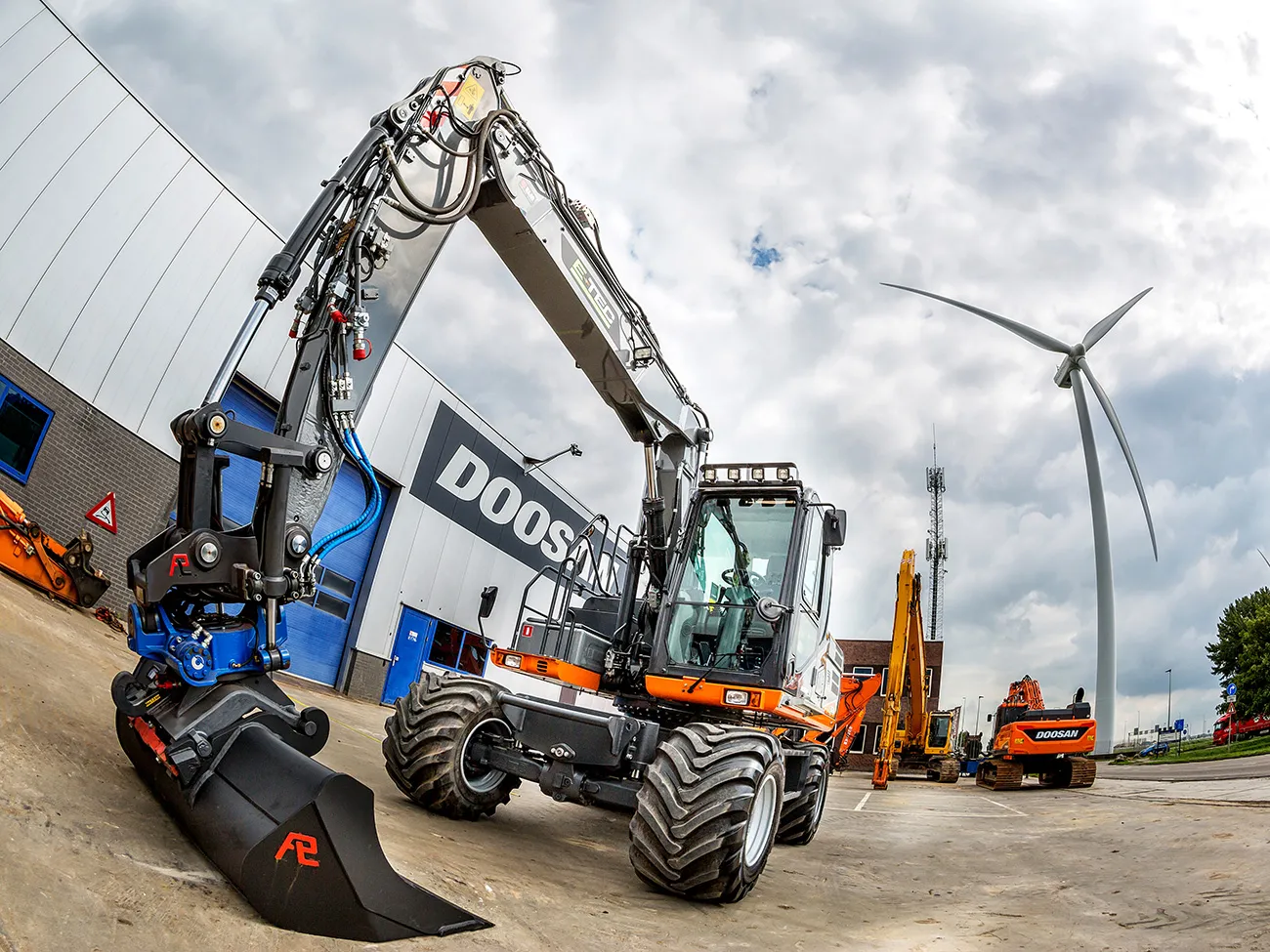
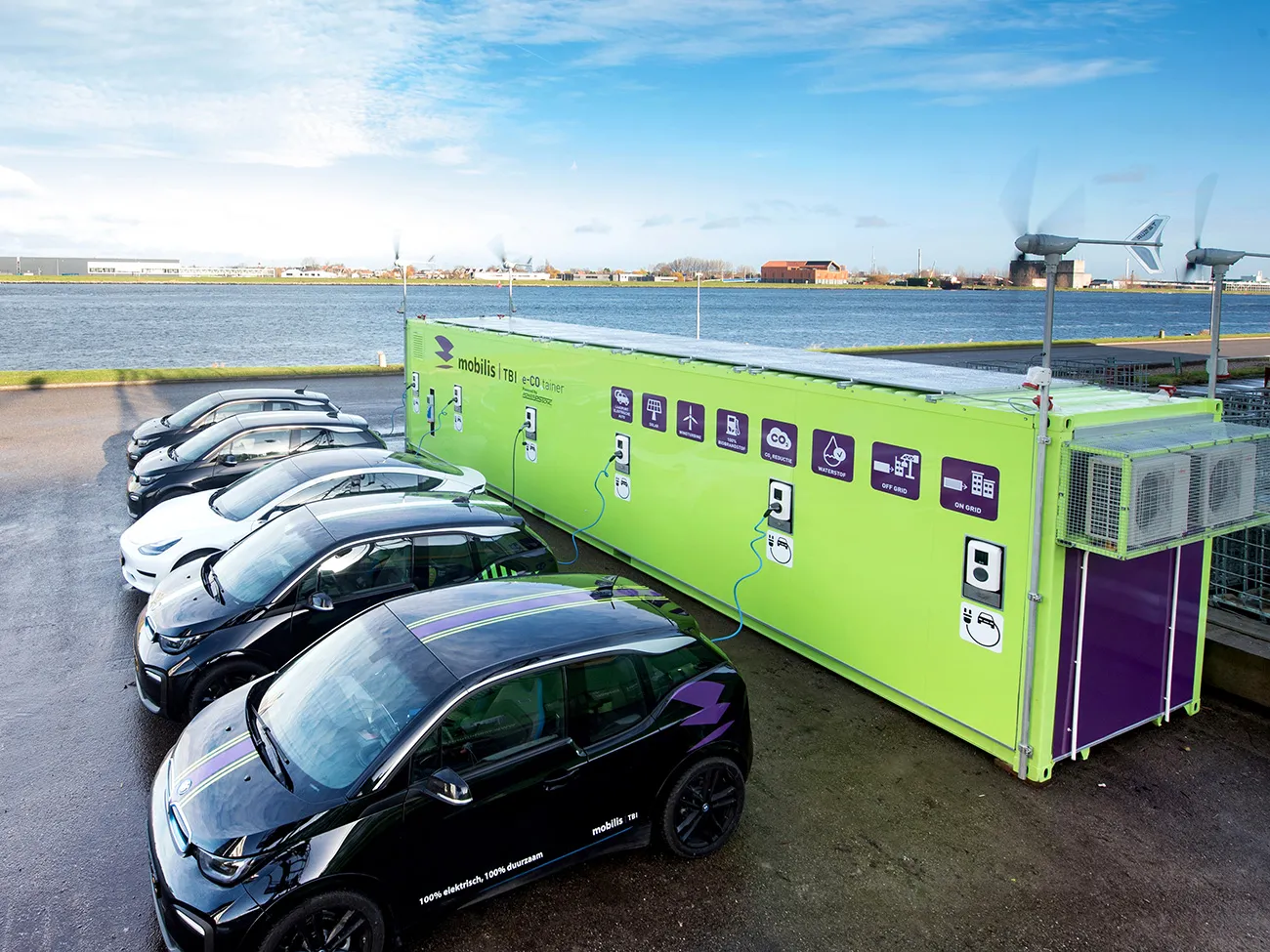
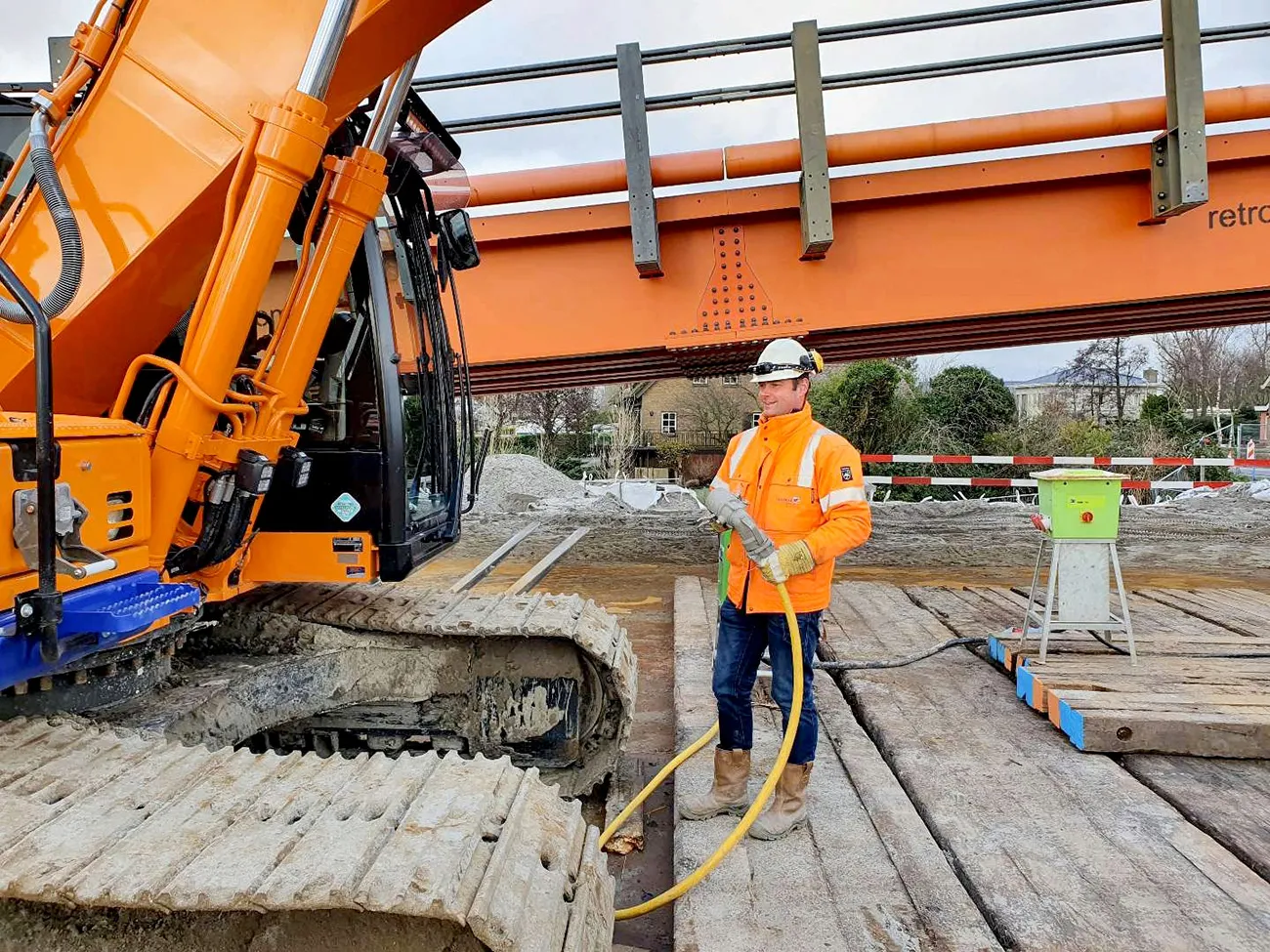
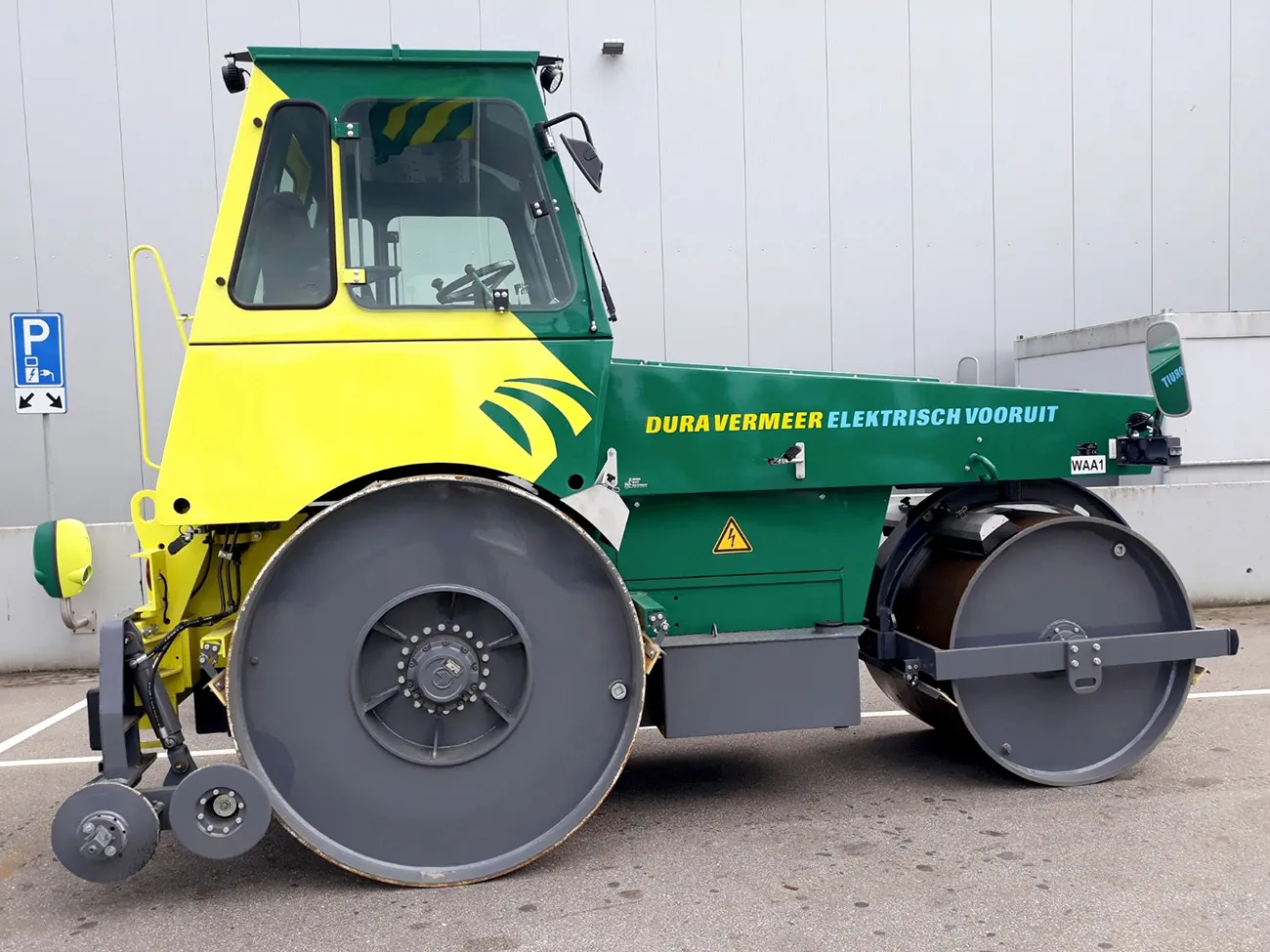
Gijezen takes us through all the methods being used to drastically reduce CO2 emissions: “One measure with a huge impact is the large-scale use of HVO fuel, which cuts CO2 emissions by 90% compared with diesel. HVO is made from residual materials from the food industry and can replace diesel on a one-to-one basis. We have also started using several heavy electric excavators (>20 tonnes). In addition, we use the e-CO2tainer, a hybrid generator containing both batteries and a clean generator. It can be used as a stand-alone unit or connected to the grid to handle peaks.
The e-CO2tainer only kicks in when needed, unlike traditional diesel generators, which run all day.”
Power supply on site
That is the underlying question that needed to be answered. Van der Voorn: “Do you take the charger to the machine or the battery to the charger?” Gijezen: “An electric tracked excavator is not designed to cover long distances efficiently. Ideally, you take the battery pack to the machine.” Van der Voorn adds that the best way of working has been assessed for each location. “It’s an ongoing search, and we accept that these kinds of issues require pioneering work.” Gijezen: “Many factors affect the answer in each situation. What can the grid supply? What capacity do the construction work and electric equipment require? And at which locations is it physically possible and worthwhile to install charging facilities?”
An ideal learning ground
There is a lot of discussion in the infrastructure sector about alternative, clean energy sources for getting equipment moving and keeping it running. This is the first project of this scale to examine maximum CO2 reductions so intensively, taking a close look at every aspect of power. Gijezen sees De Groene Boog’s approach as an ideal learning ground for future projects.
“We are creating a blueprint that everyone can benefit from. Why reinvent the wheel every time?” One notable detail is that this green way of working was not included in the tender. Van der Voorn: “De Groene Boog organised its own thematic roundtables in response to Rijkswaterstaat’s overarching aim of achieving zero emissions by 2030. At those roundtables, we worked with suppliers of green technology to identify how this project could already contribute to Rijkswaterstaat’s green ambitions.”
Going beyond keeping promises
De Groene Boog wants to go further than simply delivering on its tender commitments: “We want to excel. De Groene Boog has established an EMVU fund (the U stands for implementation) and offered it to Rijkswaterstaat. There is €3 million available to fund sustainable measures. That’s a good incentive. But how do you actually go about it? The thematic roundtables generated a wealth of insights and ideas.”
By sitting down with Rijkswaterstaat, experts and external parties, they identified so many practical measures that, according to Gijezen, the €3 million is not enough. Additional support was therefore requested from the ministry. Various proposals, including electric equipment, were submitted in June 2020. The funding was awarded in September 2020. Van der Voorn notes that the thorough preparation made it possible to submit a very concrete proposal. “In 2021, we applied for a second round, and that funding was also awarded.”
A learning process that requires sacrifices
Gijezen sees keeping everyone ‘on board’ as a challenge. “We’re encountering a number of hurdles because we’re venturing into uncharted territory. But you learn most from the things that don’t go smoothly. The trick is to keep everyone motivated so that, together, we cross the finish line every time.” According to Van der Voorn, this calls not only for a willingness to learn, but also for considerable effort.
“We’re sticking our necks out on several fronts,” he says. “The mindset has to be right, and everyone has to be pulling in the same direction. That requires persuasion from De Groene Boog and decisive action from Rijkswaterstaat. We know that what is being done now will act as a catalyst for future projects. That is why it is so important that everyone gets involved and stays involved. We’re showing that it can be done, creating a flywheel effect. Realistically, we still have a long way to go, but we’re paving the way for ‘getting better and better’.”
Gijezen concludes: “We know where we need to go. To achieve a target in the longer term, the frontrunners need to be encouraged now. We have to realise that what we are doing now will be a requirement in 2030. And that’s not far off.”
Question about this story? Ask your question
Keep following this
Get an email when a new story is published. No account needed.
- SubjectGeneral







