












Closing event for LogiVille’s ‘Smart Vehicles’ Theme Tour focuses on smart, eco-friendly road freight
Text Geert Van Cauwenberge –Image VIL / LogiVille
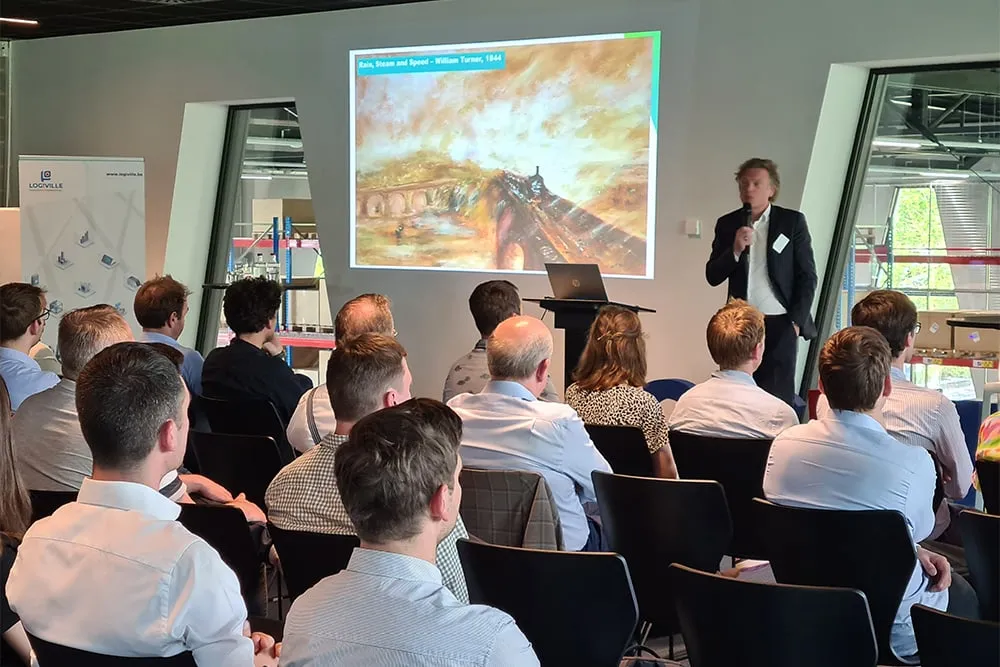
In spring 2024, Log!Ville invited entrepreneurs and logistics professionals to take part in the ‘Smart Vehicles’ Theme Tour. The tours showcased a host of innovations that are (set to) radically transform road transport. The closing event, ‘The road towards freight with brains’, took place on 24 June 2024, bringing together sector experts to review regulations and successful case studies.
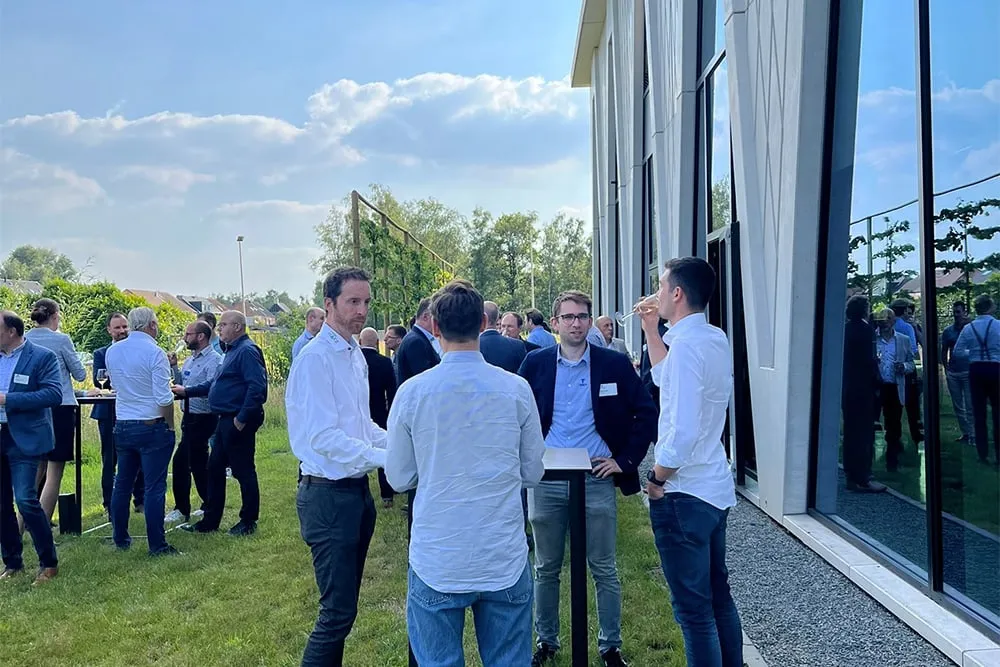
More than 80 participants from a range of sectors travelled to the logistics innovation centre that day. Over the preceding months, they had already encountered inspiring innovations in smart transport on a Theme Tour, including the Efficiency Champion XGvan DAF Trucks, the latest E-cargo Bike and electric van from DHL, Goodyear’s automated tyre monitoring and analysis, and NEXTdriver’s driving behaviour coaching app.
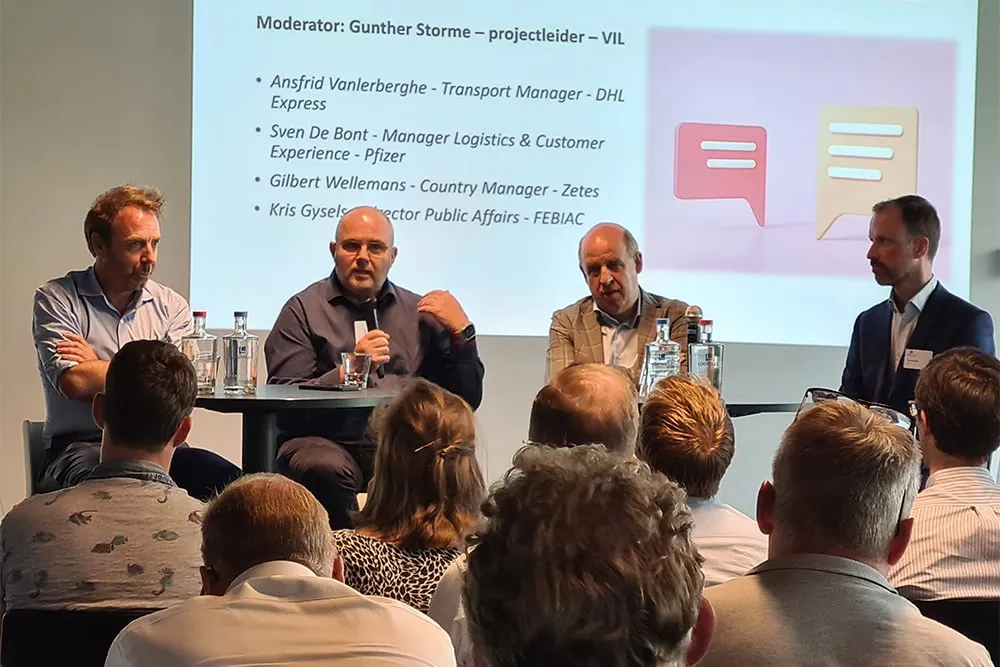
The event gave several thought leaders a platform to share their views on sustainable freight transport. After a welcome address from Paul Van Nuffel, manager of Log!Ville, Grisja Lobbestael, CEO of Flanders Make, explained how the Flemish strategic research centre for the manufacturing industry operates and the value it brings. His colleague Ellen van Nunen, Tech domain lead Autonomous & Senior project leader at Flanders Make, outlined developments in smart technologies for autonomous vehicles. A panel discussion, moderated by VIL project leader Gunther Storme, brought together DHL Express, Pfizer, Zetes and FEBIAC to discuss hot topics in sustainable road transport.
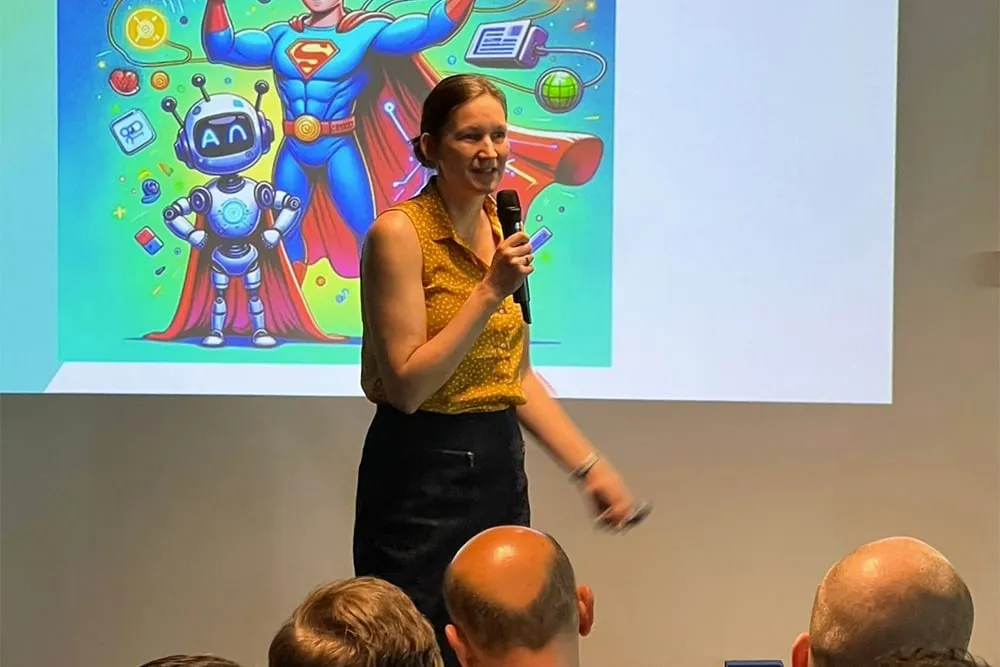
Flanders Make: fostering open innovation
With a team of more than 900 researchers and annual turnover of €100 million, Flanders Make has grown into a leading player in supporting product and process innovation in Flemish industry, operating from three sites in Lommel, Leuven and Kortrijk. “We contribute to the technological development of the vehicles, machines and factories of the future through three pillars: research, tailor-made innovation, and testing and validation infrastructure,” says Grisja Lobbestael. “Our high-quality research is often five to ten years ahead of what industry is able to absorb. Through tailor-made innovation, we work with manufacturing companies to explore how innovative solutions can be developed. Our extensive testing and validation infrastructure, including a climate chamber for vehicle testing, helps bridge the gap between research and practice.”
From SLAM to ‘platooning’
Ellen van Nunen began her presentation with a brief history of smart technologies in mobile vehicles. “Inductive Track Guidance was already in use in the 1950s, with vehicles guided along inductive paths in warehouse environments,” says the researcher. “In the 1980s and 1990s, we saw the introduction of laser navigation, which brought greater flexibility. Since 2010, SLAM, or Simultaneous Localization and Mapping, has enabled vehicles to map their surroundings while determining their own position, an essential capability for autonomous navigation in dynamic environments.”
Ellen van Nunen also discussed the rise of AI algorithms and the segmentation of sensor data into object classes, with image pixels associated with people, racks or floors. “The use of prematrix information is also revolutionising the logistics sector, as large volumes of data are analysed and patterns predicted to optimise logistics processes proactively. Artificial intelligence also improves safety through pedestrian detection, accurately identifying and tracking pedestrians in warehouses and distribution centres. This reduces accidents and increases efficiency. In transport, ‘platooning’ is another promising technology: trucks travel in convoy, guided by a lead vehicle with minimal gaps between them.”
A promising future
A closing panel discussion prompted further interaction with participants. Ansfrid Vanlerberghe (Transport Manager at DHL Express), Sven De Bont (Manager Logistics & Customer Experience at Pfizer), Gilbert Wellemans (Country Manager at Zetes) and Kris Gysels (Director Public Affairs at FEBIAC) were asked a series of challenging questions. How are their employers approaching electrification and the transition to sustainable fuels? What opportunities do they see for sustainability through the use of smart freight and smart packaging? What potential do self-driving or remotely operated trucks have in Belgium? And what is certain to be a gamechanger in the coming years? In a nutshell, rapidly advancing battery technology, with better performance and lower weight, could offer market players fantastic opportunities. Pilot projects in autonomous driving also look promising, including autonomous port areas where the technology can be put to excellent use. Smart GPS tracking and sorting machines determine which sustainable transport option, an electric van or cargo bike, is used to deliver a consignment. And what about control towers for sea and air freight, consolidating or deconsolidating consignments and assembling them to suit transport routes?
Question about this story? Ask your question
Keep following this
Get an email when a new story is published. No account needed.
- SubjectGeneral







