












Cleaner fuel is already cutting emissions today
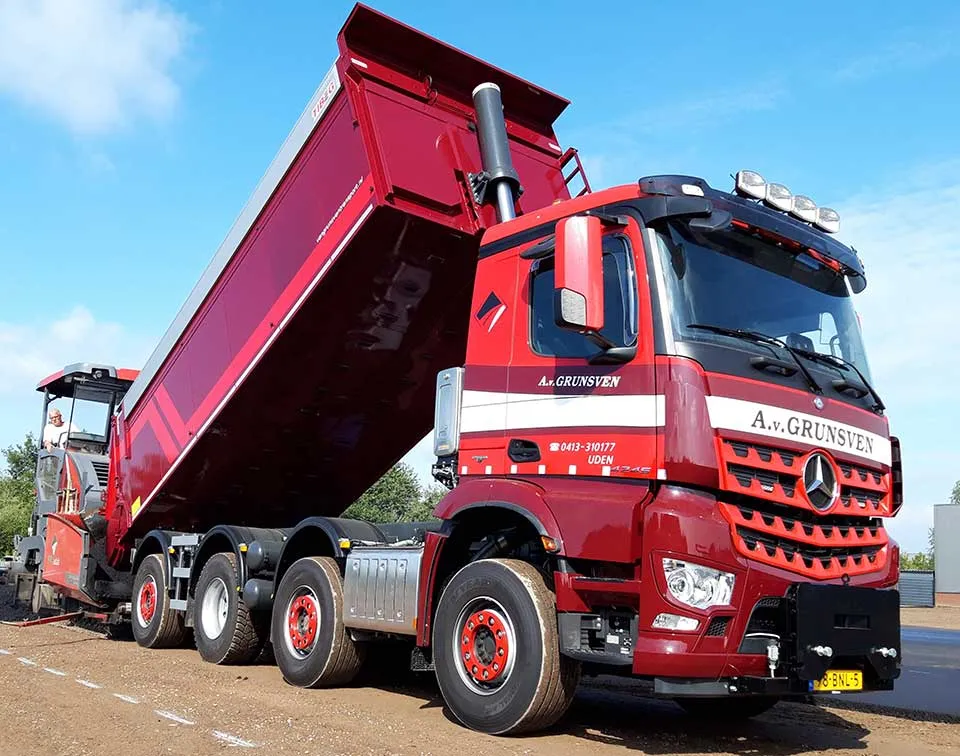
As a link in the construction supply chain, A. Van Grunsven Transport has been doing everything it can for several years to reduce CO2 and nitrogen emissions. Van Grunsven has developed special insulation for tipper trucks carrying asphalt and runs the latest-generation Euro 6 trucks. In addition, the transport company has switched to an advanced, CO2-saving fuel in partnership with fuel supplier Den Hartog. ‘We were looking for something that could cut our emissions immediately. Right now, today,’ says Anton van Grunsven.
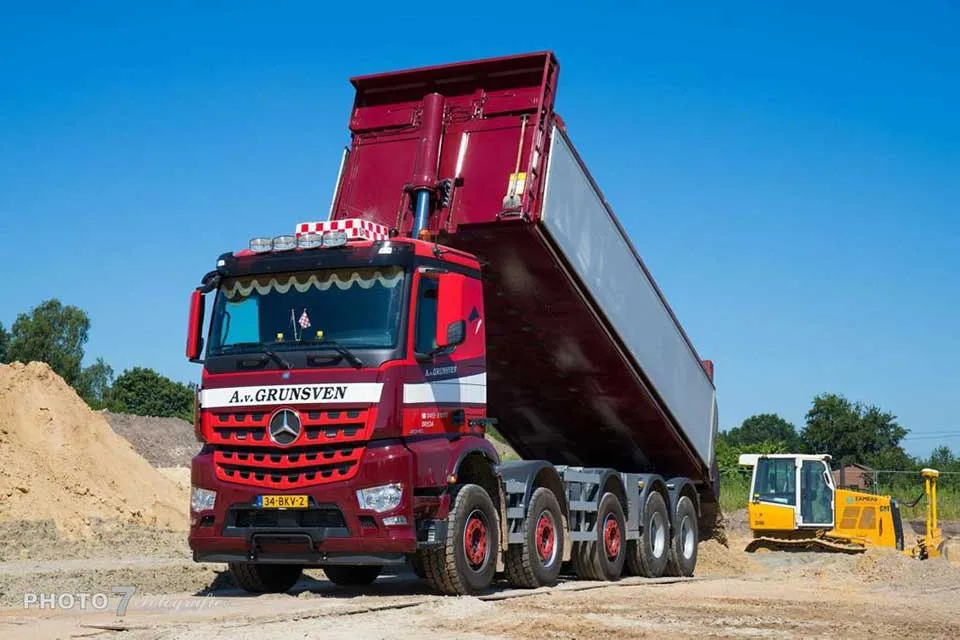
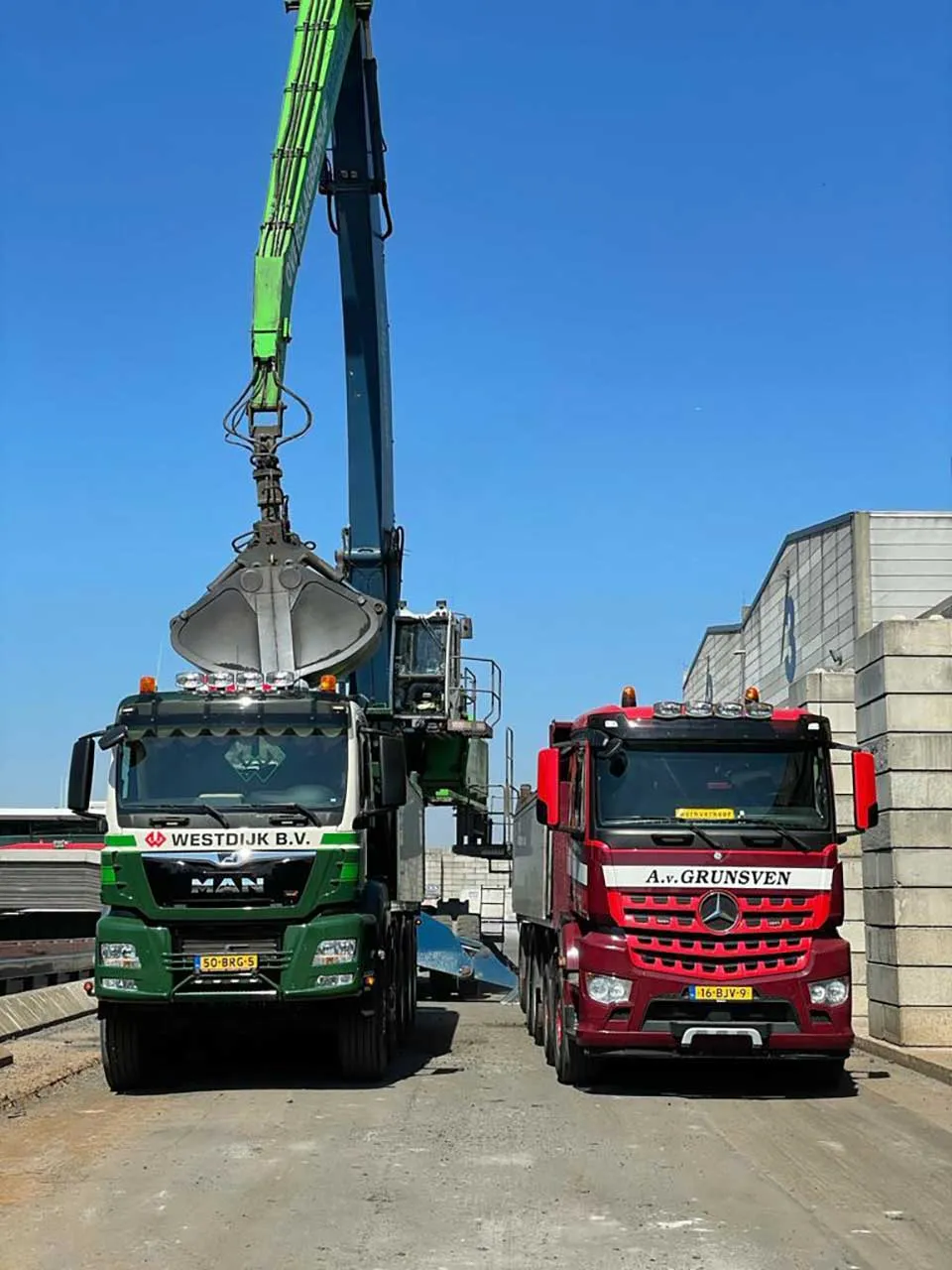
Van Grunsven focuses mainly on transporting bulk construction materials, such as sand and gravel. Over the years, A. Van Grunsven Transport in Uden (North Brabant) and sister company Westdijk Kippers in Utrecht have become highly specialised in transporting asphalt for road construction. More than 100 vehicles are active in this sector nationwide. This niche market has specific transport requirements. By developing its own technical innovations, Van Grunsven is able to respond continually to the market’s needs.
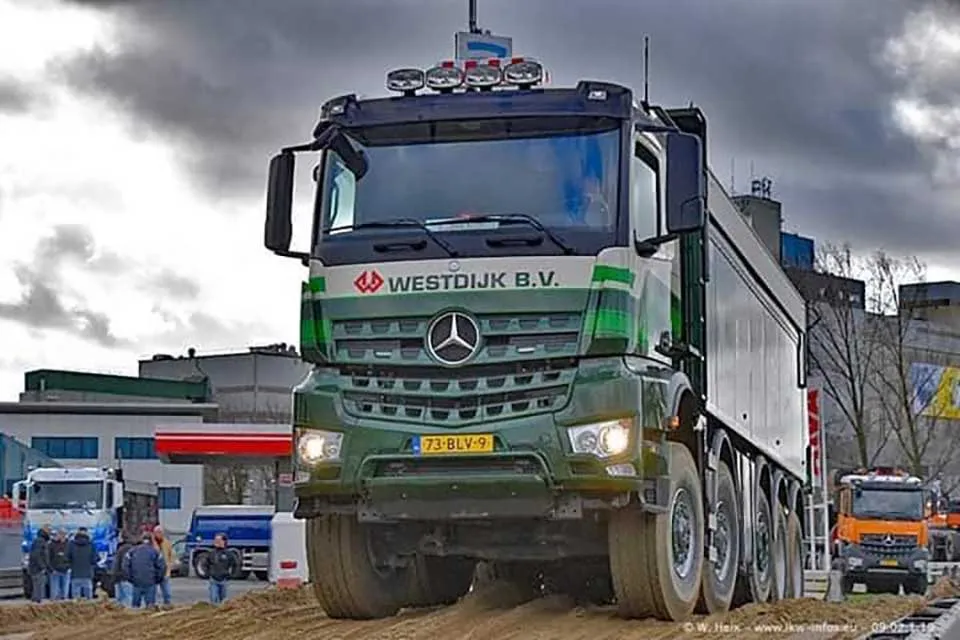
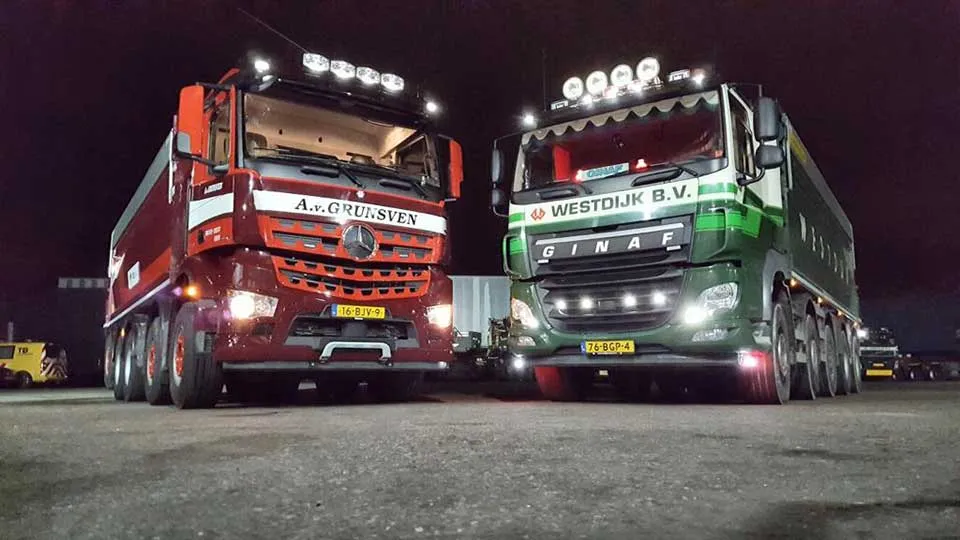
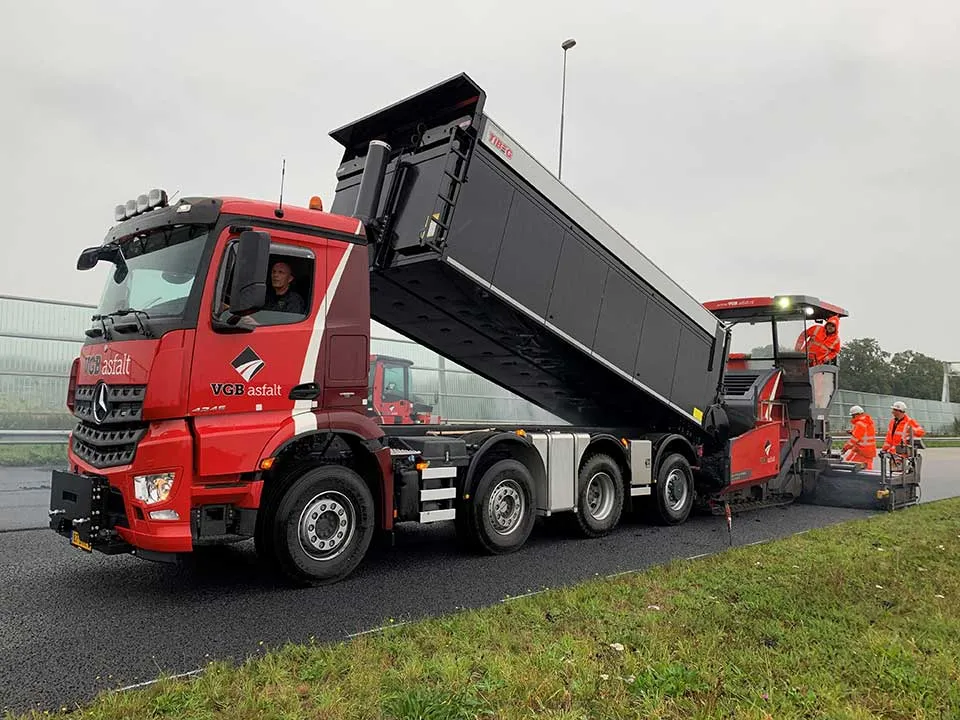
A good example is the development of its own tipper trucks with much better insulation. This means the asphalt loses less heat during transport. The asphalt plant, which produces the asphalt, therefore needs to heat the product less to ensure it reaches the required temperature when delivered to the site. This lower production temperature saves a huge amount of energy across the supply chain, and therefore reduces CO2 emissions. Van Grunsven developed these tipper trucks in-house, underlining the company’s innovative nature. This part of the business has even grown into an independent company: Tibeg.
Don’t wait, cut emissions now
For many outsiders, this is still an unusual development, but for Van Grunsven, using these tipper trucks has become standard practice. So too has running trucks that meet Euro 6 emission standards to ensure low CO2 and nitrogen emissions. Van Grunsven likes to look ahead. The market, and road construction in particular, is calling for cuts in CO2 and nitrogen emissions that go beyond what the current generation of diesel trucks, however clean, can deliver. Electric vehicles quickly seem like the obvious answer.
However, the use of battery-electric trucks still faces technical limitations. There are opportunities in distribution, but the options are currently limited for the heavy transport in which Van Grunsven operates. This is due not only to the high weights involved, but also because 24/7 operation is not unusual during the peak season. There is simply no time to charge a battery.
Despite all the limitations, Van Grunsven is certainly not ignoring this technology. ‘Behind the scenes, we are already working on concrete plans to electrify for the future. We see that as important,’ explains Anton van Grunsven, ‘including in light of the Climate Agreement as it stands. At the same time, we don’t want to wait for future developments. That’s why, a few years ago, we started looking for a technology that could immediately reduce CO2 emissions from our fleet.’
Cleaner diesel offers a solution
The existing fleet is powered by Euro 6 diesel engines. To make it more sustainable, Van Grunsven decided to replace the diesel it used with a cleaner alternative. The haulier partnered with Den Hartog in Groot Ammers. The fuel supplier and the transport company have both traditionally been family businesses, so they share the same direct lines of communication and can respond quickly. Van Grunsven says: ‘That’s why we work well together.’
Economically sustainable
It is easy to talk about operating sustainably. The reality in the transport sector is that profit margins are often slim. Switching entirely to a fully plant-based diesel such as HVO means a significant price premium. Raising rates is difficult unless the customer is genuinely willing to pay extra for it.
Van Grunsven was therefore looking for a middle ground: cutting emissions immediately, but in a way that is economically viable now. It makes sense: an investment in the environment must also be economically sustainable. Van Grunsven also has a mixed customer base, he explains. ‘Some of our customers still attach little importance to CO2 reduction, while for others it really matters.’ In consultation with Den Hartog, Van Grunsven decided to switch all its trucks to advanced FAME biodiesel. On average, 10 per cent of the fossil diesel is replaced with renewable biodiesel. It is made not from controversial food crops, but from waste streams such as used vegetable frying oil. That makes the fuel genuinely sustainable.
This makes it possible to cut CO2 emissions by up to 27 per cent across the entire fleet. In practice, the reduction is slightly lower. Van Grunsven cannot always refuel with this special diesel at its base in Uden. ‘Sometimes we have to refuel at a filling station while on the road. Unfortunately, we find that this fuel is not yet available everywhere,’ the business owner explains.
To ensure that the transport company can accurately record how many tonnes it reduces its annual CO2 emissions by, Den Hartog issues certificates with every delivery of the special diesel. This allows Van Grunsven to stand out in the market and demonstrate how many tonnes of CO2 it saves each year. Anton van Grunsven says: ‘If a client values emissions reductions on a particular project, we can allocate our annual savings precisely where they are needed.’
Question about this story? Ask your question
Keep following this
Get an email when a new story is published. No account needed.
- SubjectGeneral







