












Apeldoornseweg: from waste plan to materials plan
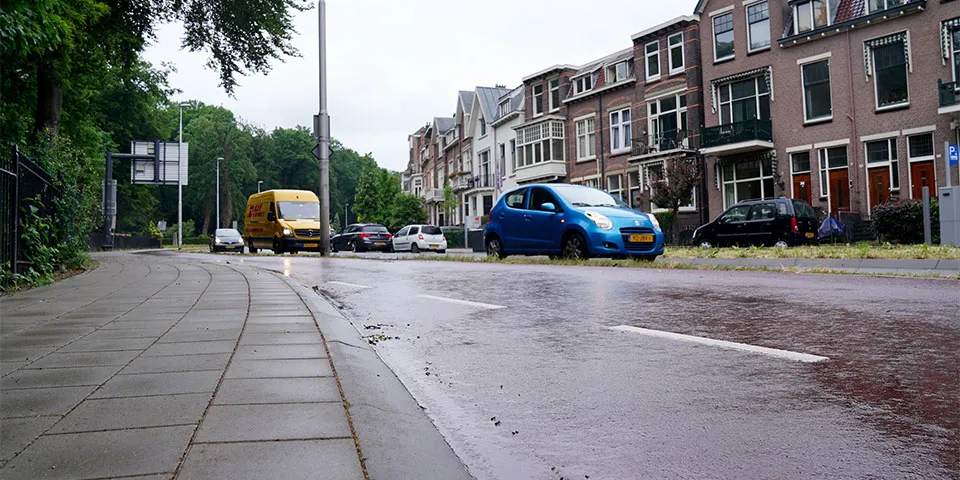
How can we do as much as possible to promote sustainability within existing contracts? That was the question facing the Municipality of Arnhem when work began on Apeldoornseweg. “Rather than opting for innovative materials whose value and quality have yet to be proven, we looked at what was possible under the existing RW contracts,” says project manager Sil Polman. “That turned out to be more than we had initially thought.” The concrete paving slabs and kerbs, concrete sewer pipes and asphalt were among the materials reused.
Apeldoornseweg is an important access road into the city and connects to the A12. Its redesign was therefore no easy task. “The sewer was in poor condition, as was the asphalt. The bus stops were outdated and the traffic lights needed replacing. We also wanted to put an end to flooding. Apeldoornseweg has a change in elevation, so water from the adjacent park flows downhill onto the road. We also took the wish for more greenery in the city into account in this project. And we listened to residents’ views: they wanted more crossing points and measures to reduce vehicle speeds.”
With all these challenges, it was already a demanding project. But the team wanted to go a step further on sustainability. Not by using the project as a testing ground for innovative materials, but by using products that meet existing requirements. “We set a number of sustainability requirements that contractors had to meet. For example, a minimum requirement for the use of secondary aggregate in new concrete products. Material can be crushed into rubble and used as a road sub-base. But old products can also be crushed into aggregate for new products, or removed from one location and reused elsewhere in their original form.”
Arnhem opted for the latter two forms of reuse. “Not all the sewer pipes and paving slabs could be reused. These were crushed into aggregate in two sizes. The coarser aggregate was used in new paving slabs and kerbs; the finer aggregate was used in the bedding mortar for the concrete walls behind the kerbs installed as part of the project.”
The new concrete kerbs and paving slabs contain 25 per cent secondary aggregate. “As the project progressed, we also set a similar requirement for the sewer pipes. In this case, the required proportion was 15 per cent.” By asking contractors to draw up a materials plan, the municipality kept the dialogue with them going. “Because we kept an open mind, we identified opportunities along the way to make the project even more sustainable.”
Sustainability was important in this project, as was proven quality. “The assessment guideline ‘Environmental profiles for concrete infrastructure products’ gives you confidence that the proportion of secondary materials will be achieved and that the quality of the finished product is assured.” More information about the assessment guideline is available at Betonhuis.nl/bestrating/brl.
Question about this story? Ask your question
Keep following this
Get an email when a new story is published. No account needed.
- SubjectGeneral







