












A look ahead with Andrea Vollebregt: water engineering, now and in the future
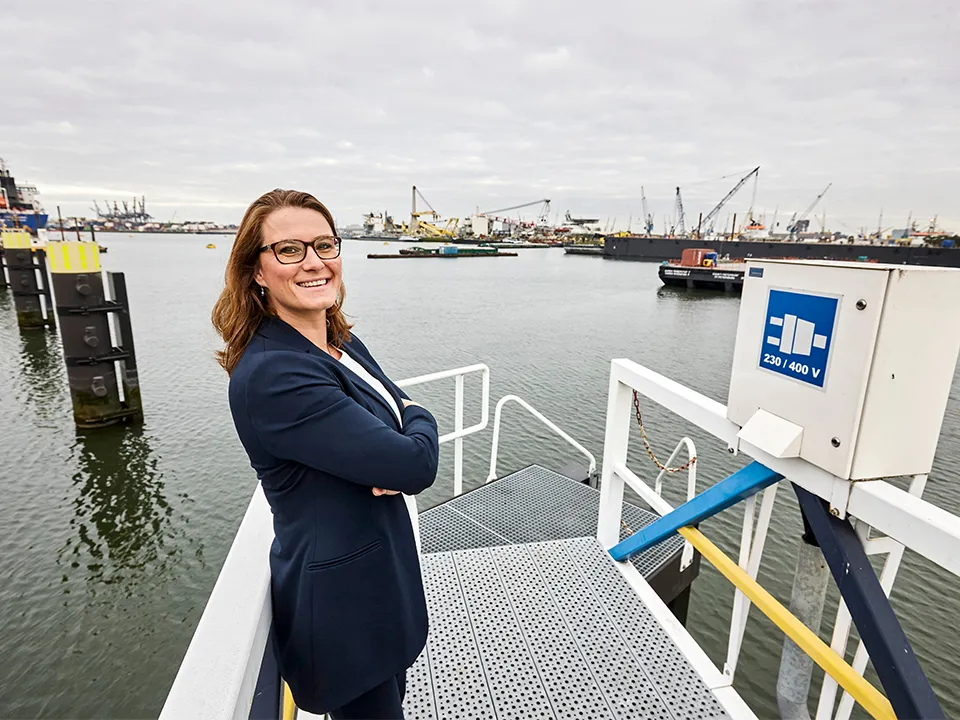
“Our companies innovate every day. Sustainability is high on everyone’s agenda, and all companies in water engineering will play their part.” Andrea Vollebregt, director of the Vereniging van Waterbouwers, shares her views.
“I think we will see a few accelerations in the years ahead when it comes to sustainability. In my view, this will depend mainly on how sustainability targets are specified in tenders.”
Andrea notes that, compared with a few years ago, everyone now recognises the climate problem and is keen to make a positive contribution. “We live in a delta in the Netherlands, and water engineering in particular has the knowledge and expertise to help develop and implement climate adaptation measures, and thereby ensure the delta is fit for the future.”
Centuries of experience working at the boundary between land and water
“We have built up our expertise through centuries of working at the boundary between land and water, which is at the heart of what we do. We maintain that added value by continuing to innovate. We are seeing an ever wider range of tools at our disposal, leading to new insights and innovations, such as data that can be used intelligently,” says Andrea.
Collaboration is a real strength
In civil engineering, no one can do anything alone; we need each other. Andrea says: “Collaboration is in our DNA. It is a real strength, as is good communication. It is also important to get the right people in the right place at the right time. That means being willing to understand one another, knowing each other’s interests and being prepared to give others a fair chance.”
Contractors should be involved in projects as early as possible. “Clients need to be clear about the project’s objective. In many projects that have been in the news in recent years, the importance of collaboration has been highlighted. Trust is a matter of give and take, of knowing and understanding one another, and being able to turn to each other when things get challenging. Collaboration models are changing in water engineering too, as new contract forms show. Their foundations are how we work together, trust one another and keep each other sufficiently informed. Not every contract suits every project, but they all have one thing in common: increasingly, clients and contractors work together from the outset to determine the best approach, allowing contractors’ delivery expertise and/or innovative capacity to be incorporated into designs at an early stage. Examples include two-phase contracts, Bouwteam agreements, Alliantie contracts and Innovatie partnerschappen.”
Fair work for fair pay
“We need to share project risks and allocate them to those best placed to manage them. We need to move further towards doing fair work for fair pay,” Andrea suggests.
On investment, Andrea notes that local authorities are investing differently because of coronavirus: “They have other major challenges, and therefore other spending commitments, which sometimes means infrastructure works are postponed. That has consequences. People need to realise that investment in infrastructure is a prerequisite for economic growth. Not only does our sector benefit from it, it also creates a positive knock-on effect. Delaying investment costs more, I am convinced of that.”
Don’t aim for 100% sustainability all at once
Greening and sustainability will make even greater strides in the years ahead. “More is already possible in terms of sustainability than clients are asking for. But I doubt that the ambition to be completely emissions-free in 10 years is realistic. I think it is wiser to take smaller, realistic steps; otherwise, we risk destroying capital. Targets need to be ambitious enough to bring about change, but realistic enough to be achievable. That way, most of the market will follow suit and the level playing field will be maintained. We also need to pay sufficient attention to the international playing field in which part of our sector operates.”
Andrea notes that companies need time to earn the money required to invest in greening. “Water engineering is a capital-intensive sector, where ships have a lifespan of around 25 years. Greening the fleet requires major investment. The sector is exploring various options, from electrification to hydrogen fuel cells. This is because the water engineering fleet is atypical and cannot be compared with, for example, the merchant fleet. Electrification, for instance, is not feasible everywhere,” Andrea concludes.
Question about this story? Ask your question
Keep following this
Get an email when a new story is published. No account needed.
- SubjectGeneral







