More efficient and sustainable multimodal freight transport thanks to the Physical Internet
Text Geert Van Cauwenberge Beeld imec
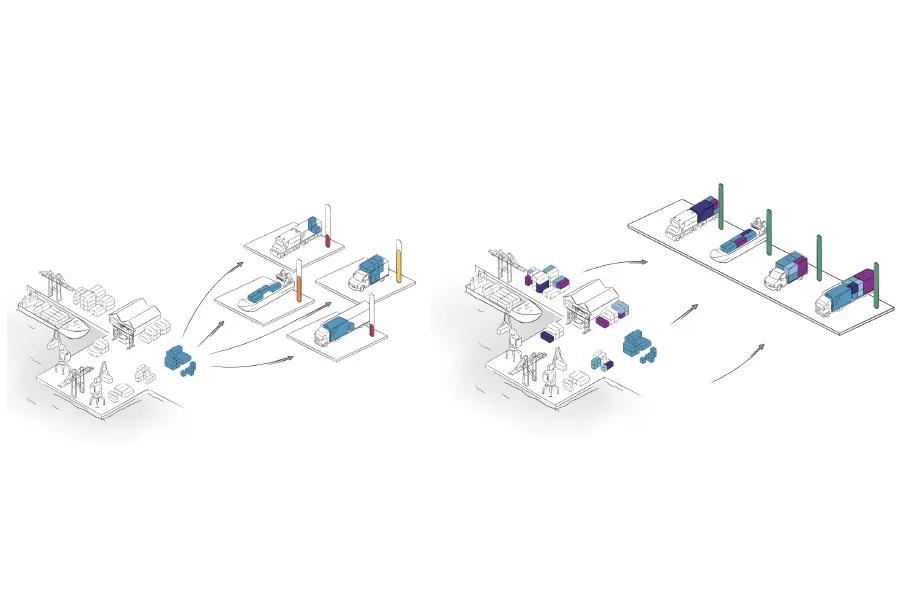
The transport and logistics sector is vital to our daily lives. It delivers food, equipment and materials to the right place every day. And it is growing, driven by the e-commerce boom. Yet freight flows are not always organised as efficiently as they could be. And there is still a long way to go towards greener transport. Since 2021, imec, VIL and VUB have been working together through the PILL project to organise logistics processes more intelligently using digital technology and a Physical Internet.
Did you know that 20% of the lorries on European roads are simply carrying air? That is according to figures from Eurostat*. What is more, many freight movements follow the same route without making full use of the capacity available for deliveries. Because each transport company uses its own planning method, collaboration is difficult, driving up the number of deliveries.
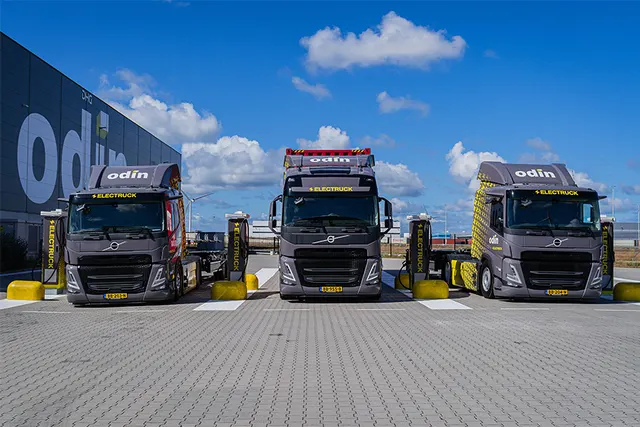
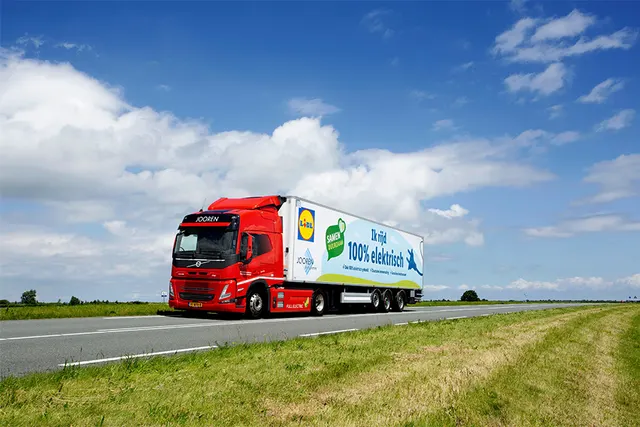
There is also a long way to go when it comes to greener transport. Much freight is carried by lorries, while the use of more environmentally friendly modes, such as inland shipping and rail, remains stable. In the previous article, you can read how truck manufacturers are beginning to roll out the electrification of lorries, but that too is a long-term undertaking.
Efficient from origin to destination
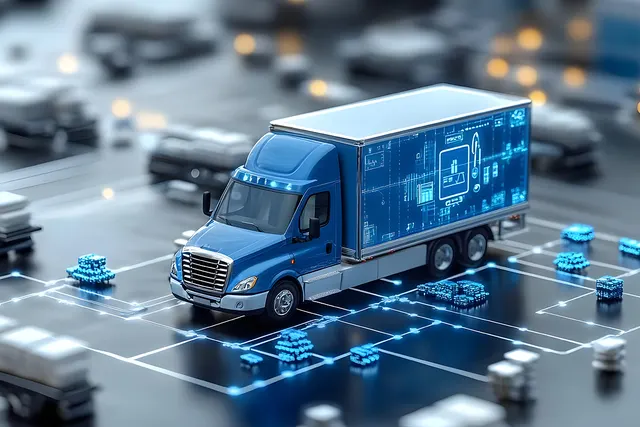
The Physical Internet aims to organise freight transport more effectively by identifying the best route across interconnected transport networks, regardless of the mode of transport. At the same time, this solution can facilitate the shift to more sustainable transport.
How? By bringing the concept of the digital internet to the transport sector. “Just as an email uses the full capacity of the network to travel from sender to recipient, goods should make full use of infrastructure capacity,” says Joris Finck, innovation manager at research centre imec. “When you send an email, it doesn’t matter which provider or device you use. In principle, moving goods from origin to destination should work in the same way. For example, this could prevent congestion on motorways by diverting freight to waterways or rail.”
New opportunities through synchromodality
The current challenges facing the logistics sector call for a different way of working. “The Physical Internet aims to address underused capacity and other inefficiencies by connecting transport networks and moving goods from origin to destination in the most efficient way,” Joris confirms. “The concept of synchromodal transport is crucial to this. It means using different transport modes flexibly, offering the shipper an integrated solution for moving goods from point A to point B.”
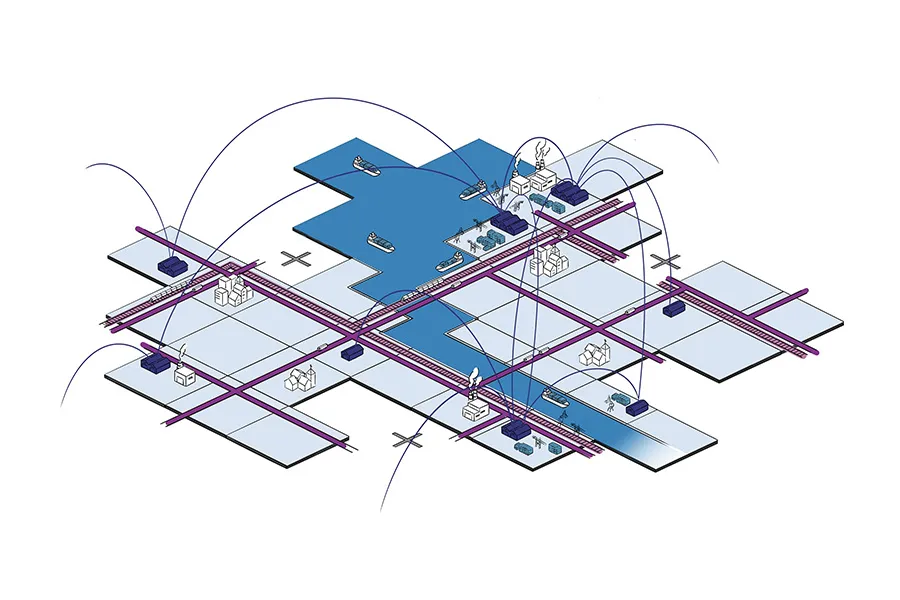
“Synchromodality is related to multimodality, the use of different transport modes, but adds contextual information. This allows you to choose the best mode of transport based on real-time information. For example, if water levels are too low, a container is redirected to road or rail transport. If there is a traffic jam, containers are transferred to inland shipping or rail.”
Shift to more sustainable transport
“We are also looking at developing and implementing the Physical Internet to make the shift to more sustainable transport possible in the future. And that will be necessary, because the European Commission expects freight transport to increase by around 30% by 2030, and by just over 56% by 2050, compared with 2015. If that increase also takes place on the roads, the situation in Flanders will become untenable,” says Joris.
“Making all lorries electric solves only part of the puzzle, since a huge amount of freight would still be carried by road. Better integration of transport modes, connecting road transport with rail and waterways, is essential.”
PILL project as facilitator
The Physical Internet Living Lab (PILL) project began in early 2021, bringing together imec, VIL and the Mobilise research group at VUB. The Agency for Innovation and Entrepreneurship (VLAIO) provides financial support for the project, which runs until the end of 2024 and focuses on the port ecosystem.
Joris outlines what has already been achieved: “We have created a Physical Internet along the Antwerp-Genk corridor, with containers transported multimodally. Since the project began, we have brought together around 25 carriers and shippers. We asked them to carry out a number of logistics transactions on their spot market. So far, the results are still fairly limited, with around three routes accepted, but this is already enough to demonstrate the concept’s potential.”
Seeking external partners
In the project, imec acts as a kind of facilitator. “It is important to understand that imec is not a software platform here, but provides the key to working in a connected environment. Each participating party therefore remains the owner of its own data. We are also actively seeking additional partners to develop and commercialise the concept further.”
Joris adds: “The PILL project is not an ad hoc initiative. On the contrary, the European Commission’s Directorate-General for Mobility and Transport is working with the membership organisation ALICE (Alliance for Logistics Innovation through Collaboration in Europe)** to help shape and support the project.” ■
* Source: A fifth of road freight kilometres by empty vehicles. Eurostat, 10 Dec. 2021.
** www.etp-logistics.eu
Question about this story? Ask your question
Keep following this
Get an email when a new story is published. No account needed.
- ThemeLower-emission transport
- SubjectTransport