AI in logistics: ‘Don’t wait and see, but don’t rush in blindly either’
Text and images Boltrics
AI is set to change logistics. But there is still a considerable gap between what is technically possible and what adds real value on the shop floor today. That is clear from conversations with Bart Lambooij, IT Manager at Bouw Logistic Services, and Arjen Hoekstra, Director of Operations at Bakker Transport & Warehousing. Both logistics service providers are at the forefront and are already actively adopting AI in their business processes. Their experiences show where the opportunities lie today, and what will be needed to take the next steps.
Bart Lambooij sees three key applications for AI in logistics: solutions from software suppliers for tasks such as transport planning and warehouse optimisation; custom agents powered by a company’s own data; and, further down the line, AI that combines the two and can actually control applications centrally.
“For example, an agent that identifies an error in a shipment’s status, suggests a solution and implements it once approved. In the longer term, there may be scope for a single central application that combines information from different sources and helps users decide what to do next.”
But technology should never be the starting point. As Lambooij puts it: “AI should not be an end in itself. It must demonstrably add value to the organisation and help in day-to-day operations.”
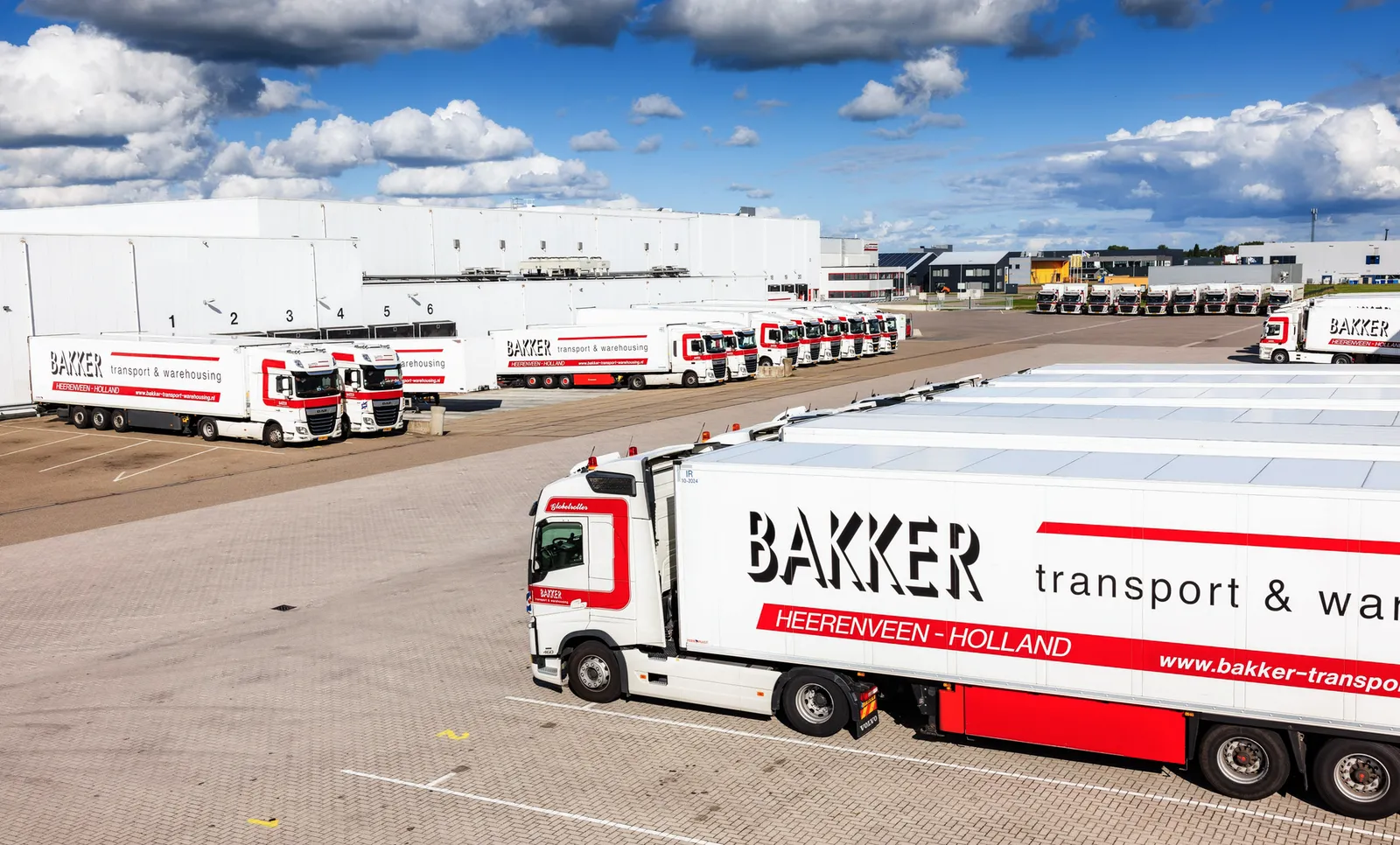
For now, that value starts much closer to home. Bouw is experimenting with custom agents for internal documentation, while Bakker Transport & Warehousing uses Copilot for internal document management, procedures and other administrative tasks.
By making company documents centrally available in SharePoint and adding a custom agent, Bakker Transport & Warehousing discovered how quickly and easily employees can find information. For now, AI’s immediate gains often lie not in fully autonomous logistics processes, but in practical support:
“Now that we’ve brought all the documentation together in one place and built a chatbot on top of it, we can find the right information much faster, prepare proposals and analyse documents,” says Arjen Hoekstra.
Good AI starts with good data and people
These first steps in AI adoption also confirm a familiar IT lesson: AI is only as good as the information it works with. Lambooij says: “Your source data needs to be in order. If the data is poor, the AI application won’t work properly either.”
But technology and data are not the only prerequisites. Hoekstra sees the human factor as one of the biggest challenges. “The technology can do far more than people are currently willing to let it do. The main obstacle is letting go of control.”
Hoekstra adds that, in his view, this is not a generational issue: “Being digitally proficient doesn’t automatically mean someone will use AI to work smarter. Employees need to understand what the technology does, be willing to experiment with it and handle data responsibly.”
Knowledge also needs to be retained. Both Lambooij and Hoekstra stress that employees must continue to understand what AI does, and that people must remain in control. Lambooij says: “As AI takes over more of the thinking, there is a risk that knowledge and judgement will decline.” Hoekstra adds: “That dependency also arises when one employee builds all kinds of AI processes and no one else knows how they work. Make sure knowledge doesn’t reside with just one person.”
Security is not an afterthought
The same caution applies to security. What data can an AI model access? Is information used for training? Who is allowed to request which data? And who is responsible when an agent carries out an action autonomously?
Authentication and access controls become essential, particularly when AI is connected to operational systems or customer portals.
Lambooij sums up his advice in practical terms: “Start small and keep the scope limited, experiment, and think carefully about security from the outset.”
At Bakker Transport & Warehousing, AI is currently used mainly as an internal tool. Hoekstra advises: “Use AI within a defined environment, which for us is the Microsoft ecosystem. Also make sure you work with parties that specialise in security, so you can keep it under control.”
From forecasting to smarter planning
With data, security and adoption in place, Lambooij and Hoekstra see plenty of opportunities for logistics. “Inventory optimisation is an area that could offer opportunities in time,” says Lambooij. “By combining data, AI can help identify patterns and trends, leading to better forecasts for demand, capacity and inventory. That will require reliable data and further technological development.”
“We also see future opportunities in transport,” Hoekstra adds. “AI could factor in traffic, road closures, costs and capacity when making planning decisions. It could help identify alternative routes and assess the impact on planning, costs and deliveries. Electric fleets add another dimension. AI could analyse patterns in energy use, journeys and prices to determine the best times to charge vehicles.”
Hoekstra also expects a shift in administrative work: “Some tasks will definitely be taken over, especially administrative ones. But I don’t expect offices to be empty.”
Lambooij and Hoekstra also expect logistics software to become more intuitive. “I expect that in a few years we’ll be managing all our business processes from a single AI-driven environment, from managing our email and tasks to controlling our logistics software,” says Lambooij.
Hoekstra sees an intermediate step towards that future. Rather than having to know exactly where information is stored in a system, he expects to be able to ask AI for what he needs. “I expect to be able to ask a chatbot: how much stock do I still have for this customer? Your system knows where that information is.”
This also changes the role of software suppliers. Once AI becomes part of warehouse and transport processes, logistics service providers depend on the capabilities of their core systems. For Bouw Logistic Services and Bakker Transport & Warehousing, the Microsoft foundation underpinning Boltrics’ WMS and TMS puts them in a strong position to keep pace with future AI developments. Lambooij says: “We have high expectations of Boltrics when it comes to AI. As a leading software supplier to the logistics sector, we expect Boltrics to take the lead. Its position is strengthened by the fact that it can benefit from the Microsoft ecosystem and take advantage of developments in Microsoft Fabric and AI tools such as Copilot.”
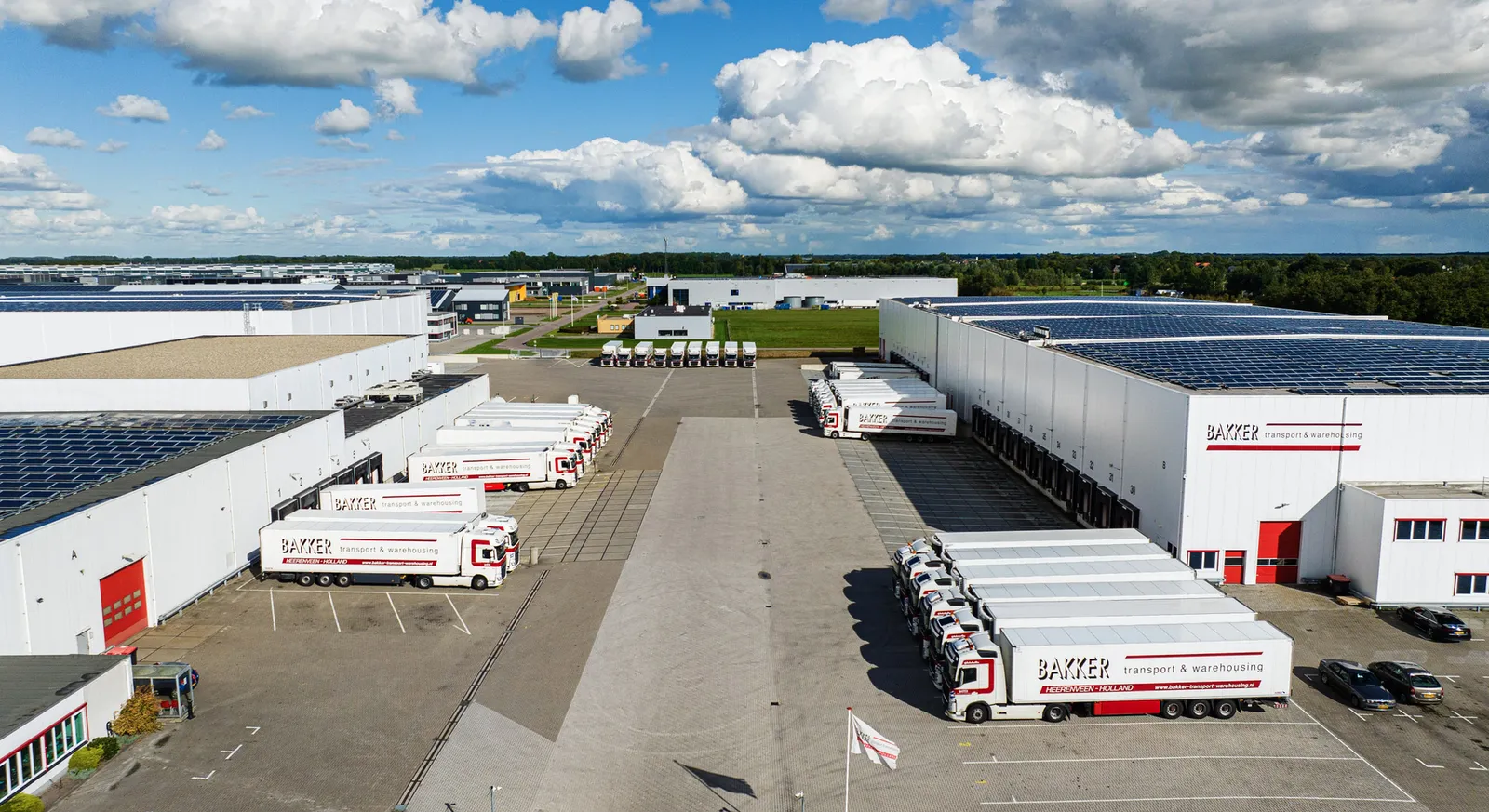
This is already a factor in supplier selection at Bakker Transport & Warehousing. After choosing Boltrics WMS, the company also opted for TMS, partly because of the benefits of keeping data in one system and its integration with Microsoft. This foundation aligns with Boltrics’ positioning as a single modular platform for WMS, TMS and FMS, built on Microsoft Dynamics 365 Business Central.
Start small, think ahead
What should logistics service providers do with AI today? Lambooij and Hoekstra both see good reason to get moving, but each emphasises a different aspect.
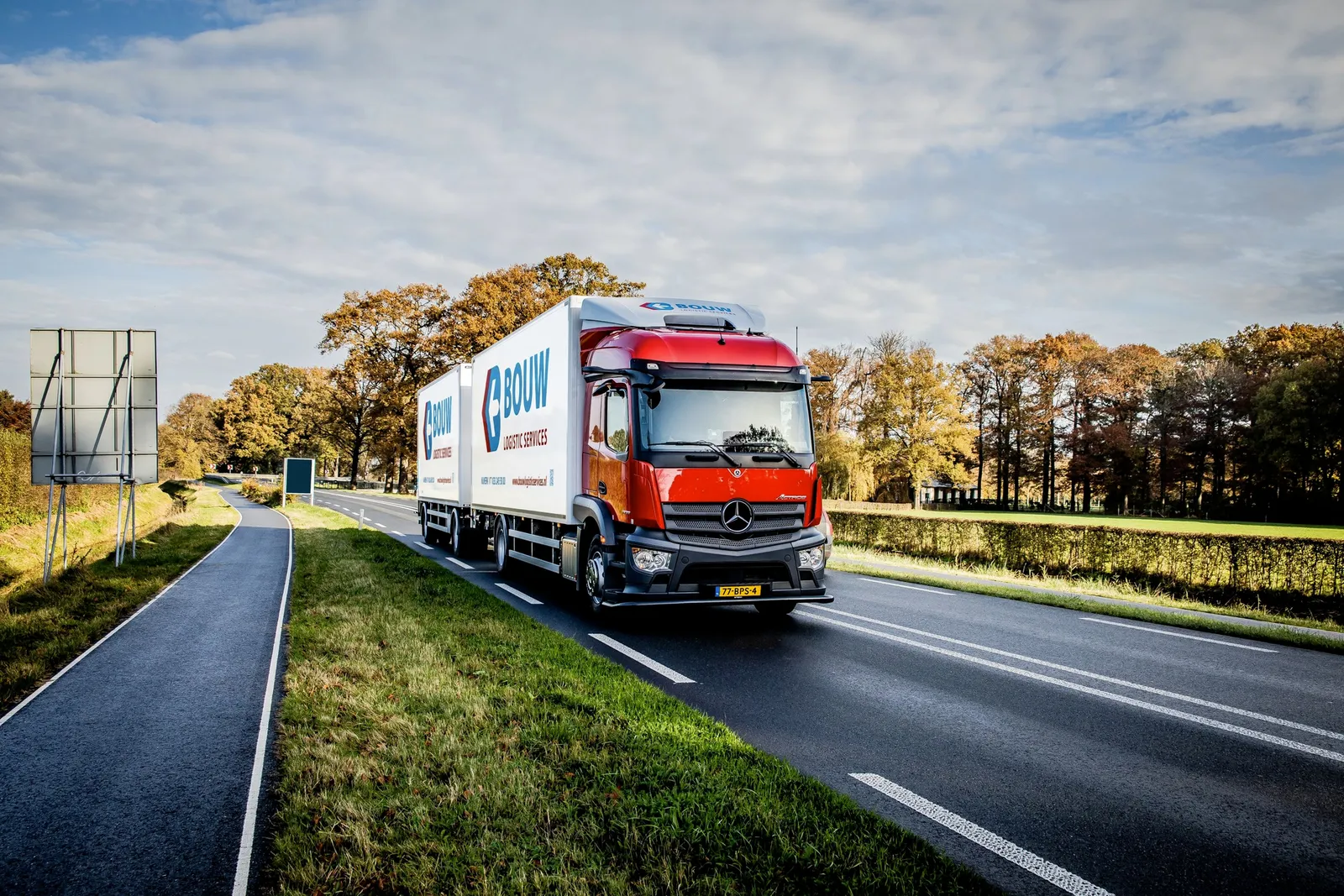
For Lambooij, it is mainly about pioneering and experimenting: “Take a measured approach. Don’t launch major AI projects straight away. Start small and keep the scope limited as you find out what works and what genuinely adds value. I don’t think Bouw necessarily needs to be at the forefront, but we do want to gain experience so we can keep up with new applications as they become available. The technology is developing so quickly that organisations need to engage with it and have a vision for it. You can’t ignore it any more.”
Hoekstra, by contrast, emphasises the people who will have to work with the technology: “Be a pioneer, but make sure you have the right people in your organisation. People who enjoy this, want to experiment and can see what it can do. Ultimately, your employees determine whether AI can really become part of day-to-day operations.”
Ultimately, these two perspectives from two different logistics companies converge: start using AI to gain experience
but remember that technology alone won’t move your organisation forward. Make sure your data and security are in good shape, choose applications that genuinely add value, and invest in the people who will be working with them.
Because however intelligent AI becomes, Hoekstra’s final advice remains relevant: “Make sure you continue to understand what is happening.”
Question about this story? Ask your question
Keep following this
Get an email when a new story is published. No account needed.
- SubjectICT & logistics