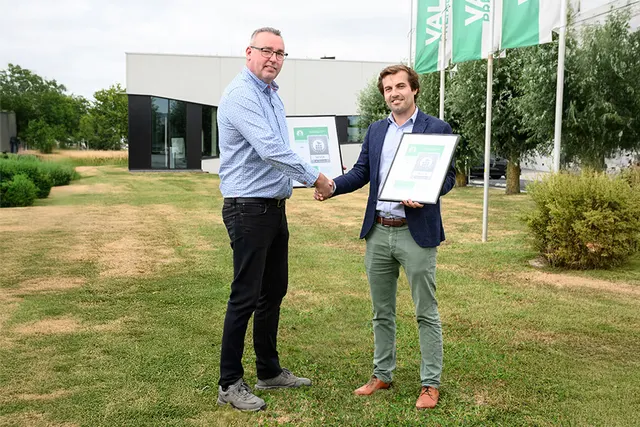
Jumbo and WITRON: effective logistics for ambient and fresh products
“First violin in a perfectly tuned supply chain orchestra”
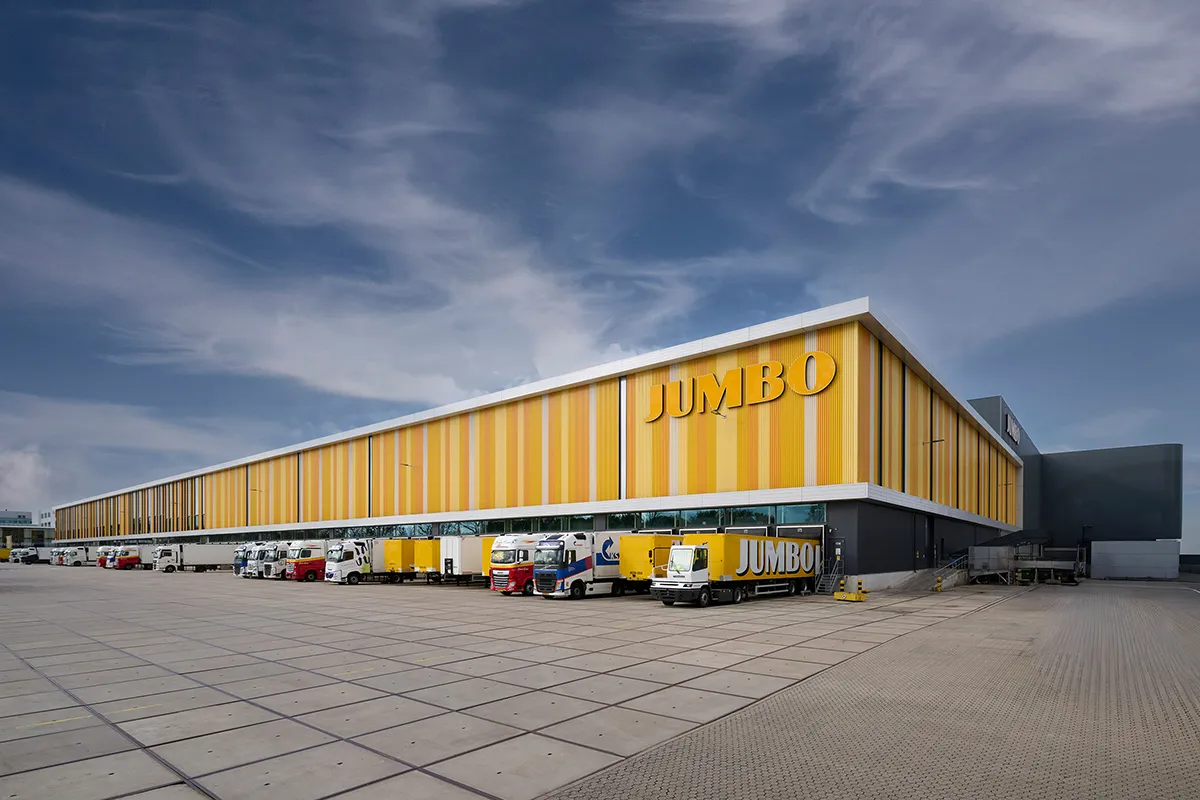
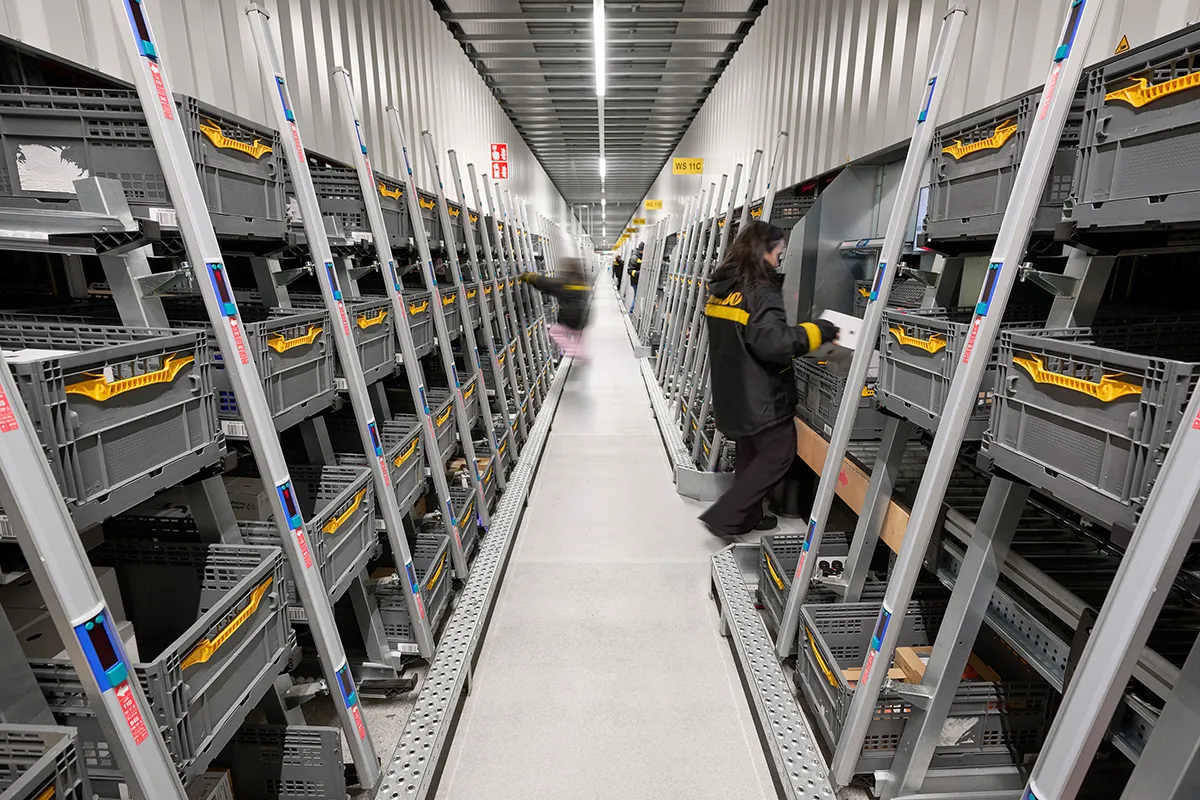
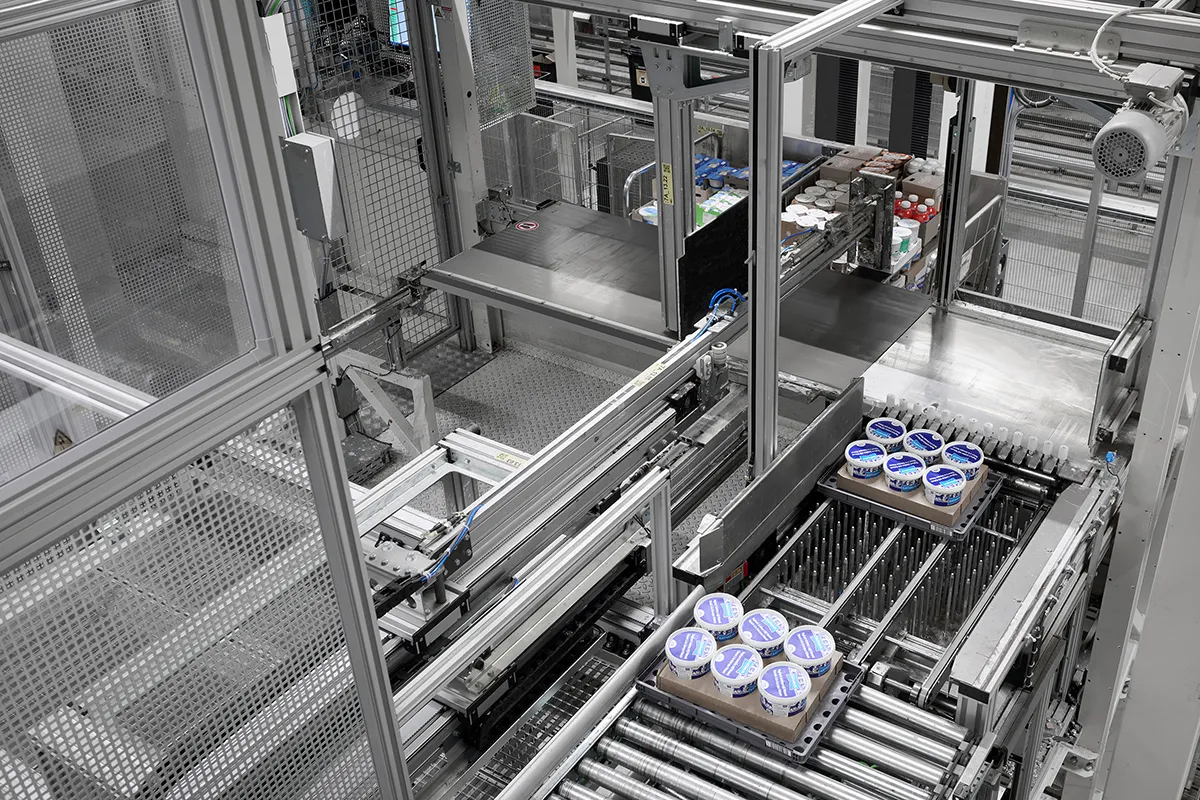
Since mid-2024, Jumbo, the Netherlands’ second-largest food retailer, has operated an almost fully automated distribution centre for fresh products. The centre helps set the pace for the entire supply chain without taking centre stage. The requirements were clear. At the Central Distribution Centre in Nieuwegein, Jumbo and WITRON present a concept that redefines the modern logistics centre. The focus is on speed, availability and flexibility. The 40,000-square-metre facility supplies more than 725 stores in the Netherlands and Belgium with almost 3,000 different fresh and ultra-fresh products. The range includes dairy products, a wide selection of cheeses, meat products, tapas, salads, chilled drinks and much more. Using the OPM (30 COM machines), AIO and CPS modules, more than 1 million units can be picked here every day at an ambient temperature of +2 degrees Celsius. In addition, a fully automated buffer at goods dispatch optimises the transport of roll cages stacked by store to the supermarkets.
The fresh distribution centre is now the second project Jumbo has successfully delivered with WITRON. The first was an efficient distribution centre for ambient products, where OPM (31 COM machines), DPS and CPS can pick up to 565,000 trade units on peak days from a range of 14,300 products.

The DC as the beating heart of Jumbo’s supply chain
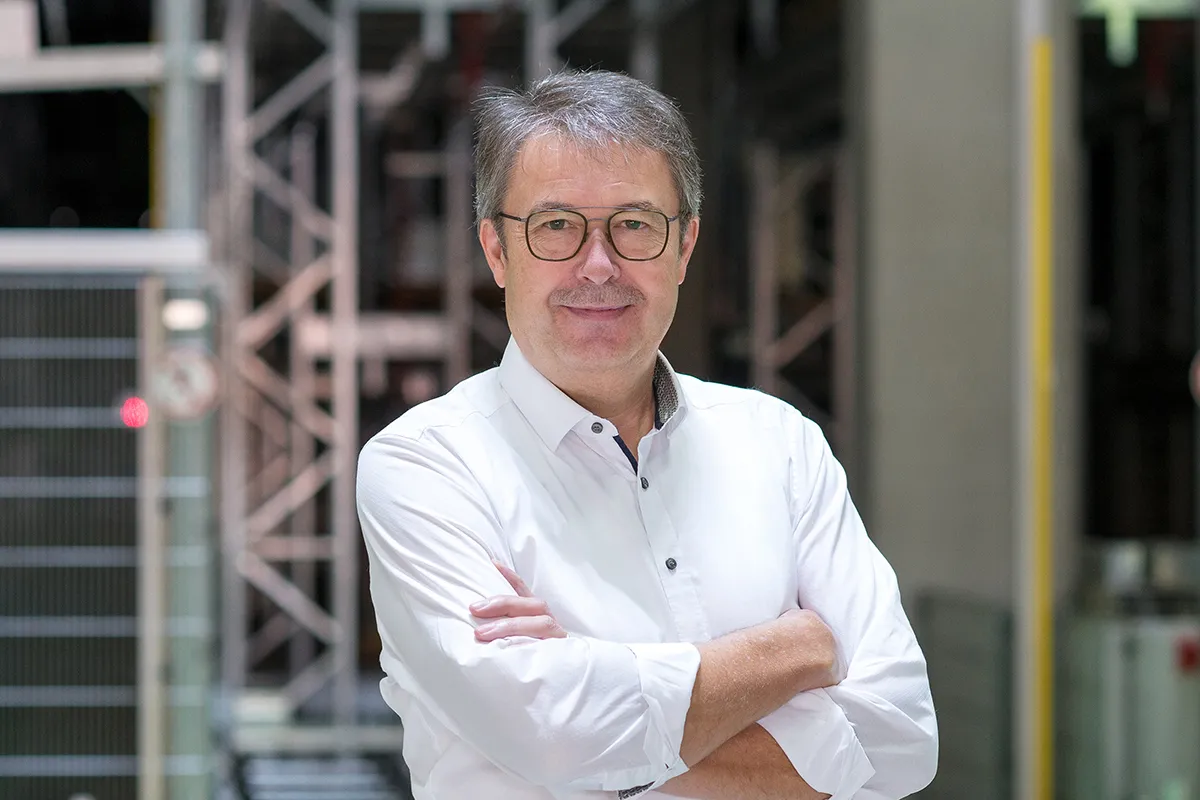
The Dutch supermarket chain Jumbo faced a series of challenges that called for the construction of one of Europe’s most ambitious logistics hubs. These included an anticipated future labour shortage, the ever-expanding ambient and fresh range, rising consumer expectations, particularly for fresh products, and the speed at which customers want to shop in-store and online. The almost fully automated fresh distribution centre in Nieuwegein, designed and built by WITRON as a lifetime partner, is now at the heart of the supply chain. The supply chain is more integrated, flexible and customer-focused than ever. Ultimately, it is the consumer who sets the pace.
Technology and IT, all under one roof
The central fresh products warehouse (CDC) is designed for a maximum capacity of more than 1.06 million picking units per day. The concept already allows for modular expansion to accommodate future growth. All logistics departments are connected by an efficient network of conveying technology. This comprises more than 670,000 storage locations for pallets, trays and crates, and 120 stacker cranes. The entire operation is controlled by a highly functional WITRON warehouse management system. WITRON developed, manufactured and commissioned all components, both technical and IT-related.
The challenge: labour market, product range and freshness
When Jumbo began planning its future a few years ago, it became clear that the existing structures would not meet future requirements. “We expected to face labour market challenges, anticipated a larger product range and wanted to consistently restructure our fresh logistics, focusing on maximum customer service, maximum product freshness and sustainability,” recalls Karel de Jong, Director of Supply Chain on Jumbo’s management team. The company wanted to increase its number of SKUs, differentiate its range further and make fresh logistics considerably more flexible. At the same time, growing product variety left regional warehouse space with less and less room to manoeuvre. The solution was to centralise, automate and consolidate processes.
Precise timing is especially important for ultra-fresh products. Temperature, daily operations and weather conditions all have a direct impact on volumes. “For us, agility means being able to respond extremely quickly to changing needs. When the weather changes, so does demand. We need to be able to respond,” explains De Jong. “The products need to be fresh on the consumer’s table, not left sitting in the warehouse.”
A new role for the warehouse: from storage facility to integral organ
The project brought about a far-reaching change in WITRON’s internal operations. The warehouse is no longer a standalone block, but a connected organ in the supply chain orchestra. Johannes Meißner, Managing Director of Technology at WITRON, describes the development as follows: “The DC is no longer a separate system, but an integral part of our customer’s organism. That is the only way to truly optimise supply chains.” This transforms the warehouse from a facility for simple storage and buffering into a key control instrument. Karel de Jong adds: “But the DC is not the conductor. The customer is.” He uses the ‘first violin’ in a harmonious supply chain orchestra as a metaphor for the warehouse: important, present and influential, but not all-determining.
Technology on an XXL scale, but balance is what matters
As a logistics hub with distribution centres for ambient and fresh products, Nieuwegein is one of WITRON’s largest projects worldwide. The facility has more than 60 COM machines and capacity for over 1 million pallets, trays and crates, as well as around 200 stacker cranes, with a maximum capacity of 1.6 million picks per day. The German company has opted for reliable technology, using OPM, AIO, CPS and the buffer at goods dispatch. This delivers maximum availability, as the DC is the backbone of the service provided to Jumbo customers in the Netherlands and Belgium. WITRON also has a service team on site to ensure all IT and technical processes run smoothly.
Both partners stress that the choice does not depend on the number of machines, but on the specific requirements of each application. How do you achieve system balance? All products are delivered to stores on roll cages. Smooth cooperation between the subsystems is therefore essential to maximise consolidation and space efficiency. As De Jong puts it: “The solution is not just another machine. The key to success is a carefully coordinated overall concept, with an important role for the people operating the installation and the team of shift leaders.”
Results in store: more choice, on shelves sooner
The effects of automation for stores are measurable:
- more SKUs, a trend that continues to grow;
- automatic stacking of goods on in-store roll cages, optimised for each aisle;
- consolidation of cases (picked in OPM and CPS) with individual items in crates (picked in AIO);
- more efficient truck loading per trip through various optimisation processes in the automated buffer at goods dispatch.
As a result, supermarket shelves can be replenished more directly and quickly, with fewer handling steps. In addition, processes previously handled through direct delivery, such as fresh fish, are now centralised through Nieuwegein. And thanks to forecasting and replenishment processes, Jumbo delivers exactly what stores need. The result for customers: fresher products, a better-tailored range, and greater availability, sooner.
Suppliers: packaging becomes a core competency
Automated processes require standardisation. This is evident, for example, in the handling of a wide variety of packaging. “That’s why we trained colleagues who have developed thorough expertise in this area,” says De Jong. Cardboard packaging, adhesive strength, stretch film, and the quality of cardboard and pallets all affect material flow values and stability. WITRON and Jumbo provided support at an early stage, identified critical packaging and ensured transparency with suppliers. The result is better inbound inspection, which in turn leads to more stable processes in the distribution centre. Overall, Jumbo employees were able to prepare very well for their new roles: no more manual processes, but a shift towards automated production. In consultation with WITRON, they were able to examine future operations in facilities built by WITRON in detail and exchange views at length with users. “Thanks to the many projects we have delivered across Europe, North America and Australia, our extensive experience allows us to provide customers with comprehensive support on the important subject of change management,” adds Meißner, CEO of WITRON.
The biggest change is not the technology, but the people
Technology can be bought, culture cannot. Jumbo introduced lean principles through the Jumbo Production System (JPS), including a more transparent shop floor, stand-ups at every shift and empowering employees to solve problems themselves as much as possible. A central control meeting is held once a day in the DC, not in an office, but right in the middle of the floor. “Here, colleagues review the previous day and go over the tasks and objectives for the next shift. If that half-hour goes well, it’ll be a good day,” says De Jong with a grin.
What measures can we expect next? Jumbo sees the supply chain as an end-to-end network rather than a collection of separate warehouses. Integrating stores, connecting with suppliers, optimising transport routes and automation, including in e-commerce, which is still handled manually, are all essential elements of the future strategic direction.
“Automation is not an end in itself, but a tool that can be deployed as needs dictate. Differentiation in the product range remains at the heart of our business philosophy, with particular emphasis on efficiency and profitability,” explains Karel de Jong. Johannes Meißner sums up the situation: “Automation laid the foundations. Now the phase of integrated optimisation begins.”
Question about this story? Ask your question
Keep following this
Get an email when a new story is published. No account needed.
- ProjectJumbo Nieuwegein distribution centre
- SubjectTransport & Logistics