return2sender pioneers environmentally friendly, affordable transport packaging
Text Geert Van Cauwenberge Image return2sender
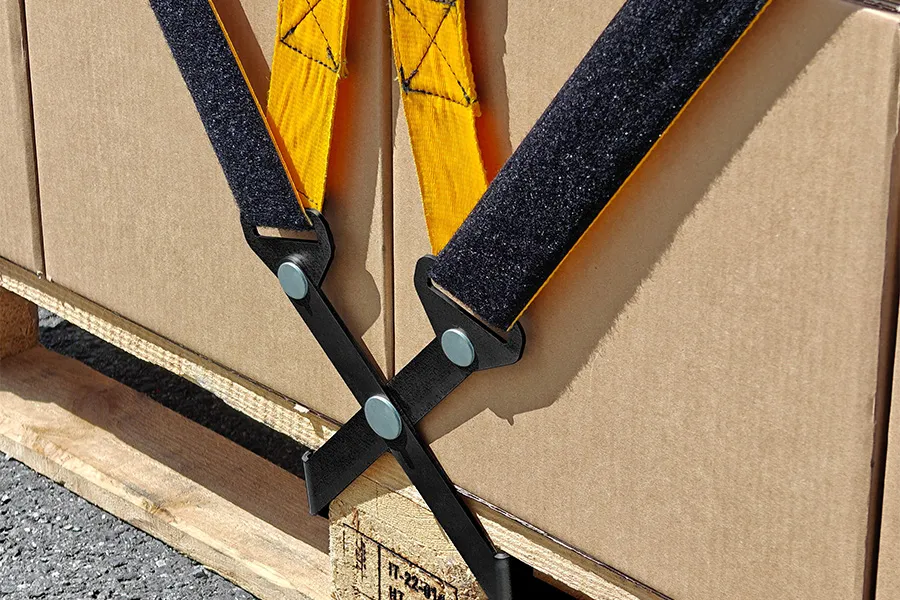
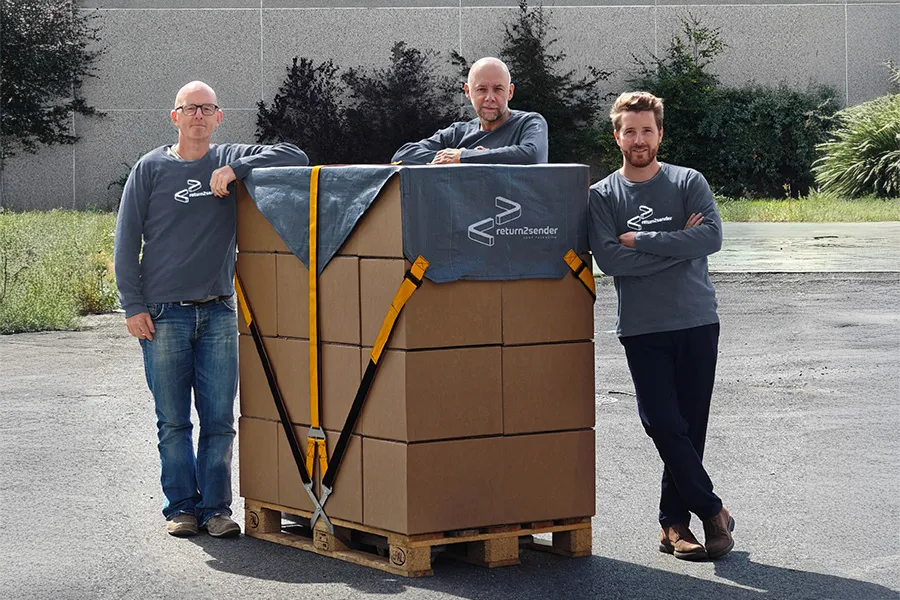
Stretch film has been a staple of transport and logistics for decades. But it comes at a cost: vast amounts of waste, tonnes of CO2 and sky-high expenses. Ambitious start-up return2sender is turning the tide. With Elvis, a reusable, circular pallet wrap, founders Johan Bonner and Adriaan Debruyne, together with CEO Willem Walravens, are putting forward a disruptive solution that is ready for the 2030 PPWR regulations and beyond. “We developed Elvis because things simply need to, and can, be better,” they say in unison.
“In Europe, we use hundreds of millions of single-use films to wrap pallets every year. That amounts to more than 2.5 kilograms of CO2 emissions per pallet,” says Johan Bonner. “Extrapolate that and you get more than 500 million kilograms of CO2 a year, just for securing loads.”
The financial impact is just as significant. The total cost of stretch film, including materials, labour and waste disposal, adds up to between 1.50 and 3.60 euros per pallet. “And that’s for a material you throw away after a single journey,” says Bonner.
Elvis: an innovative packaging alternative
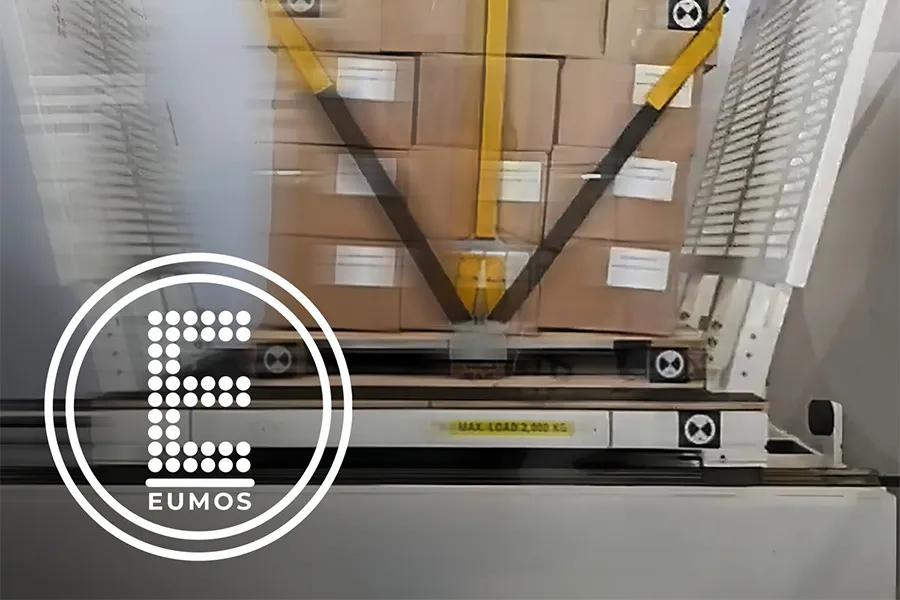
With Elvis, return2sender offers a reusable alternative that lasts for more than one hundred cycles. The wrap is EUMOS 40509-certified and designed for maximum load stability, even during intensive transport.
“Elvis is no compromise. It is safer, faster and more sustainable than film,” confirms Willem Walravens. “One person can apply the pallet wrap in less than a minute, without a machine. Two ergonomic pulls and the load is firmly secured.”
Thanks to its smart design, the wrap can be used flexibly. “We make sure Elvis is as versatile as possible within the same company or sector,” adds Walravens. “From retail to pharma, we make sure it fits, both physically and operationally.”
Less damage, less CO2, lower costs
Just as a three-point seat belt protects lives in a car, Elvis keeps loads safe in transit. Johan Bonner explains: “Unstable loads are a major risk in the logistics chain. They not only cause road accidents, accounting for more than 25 per cent of transport incidents, but also result in significant damage to goods. This has a direct impact on businesses: damaged or shifted goods are often refused on delivery or returned, leading to additional transport costs, product losses and delays in the supply chain.”
With its certified stability and secure fastening, Elvis works like a ‘seat belt’ for pallets. “Our solution keeps the load firmly in place, even during intensive transport or repeated handling. This not only improves safety, but also reduces damage claims, downtime and repacking,” says Bonner.
Less damage also means less waste. “Goods that arrive intact do not need to be produced or packaged again,” says Walravens. “This brings significant CO2 savings. Add to that the fact that Elvis itself is reusable and generates up to 95 per cent less packaging waste, and the picture is clear: safe, sustainable and economically smart. And you don’t have to wait until 2030 to comply with PPWR (Packaging and Packaging Waste Regulation, ed.). You can do so today.”
From ownership to use, with social impact
The circular model goes beyond reuse. In addition to sales, return2sender also offers repair and cleaning in partnership with adapted-work companies. “We make sure every Elvis stays in circulation for as long as possible,” says Walravens. “And we create sustainable jobs for people who face barriers to employment. The social aspect is at least as important to us.”
The company is also currently testing a product-as-a-service model in which customers pay per use. “We want to make the switch to circular packaging easier. It needs to be convenient, profitable and scalable,” says Walravens.
Want to try it for yourself? Pilot projects are under way
For businesses looking to make their logistics processes more sustainable without disruption, return2sender is launching pilot projects. “We visit, demonstrate the pallet wrap and develop a tailor-made pilot project together,” says Walravens. “No theory, just practice. You’ll see straight away what Elvis means on the shop floor and on the road.”
From idea to impact
Elvis began in 2024 with an experiment using an old big bag. “What if we could turn waste into something that performs better than the original?” was the question that Johan Bonner, Adriaan Debruyne and Willem Walravens set out to answer with their innovation project. Today, the idea has grown into a company with a patented solution that performs in real-world logistics environments.
“Elvis is a solution that cuts costs, improves safety and makes sustainability tangible. It is exactly what the sector needs now,” concludes Walravens.
Question about this story? Ask your question
Keep following this
Get an email when a new story is published. No account needed.
- ThemeSmarter use of packaging
- SubjectAutomation