The box follows the product: how smart packaging is changing logistics
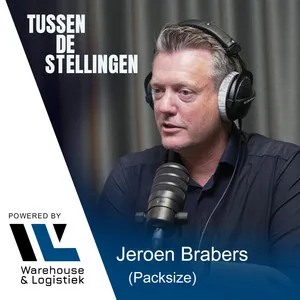
How do you stop small products being shipped in boxes that are far too large? In this episode of Tussen de Stellingen, host Roel van Gils talks to Jeroen Brabers of Packsize about made-to-measure boxes and smart packaging automation. Topics include box-first and box-last solutions, reducing air and void fill, automation at higher packaging volumes, and the impact of the European PPWR regulations. Brabers also explains how Packsize uses machines such as the X5, X6, CVP Impack and CVP Everest to tailor packaging to the product, helping to reduce transport volume, material use and manual labour.
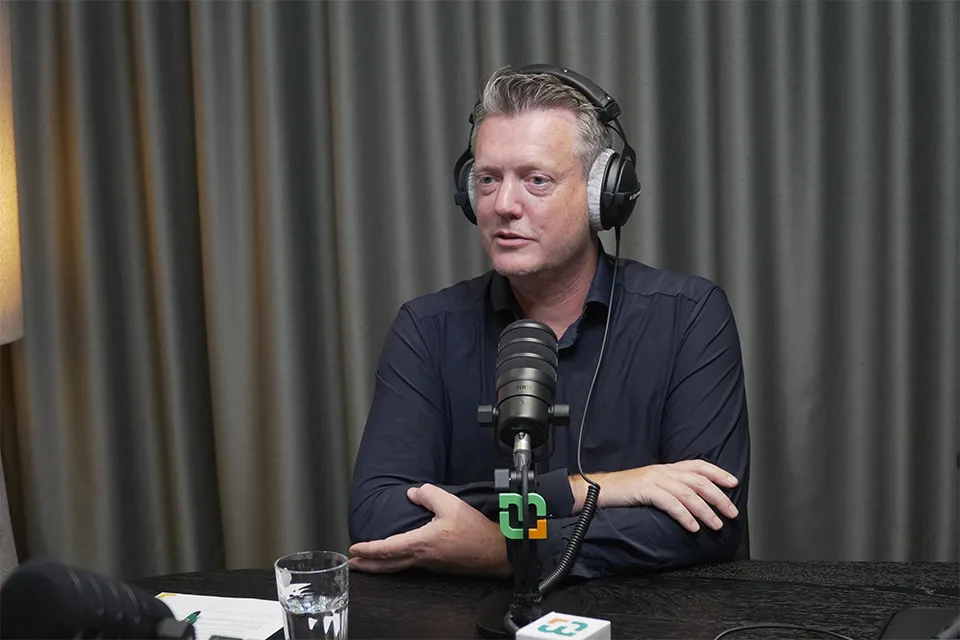
Interview with Jeroen Brabers
Host: Roel van Gils
Have a business enquiry for Packsize? Get in touch
Full transcript
All chapters (15)
- Introduction: made-to-measure boxes
- A box tailored to the product
- Why fixed box sizes were the standard for so long
- When made-to-measure becomes worthwhile
- The right time to automate
- From the EM7 to the X5 and X6
- How box-last machines work
- Dimensions and weight
- Distinctive technology
- Personalisation and online printing
- PPWR and reducing empty space
- Further development and customer-specific modifications
- The perfect box is different for every order
- Advice for businesses
- Implementation time and growth
Introduction: made-to-measure boxes
Roel van Gils Welcome to another episode of Tussen de Stellingen from Warehouse en Logistiek Benelux. You probably know the problem. You order something online, something small, perhaps a few parts and accessories, or a product that would easily fit through the letterbox. A few days later, a huge box turns up at your door. You open it and find your product surrounded by air, often with some cardboard, paper or other void fill to stop the small item moving around inside that enormous box. Today we’re looking at a solution that sounds perfectly logical: a box that fits the product.
Roel van Gils Joining me is Jeroen Brabers of Packsize. Jeroen, welcome.
Jeroen Brabers Thank you.
Roel van Gils Jeroen, tell us a little about yourself.
Jeroen Brabers Well, my name is Jeroen. I’ve been working for Packsize for just over a year now. Before that, I also worked at Sparck Technologies, the company recently acquired by Packsize. And we make made-to-measure boxes.
Roel van Gils Yes, made-to-measure boxes. That’s a broad term, of course. What exactly do you do? Perhaps you could give us a brief history: who are you, and where did you come from?
A box tailored to the product
Jeroen Brabers What we’ve been doing for quite a few years now is working out how big a box needs to be for the item you want to pack. So if, for example, you wanted to pack a water glass like the one I have here in front of me, you might not have a standard box for it. What we do is measure the product and make a box to fit.
Roel van Gils So we can take ‘made to measure’ quite literally, then?
Jeroen Brabers Literally. There are two types: a box-first solution and a box-last solution. With box-first, it works like this: you retrieve the dimensions of the item, in this case a water glass, from your WMS. It could also be a water glass and a cup and saucer, or a little box of coasters as well. The system calculates how much space the box needs, then makes a box to size and you’re ready to go. Generally, no void fill is needed. You close the box, apply the label and it’s ready for dispatch.
Roel van Gils And that’s what you call the box-first principle?
Jeroen Brabers That’s the box-first principle.
Roel van Gils So it’s based on data from the WMS.
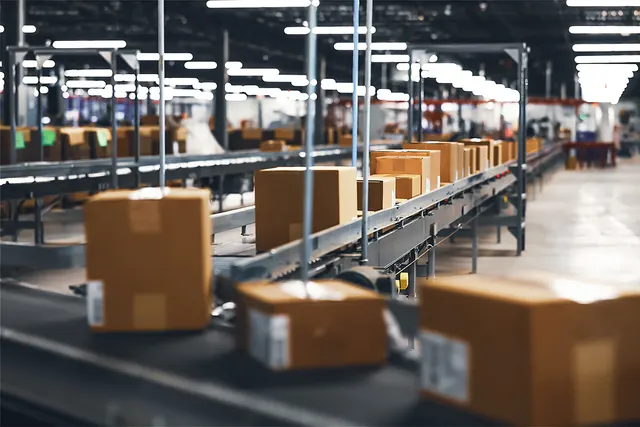
Jeroen Brabers Exactly. Then there’s the box-last principle. The difference is that you bring your products to the machine, in this case, for example, your water glass and box of coasters. You press start after placing the products on it. The machine takes a 3D scan of what you’ve put on the conveyor. It makes a box to size straight away, folds it around the product or products, seals it with tape or glue, applies a shipping label and, once again, the box is ready for dispatch.
Roel van Gils So, in other words, the box is no longer the starting point. The product is.
Jeroen Brabers Yes, that’s well put. You need a limited range of boxes. This way, we put less air in the boxes. With the box-last principle, we can get the amount of air down to 0%.
Roel van Gils Really, zero? It’s actually folded around it, so to speak.
Jeroen Brabers Well, of course, there will still be a little air here and there, inside a glass, for example. But the box is made as small as you can imagine. And there’s no void fill either. That’s a very important point.
Read the full transcriptCollapse transcript13 more chapters
Why fixed box sizes were the standard for so long
Roel van Gils We’ve been used to boxes in standard sizes for years. Why has there been such a strong attachment to them?
Jeroen Brabers It’s very simple, of course. You can pack anything in four, five or ten box sizes. And if you need void fill, that’s easy to get hold of too. Until recently, there wasn’t really any legislation on this, so you could just pick it up and use it. If that gets your process running reasonably well, it’s often perfectly fine. The consumer experience is becoming increasingly important, though. As consumers, we’ve probably all had the experience of receiving a huge box with almost nothing inside and thought: ‘Was that really necessary?’
Roel van Gils Yes.
Jeroen Brabers It also comes down to the cost of sending a box. A box is relatively cheap, and the shipping label usually costs the same regardless. Once it’s bigger than a letterbox-sized parcel, the size doesn’t really matter any more. It costs the same.
Roel van Gils Yes, so it was simply easier, at least in the past. Yes, yes, yes.
Jeroen Brabers You also have to bear in mind that when you’re packing at a packing station, the person doing the actual packing wants to be sure that the product in front of them will fit in a particular box. So they’d rather pick a box that’s perhaps one size too big than one that turns out to be too small and means they have to start again. They’re measured on how many boxes they pack per hour.
When made-to-measure becomes worthwhile
Roel van Gils Your solutions sound great, of course. But when do they become worthwhile? When does made-to-measure packaging make sense?
Jeroen Brabers The more boxes you pack per day, the easier it is to achieve a return on investment. But we shouldn’t underestimate the number of other factors that can influence the decision to buy a machine or implement a solution. On the one hand, there’s cost reduction. On the other, you want to make yourself less dependent on labour, especially when staff are harder to find or becoming more expensive.
Roel van Gils Yes.
Jeroen Brabers Plus, you can produce a lot of boxes with very few people, even towards the end of your cut-off time. So it can also support your growth. And many of our customers simply want to ship as little air and cardboard as possible.
Roel van Gils Yes, yes. So there’s a sustainability angle to it.
Jeroen Brabers Yes, exactly. And that’s on top of the cost savings we can achieve from a certain number of boxes upwards. Those are important KPIs too, of course. But to answer your question, if you’re looking at cost savings, it starts to become relevant at around 500 to 1,000 boxes a day. If you want to ship that many every day, our machine starts to make sense. Our solution comes into view.
Roel van Gils So, to go back to the point, a small change to the packaging can have an effect on several links in the chain: volume, less air and so on.
Jeroen Brabers Yes, and another point that shouldn’t be underestimated is that you no longer need to keep a huge quantity of boxes in stock. Our machines use what we call endless cardboard. It consists of stacked sheets of cardboard, all the same size, though the width can vary. It makes packaging materials much simpler to manage than having to keep track of twenty or thirty different box sizes.
The right time to automate
Roel van Gils A question many business owners may ask is: when should you automate? What’s the right time?
Jeroen Brabers Well, a lot of business owners leave it too late. We always try to make the point that it’s better to start walking now than have to run later. You’ll also find that when you start talking to us, a large part of your logistics process comes under the microscope. How will you get the products to the machine in the right way? How will you move them away from it? Where will you store them? How many people will you need at each location? So often, when you sit down with us, it also has an impact on the rest of your process.
Roel van Gils Yes, exactly. So you shouldn’t wait until you’ve run out of capacity?
Jeroen Brabers No. And I always say that you’re welcome to talk to us without committing to one of our solutions straight away. We’re very happy to explain what we can do for you.
Roel van Gils So it doesn’t stop at the machine itself. You also review the whole process.
Jeroen Brabers Yes, exactly. We always take a look. We can always offer comments and suggestions, and we’re happy to do so. Ultimately, we’re not the company that will redesign an entire warehouse, but we’re always happy to think through the process with you.
From the EM7 to the X5 and X6
Roel van Gils We’ve talked about a few solutions now.
Jeroen Brabers Since Packsize and Sparck came together, we’ve had an incredibly broad range of machines. I think it’s currently the broadest range on the market. It starts with the EM7, a low-automation machine. It lets you pack what the market sometimes calls ‘uglies’, or your unhappy flow: really awkward products that you still need to pack. We’re working with a company that handles bumpers, bonnets and things like that. You can measure the product and specify: ‘I want this box made with the corrugations running this way.’ The machine can then make a box large enough for a bonnet, bumper, lamp, table and so on. Its capacity is around 100 to 150 parcels per hour.
Roel van Gils That’s quite something.
Jeroen Brabers For those individual items, that’s often more than enough. Then we have the box-first solutions, starting with the X5, as well as the X6. The difference is their hourly capacity: around 600 per hour for the X5 and about 1,200 for the X6. These are the box-first solutions. Then there are the box-last solutions, the CVP Impack and CVP Everest, which can make 500 and up to 1,100 boxes per hour respectively.
How box-last machines work
Roel van Gils And how do those machines work?
Jeroen Brabers They’re box-last solutions, where you place the product on the conveyor belt. The operator presses start, and at that point the order is 3D-scanned. A box is then cut to size straight away at the bottom of the machine.
Roel van Gils So that’s the Box First and Box Last range. Does that cover your full range, then?
Jeroen Brabers Yes, we have a few other options related to this. For example, we can combine the X6 with what’s known as a lidder. In other words, it makes a lid. The X6 makes a box for your production line, while the lidder makes a lid for that box at the same time.
Roel van Gils OK.
Jeroen Brabers So we also try to combine the technologies. We also have gluing machines for highly manual solutions. So we have a number of other products in our line-up, but these are the main ones.
Roel van Gils And I understand that a letterbox parcel is also an option, right?
Jeroen Brabers At 1,100 boxes per hour, you can also make a box low enough to fit through a letterbox. That’s very interesting if you have products that can be sent that way, because not only is your shipping label cheaper, but the chances of delivery are much higher and people don’t have to be at home.
Dimensions and weight
Roel van Gils When it comes to dimensions and weights, what sort of range are we talking about?
Jeroen Brabers Well, we say that we can make a box from... Weight isn’t really a limitation for us. We can easily pack a 25-kilo box, for example, as long as you use the right cardboard. There’s room to vary that. That said, if you wanted to pack 500 parcels weighing 25 kilos per hour, you might need to consider a different solution, or two machines. The machine’s components do take a lot of strain from heavy products.
Distinctive technology
Roel van Gils What makes your technology so distinctive?
Jeroen Brabers The main USPs of our Box First solutions are their high speed and the wide range of products we can pack in the boxes we make. The Box Last solution is unique because it can also pack multi-line orders. I always say during a sales conversation: if you can put the products down on the table in front of you, we can pack them. Obviously, packing four loose tennis balls is tricky because they roll away. But we can pack a much wider range of products. Things stay put on a conveyor belt much better than most people think, whether standing or lying down. That’s something we do considerably better than our competitors.
Roel van Gils But an operator stacks those products, so to speak?
Jeroen Brabers Yes, that’s right. We provide training in that too. Before a machine is put into operation, we also have what we call a period... We stay with the machine for as long as necessary to train the operators, as well as the technical staff on site in basic maintenance.
Roel van Gils So there’s really no situation, apart from the tennis ball, where the machine says, ‘Sorry, that won’t work in my process’?
Jeroen Brabers You can pack a tennis ball too. You’d just need to work out a process for doing it. If, for example, you’re also sending a tennis shirt, you could put the four balls on top of the shirt so they don’t roll away. There are holders, tubes and things like that.
Roel van Gils All these possibilities.
Jeroen Brabers The interesting thing is that every customer has a handful of small solutions for things that are a bit more difficult. For example, an elastic band around two cylindrical products. These are small solutions that can achieve a lot.
Roel van Gils You must come across quite a few things in your day-to-day work, products and all sorts. Yes, that’s where you get creative with them.
Jeroen Brabers Absolutely. The upside of my job is that I’m at a different company every day.
Roel van Gils And you learn things there that you can then take with you to other customers, of course.
Jeroen Brabers Definitely.
Personalisation and online printing
Roel van Gils There’s also an interesting marketing angle to this, isn’t there? You can also offer an online printing service.
Jeroen Brabers That’s right. We can add a personalised print to every box. That’s an option we offer. You basically get a printer. It can simply say, ‘Hi Jan, thanks for your order.’ Or it can have your name on it, or a brand name. Logos too. It can all be done.
Roel van Gils Individually?
Jeroen Brabers Individually, for each order.
Roel van Gils So the box also becomes a means of communication in that sense?
Jeroen Brabers Yes, definitely. And since we’re talking about it, the X5 Nozomi is basically a Box First solution with a very large print unit integrated into it. That print unit produces a full-colour, made-to-measure box for each order, so you can print pretty much anything you can imagine. You can even print your complete logo in full colour. So you get a full-colour print that’s ready to ship straight away.
Roel van Gils Does that require different cardboard too?
Jeroen Brabers It has quite a few implications. It’s not a straightforward solution.
Roel van Gils But is it already available, or is it on the way? Is it still in development?
Jeroen Brabers There’s a prototype running now. We’re having our first conversations with potential customers. But it’s definitely coming.
Roel van Gils You can tell there’s real demand for it. Yes, the demand is for more specialisation.
Jeroen Brabers Well, there’s obviously a lot of demand for that. You can see how much marketing value packaging has gained in recent years. And it’s something we definitely need to respond to.
PPWR and reducing empty space
Roel van Gils And the new European regulations are naturally working in your favour too.
Jeroen Brabers The PPWR regulation, yes, definitely. I think we all stand to benefit from it. But it’s obviously very relevant to our sales pitch.
Roel van Gils Could you explain what it means for packaging?
Jeroen Brabers It’s a regulation relating to sustainability and CO2 reduction. More and more recycled material will have to be used. Our machines can process recycled cardboard. In addition, and this is a major point, reducing volume is becoming increasingly important. What percentage of air, or excess air, are you still allowed to package and send in your packaging? The legislation is getting stricter. It’s already in force in a limited form. From 2030, you won’t be allowed to ship more than 50% air.
Roel van Gils That’s still a lot, actually.
Jeroen Brabers 50% sounds like a lot. But take a look at what the average package you receive over the next few weeks or months looks like. It could easily contain well over 50% air.
Roel van Gils It depends on the product, of course.
Jeroen Brabers It does depend on the product, yes. But we’re talking about excess air.
Roel van Gils Excess air.
Jeroen Brabers Yes. Take that water glass as an example again. If you receive it, the space inside the glass is obviously air, but that isn’t excess air. There’s basically nothing you can do about that. The point is that the cardboard around it shouldn’t also be big enough to hold four glasses.
Roel van Gils Ah, I see.
Jeroen Brabers Or three. That’s the point: reducing that volume. Incidentally, void fill counts as excess air. So you can’t say, ‘I’ll use an oversized box, stuff it full of void fill and that’ll do the job.’ That’s not how it works.
Roel van Gils But you said the legislation is already in force in a limited form. What does ‘limited’ mean? What percentage of air is still allowed now?
Jeroen Brabers There’s currently less focus on reducing air and more on recycled material. But I’d advise everyone to look closely at what it means for their organisation, because a lot is still unclear. But the fact is, it’s here, and it’s going to become more far-reaching. Everyone will feel the impact, and so will we as consumers. We’ll see fewer lorries on the roads and less waste in the world, so I think it’s a very good thing for all of us.
Roel van Gils OK, so don’t use more packaging than necessary.
Jeroen Brabers Exactly. That’s been our message for years anyway.
Further development and customer-specific modifications
Roel van Gils Yes, I understand. I gather you’re also working on developments. That’s right, including a combination of machines.
Jeroen Brabers Well, that’s basically what I just mentioned: combining the X6 with a lid-making machine we already had for another solution. We’re also always working to improve our existing machines, looking at where we can make further modifications. We often get customer-specific requests too. They might say, ‘We’d like to do this or that with this machine. Can you make a modification to enable that?’ We have a team that looks into whether it’s possible. If there are interesting options, we can also decide to incorporate them into the production version. That’s how we’re always trying to improve the machine’s reliability even further.
Roel van Gils And do you perhaps have an exclusive announcement for us?
Jeroen Brabers Nothing I can share at the moment.
Roel van Gils OK, but there may be something coming up?
Jeroen Brabers There’ll undoubtedly be something coming up again. Definitely.
The perfect box is different for every order
Roel van Gils So, based on what we’ve just discussed, there’s no such thing as the perfect box. Or rather, in your view, every box is unique.
Jeroen Brabers Yes, it is.
Roel van Gils And it really needs to be just the right size for what goes inside.
Jeroen Brabers Yes, it’s a very logical idea. When you say it out loud, making a box to size seems completely obvious. There’s really no more logical approach, and yet it didn’t exist in the way we do it.
Advice for businesses
Roel van Gils And what advice would you give our listeners?
Jeroen Brabers If you think it might be of interest to you, get in touch. You’ll find my details on our website, packsize.nl. We can speak online or on site. We have plenty of customers in the Benelux, and we’d be happy to arrange a visit to one of their machines. That way, you can get a feel for whether it’s right for you. And as I said earlier, the answer might ultimately be no. We’ll soon work that out together. But it’s always worth having a conversation, and we’d be happy to think through your process with you.
Roel van Gils And see whether it’s right for you or not.
Implementation time and growth
Jeroen Brabers From signing the contract to the machine actually going into operation, you’re looking at around four to six months.
Roel van Gils OK, still fairly quick.
Jeroen Brabers Yes, that’s quite quick. We’re still looking to increase our production capacity.
Roel van Gils Oh, I see.
Jeroen Brabers Yes, we’re always looking for good people. We’re still looking for good technical staff, because we want to grow and expand. And we’re already doing that. Do take a look at the vacancies on our website.
Roel van Gils Excellent, sounds good. Jeroen, thank you for this conversation.
Jeroen Brabers And thank you for your time.
Roel van Gils And thank you for listening.
Companies in this story
Keep following this
Get an email when a new story is published. No account needed.
- SubjectPackaging
- CompanyPacksize