‘Warehouse automation helps meet challenges’
Text Ferdi den Bakker Beeld Körber Supply Chain
Mixed-case palletising solution
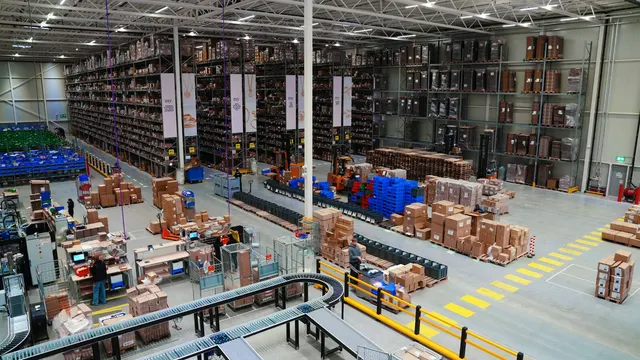
Logistics service providers looking to change or expand their processes, or simply do more with fewer people, need to think creatively. The options available to them are growing. At LogiMat, Körber Supply Chain presented a version of its mixed-case palletising solution and also sees considerable potential in new digital twin solutions.
A few persistent challenges are forcing logistics service providers to think outside the box. Grid congestion is one challenge, and a shortage of workers is another. At the same time, customers are demanding greater flexibility. “As far as the latter is concerned, logistics service providers and, for example, soft drinks bottlers are increasingly being asked to supply goods in smaller quantities and in layers suited to the load carrier,” says Marcel Spruijt, senior sales manager for Körber Supply Chain in the Netherlands.
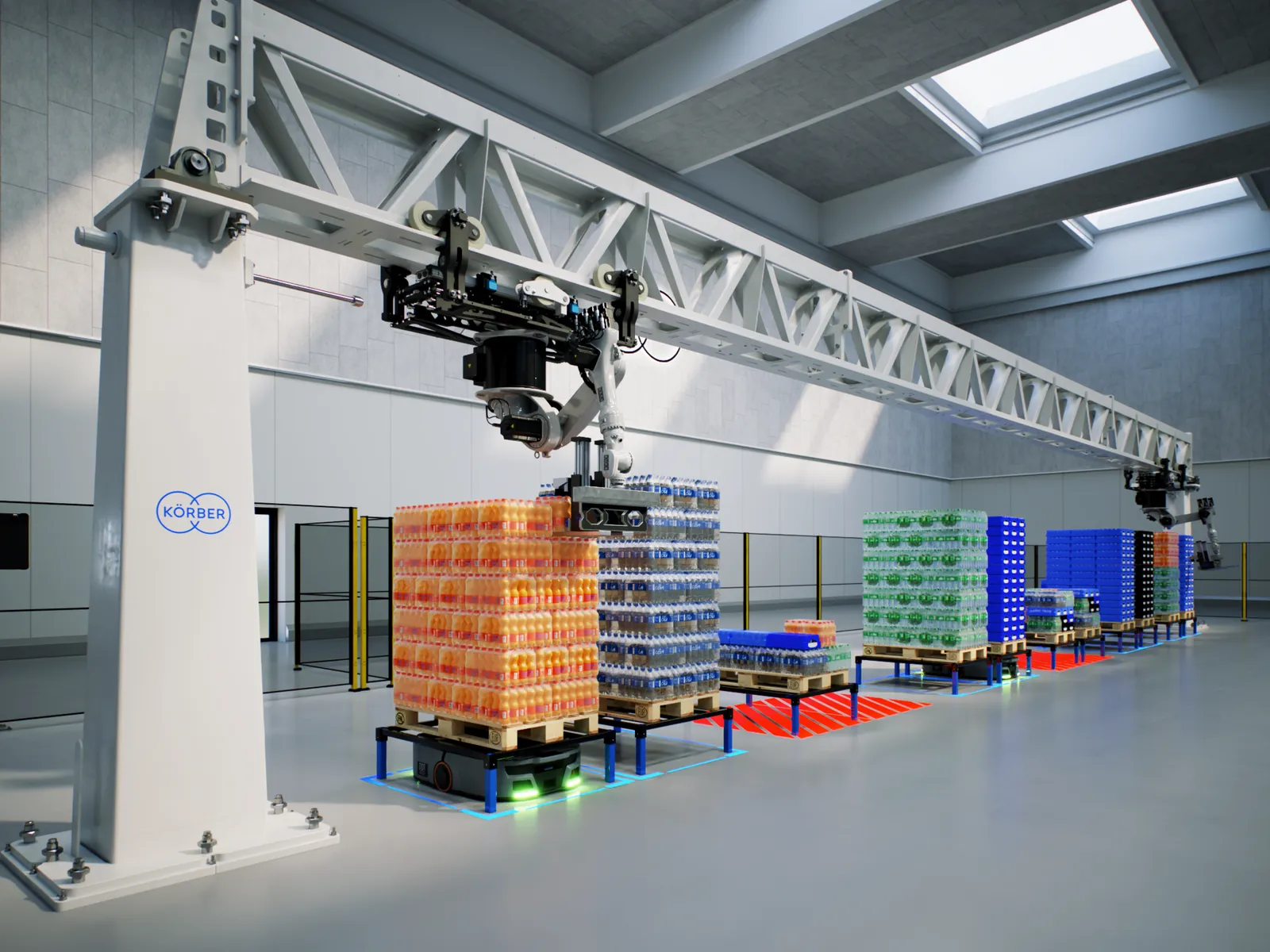
Mixed-case palletising
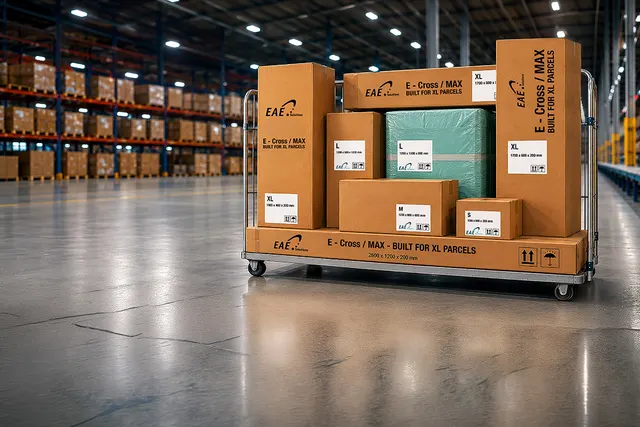
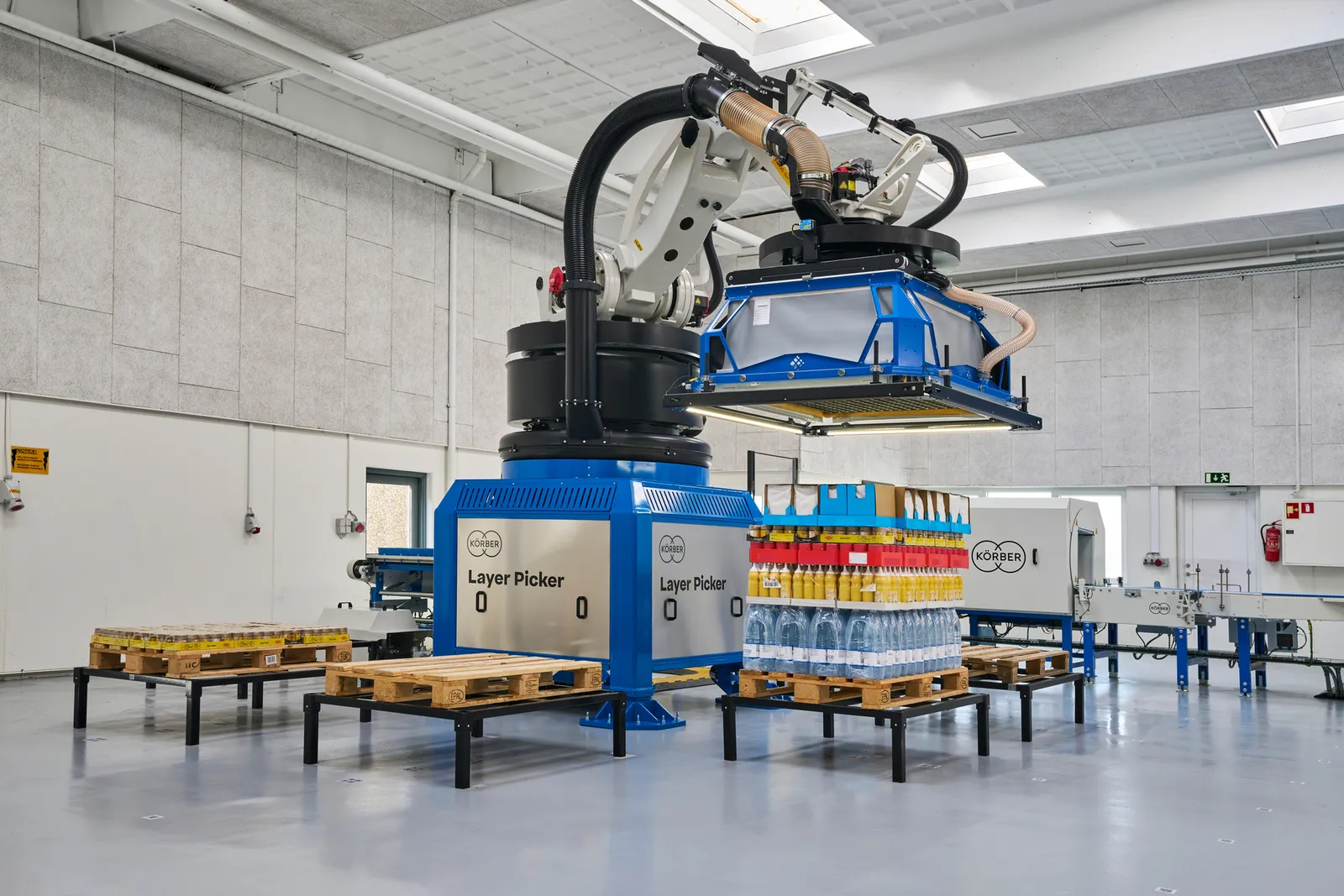
Körber Supply Chain offers a range of options for addressing these challenges. At LogiMat, the provider of end-to-end logistics solutions presented a mixed-case palletising solution. The system is designed for logistics operations at companies that produce or handle up to 1,500 SKUs per day. Spruijt says: “If a retailer asks for a mix of different products to be supplied on a pallet, this solution can take care of it.”
Smaller product quantities
The new mixed-case palletising solution gives businesses in the FMCG sector in particular the opportunity to respond more flexibly to customer requests. Spruijt has logistics service providers in mind, as well as soft drinks bottlers, for example. “Companies handling an average of between 1,000 and 1,500 SKUs per day serve retailers who want increasingly smaller quantities of products supplied to order. The mixed-case palletising solution also eliminates many of the manual tasks that are still often required.”
Addressing grid congestion
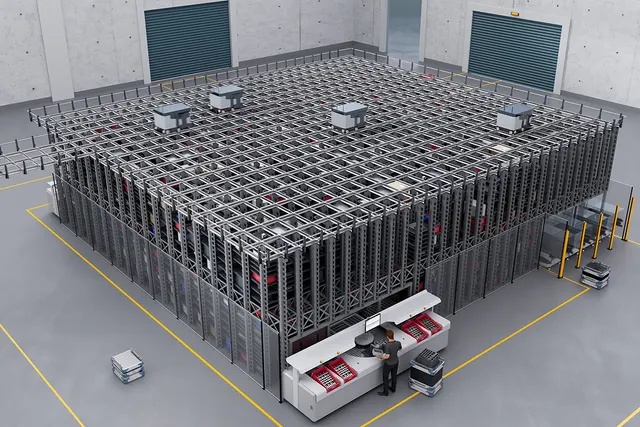
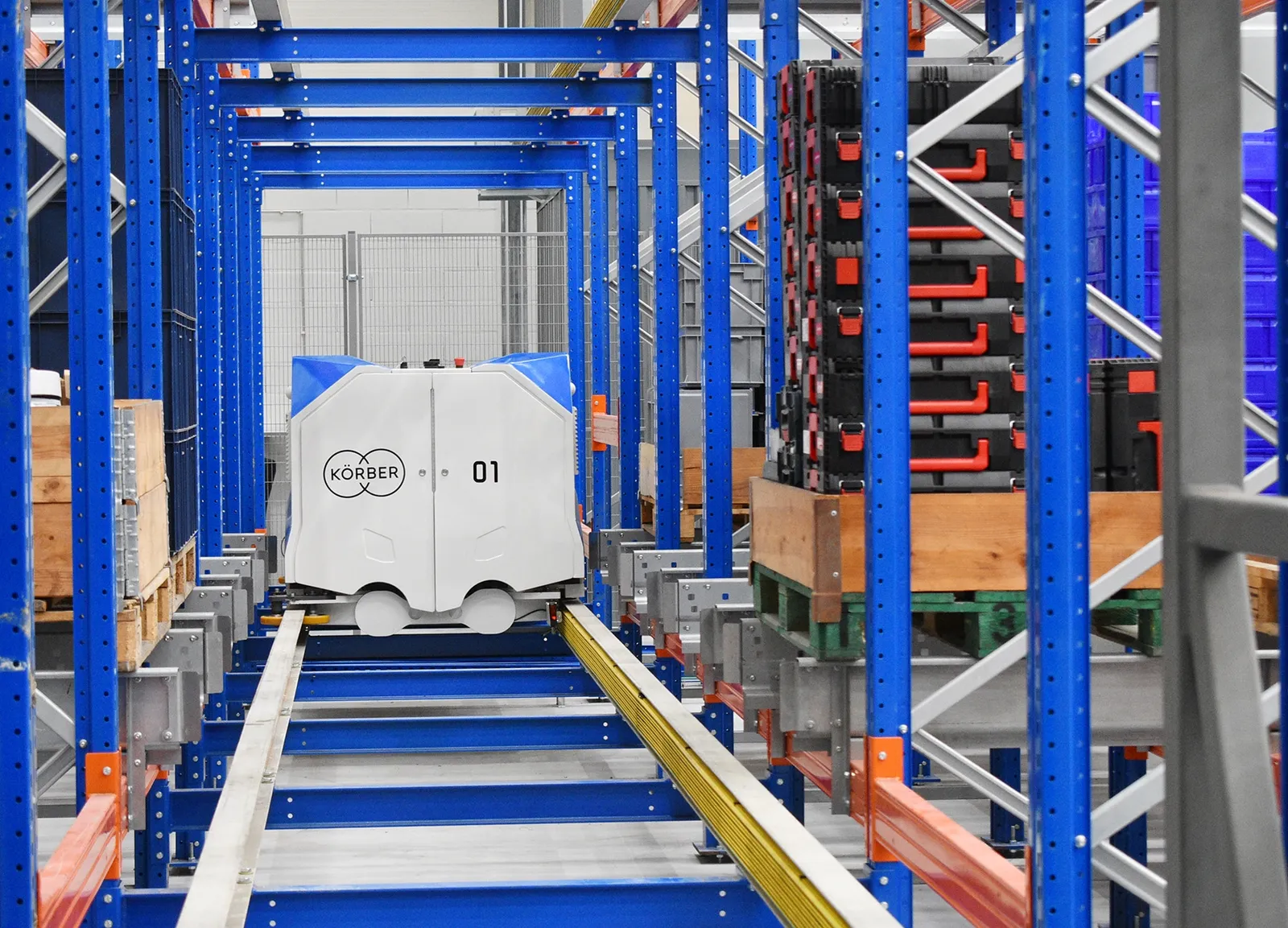
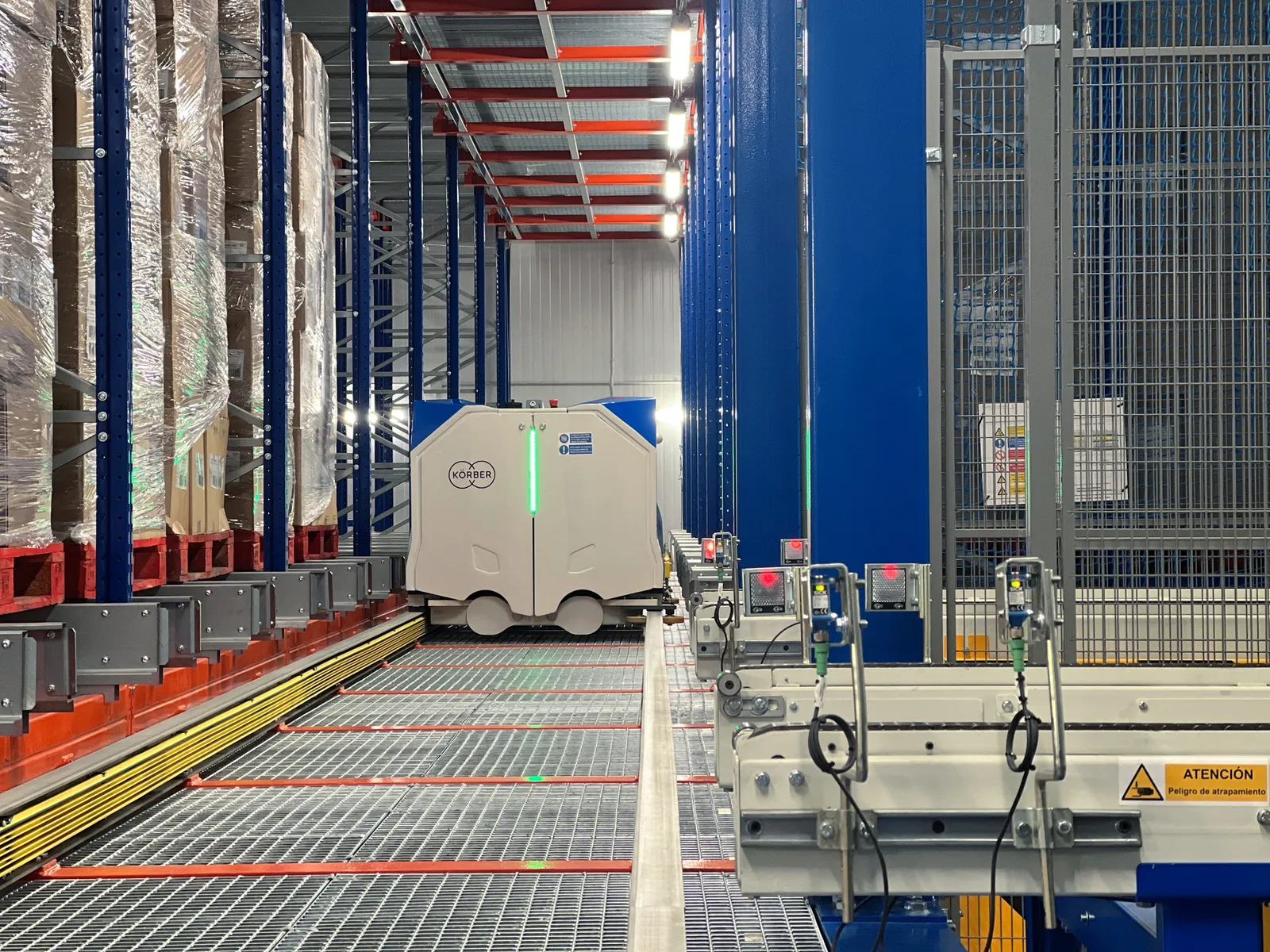
Grid congestion and the limited availability of sites for new buildings are also a challenge. Logistics service providers are being forced to carry out more work within existing premises. This is precisely where a systems integrator such as Körber can make a difference, according to Spruijt. “As a systems integrator, we know exactly which processes work well together and how new technologies such as AMRs and pallet shuttle storage systems can be integrated into existing operations without increasing energy consumption.”
Digital twin
A complete overview of the warehouse is important when responding to new customer requirements and adapting logistics operations. Körber sees considerable potential in the digital twin solution it has developed. It is working on this with Nvidia. “With this digital twin, we can simulate processes during the design of warehouse automation and optimise logistics systems. This speeds up engineering and enables us to test processes before they are put into operation. We do this in close collaboration with our customers.” Spruijt likens designing warehouse automation to connecting Lego bricks. “Systems such as a layer picker, mixed-case palletiser and AMRs make the overall picture very dynamic. The digital twin makes it easy to build a complete overview and see how the combination works in the virtual environment. This makes it easier to meet our customers’ requirements precisely.”
Virtual tour
Spruijt says digital steps are now an integral part of both the design and practical application of warehouse processes. “But a picture is worth a thousand words, so we offer a virtual tour on our website. It shows how an end-to-end process can be both sustainable and efficient.”
Een zakelijke vraag aan Körber Supply Chain? Get in touch
Companies in this story
Keep following this
Get an email when a new story is published. No account needed.
- ThemeThe supply chain under pressure
- SubjectAutomation
- CompanyKörber Supply Chain