‘The people simply aren’t there’
Text Armand Landman Image KV-Techniek
Robots and AGVs take on the workload
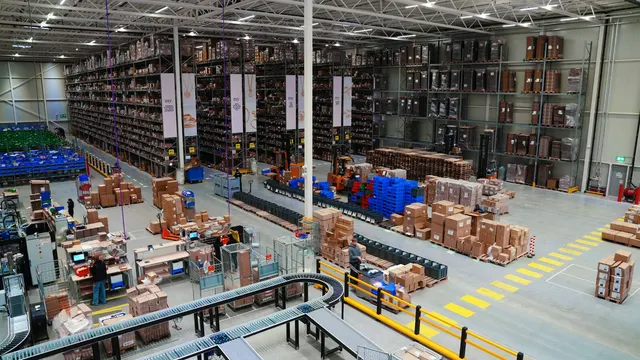
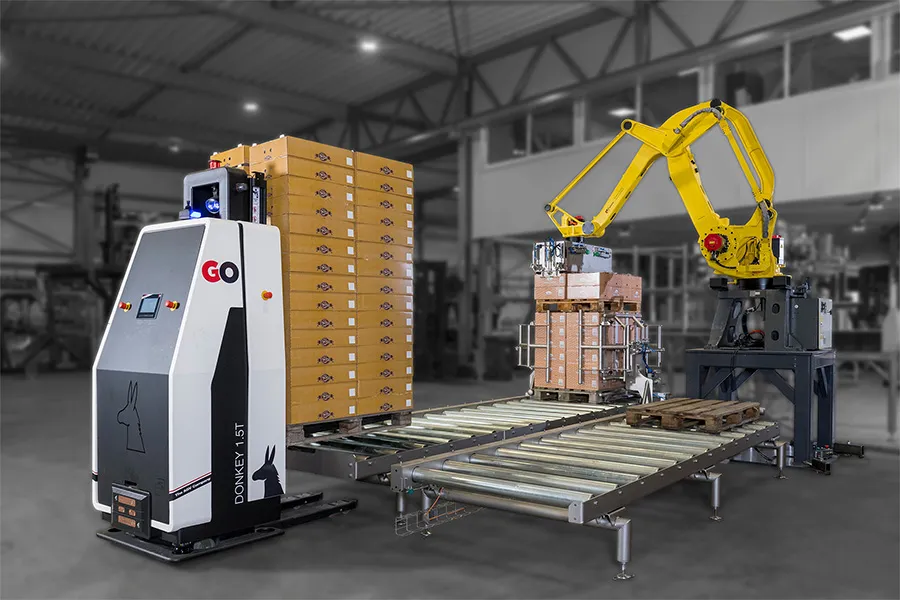
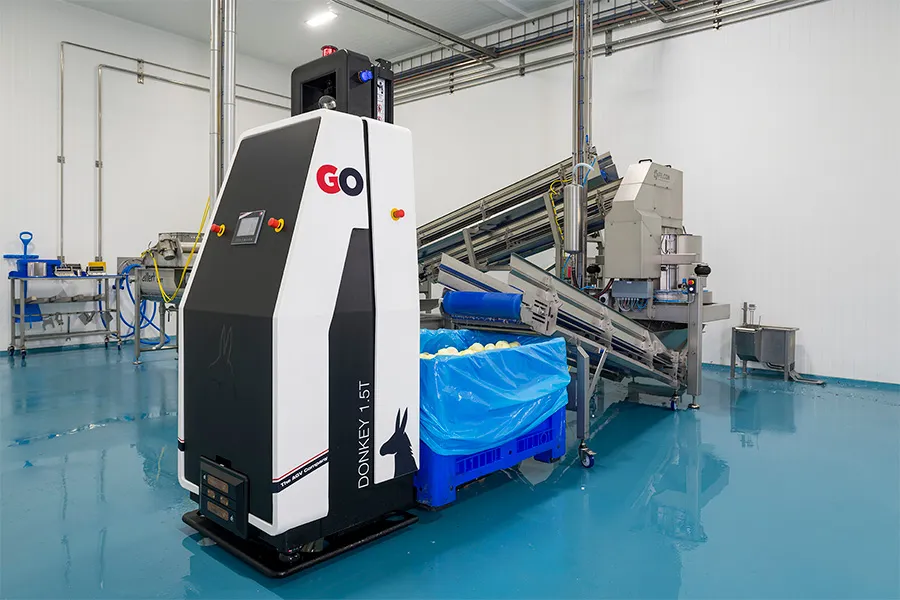
Automation in warehouses is becoming less of a choice and more of a necessity. That is the view of Bastiaan Krijger, founder and owner of Zeeland-based KV-Techniek. His company supplies complete robotic lines and Automated Guided Vehicles (AGVs), with a strong focus on the food industry.
“When I started in 2012, I bought used robots from the closed Opel plant in Antwerp,” says Krijger. “That was my starting point. We now design and build complete robotic lines, including grippers, conveying and detection systems, and integrate robots from major brands such as Fanuc, Yaskawa, ABB and KUKA. We have grown into a broad automation partner.” According to Krijger, the staff shortage in logistics is the main driver behind automation. “Many companies ask themselves: should I bring in more people, or invest in robots and AGVs? In practice, it turns out that those people often simply aren’t there. That puts an end to the debate. Automation is not only more efficient and reliable, it is often the only option.” Safety and ergonomics also play a part. “With forklifts, there is always a high risk of damage and accidents. AGVs are safer and more predictable. You can also free up good staff for roles where they add more value. That way, people can develop alongside the business rather than being phased out.”
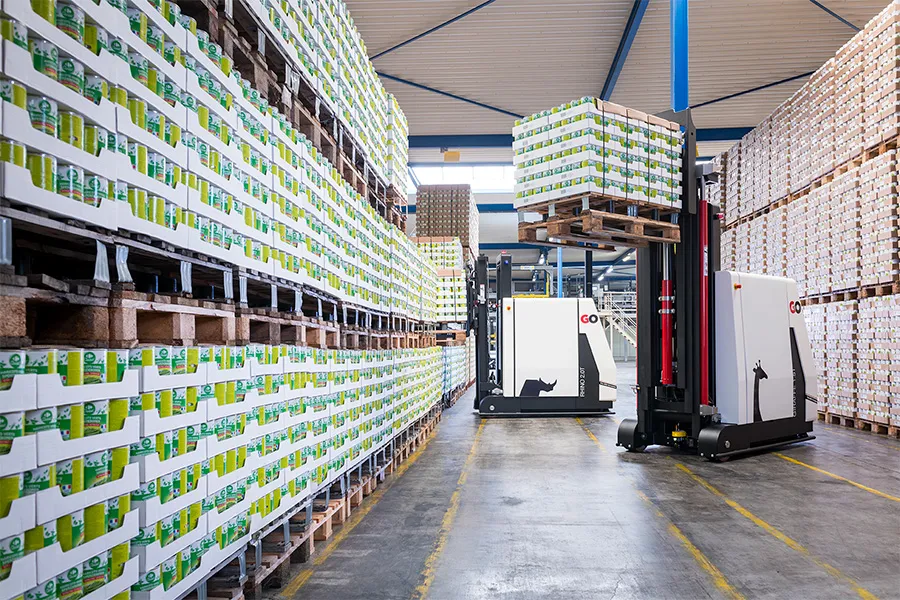
GO, the AGV-company
As AGVs take on an increasingly important role, KV-Techniek set up a separate company: GO, the AGV-company. “We wanted a clear identity in the market,” Krijger explains. “A robot integrator who might be a customer of ours for AGVs shouldn’t feel that we are also competing with them. Setting it up separately gives us clarity and focus.”
End-to-end support
While other suppliers often provide individual products, KV-Techniek offers integrated, complete solutions. “A customer wants a single point of contact. We can build a line that packs boxes and stacks pallets, which are then moved by an AGV to the wrapping station or warehouse. Whether it’s a robot, conveyor or AGV, you call us and we take care of it. That’s the strength of a systems integrator.”
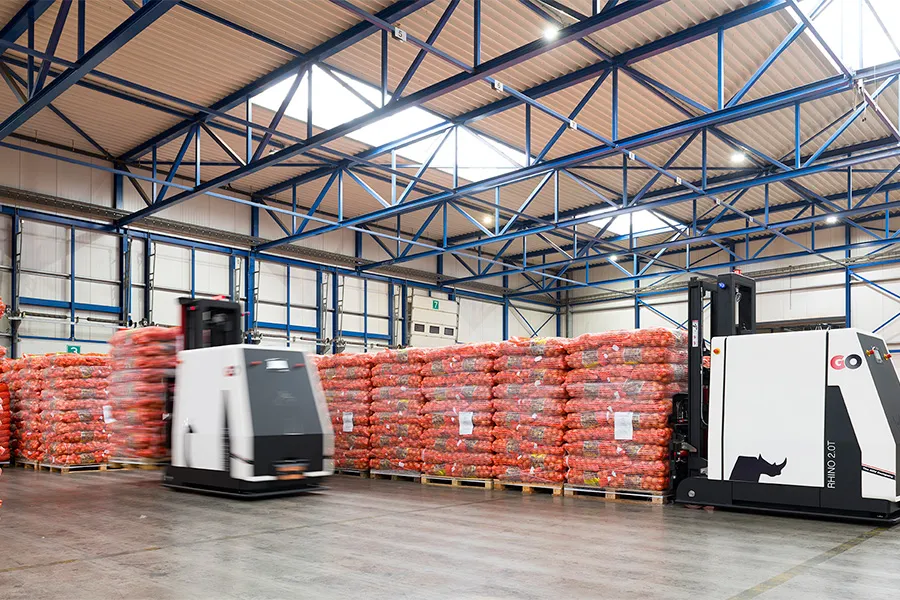
A striking example is a project at an anode block factory. “There, a robot inspects and cleans the blocks. Two AGVs then stack them to a height of five metres. The vehicles operate fully unmanned at night. This saves the factory two weekend shifts of forklift drivers. On New Year’s Eve, an AGV was still doing its rounds one minute past midnight. That says it all.”
The human factor
Automation means change, and that sometimes meets with resistance. “People are often afraid of losing their jobs, or that they won’t be able to handle the technology. That’s why we involve employees from the outset. Give them ownership, let them contribute ideas and train them properly. Then they become ambassadors rather than opponents. You shouldn’t keep people in the dark; when they understand how a machine works, their confidence grows.”
The same applies to projects in existing facilities. “Brownfield automation requires cooperation with the people on the shop floor. A forklift driver who has been putting pallets in the same place for twenty years needs to have a say if that suddenly has to change. Involve them and you can work together to find a practical solution. If you don’t, you’re guaranteed to hit a wall.”
The future: shuttle racking and AGVs
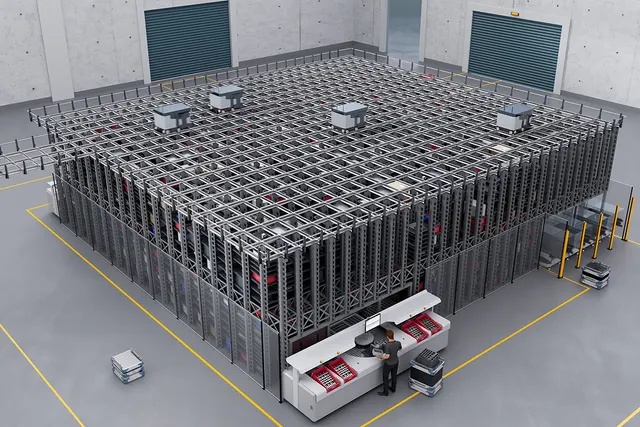
Krijger sees the greatest opportunities in the coming years in combining shuttle racking with AGVs. “It’s a great fit for companies that need to be highly flexible, handling one pallet today and another tomorrow. That’s why we’re working with shuttle racking suppliers so we can offer complete packages. Customers then have a single partner to integrate everything. That’s the future.”
Question about this story? Ask your question
Companies in this story
Keep following this
Get an email when a new story is published. No account needed.
- ThemeAutomating goods flows
- SubjectAutomation
- CompanyGO, The AGV Company