How automation can ease the labour shortage in the logistics sector
Text Albert van Roekel, Director Solutions Consultancy bij Descartes Beeld Adobe Stock

The supply chain is under pressure. According to UWV, this is due to international developments such as the war in Ukraine and disruption to shipping through the Red Sea, but perhaps most of all to a tight labour market, where an ageing population will only make staff shortages worse. This makes it increasingly important for organisations to automate their supply chain and logistics processes as much as possible.

As a result of this ongoing imbalance between the supply and demand for labour, organisations are struggling to find the workers, knowledge workers and leaders they need to thrive, and logistics and supply chain businesses in particular are feeling the strain. According to recent research by Descartes, 76% of supply chain and logistics leaders are experiencing significant staff shortages in their operations, with 37% of respondents describing the shortage as high to extreme.
Although competition for resources is a business-wide problem, the severity of staff shortages varies between organisations. According to the research data, transport operations (61%) and warehouse operations (56%) were hardest hit by staff shortages, from lorry drivers to fulfilment teams on the warehouse floor. Knowledge workers are also hard to recruit, as they become increasingly important with supply chain and logistics operations growing more technology- and data-driven: 55% of respondents are struggling to find them.
Just 9% of logistics and supply chain leaders said that staff shortages had not affected performance to any extent during peak season. Staff shortages affect not only business performance during peak season, finances and the performance of logistics partners, but also take their toll on customer service: 58% of respondents say staff shortages have had a negative impact on their service levels.

How technology can help turn the tide
With severe staff shortages on the horizon, logistics-focused organisations are centring their operational strategies on automation and technology solutions to ease the burden on their workforce. Another recent study, which examined the strategies and tactics businesses are using to address current staff shortages, found that 54% of the supply chain and logistics leaders surveyed are focusing on automating repetitive tasks and low-value services. This is a logical step towards reducing their resource footprint and delivering higher performance with fewer employees.
The study also found that 50% of the logistics-focused organisations surveyed are focusing on centralising operations, for example through centralised transport planning. This strategic approach, usually implemented through cloud-based solutions deployed as shared services across the business, helps increase operational efficiency without growing headcount.

Technology winners
How does the aim of automating repetitive, low-value tasks and using technology to boost efficiency translate to the warehouse floor or transport operations? Autonomous vehicles, robotics, drones, and soft and hard warehouse automation are all on the table for supply chain and logistics decision-makers. But some clear technology winners are emerging in the drive to ease current labour challenges in these areas and increase productivity. Respondents are particularly focused on delivery route optimisation solutions (54%) and driver mobile productivity (45%). To mitigate the impact of knowledge worker shortages, automated real-time shipment tracking (53%) is emerging as the leading technology choice.
Strategic route planning solutions, for example, increase route density while reducing planning time and the resources needed to achieve maximum efficiency. Another example is intelligent dispatch and tracking software that uses real-time GPS to ensure faster, more consistent on-time deliveries, helping maintain high customer service standards. In the warehouse, some businesses are using robotics and automated guided vehicles (AGVs) to eliminate the need for manual labour.
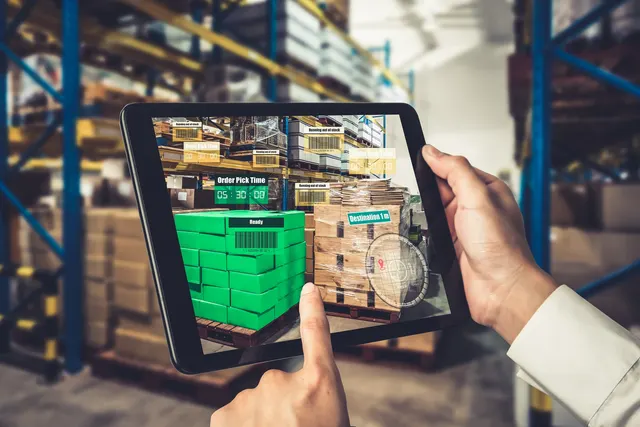
Behind the scenes, warehouse management systems (WMS) with barcode-based pick-and-pack workflows, automated multi-carrier parcel/LTL shipping and real-time order journey visibility help businesses minimise labour costs and fulfil more orders while improving the customer experience. Perhaps more importantly, automated logistics and supply chain technology solutions not only boost productivity, but also help retain staff by simplifying and improving daily workflows for warehouse staff, planners, dispatchers and drivers.
New solutions through AI
AI accelerates automation
In the wake of ChatGPT’s launch, interest in artificial intelligence (AI) has surged, and generative AI has raised expectations of AI technologies and their potential to bring new solutions to market. Supply chain and logistics leaders are also looking to AI to help improve operational efficiency and employee productivity. According to the research, almost 30% of respondents are exploring AI technology, while 53% plan to deploy it.
As logistics becomes increasingly data-driven, AI’s ability to analyse vast amounts of data in an instant will continue to drive technological innovation. AI-based capabilities such as forecasting and event detection have been embedded in logistics technology for years, in the context of route planning and transport management. However, AI’s ability to continually evaluate tens of thousands of data points and variables, and make adjustments based on what it has learned, will help further automate and accelerate logistics processes, eliminate redundancy and inefficiency, and increase employee productivity.
Higher productivity and greater job satisfaction
For supply chain and logistics leaders facing the challenge of keeping operations profitable with fewer resources, technology is changing their strategies, tactics and best practices. For employees tied up in repetitive, time-consuming, low-value tasks, and knowledge workers who spend excessive amounts of time manually preparing data, compiling reports or tracking shipments, automation is a game-changer.
When technology tools take on most of the heavy lifting, employees can free up valuable productive time to focus on more meaningful tasks, while benefiting from simpler, more streamlined workflows that improve their day-to-day working experience and ultimately help boost retention. From the C-suite perspective, the combined power of automating low-value, repetitive tasks and adopting technology-driven solutions leads to higher productivity, better supply chain visibility and improved performance, while creating more positive experiences for employees, partners and customers.
Een zakelijke vraag aan Descartes Systems Group? Get in touch
Companies in this story

Keep following this
Get an email when a new story is published. No account needed.
- ThemeThe supply chain under pressure
- SubjectSoftware
- CompanyDescartes Systems Group