Opportunities, challenges and policy priorities for Belgium’s transport sector
Text Geert Van Cauwenberge Beeld Febetra
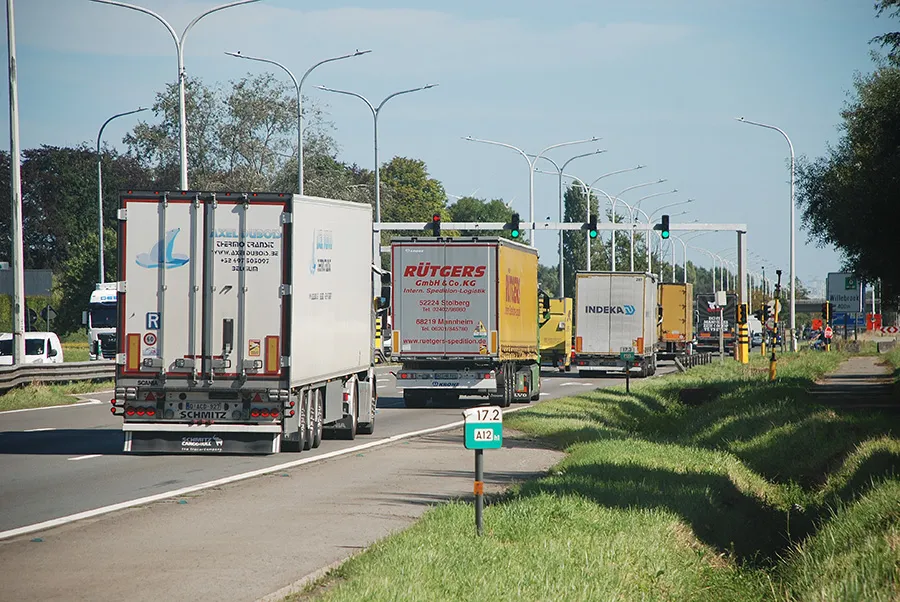
Belgium’s transport and logistics sector is an economic pillar, supporting more than 116,000 jobs and comprising over 10,800 companies. But the sector faces complex challenges, including decarbonisation, staff shortages and international competition. In its recently published Memorandum 2024, Febetra (the federation of Belgian transport and logistics service providers) takes an in-depth look at the sector and sets out policy recommendations to make transport companies fit for the future. We spoke to Philippe Degraef, director of Febetra, about these challenges and possible solutions.
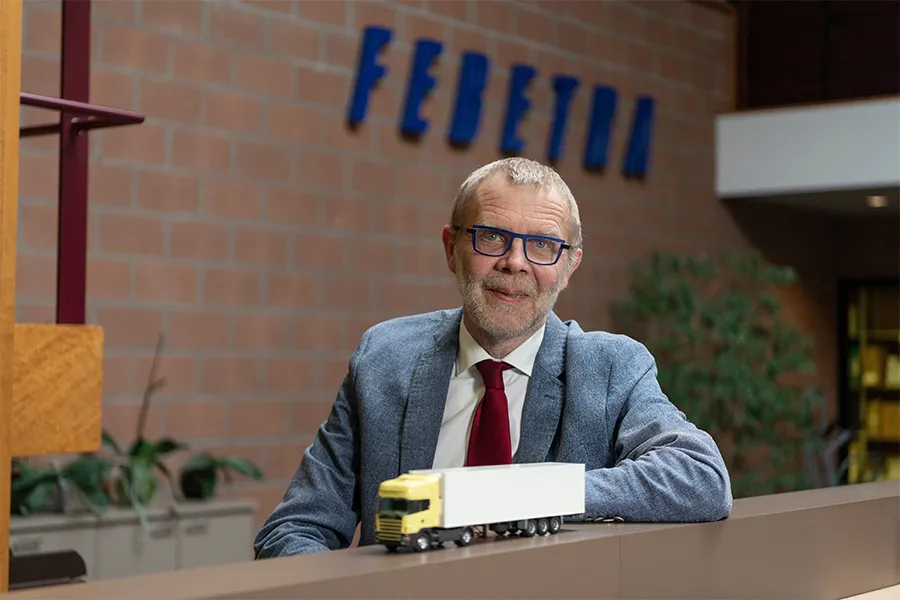
What are the biggest challenges currently facing Belgium’s transport sector?
Degraef: “Our sector is indispensable, but it is under pressure. Climate change is forcing us to decarbonise, while staff shortages and high labour costs are threatening our competitiveness. Increasing globalisation is making it harder to compete with companies in countries with lower costs. In our Memorandum 2024, we at Febetra stress that close cooperation between government and the sector is essential to address these challenges.”
What solutions do you see for making the transport sector more sustainable?
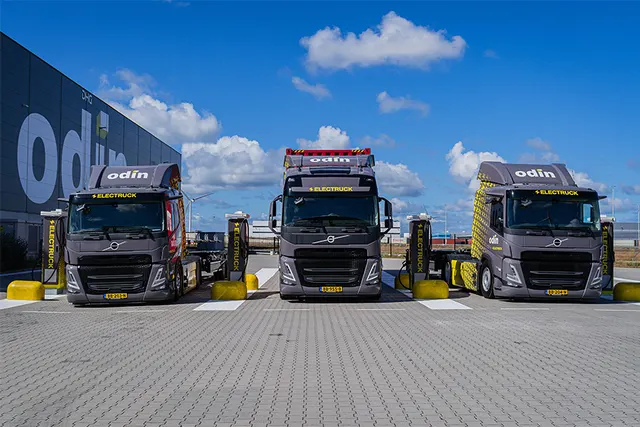
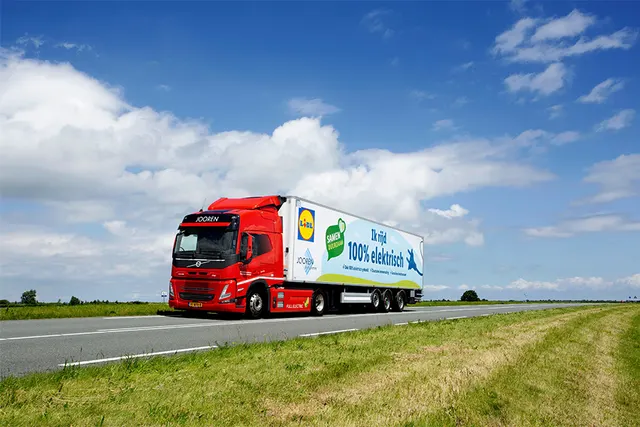
Degraef: “Reducing emissions is essential. Electric lorries, hydrogen technology and synthetic fuels offer opportunities, but the transition requires substantial investment. We are calling for greater government support, such as subsidies and a clear strategy. There is also an urgent need for sufficient charging and refuelling infrastructure. Without this foundation, the transition to greener transport cannot be rolled out successfully.”
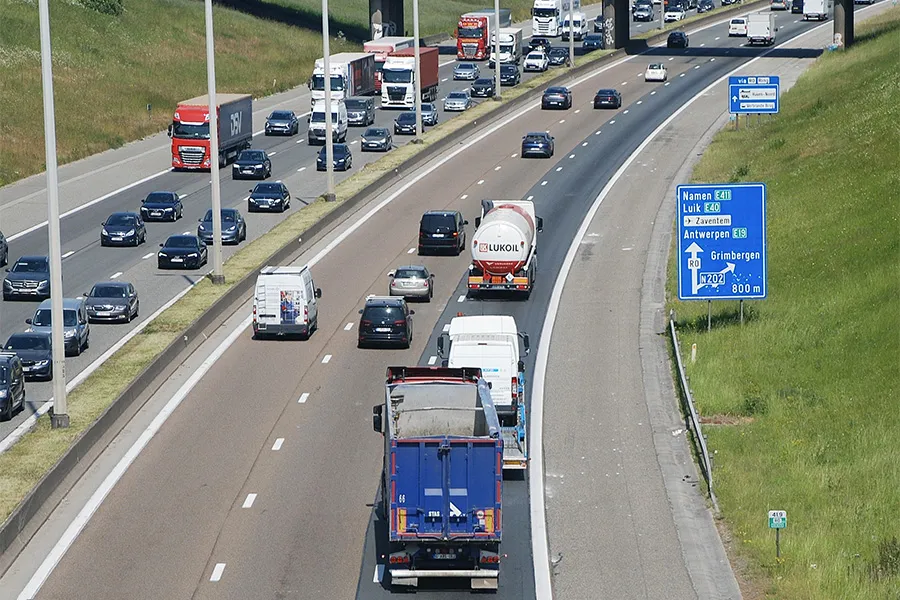
In November 2024, VIL held its well-attended multimodal event ‘Baanbrekers’ in Mechelen. How important is the modal shift to rail and inland waterways?
Degraef: “Very important. Rail and inland waterways can significantly reduce transport-related CO2 emissions. However, the high costs of transport equipment and transhipment are an obstacle. We propose providing investment support and introducing a ‘transhipment voucher’ to encourage companies to operate more sustainably. Febetra’s Memorandum 2024 stresses that a more efficient modal shift would also help reduce congestion. This approach could be more effective than the current lorry kilometre charge, a measure that has little impact on congestion on our motorways.”
Can innovative solutions such as ecocombis contribute to a more sustainable sector?
Degraef: “I am absolutely convinced they can. Ecocombis can carry up to 50 per cent more freight per trip and emit 33 per cent less CO2. Unfortunately, they cannot operate everywhere in Belgium. We are calling for them to be permanently authorised on our road network. The pilot project has been running for ten years, and evaluations have consistently been positive. It is now time to bring the pilot project to an end. Innovations like these can represent a major step towards achieving our climate goals.”
What needs to be done to improve the competitiveness of Belgian transport companies?
Degraef: “High labour costs are a major problem in our country. We propose reducing the tax burden, for example by scrapping withholding tax on non-productive hours. Cutting taxes on overtime and exempting night-work allowances from tax could also help. Maintaining the refund of excise duty on professional diesel remains necessary until viable alternatives are available. This is explicitly identified as a priority in our memorandum.”
Lorry driver has long been a shortage occupation. How can we address the driver shortage?
Degraef: “The driver shortage is acute. We need to speed up administrative procedures, such as those for driver cards. Flexi-jobs could also be a solution. This scheme gives pensioners and part-time workers the opportunity to provide temporary cover. Finally, we need to relax the recruitment rules for driving instructors to speed up the training of new drivers. This is an urgent problem that calls for creative solutions.”
“In a previous issue of this trade magazine, I pointed out that thirty years ago, one in four lorry drivers in our country was over 45. Today, that figure has risen to no less than 57.2 per cent! The working-age population in our country will not grow over the next twenty years. For every ten employees retiring, there are only eight newcomers ready to take over their jobs. We must not ignore this demographic reality.”
What role does regulation play in addressing these challenges?
Degraef: “Consistent regulation across Belgium is essential. Differences in standards between Flanders and Wallonia, for example for 50-tonne vehicles, make it difficult to work efficiently. At European level, we are calling for stricter checks on cabotage rules (cabotage is the transport of goods or passengers between two points in the same country by a company from another country. In many cases, this is prohibited, ed.) and posting rules to prevent unfair competition. We can remain competitive only if there is a level playing field.”
“In this context, targeted labour migration could be an interesting way to maintain our competitiveness. Our transport companies could increase their turnover, while migrant workers could make a valuable contribution and earn better wages under Belgian pay conditions. Society would also benefit from the additional social security contributions, which would not be generated if foreign workers were employed here through posting or various shady arrangements.”
How does Febetra view the importance of infrastructure improvements in Belgium?
Degraef: “As a sector federation, we are calling for more loading and unloading areas in urban areas and better signage for lorries. Investment in the road network is essential; our roads lag behind those of neighbouring countries. The shortage of lorry parking areas with basic facilities also needs to be addressed urgently. Without good infrastructure, the sector cannot function properly.”
Finally, how do you see the future of Belgium’s transport sector?
Degraef: “The transport sector will remain essential to our economy and society. With targeted investment in sustainability, innovation and labour market policy, we can overcome these challenges. Together with the various levels of government and companies in our country, we are working towards a sustainable and efficient future. Febetra’s Memorandum 2024 provides a clear compass for the way forward, and aims to inspire policymakers.”
Question about this story? Ask your question
Keep following this
Get an email when a new story is published. No account needed.
- SubjectTransport